Smart Agriculture ›› 2026, Vol. 8 ›› Issue (4): 238-254.doi: 10.12133/j.smartag.SA202605005
• Digital Economy • Previous Articles
ZHANG Xin1, CHEN Mingyang1, ZHAO Zhiyao1, CHI Cheng2, WANG Xiaoyi1, XU Jiping1( )
)
Received:2026-05-06
Online:2026-07-30
Foundation items:National Key Research and Development Program of China(2022YFF1101103); National Natural Science Foundation of China(62402020)
About author:ZHANG Xin, E-mail: zhangxin@btbu.edu.cn
corresponding author:
CLC Number:
ZHANG Xin, CHEN Mingyang, ZHAO Zhiyao, CHI Cheng, WANG Xiaoyi, XU Jiping. Trusted Data Space for the Agricultural Industry Chain: Theoretical Framework, Operating Mechanism, and Implementation Path[J]. Smart Agriculture, 2026, 8(4): 238-254.
Add to citation manager EndNote|Ris|BibTeX
URL: https://www.smartag.net.cn/EN/10.12133/j.smartag.SA202605005
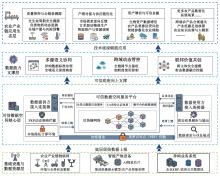
Fig. 1
Schematic diagram of the agricultural industry chain trusted data space architecture
Table 1
Architecture comparison between the trusted data space for the agricultural industry chain and traditional data platforms
| | | | |
|---|---|---|---|
| | | | |
| | | | |
| | | | |
| | | | |
| | | | |
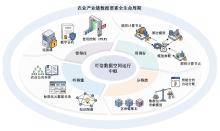
Fig. 2
Circular view of the operational logic of the agricultural industry chain trusted data space
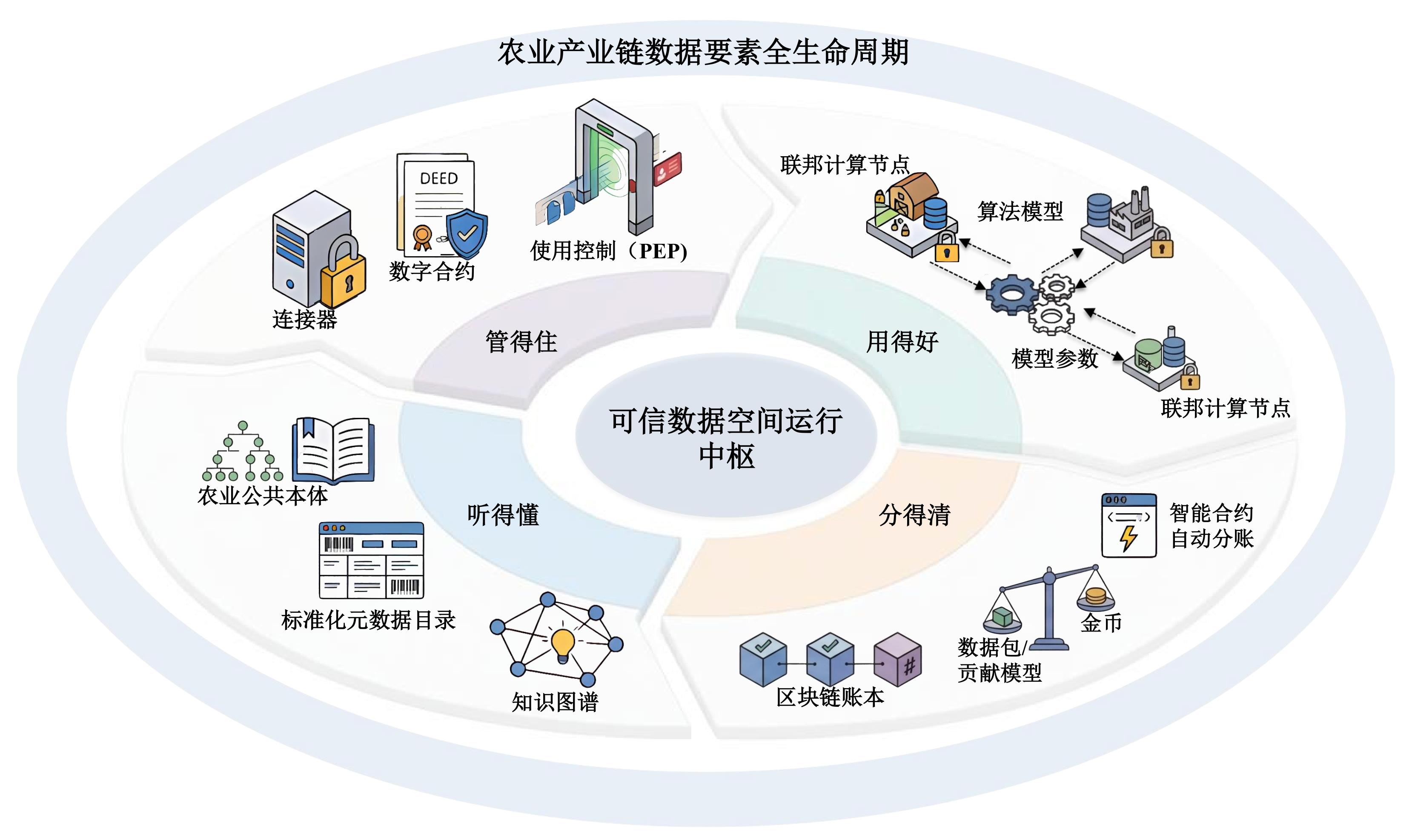
Fig. 3
Internal architecture and controlled interaction mechanism of the agricultural industry chain trusted data space
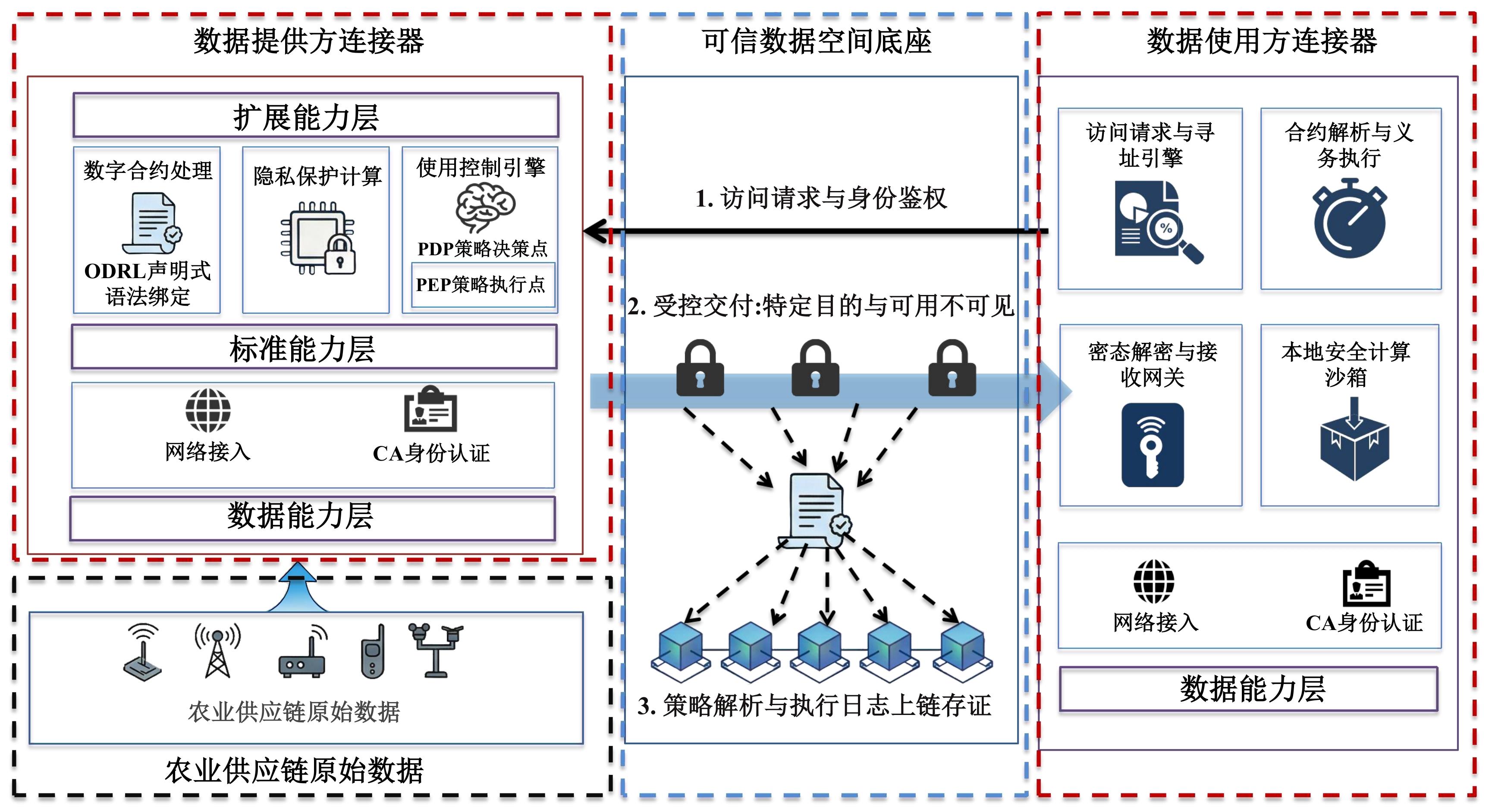
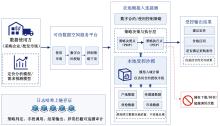
Fig. 4
Schematic diagram of local sandbox computing and controlled output mechanism for “usable but invisible” data
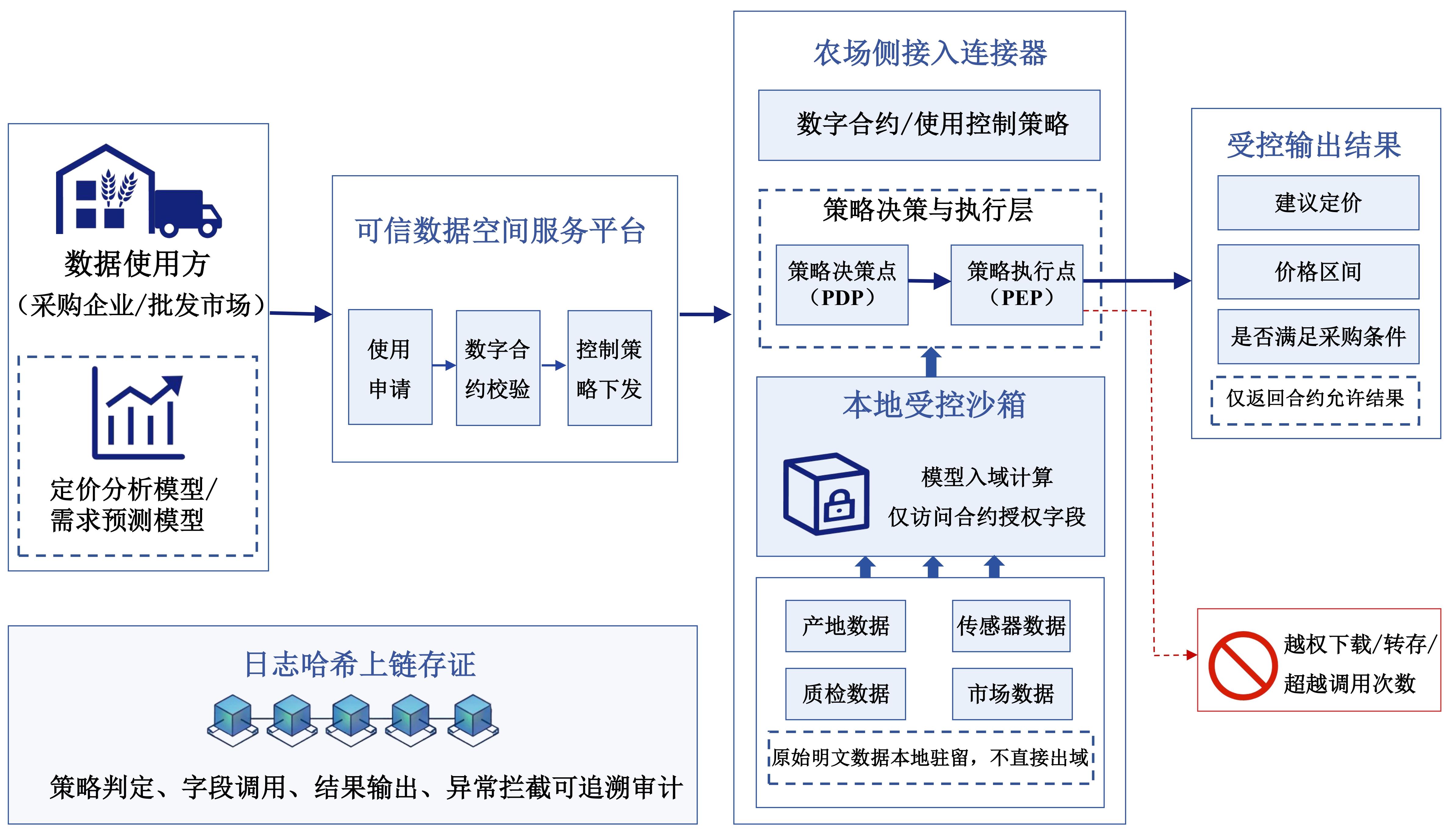
Table 2
Correspondence between integrated service platform modules and technical architecture capabilities of trusted data space
| 可信数据空间关键能力 | 综合服务平台对应模块 | 功能说明 |
|---|---|---|
| 身份管理 | 权限管理模块、角色管理、节点权限配置 | 支持监管部门、企业、消费者等不同角色的分级访问与权限配置 |
| 目录管理 | 风险因子数据库、数据导入、数据查询 | 支持多源抽检数据接入、字段标准化映射、数据检索与报表管理 |
| 数字合约管理 | 数字合约策略配置、链上智能合约接口配置、访问策略配置 | 支持数据使用目的、访问权限、调用边界和存证规则的结构化表达 |
| 数据使用控制 | 权限分级、脱敏展示、PEP拦截日志 | 支持越权访问、非授权字段调用、下载转存等异常行为的拦截和记录 |
| 存证审计 | 区块链管理模块、数据上链、防伪溯源、交易统计 | 支持数据摘要上链、交易哈希查询、区块高度展示和调用日志审计 |
| 数据产品与服务目录 | 风险画像、风险预警、风险评价、查检决策模块 | 支持风险画像服务、预警服务、评价服务和靶向查检服务输出 |
| 空间运行监测 | 数据驾驶舱、区块链运行统计 | 支持风险态势、节点数量、交易笔数、区块高度和业务运行状态展示 |
Table 3
Correspondence between typical application scenarios and key operational logic
| 典型应用场景 | 对应关键运行逻辑 | 运行方式 | 场景说明 |
|---|---|---|---|
| 全链路可信溯源与精准追责 | 语义互操作、连接器受控交互、区块链存证 | 通过批次、主体、检测项目和流通节点的元数据关联,实现对异常批次逆向追踪 | 支持异常批次的路径还原和链上摘要核验 |
| 资产增信与风险评估 | 数字合约、使用控制、本地沙箱、智能合约 | 在授权字段范围内调用检测数据、经营数据和物联网数据,输出风险评估结果 | 支持授权结果输出、越权访问拦截和风险评估结果生成 |
| 产销密态匹配 | 隐私计算、连接器受控交互、数据可用不可见 | 市场需求数据与生产数据不直接交换明文数据,通过模型或分析结果进行受控协同 | 支持需求预测、排产建议和结果受控输出 |
| 风险预警与靶向查检 | 语义互操作、知识图谱、链上审计 | 将食品类别、检测项目、区域、主体和结果判定构建为风险关联网络 | 支持重点品类、重点危害物和重点区域识别 |
| 权限控制与审计追溯 | 身份管理、使用控制、区块链存证 | 不同主体依据角色权限访问不同粒度数据,异常操作被写入审计日志 | 支持分级访问、异常拦截和链上审计查询 |
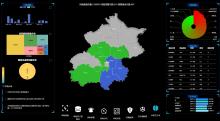
Fig. 5
Global resource situation awareness cockpit of the trusted data space for the agricultural industry chain
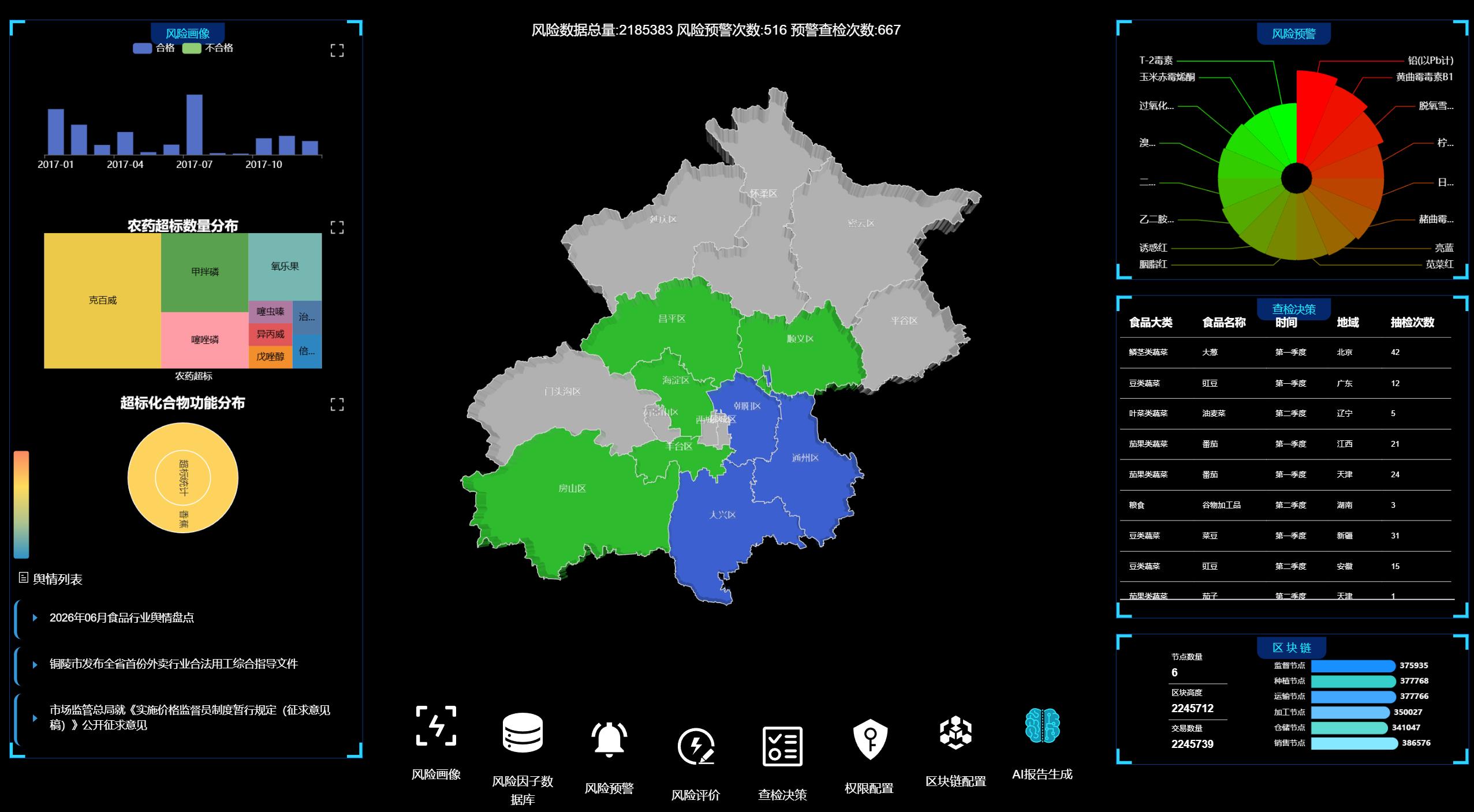
Fig. 6
Blockchain-based evidence preservation and audit tracing view enabling data sovereignty and dynamic control
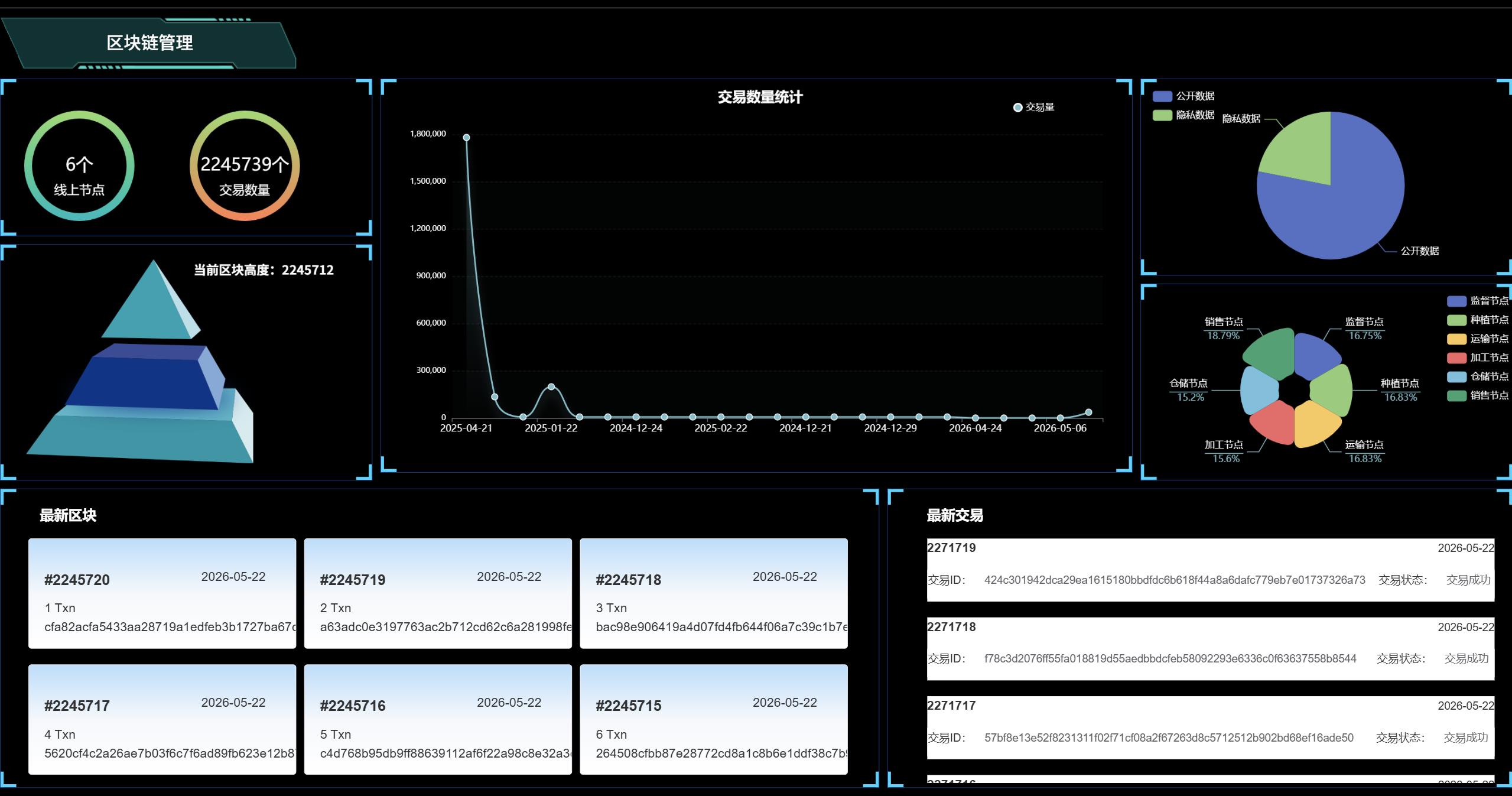
Table 4
Scenario-based description and functional correspondence of the prototype platform for the trusted data space of the agricultural industry chain
| 说明对象 | 对应运行逻辑 | 观察内容 | 场景化说明 |
|---|---|---|---|
| 数据接入与标准化治理 | 目录管理、语义互操作 | 接入数据规模、年份跨度、任务类型、监管环节、字段映射数量 | 接入2023—2025年抽检监测数据约12万条,其中2023年40 096条、2024年43 383条、2025年36 582条;覆盖4类抽检任务、3类监管环节,完成抽样单编号、抽样时间、样品名称、食品类别、检测项目、检测结果等12类关键字段映射 |
| 风险画像与靶向查检 | 语义互操作、风险画像、知识图谱 | 食品类别覆盖、风险项目覆盖、风险关联实体类型 | 覆盖蔬菜、水果、畜禽肉及副产品、食用油、粮食加工品等5类主要食品;覆盖农药残留、兽药残留、重金属污染物、食品添加剂、品质指标等5类风险项目;构建食品类别、检测项目、抽样环节、区域主体、结果判定等5类关联实体 |
| 有机农场数据上链 | 区块链存证、智能合约调用 | 上链流程步骤、链上记录要素、链下核验方式 | 将农场批次数据上链流程细化为数据采集、字段标准化、摘要生成、智能合约调用、链上存证、链下核验6个步骤;链上记录数据摘要、交易哈希、区块高度、时间戳、主体签名等5类要素;支持链下数据哈希重算与链上摘要比对 |
| 全链路可信溯源 | 语义互操作、链上存证、受控访问 | 溯源路径节点数、链上核验要素 | 支持生成“食品类别-检测项目-抽样环节-主体”4级风险路径;支持基于交易哈希、区块高度、时间戳等3类链上信息进行摘要核验 |
| 权限控制与异常拦截 | 数字合约、使用控制、本地沙箱 | 用户角色数量、权限粒度、异常操作类型 | 设置政府监管部门、农场及关联企业、终端消费者3类用户角色;支持监管级、企业级、消费者级3级数据可见范围;对越权查询、非授权字段访问、下载转存等3类异常操作进行拦截并记录PEP日志 |
| 消费者脱敏溯源查询 | 细粒度权限控制、脱敏展示 | 可见数据层级、敏感数据屏蔽类型 | 普通用户仅可查看脱敏溯源切片;企业经营数据、完整检测明文、内部风险分析结果等3类敏感信息不向普通用户开放 |
| 区块链审计追溯 | 区块链存证、审计追溯 | 审计查询入口、审计记录要素 | 支持基于交易哈希查询链上存证摘要;审计记录包括数据摘要、时间戳、提交主体、合约调用记录、异常拦截日志等5类信息 |
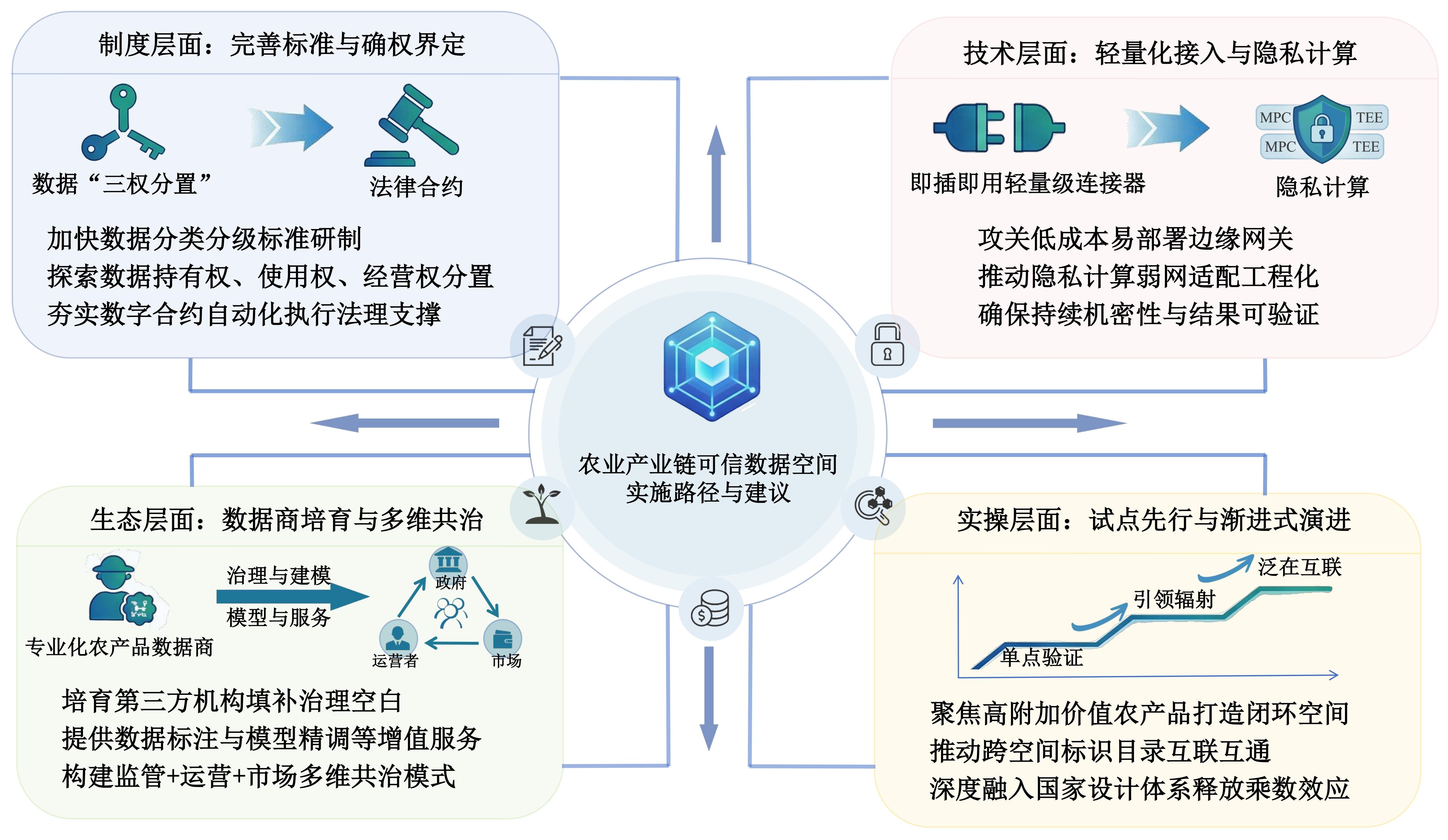
Fig. 7
Four-dimensional implementation pathway and evolutionary architecture diagram of the agricultural industry chain trusted data space
| [1] |
国家数据局,中央网信办,科技部,等.国家数据局等部门关于印发《"数据要素×"三年行动计划(2024—2026年)》的通知:国数政策〔2023〕11号[EB/OL]. [2026-04-20].
|
| [2] |
曹冰雪, 赵春江, 李瑾, 等. 中国智慧农业技术发展现状、挑战与展望[J]. 农业工程学报, 2025, 41(21): 1-10.
|
|
|
|
| [3] |
郭威, 吴华瑞, 朱华吉, 等. 农业生产大数据治理: 关键技术、应用分析与发展方向[J]. 智慧农业(中英文), 2025, 7(3): 17-34.
|
|
|
|
| [4] |
张小允, 许世卫, 王晓伟. 数字经济背景下提高中国农产品质量安全保障水平探究[J]. 农业现代化研究, 2025, 46(2): 205-214.
|
|
|
|
| [5] |
|
| [6] |
|
| [7] |
陈枫, 赵春江, 杨信廷, 等. 基于可编辑区块链的农产品供应链追溯高效存储查询模型[J]. 农业工程学报, 2024, 40(16): 143-152.
|
|
|
|
| [8] |
|
| [9] |
陈奕延, 李晔, 李存金, 等. 可持续性与数字化: 区块链驱动的循环农业研究[J]. 生态经济, 2022, 38(3): 123-133.
|
|
|
|
| [10] |
|
| [11] |
|
| [12] |
许继平, 李卉, 王浩宇, 等. 基于联邦学习的粮食供应链隐私数据要素协同计算研究[J]. 智慧农业(中英文), 2023, 5(4): 79-91.
|
|
|
|
| [13] |
张新, 肖柳君, 许继平, 等. 基于分布式联邦学习的农产品供应链跨域风险信息检测研究[J]. 农业机械学报, 2025, 56(6): 56-66, 89.
|
|
|
|
| [14] |
吴国栋, 胡全兴, 刘旭, 等. 差分隐私增强的大米区块链品控模型[J]. 智慧农业(中英文), 2024, 6(4): 149-159.
|
|
|
|
| [15] |
|
| [16] |
|
| [17] |
|
| [18] |
|
| [19] |
国家数据局. 国家数据局关于印发《可信数据空间发展行动计划(2024—2028年)》的通知:国数资源〔2024〕119号[EB/OL].
|
| [20] |
齐培杨, 孙传恒, 谭昌伟, 等. 基于PQ-ECIES的蔬菜物联网区块链防伪追溯系统[J]. 智慧农业(中英文), 2026, 8(2): 237-250.
|
|
|
|
| [21] |
景旭, 刘滋雨, 秦源泽. 基于区块链中继技术的集群式农产品供应链溯源模型[J]. 农业工程学报, 2022, 38(11): 299-308.
|
|
|
|
| [22] |
刘秋云. 数字农业背景下农产品供应链优化与成本控制研究[J]. 当代农机, 2026(2): 97-98.
|
| [23] |
|
| [24] |
|
| [25] |
|
| [26] |
房洪伟, 胡然然, 热孜燕·瓦卡斯. 智慧农业发展综合评价体系构建、实践格局与驱动机制[J]. 智慧农业(中英文), 2026, 8(3): 26-39.
|
|
|
|
| [27] |
王冰星, 苏竟琳, 李茜荧. 农业可信数据空间建设现状探讨与展望[J]. 中国总会计师, 2025(11): 41-44.
|
| [28] |
周毅, 陈成. 我国可信数据空间研究: 框架构建、主题演化与未来方向[J]. 电子政务, 2026(8): 29-40.
|
| [29] |
尚思远, 杜学绘, 刘敖迪, 等. 区块链赋能可信数据空间安全的研究进展[J]. 电子学报, 2025, 53(12): 4833-4858.
|
|
|
|
| [30] |
唐长乐. 可信数据空间多元要素协同的理论建构与实践映照[J]. 图书馆论坛, 2026, 46(5): 27-38.
|
|
|
|
| [31] |
唐长乐, 张志腾. 可信数据空间赋能档案数据资产化: 概念、作用与路径[J]. 北京档案, 2026(2): 33-40.
|
| [32] |
陈福, 周凯, 朱建明, 等. 基于区块链的可信数据空间数据要素演化博弈研究[J]. 通信学报, 2025, 46(10): 100-117.
|
|
|
|
| [33] |
中国工商银行金融科技研究院区块链研究团队.区块链赋能可信数据空间建设的研究与实践[J].中国金融电脑, 2025(8): 62-67.
|
| [34] |
|
| [35] |
刘军. 现下可信数据空间建设面临的挑战及应对建议[J]. 网络安全和信息化, 2026(1): 1-2.
|
| [36] |
王强, 陈鹏玮. 图书馆可信数据空间建设: 场景观察、风险透视与治理演进[J]. 图书馆, 2026(2): 31-39.
|
|
|
|
| [37] |
管涛, 许茂恒. 可信数据空间的构建逻辑与路径:基于全生命周期理论[J]. 图书与情报, 2025(5): 123-132.
|
|
|
|
| [38] |
|
| [39] |
|
| [40] |
|
| [41] |
王新, 张圆圆, 许苗, 等. 基于异构数据集成技术的农业信息综合管理网络平台开发[J]. 农业工程学报, 2017, 33(23): 211-218.
|
|
|
|
| [42] |
|
| [43] |
|
| [44] |
马为红, 李嘉位,
|
|
|
|
| [45] |
杨晨雪, 李娴, 周清波. 知识图谱驱动下粮食生产大数据应用现状与展望[J]. 智慧农业(中英文), 2025, 7(2): 26-40.
|
|
|
|
| [46] |
许继平, 韩佳琪, 张新, 等. 基于可信区块链和可信标识的粮油质量安全溯源研究[J]. 食品科学, 2023, 44(3): 48-59.
|
|
|
|
| [47] |
吴政娴, 文娟. 农业大数据与隐私计算技术研究综述[J]. 农业机械学报, 2025, 56(10): 184-199, 276.
|
|
|
| [1] | CHENG Yunjie, SUN Qianchi. Mechanism and Spillover Effects of Digital Logistics Driving the Modernization of the Agricultural Industry Chain [J]. Smart Agriculture, 2026, 8(3): 226-238. |
| [2] | XU Jiping, LI Hui, WANG Haoyu, ZHOU Yan, WANG Zhaoyang, YU Chongchong. Collaborative Computing of Food Supply Chain Privacy Data Elements Based on Federated Learning [J]. Smart Agriculture, 2023, 5(4): 79-91. |
| Viewed | ||||||
|
Full text |
|
|||||
|
Abstract |
|
|||||