Smart Agriculture ›› 2026, Vol. 8 ›› Issue (5): 306-318.doi: 10.12133/j.smartag.SA202604002
• Digital Economy • Previous Articles
CAO Yangchun1,2, LI Yuanjie1, ZHANG Jing1( )
Received:2026-04-01
Online:2026-09-30
Foundation items:National Natural Science Foundation of China(72374051); Guangdong Basic and Applied Basic Research Foundation(2024A1515110051); Guangdong Provincial University Youth Innovative Talents Program(2023WQNCX021); Guangdong Provincial Education Science Planning Project(2024GXJK610); Guangdong Ocean University Research Start-up Fund Project(060302092301)
About author:CAO Yangchun, E-mail: caoyc@gdou.edu.cn
corresponding author:
CLC Number:
CAO Yangchun, LI Yuanjie, ZHANG Jing. The Impact of Agricultural Mechanization on Farmers' Income: A Causal Inference Approach Using Double Machine Learning[J]. Smart Agriculture, 2026, 8(5): 306-318.
Add to citation manager EndNote|Ris|BibTeX
URL: https://www.smartag.net.cn/EN/10.12133/j.smartag.SA202604002
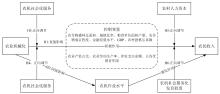
Fig. 1
Theoretical framework of the impact of agricultural mechanizationon farmers' income level
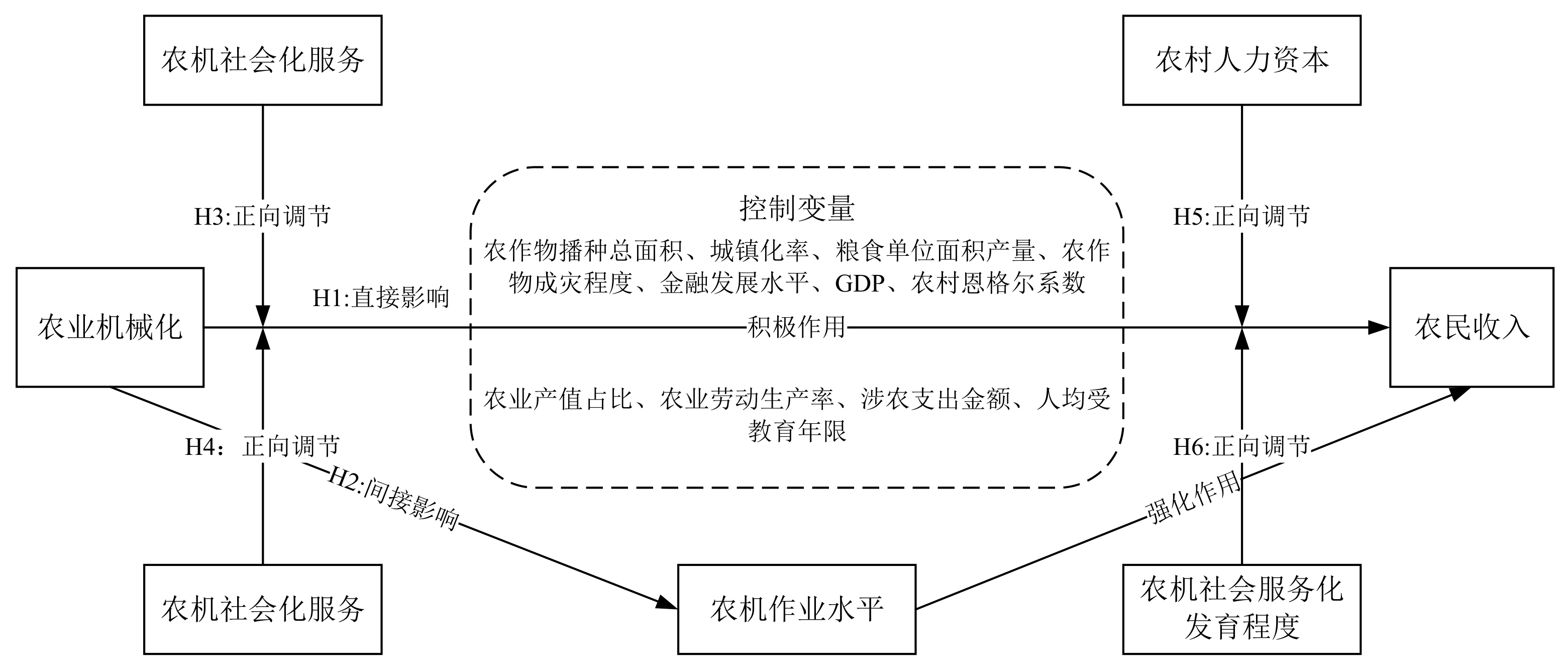
Table 1
Indicators and calculation of the comprehensive agricultural mechanization level
| 变量 | 指标 | 计算公式 | 权重 |
|---|---|---|---|
| 农业机械化综合水平 | 机械耕地水平 | 机械耕地水平=机耕面积/农作物播种总面积 (1) | 0.4 |
| 机械播种水平 | 机械播种水平=机播面积/农作物播种总面积 (2) | 0.3 | |
| 机械收获水平 | 机械收获水平=机收面积/农作物播种总面积 (3) | 0.3 |
Table 2
Evaluation index system construction of agricultural operation level
| 变量 | 指标 | 计算公式 | 权重 |
|---|---|---|---|
| 农机作业水平 | 有效灌溉率 | 有效灌溉率=有效灌溉面积/农作物播种总面积 (4) | 0.198 |
| 单位面积农机总动力 | 单位面积农机总动力=农业机械总动力/农作物播种总面积 (5) | 0.418 | |
| 单位面积化肥施用量 | 单位面积化肥施用量=化肥施用量/农作物播种总面积 (6) | 0.384 |
Table 3
Variable meaning and descriptive statistics of agricultural mechanization affecting farmers' income
| 变量类型 | 变量名称 | 变量说明 | 平均值 | 标准差 | 最小值 | 最大值 |
|---|---|---|---|---|---|---|
| 被解释变量 | 农民收入/亿元 | 农民人均可支配收入取对数 | 9.318 | 0.548 | 7.999 | 10.668 |
| 工资性收入 | 8.283 | 0.825 | 5.981 | 10.204 | ||
| 经营净收入 | 8.337 | 0.478 | 6.523 | 9.359 | ||
| 核心解释变量 | 农业机械化综合水平 | 见 | 0.556 | 0.204 | 0.039 | 1.052 |
| 控制变量 | 农作物播种总面积/千公顷 | 农作物播种面积取对数 | 8.092 | 1.222 | 4.483 | 9.635 |
| 城镇化率/% | 城镇常住人口占比 | 57.830 | 13.860 | 22.610 | 89.600 | |
| 粮食单位面积产量/(万吨/千公顷) | 粮食产量/粮食作物播种总面积 | 0.541 | 0.101 | 0.289 | 0.817 | |
| 农作物成灾程度/% | 农作物成灾面积/农作物播种总面积 | 0.099 | 0.115 | 0.000 | 0.691 | |
| 农业产值占比/% | 农业总产值/农林牧渔业总产值 | 0.522 | 0.084 | 0.301 | 0.734 | |
| 农业劳动生产率/(万元/人) | 第一产业增加值/第一产业就业人数 | 3.080 | 1.932 | 0.405 | 11.837 | |
| 涉农支出金额/亿元 | 地方财政农林水事务支出取对数 | 6.010 | 0.723 | 3.651 | 7.282 | |
| 人均受教育年限/年 | 6岁以上人口平均受教育年限 | 7.638 | 0.833 | 3.803 | 10.065 | |
| 农村恩格尔系数/% | 农村居民家庭食品消费支出/消费总支出 | 35.467 | 6.535 | 23.800 | 54.249 | |
| 金融发展水平/亿元 | 金融机构各项贷款金额取对数 | 9.983 | 1.106 | 5.390 | 12.511 | |
| 经济发展水平/亿元 | GDP取对数 | 9.653 | 1.063 | 5.986 | 11.818 | |
| 机制变量 | 农机作业水平 | 见 | 0.255 | 0.134 | 0.048 | 0.796 |
| 调节变量 | 农机社会服务/亿元 | 农林牧渔服务业产值 | 161.516 | 176.351 | 2.714 | 1 043.700 |
| 农业合作社密度 | 农业合作社数量/农作物播种总面积 | 12.396 | 11.613 | 0.181 | 84.584 | |
| 城乡收入差距 | 城乡居民人均收入差距取对数 | 9.762 | 0.390 | 8.904 | 10.845 | |
| 农机装备结构 | 大中型拖拉机/拖拉机总量 | 0.283 | 0.200 | 0.016 | 0.895 |
Table 4
Benchmark regression results: effects of the agricultural mechanization on farmers' income and its components
| 变量 | 农民人均可支配收入 | 工资性收入 | 经营净收入 |
|---|---|---|---|
| 农业机械化综合水平 | 0.175*** (0.066) | -0.368*** (0.118) | 0.595*** (0.073) |
| 控制变量 | 是 | 是 | 是 |
| 年份固定效应 | 是 | 是 | 是 |
| 个体固定效应 | 是 | 是 | 是 |
| 观测值 | 496 | 496 | 496 |
Table 5
Robustness test results of per capita disposable income of farmers (Part 1): winsorization and sample split ratio adjustments
| 变量 | 缩尾1% | 1∶2 | 1∶7 |
|---|---|---|---|
| 农业机械化综合水平 | 0.163** (0.066) | 0.645*** (0.078) | 0.581*** (0.071) |
| 控制变量 | 是 | 是 | 是 |
| 年份固定效应 | 是 | 是 | 是 |
| 个体固定效应 | 是 | 是 | 是 |
| 样本量/个 | 496 | 496 | 496 |
Table 6
Robustness test results of per capita disposable income of farmers (Part 2): excluding municipalities and replacing machine learning algorithms
| 变量 | 排除直辖市样本 | 随机森林 | 梯度提升 |
|---|---|---|---|
| 农业机械化综合水平 | 0.162** (0.072) | 0.177** (0.084) | 0.217*** (0.081) |
| 控制变量 | 是 | 是 | 是 |
| 年份固定效应 | 是 | 是 | 是 |
| 个体固定效应 | 是 | 是 | 是 |
| 样本量 | 432 | 496 | 496 |
Table 7
Endogenous test results of agricultural mechanization affecting farmers' income
| 变量 | 非农就业平均工资 |
|---|---|
| 农民人均可支配收入 | |
| 农业机械化综合水平 | 5.572** (2.348) |
| 控制变量 | 是 |
| 年份固定效应 | 是 |
| 个体固定效应 | 是 |
| 样本量 | 496 |
Table 8
Heterogeneity analysis results of per capita disposable income of farmers (Part 1): groupings by major grain-producing areas and terrain relief
| 变量 | 被解释变量:农民人均可支配收入 | |||
|---|---|---|---|---|
| 粮食主产区 | 非粮食主产区 | 地形起伏高 | 地形起伏低 | |
| 农业机械化综合水平 | -0.237** (0.114) | 0.217*** (0.088) | 0.199** (0.096) | -0.244** (0.106) |
| 控制变量 | 是 | 是 | 是 | 是 |
| 年份固定效应 | 是 | 是 | 是 | 是 |
| 个体固定效应 | 是 | 是 | 是 | 是 |
| 样本量 | 208 | 288 | 240 | 256 |
Table 9
Heterogeneity analysis results (Part 2): groupings by farmers' income levels
| 变量 | 高收入地区 | 中等收入地区 | 低收入地区 |
|---|---|---|---|
| 农业机械化综合水平 | 0.000 (0.127) | -0.088 (0.124) | 0.288** (0.132) |
| 控制变量 | 是 | 是 | 是 |
| 年份固定效应 | 是 | 是 | 是 |
| 个体固定效应 | 是 | 是 | 是 |
| 样本量 | 160 | 176 | 160 |
Table 10
Mechanisms of the impact of agricultural mechanization on farmers' income level
| 变量 | 农机作业水平 |
|---|---|
| 农业机械化综合水平 | 0.201*** (0.035) |
| 控制变量 | 是 |
| 年份固定效应 | 是 |
| 个体固定效应 | 是 |
| 样本量 | 496 |
Table 11
Interaction effects between moderating variables and comprehensive mechanization level
| 变量 | 农林牧渔服务业产值 | 农业合作社密度 | 规模农机占比 | 城乡收入差距 |
|---|---|---|---|---|
| 农民人均可支配收入 | 0.000 2*** (0.000) | 0.028*** (0.002) | 0.169** (0.077) | 0.022*** (0.007) |
| 控制变量 | 是 | 是 | 是 | 是 |
| 年份固定效应 | 是 | 是 | 是 | 是 |
| 个体固定效应 | 是 | 是 | 是 | 是 |
| 样本量 | 496 | 496 | 496 | 496 |
Table 12
Synergistic moderation effects of control variables on the income-enhancing effect of agricultural mechanization
| 变量 | 交互项检验结果 |
|---|---|
| 农业产值占比 | 0.121 |
| 劳动力生产率 | 0.058*** |
| 农作物播种面积 | 0.002 |
| 农作物成灾程度 | -1.488*** |
| 涉农支出金额 | 0.041*** |
| 城镇化率 | 0.001 |
| 粮食单位面积产量 | 0.475*** |
| 人均受教育年限 | 0.005 |
| 农村恩格尔系数 | 0.003* |
| 金融发展水平 | 0.021*** |
| GDP | 0.017*** |
| [1] |
赵春风. 农业现代化背景下农业机械化组织创新与发展研究[J]. 农业经济, 2023(8): 13-16.
|
| [2] |
刘桂英, 谢文军, 陈跃灵, 等. 农业机械化与农民收入——以经营规模与劳动力转移为调节变量[J]. 中国农机化学报, 2025, 46(6): 271-279.
|
|
|
|
| [3] |
钟甫宁, 陆五一, 徐志刚. 农村劳动力外出务工不利于粮食生产吗? ——对农户要素替代与种植结构调整行为及约束条件的解析[J]. 中国农村经济, 2016(7): 36-47.
|
| [4] |
唐林, 罗小锋, 张俊飚. 购买农业机械服务增加了农户收入吗——基于老龄化视角的检验[J]. 农业技术经济, 2021(1): 46-60.
|
|
|
|
| [5] |
姚成胜, 肖雅雯, 杨一单. 农业劳动力转移与农业机械化对中国粮食生产的关联影响分析[J]. 农业现代化研究, 2022, 43(2): 306-317.
|
|
|
|
| [6] |
蔡昉. 刘易斯转折点——中国经济发展阶段的标识性变化[J]. 经济研究, 2022, 57(1): 16-22.
|
| [7] |
何进, 李洪文, 陈海涛, 等. 保护性耕作技术与机具研究进展[J]. 农业机械学报, 2018, 49(4): 1-19.
|
|
|
|
| [8] |
罗锡文, 廖娟, 胡炼, 等. 提高农业机械化水平促进农业可持续发展[J]. 农业工程学报, 2016, 32(1): 1-11.
|
|
|
|
| [9] |
文长存, 孙玉竹, 魏昊, 等. 新形势下农户粮食规模经营行为及其影响因素研究——基于粮食主产区的调查数据[J]. 华中农业大学学报(社会科学版), 2017(3): 8-16.
|
|
|
|
| [10] |
彭超, 段晋苑, 马彪. 新农人发展质量及其影响因素研究[J]. 宏观质量研究, 2021, 9(4): 15-27.
|
|
|
|
| [11] |
刘桂英, 郝文茹, 朱振宏. 高标准农田建设能有效促进粮食安全与农民增收双目标实现吗[J]. 农业经济与管理, 2025(6): 31-44.
|
|
|
|
| [12] |
刘旭阳. 农业社会化服务如何影响小规模家庭农业——以农机服务业为例[J]. 临沂大学学报, 2024, 46(6): 69-82.
|
|
|
|
| [13] |
蔡永春.农业机械化对粮食生产效率的影响研究[J].农机市场,2026,(1):100-102.
|
| [14] |
吴昊, 赵丹. 农业现代化发展对城乡收入差距的影响及机制研究[J]. 税务与经济, 2025(5): 4-15.
|
|
|
|
| [15] |
李斯华, 刘辉, 董洁芳. 我国农业机械化高质量发展的内涵特征、影响因素和发展路径[J]. 中国农机化学报, 2025, 46(10): 1-7.
|
|
|
|
| [16] |
钱巍, 王永胜, 潘方卉. 农民合作社对农业机械化水平的影响研究——基于土地流转的调节效应[J]. 农林经济管理学报, 2022, 21(2): 178-187.
|
|
|
|
| [17] |
马玉婷, 叶初升. 共同富裕视域下农业机械化的城乡收入分配效应[J]. 南开经济研究, 2024(11): 195-211.
|
|
|
|
| [18] |
张林, 温涛, 刘渊博. 农村产业融合发展与农民收入增长: 理论机理与实证判定[J]. 西南大学学报(社会科学版), 2020, 46(5): 42-56, 191, 192.
|
|
|
|
| [19] |
桂俊练, 何筠, 钱晶晶, 等. 高标准农田建设政策对农民收入的影响及作用机制[J]. 中国生态农业学报(中英文), 2026, 34(6): 1363-1374.
|
|
|
|
| [20] |
程文明.农业保险对农业机械化综合水平的影响——基于2008—2017年省级面板数据的实证[J].技术经济与管理研究,2020,(9):82-86.
|
|
|
|
| [21] |
潘永正, 梅慧璇, 魏君英. 新型农业经营主体培育提升农民收入水平了吗? [J]. 农业现代化研究, 2026, 47(3): 757-768.
|
|
|
|
| [22] |
邓悦, 吴忠邦, 罗连发. 农业机械化促进了农民增收吗?——基于农村人力资本调节效应的分析[J]. 南京农业大学学报(社会科学版), 2023, 23(1): 169-180.
|
|
|
|
| [23] |
李爱. 有偏技术进步视角下农业要素综合禀赋与农民增收研究[J]. 北京联合大学学报(人文社会科学版), 2026, 24(1): 47-61.
|
|
|
|
| [24] |
王领, 苏洋, 余国新, 等.基于产业视角的西北地区生态产品价值实现对保护地农民共同富裕的效应研究[J/OL].中国农业资源与区划.(2026-04-10) [2026-06-02].
|
|
|
|
| [25] |
张成, 侯娜, 高宇萌, 等. 从“增量”到“提质”: 数字经济如何赋能农民收入质量提升?[J/OL]. 中国农业资源与区划, 2026-01-05.
|
|
|
|
| [26] |
|
| [27] |
戴浩, 于晨洋, 魏君英, 等. 农业社会化服务政策对培育新型农业经营主体的影响——基于双重机器学习的因果推断[J]. 农林经济管理学报, 2025, 24(5): 632-641.
|
|
|
|
| [28] |
张涛, 李均超. 网络基础设施、包容性绿色增长与地区差距——基于双重机器学习的因果推断[J]. 数量经济技术经济研究, 2023, 40(4): 113-135.
|
|
|
|
| [29] |
钱力, 金雨婷, 马草原. 数字新质生产力与农民增收:理论分析与经验证据[J]. 西南大学学报(社会科学版), 2024, 50(5): 15-30.
|
|
|
|
| [30] |
江艇. 因果推断经验研究中的中介效应与调节效应[J]. 中国工业经济, 2022(5): 100-120.
|
|
|
| [1] | ZHANG Xingshan, YANG Heng, MA Wenqiu, YANG Minli, WANG Haiyi, YOU Yong, HUI Yunting, GONG Zeqi, WANG Tianyi. Ecological Risk Assessment of Cultivated Land Based on Landscape Pattern: A Case Study of Tongnan District, Chongqing [J]. Smart Agriculture, 2024, 6(3): 58-68. |
| [2] | YANG Yinsheng, WEI Xin. The Development Logic, Influencing Factors and Realization Path for Low-Carbon Agricultural Mechanization [J]. Smart Agriculture, 2023, 5(4): 150-159. |
| Viewed | ||||||
|
Full text |
|
|||||
|
Abstract |
|
|||||