Smart Agriculture ›› 2026, Vol. 8 ›› Issue (3): 51-66.doi: 10.12133/j.smartag.SA202601001
• Special Issue--Digital Technologies Reshaping Agriculture and Agricultural Economics • Previous Articles Next Articles
YI Hongmei1, HE Xu1, ZHI Huayong1, HUANG Jikun1( ), CHEN Xi2
Received:2025-12-31
Online:2026-05-30
Foundation items:Project of Peking University Institute of Advanced Agricultural Sciences (Weifang, Shandong)
About author:YI Hongmei, E-mail: hmyi.ccap@pku.edu.cn
corresponding author:
CLC Number:
YI Hongmei, HE Xu, ZHI Huayong, HUANG Jikun, CHEN Xi. Adoption and Challenges of Digital and Intelligent Technologies in Agriculture: Evidence from Two Representative Household Surveys[J]. Smart Agriculture, 2026, 8(3): 51-66.
Add to citation manager EndNote|Ris|BibTeX
URL: https://www.smartag.net.cn/EN/10.12133/j.smartag.SA202601001
Table 1
Sample sizes and household weights of the nine-province survey
| 区域 | 省份 | 县(市)/个 | 乡(镇)/个 | 村/个 | 农户/个 | 户权重 |
|---|---|---|---|---|---|---|
| 合计 | 57 | 136 | 288 | 3 080 | — | |
| 东北 | 辽宁 | 5 | 10 | 10 | 200 | 1/1 800 |
| 华北 | 河北 | 5 | 10 | 10 | 200 | 1/1 800 |
| 山东 | 10 | 30 | 60 | 600 | 1/5 400 | |
| 华东 | 浙江 | 5 | 10 | 20 | 200 | 1/1 800 |
| 华中 | 湖北 | 5 | 10 | 20 | 200 | 1/1 800 |
| 江西 | 12 | 36 | 108 | 1 080 | 1/9 720 | |
| 华南 | 广东 | 5 | 10 | 20 | 200 | 1/1 800 |
| 西南 | 四川 | 5 | 10 | 20 | 200 | 1/1 800 |
| 西北 | 陕西 | 5 | 10 | 20 | 200 | 1/1 800 |
Table 2
Characteristics of primary agricultural decision-makers
| 特征 | 东北 | 华北 | 华东 | 华中 | 华南 | 西南 | 西北 | 合计 |
|---|---|---|---|---|---|---|---|---|
| 男性占比/% | 85 | 84 | 86 | 82 | 78 | 61 | 86 | 81 |
| 年龄/岁 | 63.43 | 61.28 | 67.22 | 63.15 | 62.58 | 59.36 | 60.42 | 62.25 |
| 受教育水平/年 | 8.60 | 7.84 | 6.51 | 7.47 | 7.47 | 7.10 | 8.37 | 7.65 |
| 样本数量 | 120 | 662 | 92 | 921 | 144 | 165 | 187 | 2 291 |
Table 3
Gender differences of primary agricultural decision-makers
| 特征 | 女 | 男 | P值 |
|---|---|---|---|
| 年龄/岁 | 59.73 | 62.82 | 0.001 |
| (10.20) | (10.01) | ||
| 受教育水平/年 | 6.82 | 7.81 | 0.001 |
| (5.97) | (4.24) | ||
| 样本数量 | 425 | 1 866 |
Table 4
Ratio of primary agricultural decision-makers who use smartphones
| 区域 | 合计 | 男 | 女 |
|---|---|---|---|
| 东北 | 80.8 | 78.4 | 94.4 |
| 华北 | 77.0 | 77.8 | 73.7 |
| 华东 | 55.4 | 58.2 | 38.5 |
| 华中 | 72.6 | 74.2 | 69.8 |
| 华南 | 75.7 | 72.3 | 87.5 |
| 西南 | 82.4 | 80.2 | 85.9 |
| 西北 | 82.9 | 84.4 | 74.1 |
| 全样本合计 | 76.3 | 76.3 | 76.6 |
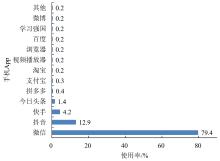
Fig. 1
Distribution of the frequently used smartphone apps among primary agricultural decision-makers
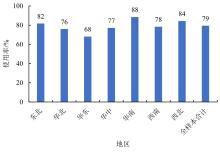
Fig. 2
Ratio of primary agricultural decision-makers using WeChat frequently in each region
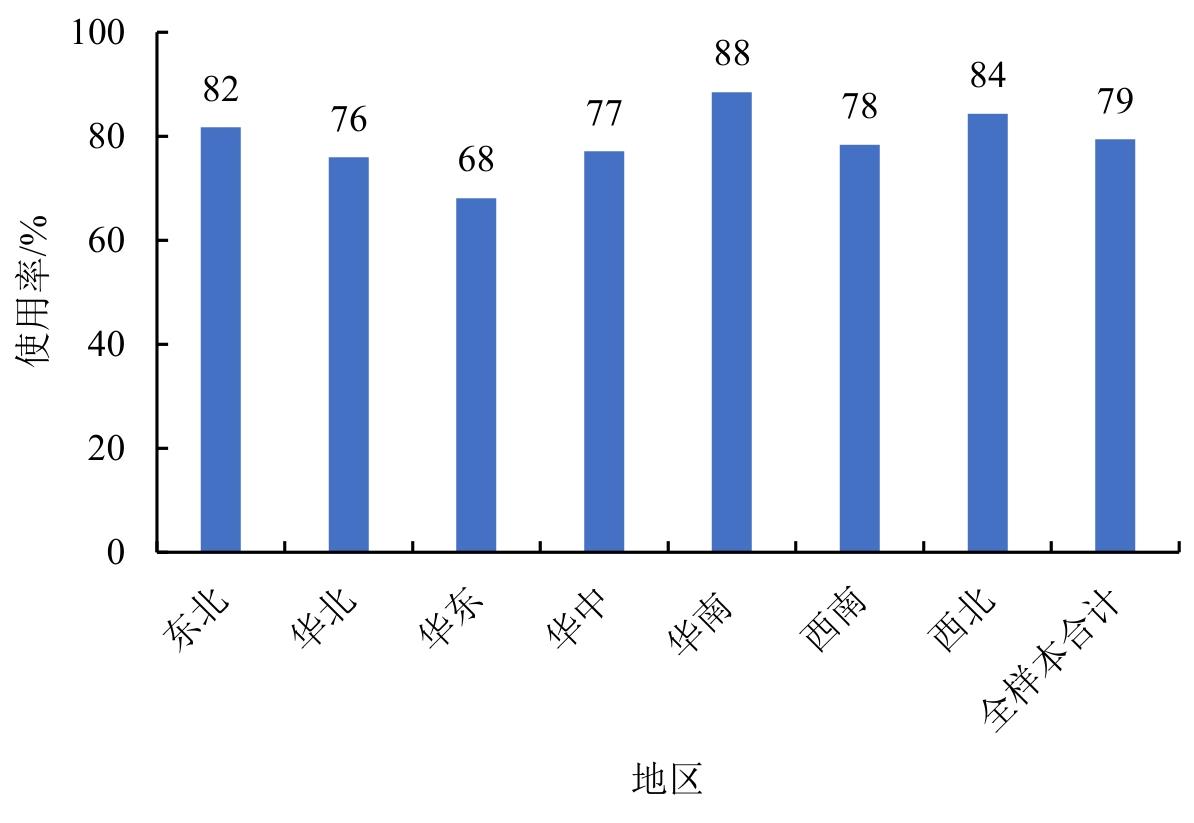
Table 5
Frequency of WeChat use among primary agricultural decision-makers in each region
| 区域 | 基本不用 | 偶尔使用 | 经常使用或每天都使用 | 合计 |
|---|---|---|---|---|
| 东北 | 1.2 | 19.3 | 79.5 | 100 |
| 华北 | 3.2 | 12.4 | 84.4 | 100 |
| 华东 | 4.9 | 19.5 | 75.6 | 100 |
| 华中 | 1.7 | 15.0 | 83.3 | 100 |
| 华南 | 5.0 | 11.0 | 84.0 | 100 |
| 西南 | 3.2 | 10.2 | 86.6 | 100 |
| 西北 | 1.3 | 3.4 | 95.3 | 100 |
| 全样本合计 | 2.6 | 11.9 | 85.5 | 100 |
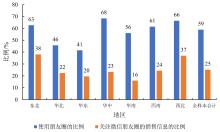
Fig. 3
Proportions of major agricultural decision-makers using WeChat in each region who browse Moments and pay attention to sales information posted on Moments
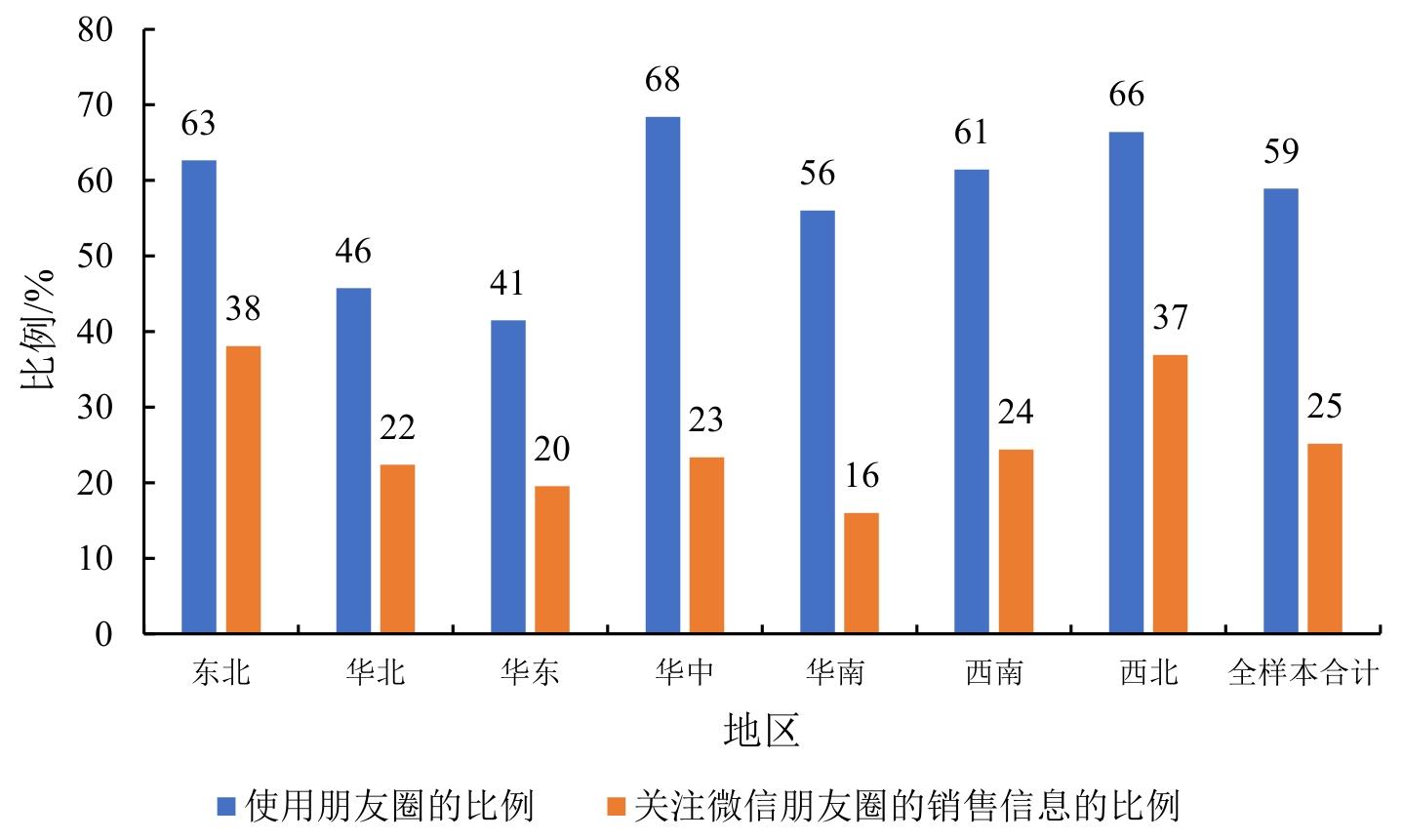
Table 6
Ratio of WeChat-using primary agricultural decision-makers who follow agriculture-related official accounts in each region
| 区域 | 基本不用 | 偶尔使用 | 经常使用 或每天都在使用 | 合计 |
|---|---|---|---|---|
| 东北 | 50.6 | 33.7 | 15.7 | 100 |
| 华北 | 64.6 | 23.2 | 12.2 | 100 |
| 华东 | 68.3 | 17.1 | 14.6 | 100 |
| 华中 | 67.7 | 21.5 | 10.8 | 100 |
| 华南 | 75.0 | 17.0 | 8.0 | 100 |
| 西南 | 77.0 | 15.8 | 7.2 | 100 |
| 西北 | 58.4 | 23.5 | 18.1 | 100 |
| 全样本合计 | 66.1 | 21.7 | 12.2 | 100 |
Table 7
Ratio of primary agricultural decision-makers who read agricultural policies on smartphones in each region
| 区域 | 基本不用 | 偶尔使用 | 经常使用 或每天都在使用 | 合计 |
|---|---|---|---|---|
| 东北 | 38.5 | 35.4 | 26.1 | 100 |
| 华北 | 53.7 | 26.7 | 19.6 | 100 |
| 华东 | 58.9 | 19.6 | 21.5 | 100 |
| 华中 | 56.0 | 28.5 | 15.5 | 100 |
| 华南 | 59.6 | 18.4 | 22.0 | 100 |
| 西南 | 58.8 | 28.7 | 12.5 | 100 |
| 西北 | 30.3 | 31.0 | 38.7 | 100 |
| 全样本合计 | 50.7 | 27.4 | 21.9 | 100 |
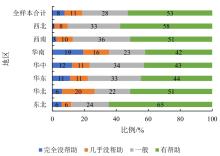
Fig. 4
Self-reported opinions on usefulness of accessing agricultural information via smartphones by primary agricultural decision-makers in each region
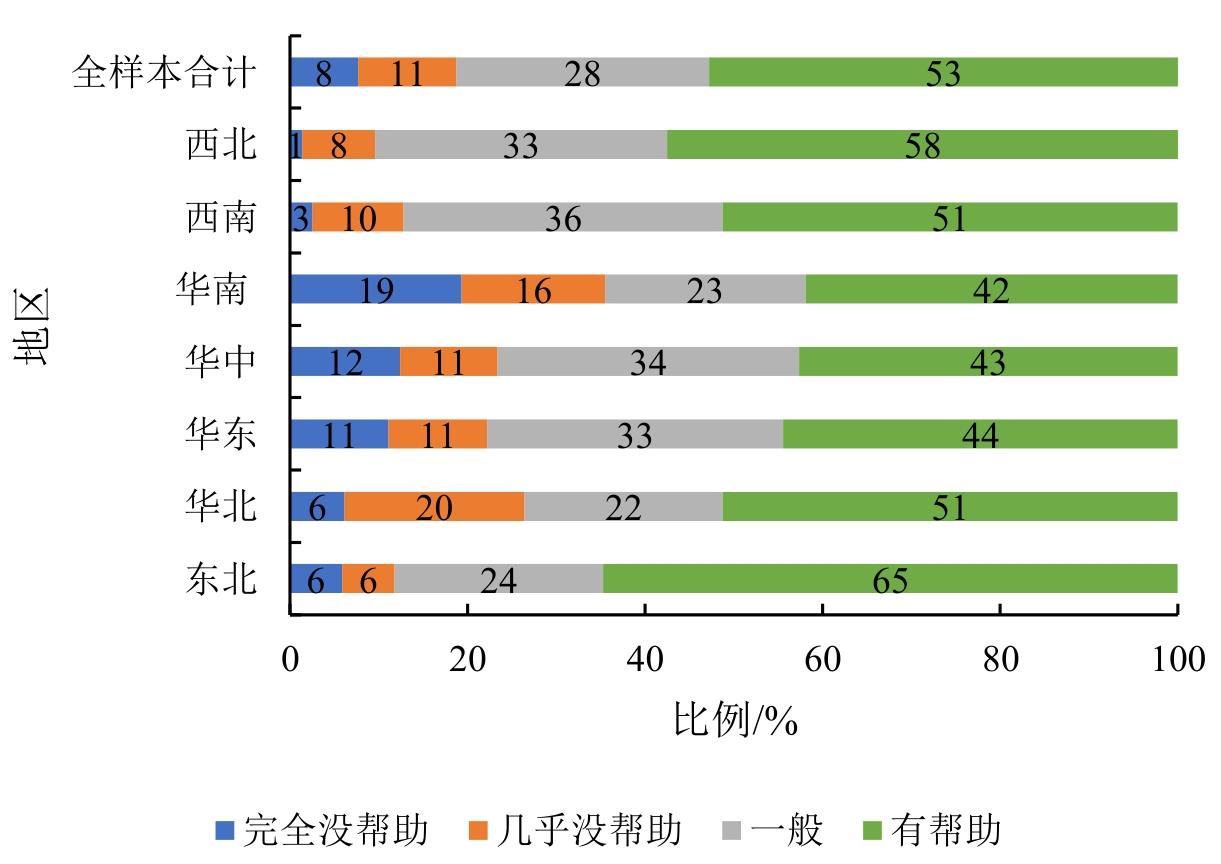
Table 8
E-commerce participation and online credit use in 2023 among selected households
| 区域 | 2023年进行过网购的农户占比/% | 2023年有网络销售活动的农户/% | 知道可以通过网络进行贷款的农户占比/% | 2022—2023年通过网络贷过款的农户占比/% | 其中1,2022—2023年网贷农户的网贷数量/笔 | 其中2,2022—2023年通过网络分期付款的网贷农户占比/% | |
|---|---|---|---|---|---|---|---|
| 农产品 | 其他商品 | ||||||
| 东北 | 40.0 | 0.5 | 0.0 | 29.5 | 2.0 | 1.0 | 5.0 |
| 华北 | 43.5 | 0.2 | 0.6 | 27.7 | 2.0 | 1.1 | 8.0 |
| 华东 | 50.5 | 0.0 | 0.0 | 13.0 | 2.0 | 2.0 | 7.0 |
| 华中 | 57.9 | 0.3 | 0.1 | 21.1 | 2.0 | 1.4 | 13.0 |
| 华南 | 51.5 | 1.5 | 0.0 | 23.8 | 1.9 | 1.7 | 14.0 |
| 西南 | 57.0 | 0.0 | 0.0 | 29.5 | 2.0 | 1.0 | 9.5 |
| 西北 | 66.3 | 0.0 | 0 | 49.5 | 1.9 | 1.8 | 15.0 |
| 全样本合计 | 52.0 | 0.3 | 0.2 | 27.0 | 2.0 | 1.5 | 10.0 |
Fig. 5
Distribution of online loan transactions across credit channels
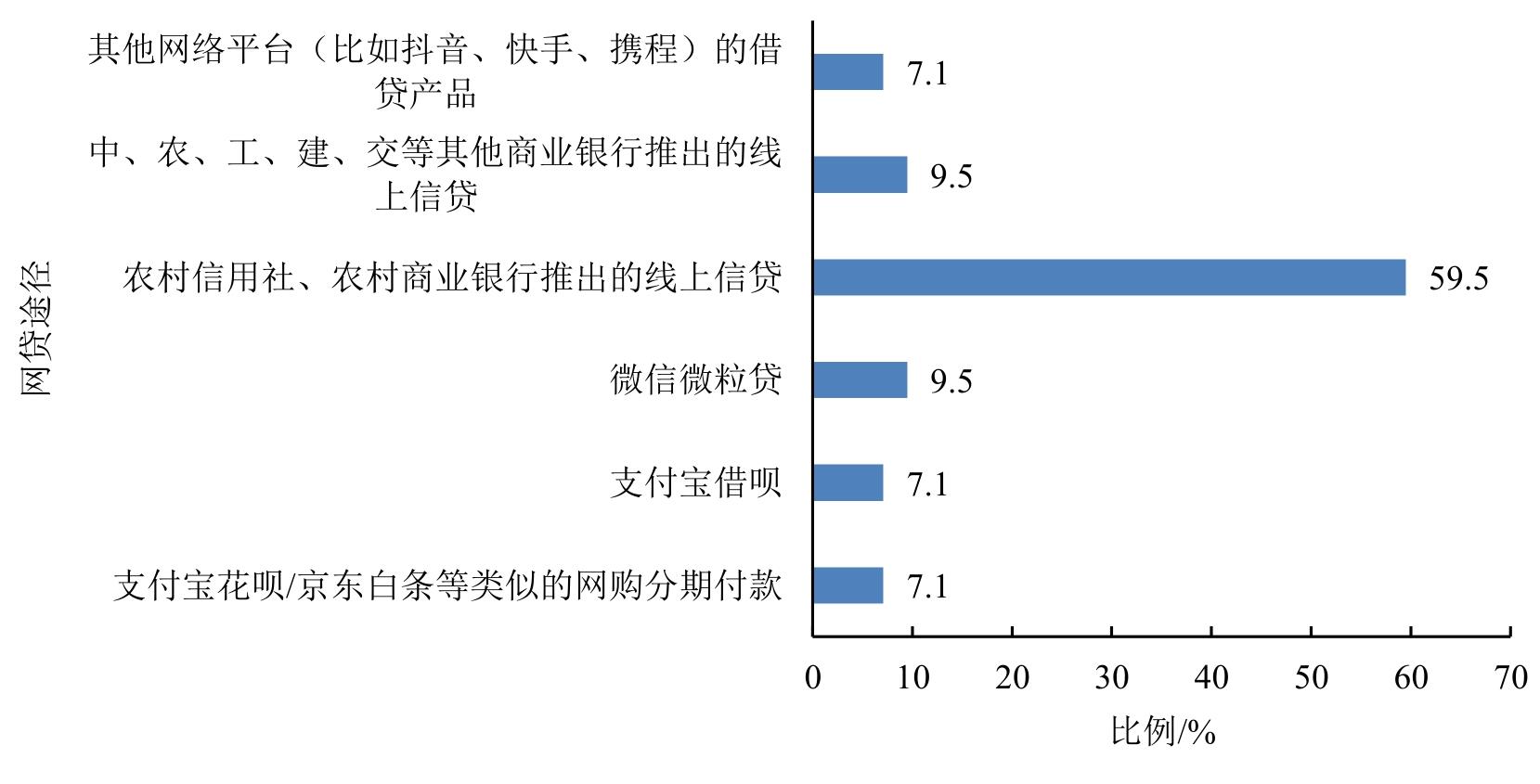
Fig. 6
Ratio of households using drones for pesticide application in each region
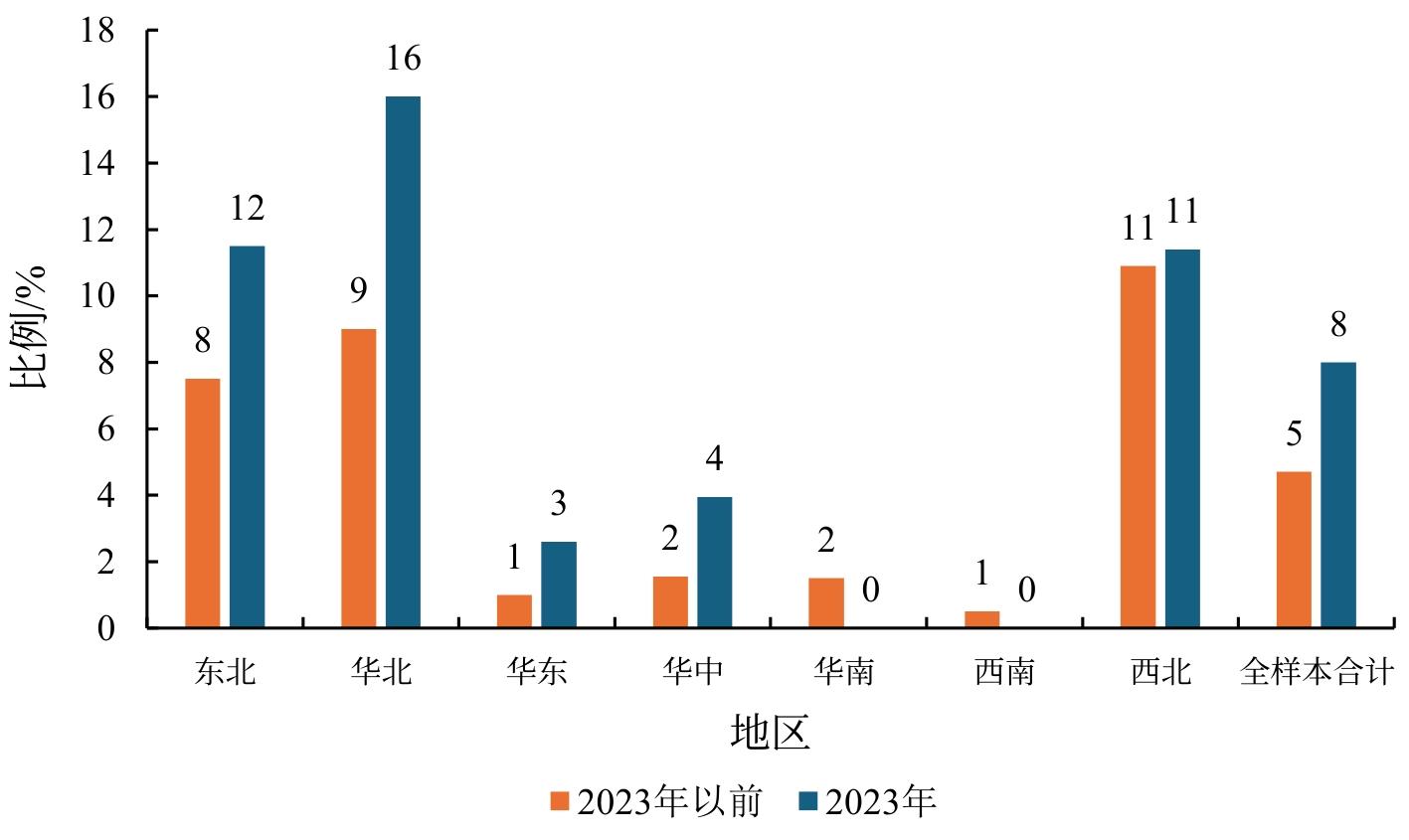
Fig. 7
Share of households using drones for herbicide, fertilizer, and sowing in 2023 in each region
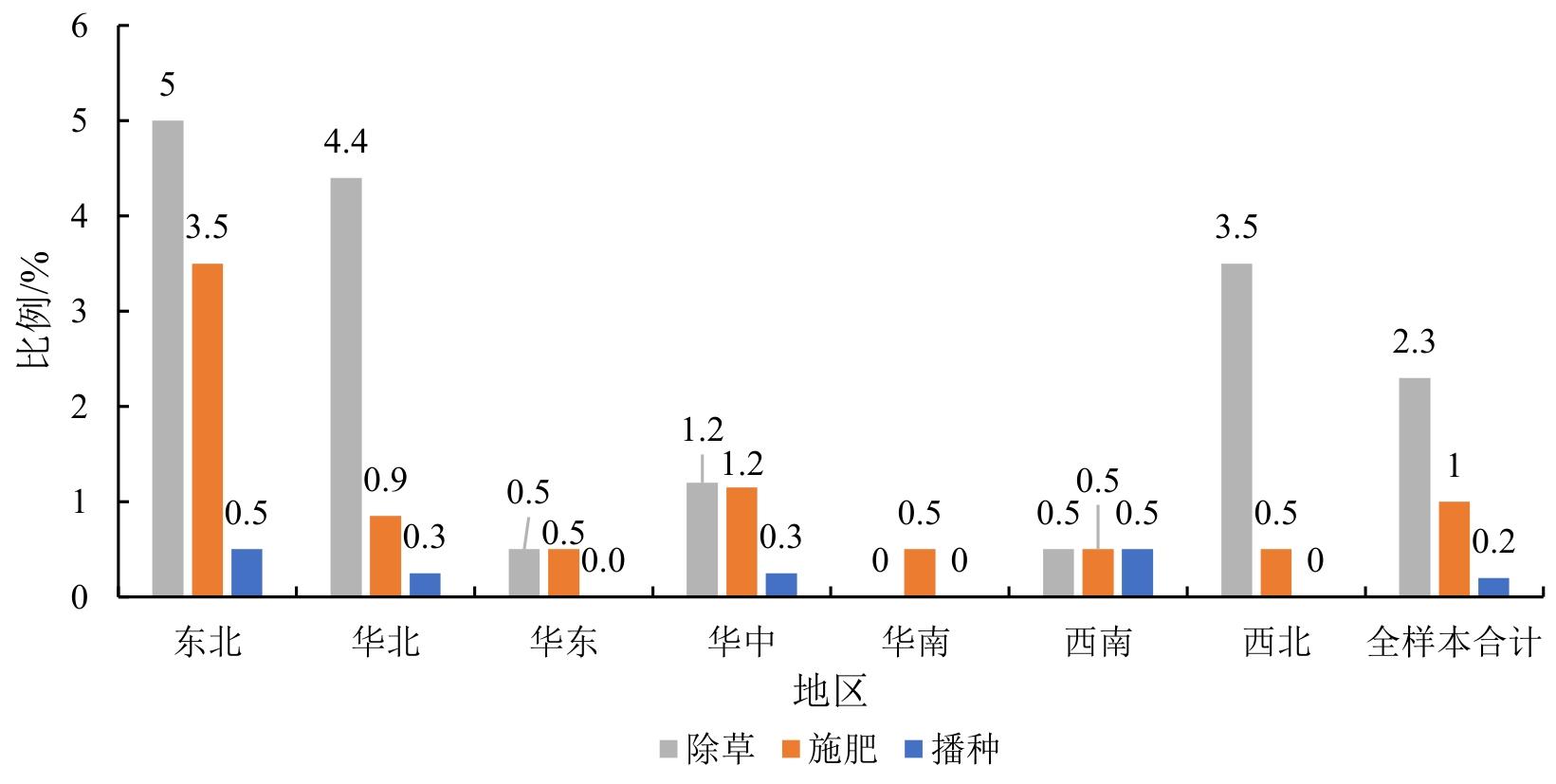
Table 9
Application status of drones in major grain-producing regions
| 无人机使用途径 | 大规模户/% | 小规模户/% | 全样本 (未加权)/% | 全样本 (按照户数占比加权)/% | 全样本 (按面积占比加权)/% |
|---|---|---|---|---|---|
| 自家是否有植保无人机 | 5 | 0 | 2.5 | 0.3 | 3.9 |
| (22) | (0) | ||||
| 使用植保无人机社会化服务 | 42 | 12 | 26 | 13.6 | 35.4 |
| (49) | (32) | ||||
| 样本数量 | 320 | 328 | 648 | 648 | 648 |
Table 10
Application status of BeiDou navigation systems in major grain-producing regions
| 北斗导航技术的使用途径 | 大规模户/% | 小规模户/% | 全样本(未加权)/% | 全样本(按照户数占比加权)/% | 全样本(按面积占比加权)/% |
|---|---|---|---|---|---|
| 自家是否有农机 | 82 | 41 | 61.5 | 43.2 | 73.0 |
| (39) | (0.49) | ||||
| 自家农机是否装北斗导航(仅限自家有农机的户) | 16 | 0 | 0.08 | 0.8 | 12.5 |
| (37) | (0) | ||||
| 耕种收环节是否使用农机社会化服务 | 76 | 79 | 77.5 | 78.8 | 76.7 |
| (43) | (41) | ||||
| 耕地环节使用的社会化服务提供的农机是否装北斗导航 | 33 | 18 | 25.5 | 18.8 | 29.7 |
| (47) | (39) | ||||
| 播种环节使用的社会化服务提供的农机是否装北斗导航 | 30 | 17 | 22.4 | 17.7 | 19.9 |
| (46) | (38) | ||||
| 收获环节使用的社会化服务提供的农机是否装北斗导航 | 27 | 26 | 26.5 | 26.1 | 26.8 |
| (44) | (44) | ||||
| 样本数量 | 320 | 328 | 648 | 648 | 648 |
| [1] |
|
| [2] |
周亚虹, 邱子迅, 姜帅帅, 等. 数字经济发展与农村共同富裕: 电子商务与数字金融协同视角[J]. 经济研究, 2024, 59(7): 54-71.
|
|
|
|
| [3] |
阮荣平, 周佩, 郑风田. “互联网+”背景下的新型农业经营主体信息化发展状况及对策建议——基于全国1 394个新型农业经营主体调查数据[J]. 管理世界, 2017(7): 50-64.
|
| [4] |
胡雯, 黄季焜, 陈富桥, 等. 基于区块链技术的农产品质量安全追溯体系: 实践、挑战与建议[J]. 农业经济问题, 2024(5): 33-47.
|
|
|
|
| [5] |
|
| [6] |
李家辉, 李晗, 牛永泽, 等. 2025. 精准农业技术对农户生产效率和家庭收入的协同影响及机制[J]. 资源科学, 2025, 47(11): 2466-2479.
|
|
|
|
| [7] |
黄季焜, 苏岚岚, 王悦. 数字技术促进农业农村发展: 机遇、挑战和推进思路[J]. 中国农村经济, 2024(1): 21-40.
|
|
|
|
| [8] |
夏显力, 陈哲, 张慧利, 等. 农业高质量发展: 数字赋能与实现路径[J]. 中国农村经济, 2019(12): 2-15.
|
|
|
|
| [9] |
刘金晶, 刘灵芝. 合作经营如何促进养殖户数字技术采纳——以鸭RFID脚环、翅标为例[J]. 农业技术经济, 2024(12): 46-67.
|
|
|
|
| [10] |
苏岚岚, 张航宇, 彭艳玲. 农民数字素养驱动数字乡村发展的机理研究[J]. 电子政务, 2021(10): 42-56.
|
| [11] |
黄季焜. 数字技术如何促进乡村振兴——兼谈农村数字金融[J]. 农村金融研究, 2023(12): 3-10.
|
|
|
|
| [12] |
|
| [13] |
杨志海. 老龄化、社会网络与农户绿色生产技术采纳行为——来自长江流域六省农户数据的验证[J]. 中国农村观察, 2018(4): 44-58.
|
|
|
|
| [14] |
|
| [15] |
|
| [16] |
|
| [17] |
|
| [18] |
|
| [19] |
|
| [20] |
罗必良. 论服务规模经营——从纵向分工到横向分工及连片专业化[J]. 中国农村经济, 2017(11): 2-16.
|
|
|
|
| [21] |
FAO. Leveraging automation and digitalization for precision agriculture: Evidence from the case studies[M]. Rome, Italy: FAO, 2022.
|
| [22] |
|
| [23] |
|
| [24] |
|
| [25] |
姜维军, 颜廷武, 张俊飚. 互联网使用能否促进农户主动采纳秸秆还田技术——基于内生转换Probit模型的实证分析[J]. 农业技术经济, 2021(3): 50-62.
|
|
|
|
| [26] |
|
| [27] |
银西阳, 余茜, 苏秦, 等. 互联网嵌入对农户化学农药减量使用的影响——基于PSM模型的计量分析[J]. 中国农业资源与区划, 2023, 44(2): 68-76.
|
|
|
|
| [28] |
|
| [29] |
李欠男, 李谷成. 互联网发展对农业全要素生产率增长的影响[J]. 华中农业大学学报(社会科学版), 2020(4): 71-78, 177.
|
|
|
|
| [30] |
唐文苏, 翁贞林, 鄢朝辉. 信息获取、风险偏好与技术密集型农机社会化服务——基于江西省水稻规模经营户的调研[J]. 中国农业大学学报, 2022, 27(4): 270-280.
|
|
|
|
| [31] |
陈昕, 胡友, 祁春节. 互联网使用对农户农业生产性服务采纳的影响——基于CFPS的微观证据[J]. 湖南农业大学学报(社会科学版), 2021, 22(6): 1-10, 20.
|
|
|
|
| [32] |
|
| [33] |
|
| [34] |
方福前, 田鸽. 数字经济促进了包容性增长吗——基于“宽带中国”的准自然实验[J]. 学术界, 2021(10): 55-74.
|
| [35] |
苏岚岚, 彭艳玲. 农民数字素养、乡村精英身份与乡村数字治理参与[J]. 农业技术经济, 2022(1): 34-50.
|
|
|
|
| [36] |
|
| [37] |
|
| [38] |
张诚, 翁希演. 电子商务进农村综合示范政策实施缩小了农户消费差距吗[J]. 中国农村观察, 2024(2): 46-68.
|
|
|
|
| [39] |
|
| [40] |
|
| [41] |
邵占鹏. 规则与资本的逻辑: 淘宝村中农民网店的型塑机制[J]. 西北农林科技大学学报(社会科学版), 2017, 17(4): 74-82.
|
|
|
|
| [42] |
孔祥智, 方松海, 庞晓鹏, 等. 西部地区农户禀赋对农业技术采纳的影响分析[J]. 经济研究, 2004, 39(12): 85-95, 122.
|
|
|
|
| [43] |
张益丰. 生鲜果品电商销售、农户参与意愿及合作社嵌入——来自烟台大樱桃产区农户的调研数据[J]. 南京农业大学学报(社会科学版), 2016, 16(1): 49-58, 163-164.
|
|
|
|
| [44] |
曾亿武, 陈永富, 郭红东. 先前经验、社会资本与农户电商采纳行为[J]. 农业技术经济, 2019(3): 38-48.
|
|
|
|
| [45] |
|
| [46] |
鲁钊阳. 政府扶持农产品电商发展政策的有效性研究[J]. 中国软科学, 2018(5): 56-78.
|
|
|
|
| [47] |
闫桂权, 何玉成, 张晓恒. 数字普惠金融发展能否促进农业机械化——基于农机作业服务市场发展的视角[J]. 农业技术经济, 2022(1): 51-64.
|
|
|
|
| [48] |
李家辉, 陆迁. 数字金融对农户采用绿色生产技术的影响[J]. 资源科学, 2022, 44(12): 2470-2486.
|
|
|
|
| [49] |
何雄奎. 中国精准施药技术和装备研究现状及发展建议[J]. 智慧农业(中英文), 2020, 2(1): 133-146.
|
|
|
|
| [50] |
BankWorld. World development indicators 2017[M]. Washington, DC: World Bank, 2017.
|
| [51] |
马英剑, 徐勇, 孙利, 等. 我国航空植保的发展现状及展望[J]. 农药, 2022, 61(7): 469-477.
|
|
|
|
| [52] |
|
| [53] |
岳德成, 姜延军, 李青梅, 等. 植保无人机喷施对玉米田土壤处理除草剂的减量效应[J]. 植物保护, 2019, 45(2): 193-198.
|
|
|
|
| [54] |
欧阳安, 崔涛, 林立. 智能农机装备产业现状及发展建议[J]. 科技导报, 2022, 40(11): 55-66.
|
|
|
|
| [55] |
张智刚, 殷珍, 吴潇, 等. 农业机械自动导航技术研究进展[J]. 农业工程学报, 2025, 41(23): 1-13.
|
|
|
|
| [56] |
|
| [57] |
|
| [58] |
杨涛, 李晓晓. 农机自动驾驶系统研究进展与行业竞争环境分析[J]. 中国农机化学报, 2021, 42(11): 222-231.
|
|
|
|
| [59] |
刘慧. 春耕生产迈向智能化 构建“天空地”一体化网络[N]. 经济日报, 2022-04-06.
|
| [1] | HUI Liwei, CAI Hailong, YI Hongmei. How Is Smart Agricultural Machinery Adopted by Farmers? Micro-Evidence from Beidou Navigation Tractors [J]. Smart Agriculture, 2026, 8(3): 85-98. |
| Viewed | ||||||
|
Full text |
|
|||||
|
Abstract |
|
|||||