• •
魏道初1,2( ), 王志翀1, 李学成1, 王景巍1, 周孟创1, 翟长远1,2(), 邹伟1()
收稿日期:2026-04-18
出版日期:2026-07-07
基金项目:作者简介:魏道初,硕士,研究方向为智能化装备研发。E-mail:weidaochu2012@163.com
WEI Daochu, E-mail: weidaochu2012@163.com
通信作者:
WEI Daochu1,2(), WANG Zhichong1, LI Xuecheng1, WANG Jingwei1, ZHOU Mengchuang1, ZHAI Changyuan1,2(), ZOU Wei1()
Received:2026-04-18
Online:2026-07-07
Foundation items:National Key Research and Development Program of China(2022YFD2001402); China Agriculture Research System of the Ministry of Finance and the Ministry of Agriculture and Rural Affairs(CARS-30-4-01); Platform Construction and Capacity Enhancement of the Peach Industry Technology Research Institute(CYJS202601)
Corresponding author:摘要:
【目的/意义】 果园施肥作业是保障果树养分供给和提升果园生产效益的重要环节,开沟施肥机械是实现果园施肥机械化与精准化的关键装备。受果园地形起伏、作业空间受限、根系分布隐蔽及农艺需求多样等因素影响,现有果园开沟施肥机械在环境适应性、作业稳定性、施肥精度和智能化水平等方面仍存在不足。为明确该领域关键技术的发展现状与趋势,围绕果园开沟施肥机械开展综述。 【进展】 综述了果园施肥工艺特点及其对装备作业方式的要求,整理了开沟机构、排肥机构及整机结构形式的研究进展,同时分析不同技术方案的适用性与局限性。从系统角度总结了果园开沟施肥作业在开沟深度感知控制、变量施肥以及施肥量调控等方面的智能化研究进展,阐明了果园施肥装备由机械化向信息感知与闭环控制方向发展的技术趋势。 【结论/展望】 针对当前果园开沟施肥机械在复杂环境适应性、多参数协同控制及系统集成等方面面临的主要瓶颈,提出了面向智慧果园的果园施肥装备发展方向,为果园开沟施肥装备的结构优化与智能化设计提供参考。
中图分类号:
魏道初, 王志翀, 李学成, 王景巍, 周孟创, 翟长远, 邹伟. 果园开沟施肥装备关键技术研究进展与智能化发展趋势[J]. 智慧农业(中英文), doi: 10.12133/j.smartag.SA202604028.
WEI Daochu, WANG Zhichong, LI Xuecheng, WANG Jingwei, ZHOU Mengchuang, ZHAI Changyuan, ZOU Wei. Research Progress on Key Technologies and Intelligent Development Trends of Orchard Trenching and Fertilization Equipment[J]. Smart Agriculture, doi: 10.12133/j.smartag.SA202604028.
表1
各类施肥方式的优缺点及应用场景
| 施肥方式 | 主要优点 | 主要缺点 | 应用场景 |
|---|---|---|---|
| 环状沟施[ | 与根系分布匹配度高、施肥均匀、适合根系外围促生新根 | 沟位规划与回转空间要求较高;行间狭窄时机动性受限 | 成年果树基肥和追肥 |
| 条沟施[ | 通过性好、作业效率高、路径规划简单 | 对单株定点性较弱,易受行间障碍影响 | 密植果园、规模化基地快速追肥 |
| 放射沟施[ | 兼顾不同根向,保护主根系 | 对转弯半径与沟间距要求高;不利于超密植 | 树体间距较大、行间较宽的果园 |
| 穴施[ | 定量与深度可精确控制,便于幼树定向供肥 | 劳动强度大、效率低,小机具效率受限 | 幼树或定植初期、补救性施肥 |
| 滴灌施肥(水肥一体化)[ | 水肥同步、利用率高、便于传感与自动控制联动 | 初期投资与维护成本高,维护要求高 | 设施园、矮化密植、旱区节水 |
| 地表撒施[ | 作业效率极高、成本低 | 肥效易受蒸发径流与反硝化影响,利用率偏低 | 平地、低成本大面积快速追施 |
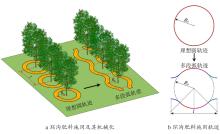
图1
环沟肥料施用方法及其机械化作业轨迹示意图[19]
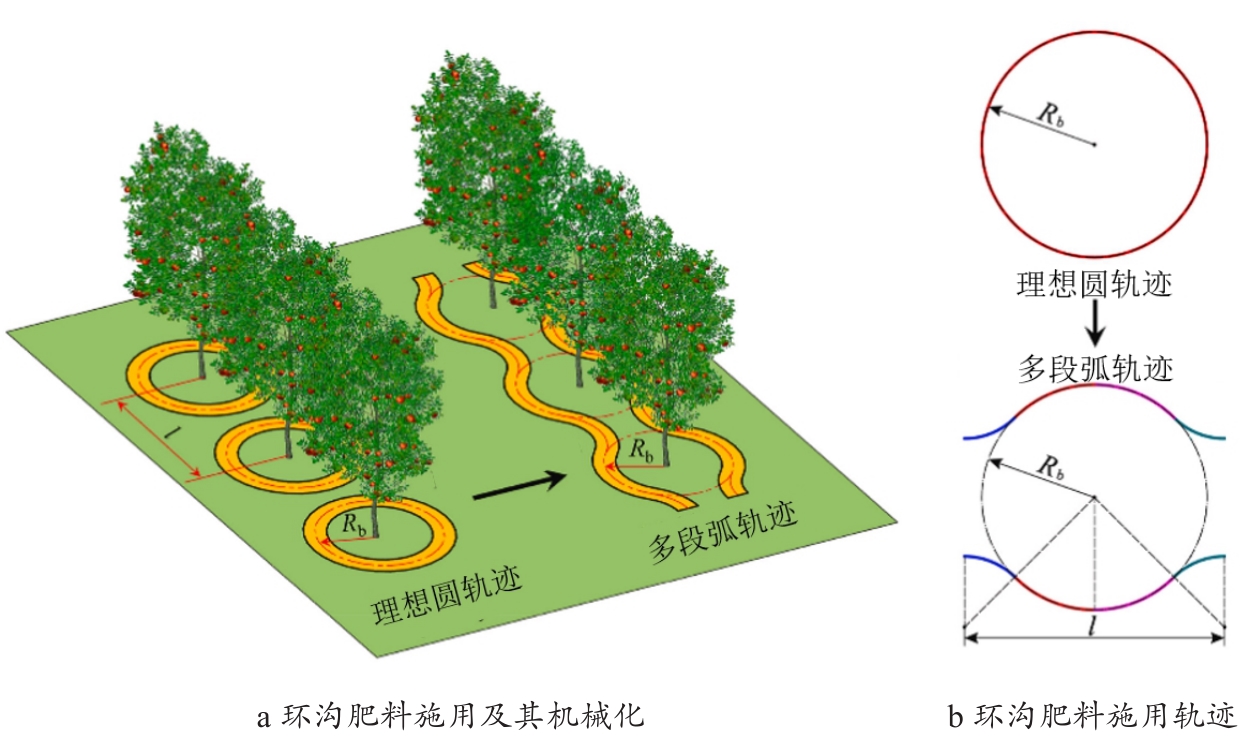
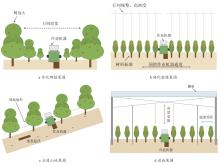
图2
不同果园类型与行间作业条件示意图
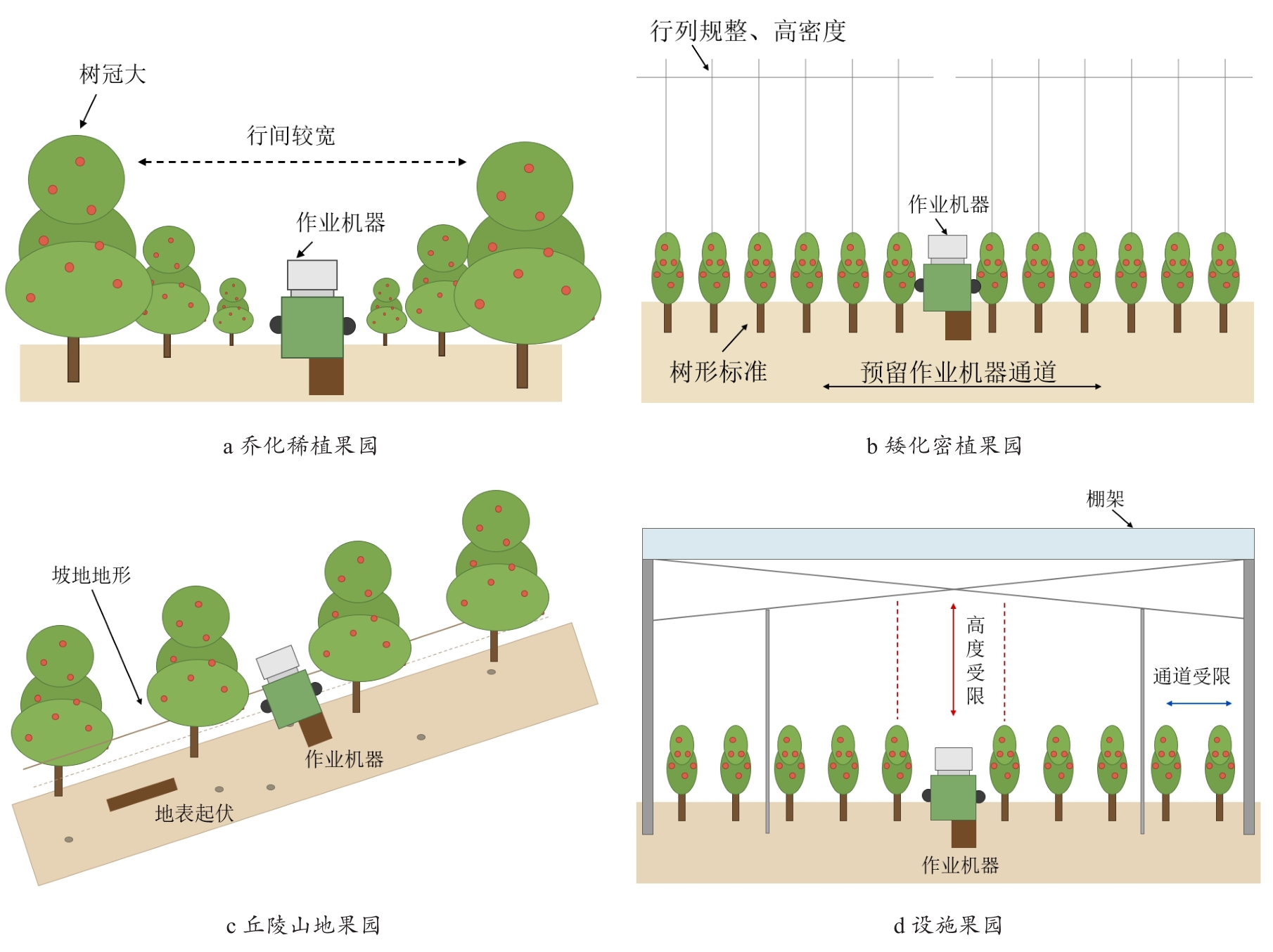
表2
不同果园类型下开沟施肥参数与装备配置需求
| 果园类型 | 空间特征 | 适宜施肥方式 | 开沟施肥参数要求 | 适宜装备形式 | 关键控制要求 |
|---|---|---|---|---|---|
| 矮化密植果园[ | 株距相对较小,树形规整,行列标准化程度较高,根系分布较集中 | 行侧条沟施肥、近根区定向施肥、滴灌施肥 | 宜采用中浅沟、窄沟作业;施肥位置应靠近有效根区并避开主根及设施管线 | 小型自走式、窄体履带式、电动或液压驱动机型 | 行间稳定通行、沟位精确控制、施肥位置精准控制 |
| 乔化稀植/成年果园[ | 树冠大,根系分布范围广,行间空间相对宽裕 | 环状沟施肥、放射沟施肥、行侧条沟施肥 | 可采用中深沟作业;更强调开沟深度、施肥量和连续作业效率;施肥位置多布置在树冠投影边缘或根系外围吸收区 | 拖拉机配套式、悬挂式、偏置式开沟施肥机 | 沟深稳定、肥箱容量匹配、作业效率提升 |
| 丘陵山地/复杂地形果园[ | 地形起伏大,坡度变化明显,附着条件差,行间道路不规则 | 局部定向施肥、有机肥深施 | 开沟深度需具备较宽调节范围;沟深和沟形易受坡度、滑移和机具姿态影响 | 履带自走式、遥控式、低重心开沟施肥机 | 坡地稳定、仿形控制、抗滑移、作业安全 |
| 设施果园/避雨棚果园[ | 棚下通道受限、环境敏感 | 浅中沟施肥、滴灌施肥、小型定向施肥 | 开沟深度和宽度不宜过大;要求低扰动、低噪声和小型化 | 小型电动式、轻量化自走式、模块化施肥装备 | 小型化、低噪低排、低扰动作业 |
| 标准化/智慧果园[ | 行株距规整,作业路径相对明确,便于传感器和控制系统布置 | 根区定向施肥、变量施肥、处方图施肥 | 开沟深度、施肥量和作业速度需协同匹配;施肥位置可依据树体位置、冠层信息或处方图动态调整 | 自动导航式、变量施肥式、多功能一体化装备 | 路径跟踪、变量调控、施肥量闭环控制 |
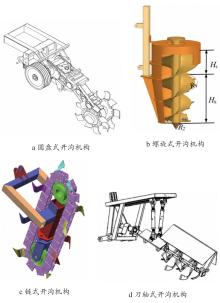
图3
果园开沟机构类型与结构示意图[11, 31-33]
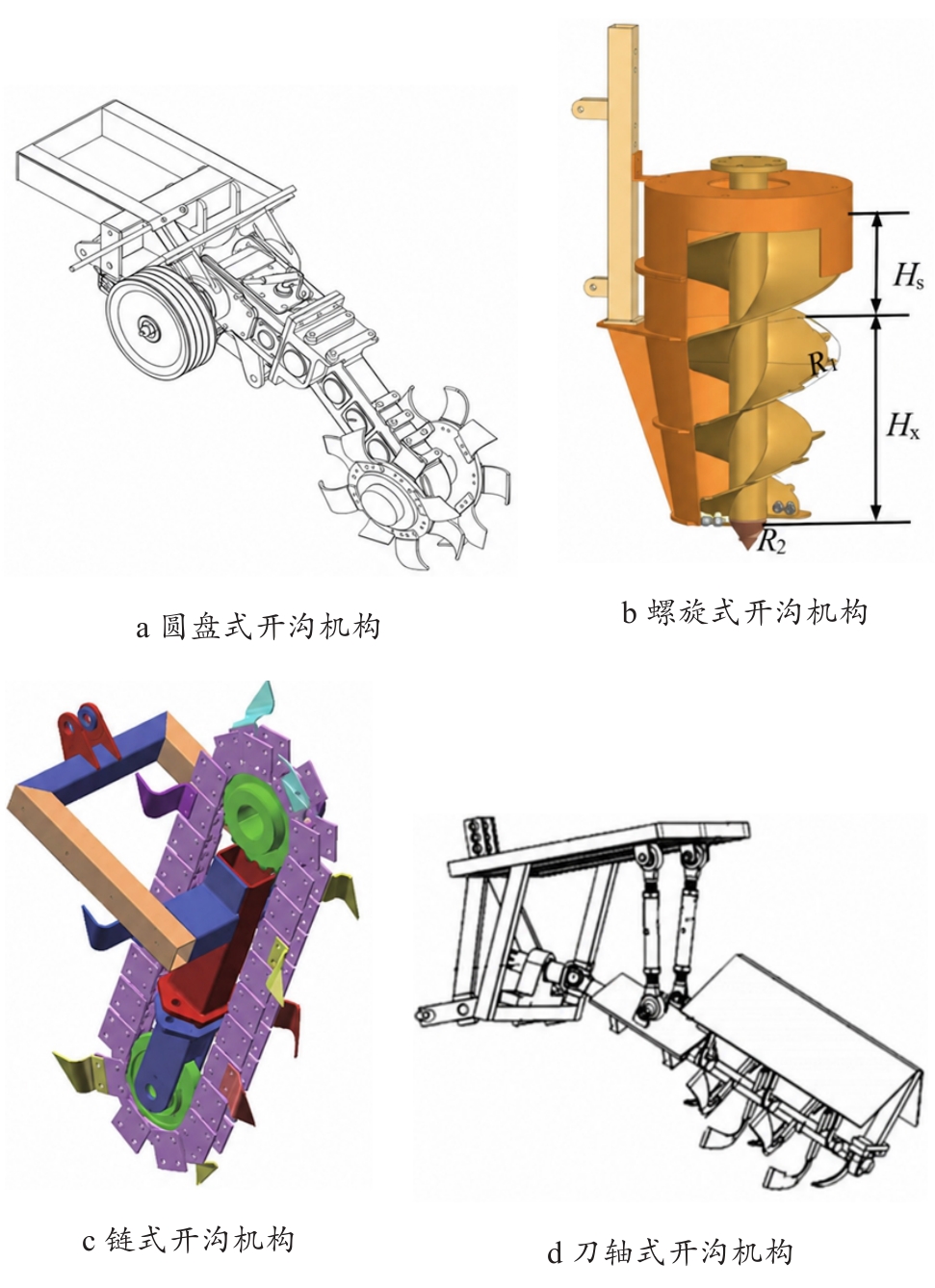
表3
不同类型果园开沟机构性能对比分析
| 类型 | 优点 | 缺点 | 应用场景 |
|---|---|---|---|
| 圆盘式开沟机构[ | 结构紧凑,刀盘受力均匀;抛土能力强,沟形较规整 | 开沟深度受刀盘直径和安装角度限制 | 平地或缓坡矮砧密植果园的基肥、追肥沟施作业;土壤中等硬度、有杂草或残膜覆盖的行间施肥 |
| 螺旋式开沟机构[ | 连续切土、碎土和输土,沟壁整齐、沟底平整;深度稳定性好 | 结构相对复杂,加工成本高;功耗较大,对传动系统和动力储备要求高 | 坡地或起伏地形果园的深施作业;需要深窄沟、深松改土以及有机肥混拌施入的树盘、树行施肥 |
| 链式开沟机构[ | 开沟效率高,能形成较深且宽度可控的窄沟;沟形整齐、不易回土 | 链条和刀齿磨损快,维护保养工作量大;高负荷下振动和噪声较大 | 树行深窄沟施肥、主干道两侧基础沟开沟等需要深窄沟的作业 |
| 旋耕/刀轴式开沟机构[ | 切土、碎土能力强,可同时完成深松、碎土和部分混拌;对板结土层破碎效果好,有利于改善根系生长环境 | 功耗最高,对动力匹配和结构强度要求高;对土壤扰动大,易伤根、破坏土壤结构 | 土壤板结或有犁底层的果园基肥深施;老果园更新改造、深松配合有机肥深施;对碎土细度和混拌效果要求较高的施肥作业 |
表4
果园开沟施肥机排肥机构类型及适用性比较
| 类型 | 适用肥料 | 主要优点 | 主要缺点 |
|---|---|---|---|
| 星轮/沟轮式排肥器[ | 颗粒肥、流动性较好的粉状肥 | 结构简单、成本低;体积计量较准确,排肥量稳定;易与小型施肥机配套 | 对粒径差异大或含水率高、易结块肥料易架桥、填充不满 |
| 螺旋式排肥器[ | 颗粒肥、部分粉状肥及流动性较好的混配肥 | 输送距离较长,可兼顾输送与计量;排肥连续、脉动较小 | 对肥料流动性敏感,含水率高、黏性大的肥料易在螺旋间黏附或堵塞 |
| 离心式排肥器[ | 流动性较好颗粒肥 | 改善肥料充填条件,减轻架桥;多腔等量排肥,计量精度高、均匀性好 | 结构相对复杂,加工精度要求高;对肥料粒径和流动性有一定要求 |
| 刮板输送式排肥装置[ | 高含水率、大块有机肥 | 克服有机肥黏性和架桥性,能实现大流量、大剂量供料;与破碎辊、螺旋排肥器组合后排肥更稳定 | 结构相对庞大,对整机尺寸和重量影响较大;刮板与箱体磨损较快,维护工作量较大 |
| 组合式排肥系统(刮板+破碎辊+螺旋排肥)[ | 高含水率有机肥及有机-无机混合肥 | 适应肥料种类多;与液压/电机驱动易于实现转速调节和变量施肥 | 结构复杂、成本较高,对动力匹配和整机布置要求高;维护点多,长期使用需定期清理与保养 |
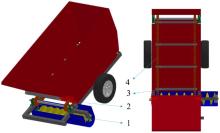
图4
一种典型组合式排肥与防架桥结构示意图 注:1. 螺旋输送机;2. 机架;3. 刮板链;4. 刮板。
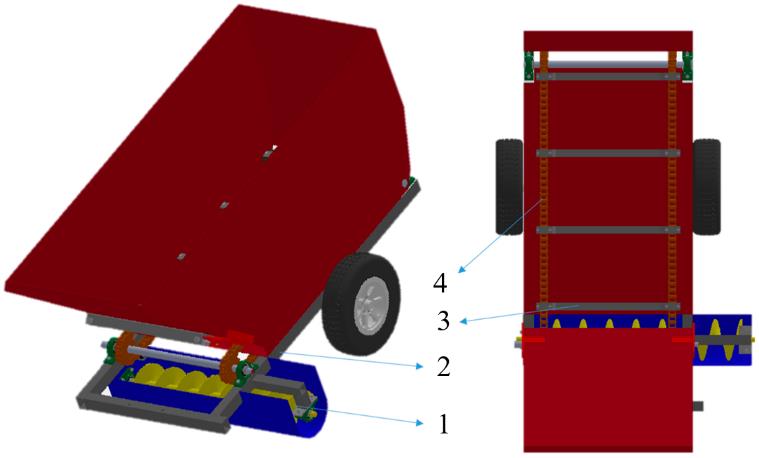
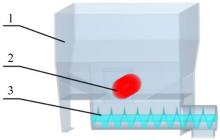
图5
果园螺旋定量施肥装置结构图Fig. 5 Structural diagram of the orchard spiral quantitative fertilization device 注:1. 施肥箱;2. 恒流螺杆;3. 输送螺杆。
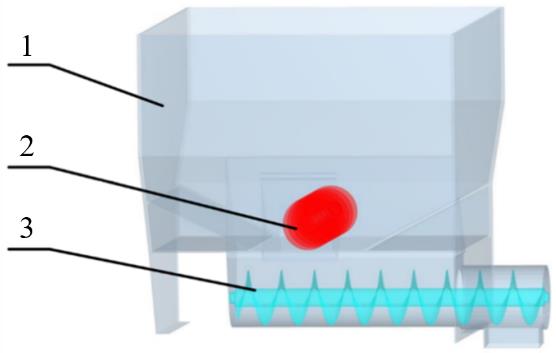
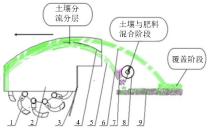
图6
土肥碰撞混合覆土过程示意图 注:1. 开沟装置;2. 导流板;3. 排土清理板;4. 分土板;5. 后抛肥料与土壤颗粒混合装置;6. 覆盖肥料的土壤颗粒后抛装置;7. 肥料颗粒;8. 螺旋器;9. 土壤肥料混合层。
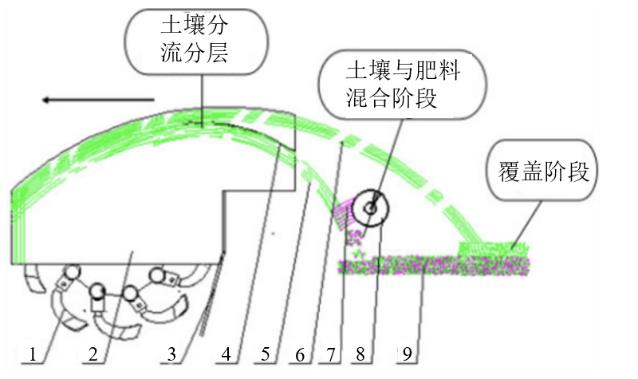
表5
2015—2025年典型果园开沟施肥机型与关键参数对比
| 整机机型 | 行走形式 | 主要开沟形式 | 排肥与供肥方式 | 作业稳定性与精度特征 | 适用场景 |
|---|---|---|---|---|---|
| 牵引/悬挂式一体机[ | 拖拉机牵引/三点悬挂 | 圆盘式/链式/犁式 | 螺旋计量、星轮计量 | 沟深受地形影响较大;定深轮可改善一致性 | 平地或缓坡果园;行距较宽 |
| 自走轮式开沟施肥机[ | 轮式自走底盘 | 圆盘式/螺旋式 | 螺旋+二级计量 | 作业稳定性较牵引式提升;路径一致性较好 | 地形较复杂果园 |
| 履带自走式开沟施肥机[ | 履带底盘自走 | 螺旋式/链式 | 刮板输送+螺旋计量 | 坡地沟深与姿态稳定性高 | 丘陵山地;狭窄行距 |
| 遥控/平台化机型[ | 履带底盘+无线遥控 | 螺旋式 | 组合式供肥 | 沟深与排肥稳定性可控 | 山地果园;安全要求高 |
| 多功能复合作业机[ | 自走或牵引平台 | 螺旋式/犁式 | 多级计量/混合供肥 | 稳定性依赖动力匹配与结构协调 | 规模化果园 |
| 智能化发展型装备[ | 自走电驱/电液平台 | 可调式开沟器 | 闭环计量系统 | 沟深/施肥量可闭环控制 | 智慧果园示范应用 |
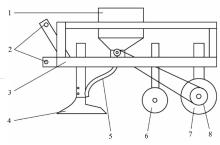
图7
开沟施肥覆土机整体机构图[57]Fig. 7 Overall structure of the trenching, fertilization, and soil-covering machine 注:1. 肥料箱;2. 三点悬挂架;3. 机架;4. 人字形开沟器;5. 输肥管;6. 覆土装置;7. 地轮;8. 链传动机构。
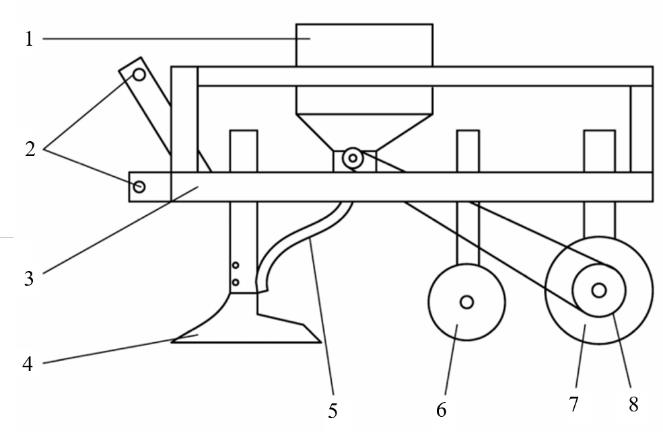
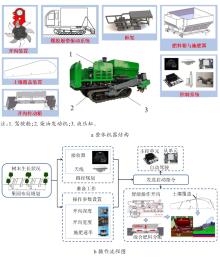
图8
自走式果园开沟施肥整机结构图[49]
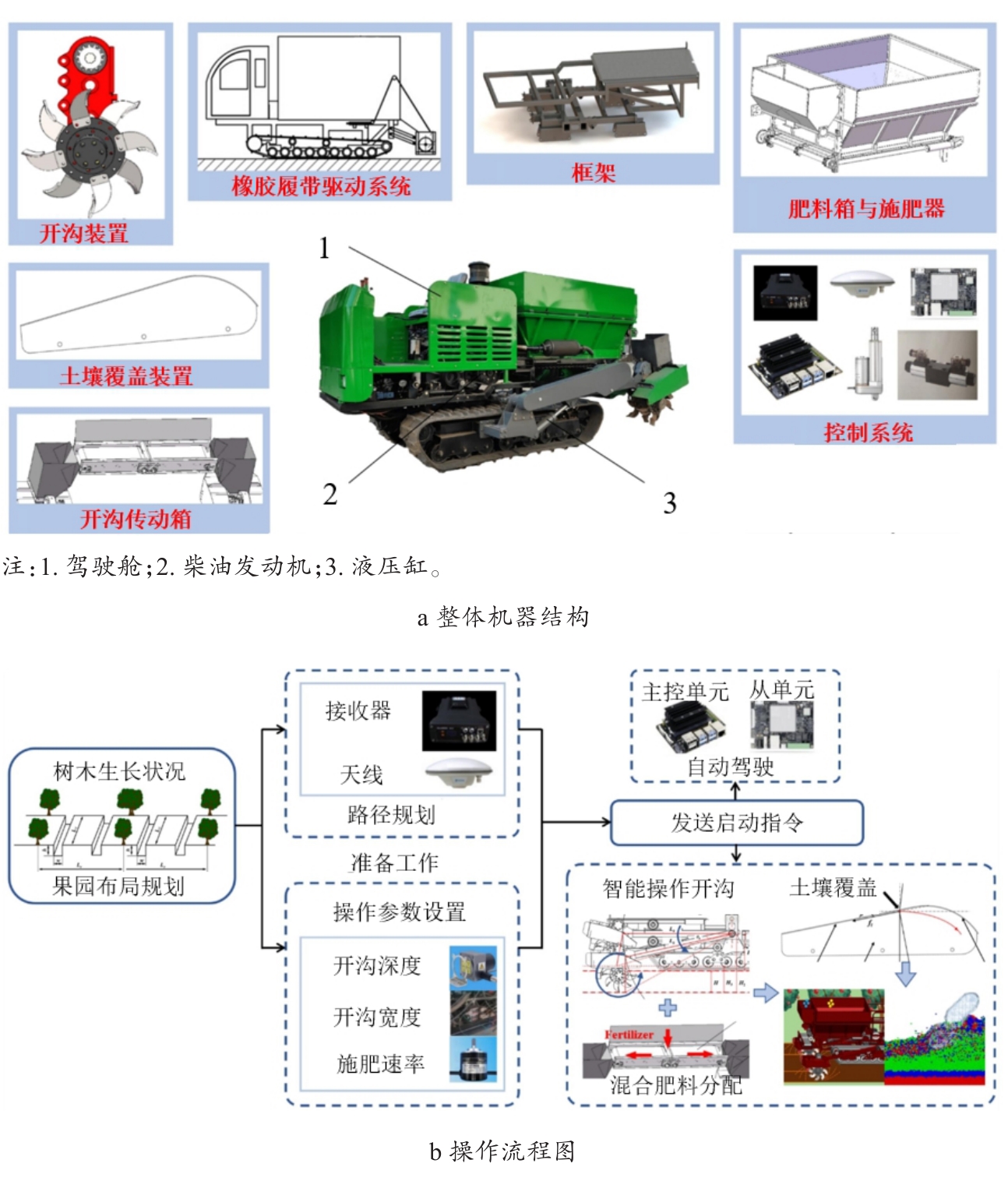
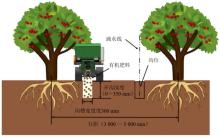
图9
果园复合作业开沟-施肥-覆土装备作业原理示意图
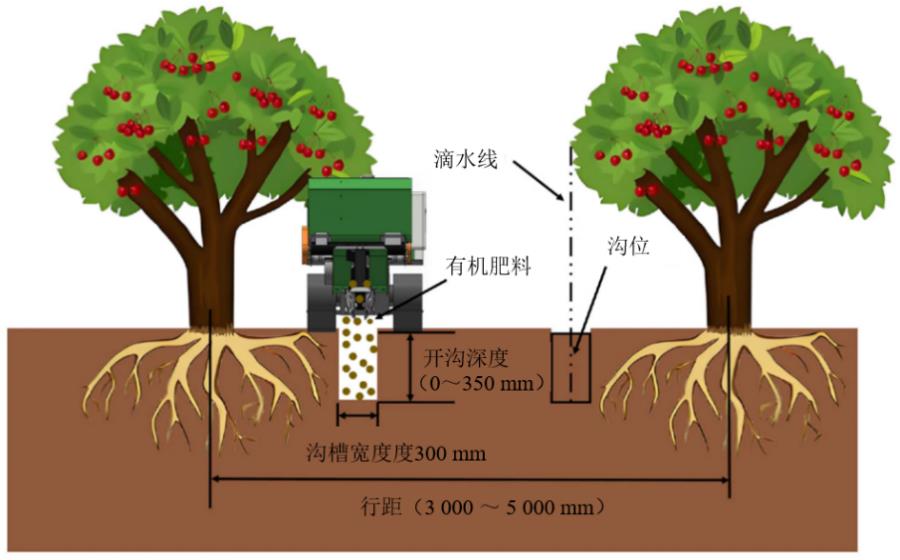
表6
202—2025年果园开沟施肥新型技术装备进展
| 技术装备方向 | 代表装备形式 | 主要技术进展 | 解决的主要问题 | 现阶段局限 |
|---|---|---|---|---|
| 履带自走式开沟施肥装备[ | 履带底盘、自走式开沟施肥一体机 | 采用低重心履带底盘,集成开沟、施肥、覆土等作业部件 | 提高丘陵山地、狭窄行距果园的通过性和稳定性 | 整机成本较高,维护要求高,作业效率受地形影响明显 |
| 遥控/半自主开沟施肥装备[ | 遥控履带式开沟施肥机、山地果园遥控作业平台 | 通过无线遥控、电液控制降低人工近距离作业风险 | 改善坡地、复杂果园作业安全性 | 智能化程度有限,仍依赖人工判断和远程操控 |
| 偏置式根区定向施肥装备[ | 偏置开沟施肥机、树冠投影边缘施肥机 | 开沟部件侧向布置,施肥位置可根据树冠或根区范围调整 | 提高施肥位置与果树有效根区的匹配度 | 偏置作业对整机稳定性、转弯空间和驾驶精度要求较高 |
| 多功能复合作业装备[ | 开沟施肥覆土一体机,深松施肥混肥联合作业机 | 将开沟、输肥、排肥、覆土、镇压等多工序集成 | 减少重复进地,提高作业连续性和综合效率 | 部件耦合强,动力匹配和故障维护难度较大 |
| 有机肥与多肥种兼容装备[ | 刮板输送、破碎辊、螺旋排肥组合系统 | 增强对高含水率、大块状有机肥及混合肥的适应性 | 缓解有机肥架桥、堵塞和排肥不连续问题 | 结构复杂,占用空间大,计量精度仍需提高 |
| 自动调深与电液控制装备[ | 液压调深开沟装置、自动仿形开沟装置 | 通过液压缸、位移传感器和控制系统调节开沟深度 | 提高沟深一致性和复杂地表适应性 | 土壤阻力突变和机具振动会影响控制稳定性 |
| 变量施肥与闭环排肥装备[ | 电机驱动排肥器、称重反馈排肥系统、处方图施肥机 | 通过转速、电流、扭矩、称重或流量反馈调节施肥量 | 提高施肥量控制精度,支持精准施肥 | 对传感器可靠性、处方信息和控制算法依赖较强 |
| 导航与自主作业装备[ | RTK导航开沟施肥机、视觉/激光雷达(Light Detection and Ranging,LiDAR)辅助行间导航装备 | 引入定位导航、路径跟踪和障碍识别技术 | 提升作业路径一致性和无人化作业能力 | 树冠遮挡、地形起伏和非结构化环境影响系统稳定性 |
表7
果园开沟施肥商业化整机代表机型及其主要特点
| 厂商 | 代表机型 | 适用场景 | 主要功能 | 结构特点 |
|---|---|---|---|---|
| 中颐农装 | 2~5方单侧开沟撒肥机 | 现代果园、有机肥和大化肥施用 | 可对有机肥固体物料进行开沟深施、单双侧抛撒和定向输送 | 集开沟、施肥、覆土、抛撒于一体,可选双侧开沟、底盘升降和视频监控 |
| 河北保东 | 偏置施肥机系列 | 不同行距果园、拖拉机配套作业 | 果园开沟施肥,可根据行距调整施肥位置 | 最大施肥深度约30 cm,开沟位置可偏离拖拉机中心40/60/80 cm,肥箱容量分别有0.3/0.4/0.6/2 m3可选 |
| AgPro | 160-D/160-DX2/190-DX3 applicator | 果园、葡萄园及行作 物 | 支持地表与地下结合施肥,适于干肥定量施用 | 正地轮驱动计量,施肥量不受地速影响;工作部件可适配不同行距和滴灌布局 |
| Haifa | Applicator for MulticoteTM Agri in Orchards | 各类、各树龄果园 | 近树根区定向施肥 | 可调节施肥沟与树行距离、施肥深度和排量,并借助sonar识别树干,实现按树近根施肥 |
| Rinieri | IC fertilizer burying spreader | 果园、葡萄园行间作业 | 颗粒矿质肥或有机肥埋施 | 可配置单侧或双侧埋施犁,适合行间埋肥和土壤混拌 |
| KUHN | MDS.2/.2W Fertilizer Spreader | 果园、葡萄园近根区条带施肥 | 双条带定向施肥 | 条带施肥附件可在两行内变量宽度施肥,行距100%可调,能够实现近根区施肥 |
表8
果园开沟施肥装备实际应用类型与技术特点对比
| 装备类型 | 主要应用场景 | 常见作业参数 | 作业效率与成本特征 | 应用技术特点 | 主要限制 |
|---|---|---|---|---|---|
| 拖拉机配套式开沟施肥机[ | 平地、缓坡、行距较宽果园 | 开沟深度多为30~40 cm,开沟宽度多为20~30 cm | 作业效率较高,购置和维护成本相对较低 | 结构成熟,配套方便,适合规模化果园 | 对拖拉机依赖强,狭窄行间和坡地适应性不足 |
| 履带自走式开沟施肥机[ | 丘陵山地、狭窄行距果园 | 开沟深度和施肥量可调,适合中低速稳定作业 | 成本较高,维护要求较高 | 通过性好,坡地稳定性强,转弯半径小 | 结构复杂,推广受购置成本和维护能力高的限制 |
| 遥控/半自主开沟施肥机[ | 坡地果园、危险作业环境 | 可实现远距离操控和作业参数调节 | 成本较高,作业效率受控制距离和地形影响 | 降低人工风险,适合复杂地形 | 智能化程度有限,仍依赖人工判断 |
| 根区定向/变量施肥装备[ | 标准化果园、葡萄园、智慧果园 | 可调节施肥位置、深度和排量 | 成本高,对传感器和控制系统依赖强 | 施肥精度高,便于与处方图和传感系统结合 | 处方信息获取困难,系统可靠性和经济性仍需验证 |
表9
不同类型果园开沟施肥装备成本与作业效率对比分析
| 装备类型 | 购置成本 | 维护成本 | 作业效率 | 适用经营规模 | 综合应用效益 | 推广限制 |
|---|---|---|---|---|---|---|
| 拖拉机配套式开沟施肥机[ | 低/中 | 低 | 较高 | 中大规模、行距较宽果园 | 依托已有拖拉机动力,单机作业效率较高,综合使用成本较低 | 对拖拉机和行间空间依赖较强,丘陵山地和窄行果园适应性不足 |
| 偏置式开沟施肥机[ | 中 | 中 | 较高 | 成年果园、标准化果园 | 可实现行侧或树冠边缘施肥,兼顾作业效率和根区定向 | 偏置作业对机具稳定性和驾驶操作要求较高 |
| 履带自走式开沟施肥机[ | 中/高 | 中/高 | 中等 | 丘陵山地果园 | 通过性和坡地稳定性较好,但购置与维护成本高 | 结构复杂,零部件维护要求较高 |
| 遥控/半自主开沟施肥机[ | 高 | 高 | 中等 | 坡地、危险或复杂作业环境 | 可降低人工风险,提高复杂地形作业安全性 | 智能化系统成本高,作业效率受人工远程控制和地形条件影响 |
| 根区定向/变量施肥装备[ | 高 | 高 | 中等/较高 | 标准化果园、智慧果园、示范园区 | 可提高施肥精度和肥料利用效率 | 前期投入大,对处方信息、传感器和控制系统依赖强 |
| 多功能复合作业机[ | 中/高 | 中/高 | 较高 | 规模化果园、有机肥深施场景 | 一次进地完成开沟、施肥、覆土等多道工序,可减少重复作业 | 功能集成度高,动力匹配和故障维护难度较大 |
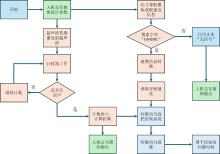
图10
果园开沟施肥作业在线监测-决策-执行闭环控制框架图
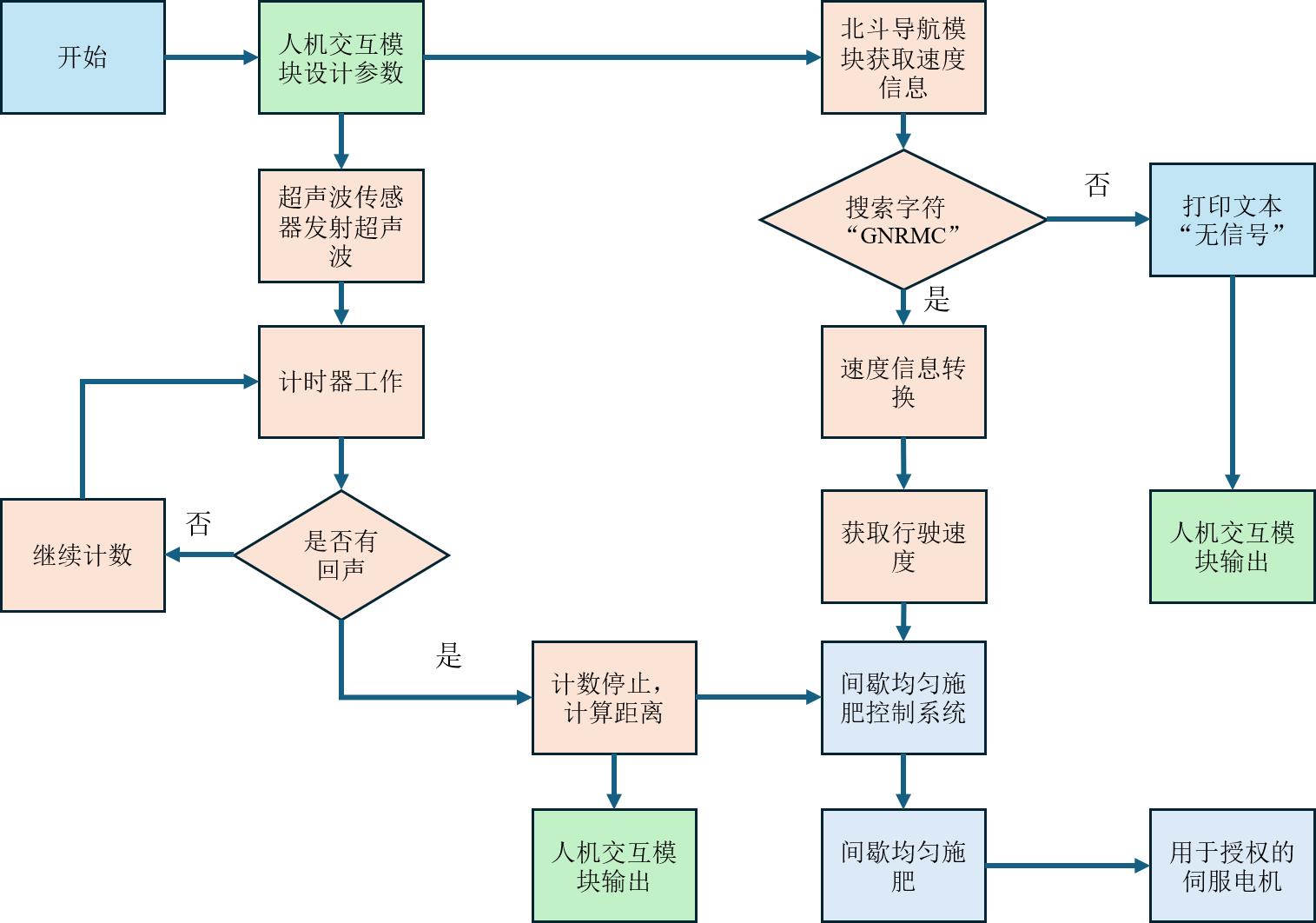
表10
果园变量施肥信息来源及其作用
| 变量信息来源 | 主要获取方式 | 反映内容 | 在变量施肥中的作用 |
|---|---|---|---|
| 土壤养分信息[ | 土壤采样、土壤传感器、养分空间插值 | 土壤氮、磷、钾、有机质等肥力差异 | 构建分区施肥处方图,确定基础施肥量 |
| 树体生长信息[ | 图像识别、多光谱、LiDAR、人工调查 | 树势强弱、冠层体积、叶面积、枝叶密度 | 根据树体生长需求调整单株或分区施肥量 |
| 冠层与根区空间信息[ | LiDAR、机器视觉、树冠滴水线检测 | 冠层边界、树体位置、潜在根系分布范围 | 辅助确定施肥位置和沟位,支持根区定向施肥 |
| 历史产量与管理信息 | 产量记录、果园档案、历年施肥记录 | 不同区域产量水平和养分投入响应 | 修正施肥处方,提高长期管理适应性 |
| 作业状态信息[ | 全球卫星导航系统(Global Navigation Satellite System, GNSS)、车速传感器、编码器、排肥轴转速传感器 | 机具位置、作业速度、排肥机构运行状态 | 实现地速补偿和排肥量动态调节 |
| 排肥反馈信息[ | 称重传感器、流量传感器、电流或扭矩监测 | 实际排肥量、堵塞风险、肥料流动状态 | 支持施肥量闭环控制和异常状态诊断 |
表11
果园开沟施肥装备地形适应性与自主作业关键技术
| 技术方向 | 主要感知或控制对象 | 作用 | 当前主要问题 |
|---|---|---|---|
| 地形与坡度感知[ | 坡度、地表起伏、机具姿态 | 为沟深补偿、速度调节和安全控制提供依据 | 坡地振动和滑移会影响测量稳定性 |
| 底盘通过性与稳定控制[ | 履带底盘、轮速、侧倾状态 | 提高丘陵山地和狭窄行距果园通行能力 | 结构复杂,成本和维护要求较高 |
| 开沟深度自适应调节[ | 沟深、开沟器位置、地表高度 | 保持复杂地形下开沟深度一致性 | 土壤阻力突变时控制响应易滞后 |
| 自主导航与路径跟踪[ | 作业路径、果树行、行间边界 | 实现机具自动行驶和路径保持 | 树冠遮挡和非结构化环境影响定位精度 |
| 树体与障碍物识别[ | 树干、支架、石块、滴灌管等 | 支持避障、作业位置修正 | 复杂背景下识别可靠性仍不足 |
| 作业参数联动控制[ | 行驶速度、开沟深度、施肥量 | 实现地形变化下的稳定施肥 | 多参数耦合强,控制模型仍不完善 |
| [1] |
|
| [2] |
|
| [3] |
|
| [4] |
傅剑, 朱建锡, 姚爱萍. 我国丘陵山地果园机械化开沟施肥发展现状与趋势[J]. 农业装备与车辆工程, 2024, 62(10): 30-35.
|
|
|
|
| [5] |
韩冷, 何雄奎, 王昌陵, 等. 智慧果园构建关键技术装备及展望[J]. 智慧农业(中英文), 2022, 4(3): 1-11.
|
|
|
|
| [6] |
吴逸腾, 杨英正, 阴振华, 等. 果园施肥装备的排肥器研究现状与展望[J]. 农业技术与装备, 2023(7): 47-48.
|
|
|
|
| [7] |
马木提江, 阿孜古力, 阿斯古力·阿布拉, 等. 果园开沟施肥机械研究现状及发展趋势分析[J]. 中国农机装备, 2024(6): 43-45.
|
|
|
|
| [8] |
王文赞, 韩建, 倪玉雪, 等. 有机肥替代化肥氮对苹果产量、品质及温室气体排放的影响[J]. 植物营养与肥料学报, 2023, 29(3): 437-448.
|
|
|
|
| [9] |
|
| [10] |
朱新华, 李洪春, 李旭东, 等. 果园有机肥机械化环沟施肥方法及其实现[J]. 农业工程学报, 2023, 39(17): 60-70.
|
|
|
|
| [11] |
|
| [12] |
|
| [13] |
|
| [14] |
袁全春, 曾锦, 雷哓晖, 等. 果园精准施肥技术装备研究进展[J]. 中国农机化学报, 2024, 45(3): 58-65, 89.
|
|
|
|
| [15] |
|
| [16] |
|
| [17] |
李旭东, 梅方炜, 刘永帅, 等. 基于AMESim-Matlab联合仿真的果园环沟施肥轨迹控制系统[J]. 农业工程学报, 2025, 41(16): 55-65.
|
|
|
|
| [18] |
|
| [19] |
|
| [20] |
崇兴花. 果园机械化生产技术研究进展[J]. 农业机械, 2021(7): 80-82.
|
| [21] |
周逸涵, 方鹏, 刘木华, 等. 果园开沟施肥机械研究现状与展望[J]. 中国农机化学报, 2025, 46(5): 133-140.
|
|
|
|
| [22] |
|
| [23] |
|
| [24] |
崔宏伟, 路晓轩, 杨亚青, 等. 智慧化果园关键生产技术研究现状与进展[J]. 果树学报, 2025, 42(7): 1582-1609.
|
|
|
|
| [25] |
|
| [26] |
|
| [27] |
|
| [28] |
张宏建, 徐春保, 刘双喜, 等. 自动调节深度式果园双行开沟施肥机设计与试验[J]. 农业机械学报, 2021, 52(1): 62-72.
|
|
|
|
| [29] |
|
| [30] |
|
| [31] |
苏江红. 丘陵果园立式螺旋开沟施肥机的设计与试验[D]. 南昌: 江西农业大学, 2024.
|
| [32] |
|
| [33] |
刘剑飞. 果园双螺旋开沟施肥装置设计与试验[D]. 长沙: 湖南农业大学, 2024.
|
| [34] |
|
| [35] |
|
| [36] |
陈睿, 张建军. 基于SPH方法的果园螺旋开沟器功耗分析[J]. 西南大学学报(自然科学版), 2015, 37(12): 168-172.
|
|
|
|
| [37] |
陈平录, 苏江红, 许静, 等. 丘陵果园立式螺旋开沟施肥机设计与试验[J]. 农业机械学报, 2024, 55(10): 223-233, 274.
|
|
|
|
| [38] |
|
| [39] |
|
| [40] |
韩英, 贾如, 唐汉. 精准变量施肥机械研究现状与发展建议[J]. 农业工程, 2019, 9(5): 1-6.
|
|
|
|
| [41] |
朱新华, 李旭东, 高翔, 等. 自走式果园有机肥条铺机设计与试验[J]. 农业机械学报, 2022, 53(5): 136-146.
|
|
|
|
| [42] |
薛忠, 赵亮, 王凤花, 等. 基于EDEM的螺旋式排肥器排肥性能研究[J]. 农机化研究, 2020, 42(6): 87-95.
|
|
|
|
| [43] |
徐勇, 宋明翰, 孙国峻, 等. 刮板输送式大棚有机肥排肥装置的设计与试验[J]. 华南农业大学学报, 2021, 42(6): 79-87.
|
|
|
|
| [44] |
|
| [45] |
|
| [46] |
|
| [47] |
|
| [48] |
柳国光, 王涛, 楼婷婷. 果园履带式偏置开沟施肥机研制与试验[J]. 农业工程, 2022, 12(7): 114-117.
|
|
|
|
| [49] |
|
| [50] |
|
| [51] |
张轩, 陈中武, 李君略, 等. 果园遥控开沟施肥机设计与试验[J]. 现代农业装备, 2023, 44(3): 39-46.
|
|
|
|
| [52] |
张建路, 王鹏飞, 陈春皓, 等. 苹果园开沟施肥机排肥装置设计与试验[J]. 中国农机化学报, 2024, 45(1): 83-89.
|
|
|
|
| [53] |
|
| [54] |
吴平凡, 周岭, 王龙杰, 等. 有机肥施用技术与装备研究进展[J]. 塔里木大学学报, 2024, 36(3): 1-10.
|
|
|
|
| [55] |
程梅. 果园开沟深施肥机机械结构设计[J]. 安徽农业科学, 2014, 42(23): 8086-8088.
|
|
|
|
| [56] |
|
| [57] |
郭振华, 陈换美. 后悬挂式果园开沟施肥覆土机设计与试验[J]. 农机化研究, 2022, 44(3): 120-123, 136.
|
|
|
|
| [58] |
苏子昊, 兰峰, 黎子明, 等. 果园定向施肥机施肥系统结构设计[J]. 农业工程, 2014, 4(4): 116-119, 124.
|
|
|
|
| [59] |
|
| [60] |
张轩, 王斌斌, 李沐桐. 南方丘陵果园多功能遥控电动履带底盘设计与试验[J]. 现代农业装备, 2025, 46(6): 77-83, 115.
|
|
|
|
| [61] |
|
| [62] |
|
| [63] |
|
| [64] |
周滨, 赵荣繁, 曾维刚, 等. 基于ANSYS的果园开沟施肥机机架的有限元分析[J]. 新疆农机化, 2025(4): 9-12.
|
|
|
|
| [65] |
江政鑫, 赵振江, 王拓辉, 等. 农家果园一体化施肥机的设计与应用研究[J]. 河北农机, 2025(6): 15-17.
|
| [66] |
柴明慧. 尧都区葡萄园生产管护机械化开沟施肥对比试验报告[J]. 农业开发与装备, 2024(5): 145-147.
|
| [67] |
|
| [68] |
赵明明, 郝向泽, 赵天才, 等. 基于激光传感器的开沟深度控制系统的设计与试验[J]. 华南农业大学学报, 2018, 39(6): 91-96.
|
|
|
|
| [69] |
|
| [70] |
|
| [71] |
刘羊, 刘宇洋, 陈江春, 等. 标准化果园多功能作业平台关键技术研究现状与趋势[J]. 智能化农业装备学报(中英文), 2024, 5(1): 31-39.
|
|
|
|
| [72] |
|
| [73] |
|
| [74] |
|
| [75] |
余洪锋, 丁永前, 谭星祥, 等. 施肥机施肥性能检测装置的设计与试验[J]. 南京农业大学学报, 2016, 39(3): 511-517.
|
|
|
|
| [76] |
高文杰,宋学锋,戴飞,等. 智能排肥试验台的设计与性能试验[J]. 林业机械与木工设备, 2022, 50(4): 41-47.
|
|
|
|
| [77] |
万仕军, 何瑞银, 余洪峰, 等. 具有自适应标定功能的施肥控制系统的设计与试验[J]. 华南农业大学学报, 2024, 45(1): 88-96.
|
|
|
|
| [78] |
|
| [79] |
|
| [80] |
景子奇, 袁逸萍, 张俊三, 等. 果园开沟施肥机控制系统的设计[J]. 农机化研究, 2022, 44(6): 59-64.
|
|
|
|
| [81] |
|
| [82] |
|
| [83] |
谭好超, 沈聪聪, 马俊龙, 等. 林果园有机肥双参联控系统设计与试验[J]. 农业工程学报, 2025, 41(16): 66-76.
|
|
|
|
| [84] |
王儒敬. 农业传感器: 研究进展、挑战与展望[J]. 智慧农业(中英文), 2024, 6(1): 1-17.
|
|
|
|
| [85] |
|
| [86] |
|
| [1] | 刘力宁, 张洪奇, 章子文, 张正辉, 王甲玉, 李宣宣, 朱珂, 柳平增. 无人智慧农场关键技术与构建模式——以“吨半粮”无人农场为例[J]. 智慧农业(中英文), 2025, 7(1): 70-84. |
| 阅读次数 | ||||||
|
全文 |
|
|||||
|
摘要 |
|
|||||