Smart Agriculture ›› 2026, Vol. 8 ›› Issue (1): 86-103.doi: 10.12133/j.smartag.SA202507048
• Overview Article • Previous Articles Next Articles
XIAO Deqin1,2,3( ), LÜ Yuding1,2, HUANG Yigui1,2, CUAN Kaixuan1,2
Received:2025-07-30
Online:2026-01-30
Foundation items:National Key Research and Development Program(2021YFD200802); The Innovation Team of Key Common Technologies for Smart Agriculture under the Guangdong Modern Agricultural Industry System(2024CXTD28)
corresponding author:
CLC Number:
XIAO Deqin, LÜ Yuding, HUANG Yigui, CUAN Kaixuan. Research Progress and Future Prospects of Pig Intelligent Detection Technology[J]. Smart Agriculture, 2026, 8(1): 86-103.
Add to citation manager EndNote|Ris|BibTeX
URL: https://www.smartag.net.cn/EN/10.12133/j.smartag.SA202507048
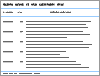
Table 1
Types of data required by the intelligent pig detection algorithm
| 数据类型 | 描述 | 应用方向 |
|---|---|---|
| 红外图像 | 通过红外摄像头采集的图像数据 | 检测生猪的体温,用于健康监测和疾病预警 |
| 可见光图像 | 通过可见光摄像头采集到的图像或者视频数据 | 猪只行为识别、体重估计、盘点、异常识别特征等数据识别 |
| 深度图像 | 通过深度相机来获取猪只的三维形态信息 | 对猪只体尺、体重的估测 |
| 传感器数据 | 从三轴加速度传感器、温度传感器、振动传感器采集到的猪只行为、生理数据 | 猪只的活动水平识别、体温、行为 |
| 音频数据 | 通过音频监控系统提取得到的猪只声音数据 | 猪只异常声音(咳嗽)识别、发情识别 |
Table 2
Mainstream algorithms for intelligent pig detection
| 算法类型 | 检测指标 | 优点 | 缺点 |
|---|---|---|---|
| 基于红外图像的体温检测 | 耳根/前额/眼睛/腹部温度(最大值、平均值) | 非接触式测量,减少应激与交叉感染 | 遮挡时精度下降(如侧卧);环境温度干扰 |
| 基于可见光的行为识别 | 采食、攻击、站立、坐姿等行为 | 成本低,部署方便;识别准确率高(>95%) | 复杂场景(光照变化、猪群堆叠)易误检 |
| 基于目标跟踪的行为检测 | 个体运动轨迹、行为持续时间(如饮水、爬跨) | 支持长时间监测;跟踪精度高 | 群体遮挡易导致ID切换;计算复杂度高 |
| 基于图像分割的检测 | 猪只轮廓、个体区分、体尺参数 | 像素级精准划分;支持密集群体识别 | 实时性差;模型参数量大 |
| 基于三维图像的体重估计 | 体重、体尺 | 非接触式 | 设备成本高;动态姿态影响精度 |
| 基于可穿戴传感器检测 | 活动量、体温、采食频率 | 个体精准追踪;全天候监测 | 传感器易脱落;数据传输耗能高 |
| 基于异常声音的检测 | 咳嗽、异常叫声 | 可远程监测呼吸道疾病 | 背景噪声干扰;样本标注成本高 |
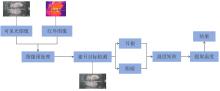
Fig. 1
Extraction process of pig body temperature
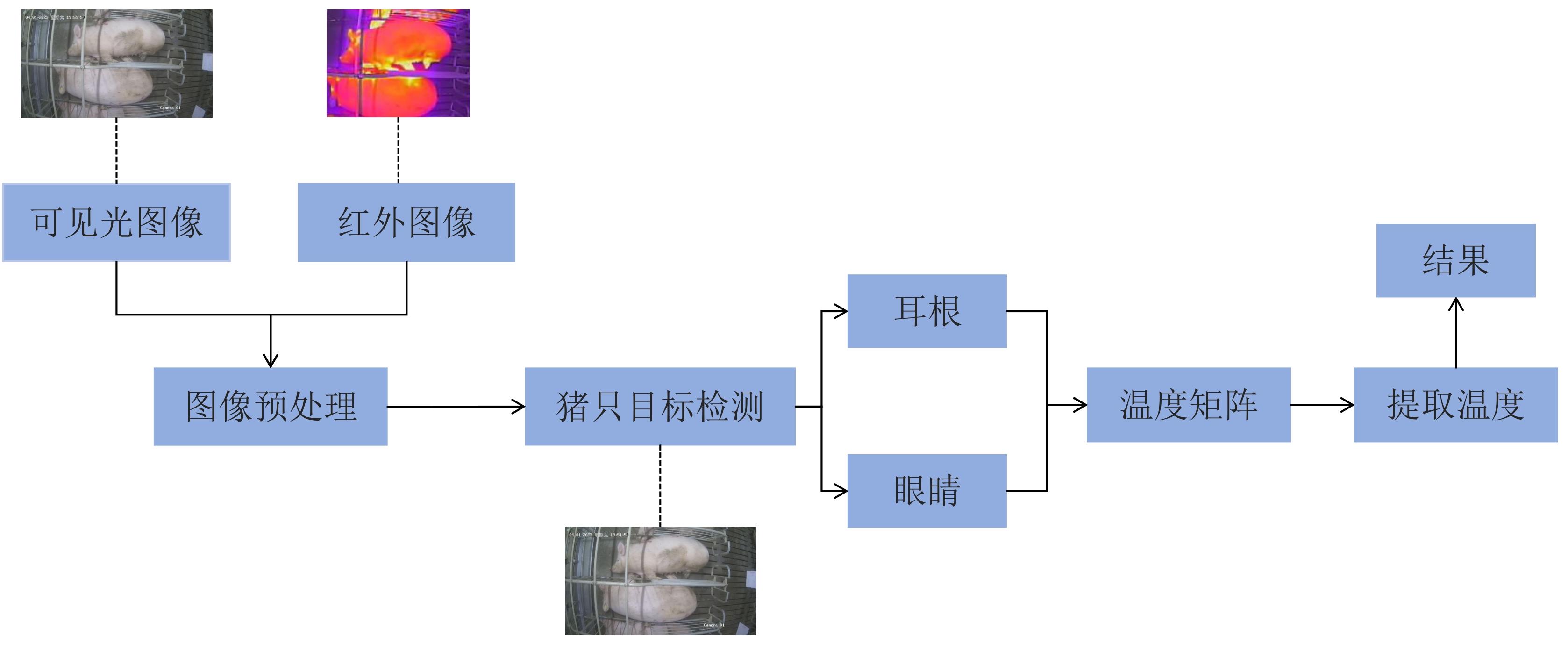
Table 3
Application of object detection on pig behavior recognition
| 行为 | 参考文献 | 算法 | 评价指标 | 结果/% |
|---|---|---|---|---|
| 采食 | YANG等[ | Faster R-CNN | 准确率 | 99.60 |
| CHEN等[ | 深度可分离卷积网络(Extreme Inception,Xception)+长短期记忆网络(Long Short-Term Memory, LSTM) | 准确率 | 98.40 | |
| 李菊霞等[ | YOLOv4 | 平均精度(Average Precision, AP) | 94.50 | |
| 陆舟等[ | YOLOv5L+ShuffleNet | 准确率 | 96.40 | |
| 行走 | 杨宏宇等[ | 改进的YOLOv4 | 准确率 | 88.00 |
| 仝志民等[ | 改进的YOLOv8 | 均值平均精度(Mean Average Precision, mAP) | 96.00 | |
| 攻击 | 高云等[ | 改进的三维卷积神经网络(Convolutional 3D, C3D) | 准确率 | 95.70 |
| CHEN等[ | 视觉几何组16层网络(Visual Geometry Group 16-layer network, VGG-16)+LSTM | 准确率 | 97.20 | |
| 李艳文等[ | 改进的YOLOX | 准确率 | 98.55 | |
| 坐姿 | ZHENG等[ | Faster R-CNN | AP | 90.70 |
| 薛月菊等[ | 改进的Faster R-CNN | AP | 94.62 | |
| ZHU等[ | 改进的双流RGB-D Faster R-CNN | AP | 96.49 | |
| SHAO等[ | YOLOv5、DeepLabv3+ | 准确率 | 92.45 | |
| JI等[ | 改进的YOLOX | mAP | 95.70 | |
| HUANG等[ | 高效能YOLO(High-Effect YOLO, HE-YOLO) | AP | 98.41 | |
| 站立 | 薛月菊等[ | 改进的Faster R-CNN | AP | 96.73 |
| ZHU等[ | 改进的双流RGB-D Faster R-CNN | AP | 99.74 | |
| 性行为 | ZHANG等[ | SSD+移动卷积神经网络(MobileNet) | AP | 92.30 |
| LI等[ | 改进的SlowFast网络 | 准确率 | 97.63 | |
| ZHANG等[ | ResNet101+时序片段网络(Temporal Segment Networks, TSN) | 准确率 | 98.99 |
Table 4
Application of object tracking on pig behavior detection
| 参考文献 | 检测算法 | 跟踪精度/% | 跟踪时长 | 行为 |
|---|---|---|---|---|
| 李亿杨等[ | 粒子滤波算法 | 93.40 | 30 s内 | 采食 |
| GAN等[ | 图卷积网络 | 97.04 | 30 s | 社交嗅闻、攻击、玩耍 |
| 涂淑琴等[ | 改进TransTrack | 92.00 | 1 min | 采食、站立、躺卧 |
| TRAN和THANH[ | YOLOv7+改进的DeepSORT | 93.60 | 30 min内 | 采食、站立、躺着 |
| MELFSEN等[ | ByteTrack | 98.20 | 未说明 | 采食、站立、躺着、行走、攻击、玩耍 |
| TU等[ | YOLOX+改进的稳健关联多行人跟踪算法(Robust Associations Multi-Pedestrian Tracking, BoT-SORT) | 97.00 | 1 min | 采食、站立、躺着、其他 |
| 王亚彬等[ | YOLOv8+无迹卡尔曼滤波跟踪算法(Unscented Kalman Filter Track, UKFTrack) | 97.70 | 8 min | 行走、站立 |
| TU等[ | 集成OBB、关键点检测、MOT及跟踪后处理-猪只攻击关系识别(OBB and keypoint detection, MOT, and post-tracking processing-pig aggression relationship identification, OKByte-AR) | 98.50 | 未说明 | 攻击 |
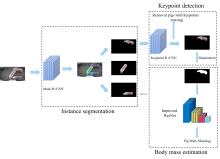
Fig. 2
Flow chart of pig weight measurement model
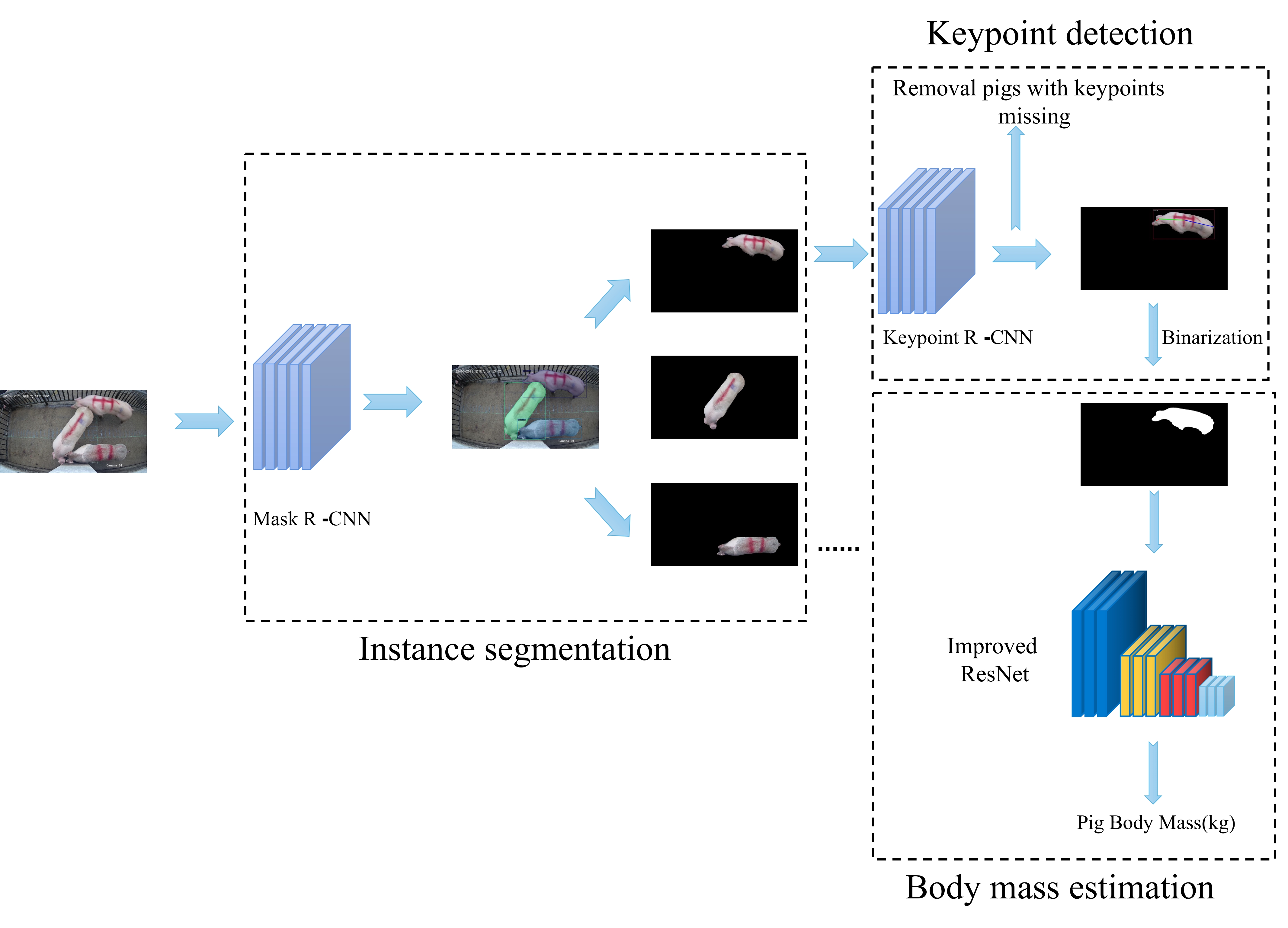
Table 5
Application of image segmentation on pig detection
| 应用 | 参考文献 | 算法 | 分割评价指标 | 结果/% |
|---|---|---|---|---|
| 语义分割 | 杨阿庆等[ | VGG16+FCN | MIoU | 95.16 |
| YANG等[ | FCN | MIoU | 95.00 | |
| 胡志伟等[ | VGG16+UNet | MIoU | 86.60 | |
| BRÜNGER等[ | 残差网络34层(Residual Network with 34 Layers,ResNet34)+UNet | 准确率 | 95.86 | |
| 实例分割 | LI等[ | Mask R-CNN | 平均像素精度 | 83.83 |
| 高云等[ | 改进的Mask R-CNN | 准确率 | 85.40 | |
| 高云等[ | FPN+Mask R-CNN | 准确率 | 89.25 | |
| 刘坤等[ | ResNet50+Mask R-CNN+循环残差注意力(Recurrent Residual Attention,RRA) | AP | 89.20 | |
| HU等[ | 双注意力机制模块(Dual Attention Module,DAB)+ResNet101+混合任务级联(Hybrid Task Cascade,HTC)+Mask R-CNN | AP | 93.10 | |
| TU等[ | 掩膜评分R-CNN(Mask Scoring R-CNN,Ms R-CNN)+软非极大值抑制(Soft Non-Maximum Suppression,soft-NMS) | 准确率 | 94.11 |
Fig. 3
Flow of the moving pig weight estimation algorithm based on RGB-D data
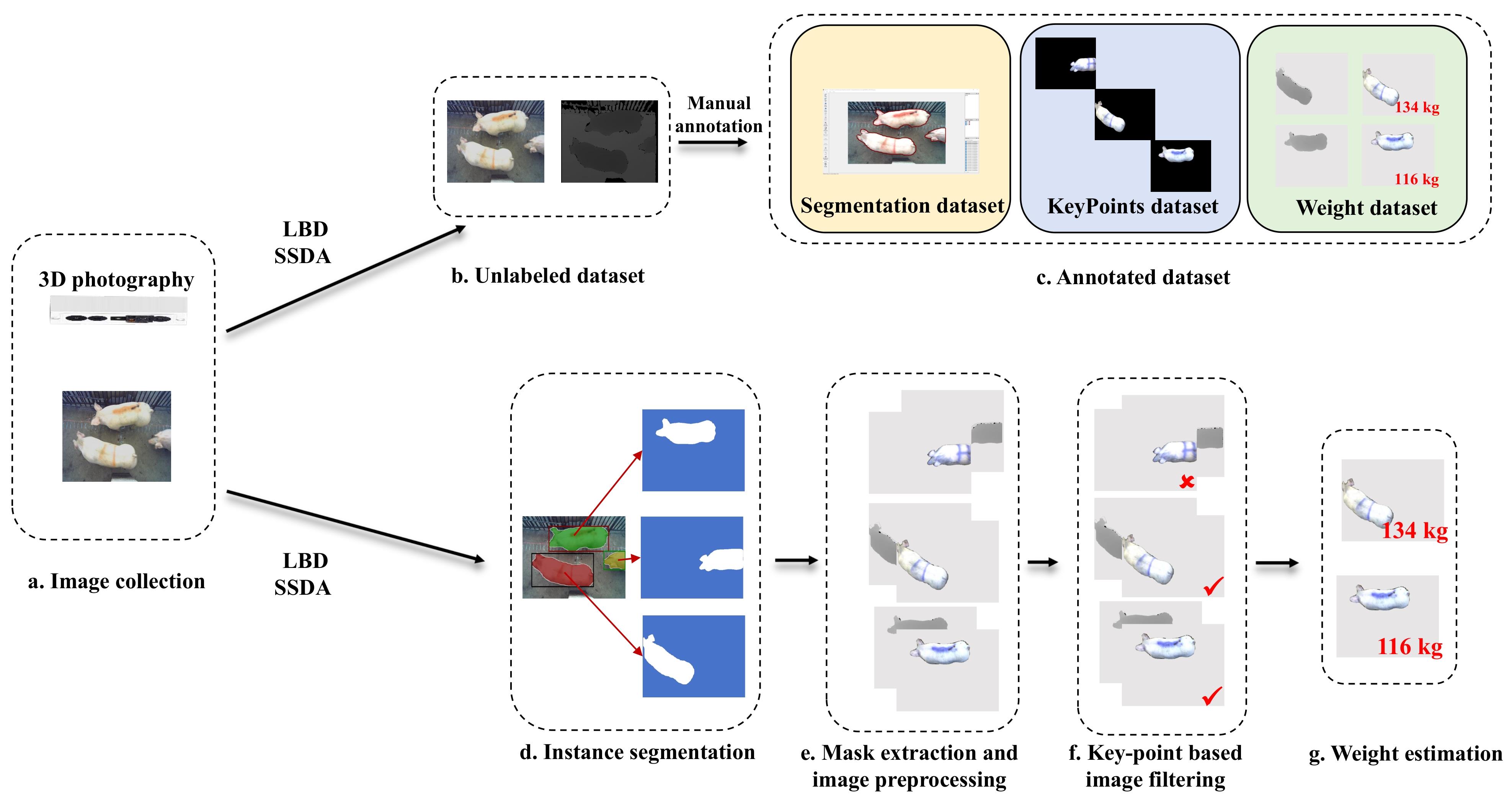
Fig. 4
Pig weight estimation
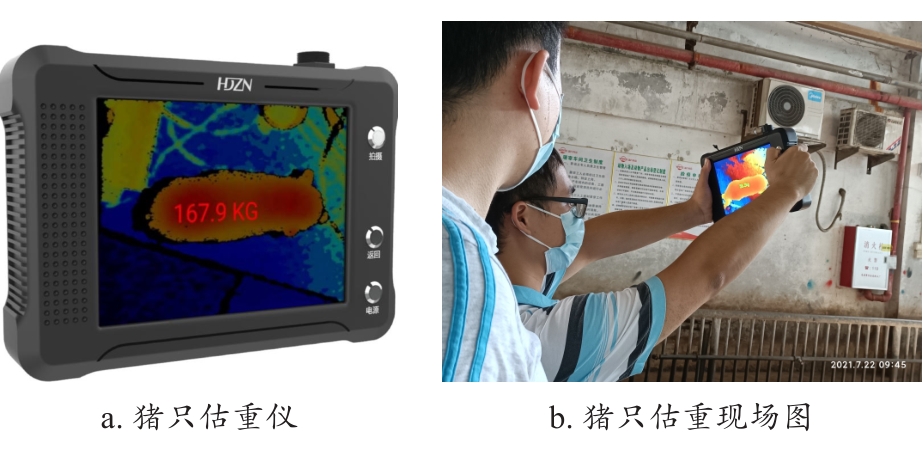

Fig. 5
Animal health monitor
Fig. 6
Different types of inspection robots
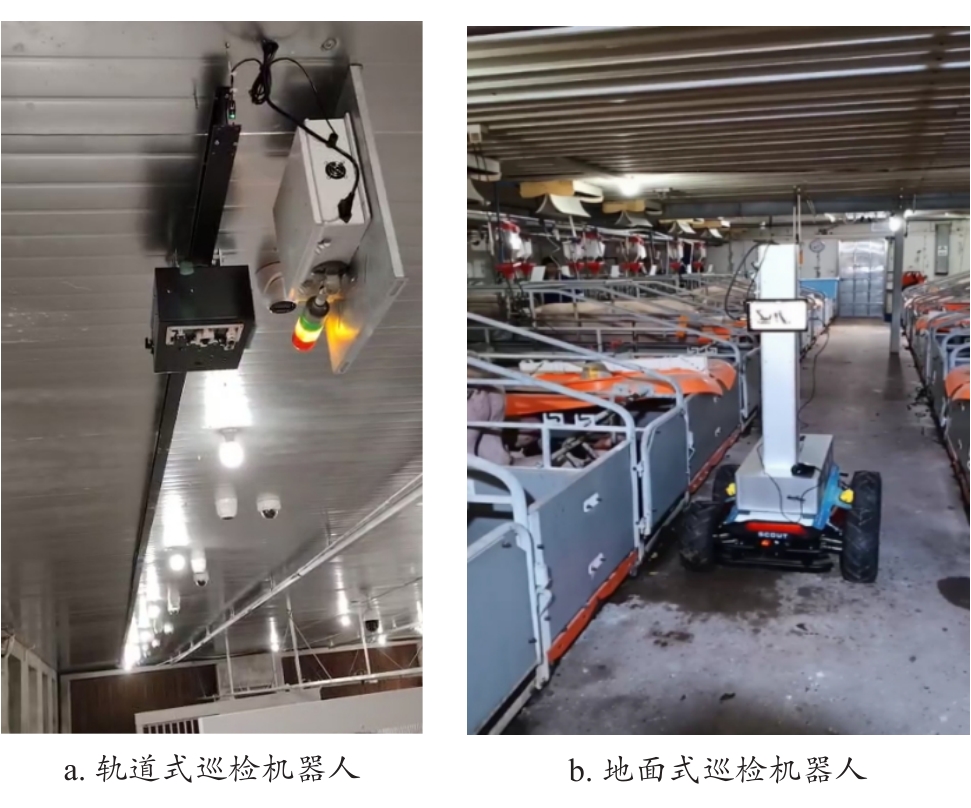
Table 6
Research on intelligent testing equipment of pigs
| 装备 | 研究团队 | 核心技术/方法 | 功能特点 |
|---|---|---|---|
| 估重装备 | 樊士冉等[ | 分体式手持3D相机+估重显示终端 | 便携式采集立体图片并保存结果 |
| 薛素金和杨焜[ | 3D卷积神经网络+面部/耳牌识别装置 | 身份识别后栅栏内自动估重 | |
| 桂志明等[ | 多模态技术 | 适用于日常猪场估重 | |
| 景俊年和邓利斌[ | 物联网称重系统(称重机构+识别模块) | 实时监测动物体重 | |
| 健康检测装备 | 邹远炳等[ | 分布流式计算+节点资源调度器算法 | 规模化猪只视频流数据处理 |
| 杨栋等[ | 阈值对比分析算法 | 异常健康状况预警 | |
| 谢继华等[ | 猪脸识别+RFID技术+体温传感器 | 体温监测与饮水次数记录,异常预警 | |
| 肖德琴等[ | 红外测温技术+声音语料特征分析 | 结合耳部温度与声音特征判断猪只健康状态 | |
| 轨道式巡检机器人 | 林探宇等[ | 滑轨平台+红外热像仪+RFID阅读器 | 限位栏猪场双模体温监测 |
| 刘龙申等[ | 轨道机器人+行为检测算法 | 哺乳母仔猪群体行为一体化检测 | |
| 刘战启等[ | 吊轨搭载毫米波雷达和摄像头 | 自主巡场、智能调节监测角度 | |
| 地面式巡检机器人 | 曾志雄等[ | 铝型材框架+减震悬架系统+有限元仿真 | 复杂地面环境自适应移动 |
| 吕成军等[ | 行走/供能/控制/检测模块集成 | 减少人工巡视时间成本 | |
| 方明和徐波[ | 活动轮联动排水降温系统 | 移动时自动降温 |
Table 7
Commercial intelligent testing equipment of pigs
| 商业产品/系统 | 关键技术/硬件 | 性能指标 |
|---|---|---|
| eYegrow | 3D相机系统 | 准确率超过97% |
| OptiSCAN | 手持3D相机+平板 | 估重准确率约98% |
| PigBrother | 摄像机+机器学习(Machine Learning,ML)算法 | 连续估重,精度未说明 |
| PIGI | 手机摄像头 | 准确率约98% |
| EID Hog (Pig) Weigh Crate | 通道称重、耳标识别 | 精度为±2 kg |
| BioTag智能耳标 | 实时监测体温与活动,用于发情和分娩预测 | 未说明 |
| [1] |
林惠敏, 刘柳锋. 中美猪肉产品贸易竞争力实证分析[J]. 现代畜牧科技, 2024(6): 152-155.
|
|
|
|
| [2] |
闫红军, 马乃祥, 庄向婷, 等. 2024年集约化养殖模式发展状况下, 猪的福利问题与改进措施[J]. 猪业科学, 2025, 42(2): 36-38.
|
|
|
|
| [3] |
杨亮, 王辉, 陈睿鹏, 等. 智能养猪工厂的研究进展与展望[J]. 华南农业大学学报, 2023, 44(1): 13-23.
|
|
|
|
| [4] |
|
| [5] |
|
| [6] |
|
| [7] |
王乔琪. 牧原股份的“猪哲学”与“养猪科技”[N]. 上海证券报, 2025-06-30(6).
|
| [8] |
星农天下. 科技“大拿”的新玩法[J]. 农家之友, 2019(2): 28-29.
|
|
|
|
| [9] |
|
| [10] |
明月. 体温变化在猪病诊疗中的应用[J]. 畜牧兽医科技信息, 2021(3): 167.
|
|
|
|
| [11] |
|
| [12] |
|
| [13] |
|
| [14] |
肖德琴, 林思聪, 刘勤, 等. 基于红外热成像的生猪耳温自动提取算法[J]. 农业机械学报, 2021, 52(8): 255-262.
|
|
|
|
| [15] |
刘刚, 冯彦坤, 康熙, 等. 基于改进YOLOv4的生猪耳根温度热红外视频检测方法[J]. 农业机械学报, 2023, 54(2): 240-248.
|
|
|
|
| [16] |
|
| [17] |
田浩楠, 华婧伊, 张少帅, 等. 基于红外热成像与线性回归拟合的母猪体温检测技术研究[J]. 智能化农业装备学报(中英文), 2023(1): 36-41.
|
|
|
|
| [18] |
|
| [19] |
|
| [20] |
|
| [21] |
|
| [22] |
|
| [23] |
|
| [24] |
|
| [25] |
|
| [26] |
李菊霞, 李艳文, 牛帆, 等. 基于YOLOv4的猪只饮食行为检测方法[J]. 农业机械学报, 2021, 52(3): 251-256.
|
|
|
|
| [27] |
陆舟, 沈明霞, 刘龙申, 等. 基于轻量化网络与注意力机制的育肥猪采食行为识别方法研究[J]. 南京农业大学学报, 2023, 46(4): 802-812.
|
|
|
|
| [28] |
杨宏宇, 陈立畅, 谢小龙, 等. 改进YOLOv4模型在版纳微型猪只行为识别中的研究[J]. 黑龙江畜牧兽医, 2024(19): 46-54, 118, 119.
|
|
|
|
| [29] |
仝志民, 徐天哲, 石传淼, 等. 基于CBCW-YOLOv8的猪只行为识别方法研究[J]. 农业机械学报, 2025, 56(2): 411-419.
|
|
|
|
| [30] |
高云, 陈斌, 廖慧敏, 等. 群养猪侵略性行为的深度学习识别方法[J]. 农业工程学报, 2019, 35(23): 192-200.
|
|
|
|
| [31] |
|
| [32] |
李艳文, 李菊霞, 纳腾潇, 等. 基于YOLOX-NGS的群养猪只攻击行为识别[J]. 农业工程学报, 2023, 39(24): 177-184.
|
|
|
|
| [33] |
|
| [34] |
薛月菊, 朱勋沐, 郑婵, 等. 基于改进FasterR-CNN识别深度视频图像哺乳母猪姿态[J]. 农业工程学报, 2018, 34(9): 189-196.
|
|
|
|
| [35] |
|
| [36] |
|
| [37] |
|
| [38] |
|
| [39] |
|
| [40] |
|
| [41] |
|
| [42] |
|
| [43] |
|
| [44] |
|
| [45] |
|
| [46] |
|
| [47] |
|
| [48] |
杨秋妹, 肖德琴, 张根兴. 猪只饮水行为机器视觉自动识别[J]. 农业机械学报, 2018, 49(6): 232-238.
|
|
|
|
| [49] |
|
| [50] |
|
| [51] |
|
| [52] |
张丽雯, 周昊, 朱启兵. 基于PigsTrack跟踪器的群养生猪多目标跟踪[J]. 农业工程学报, 2023, 39(16): 181-190.
|
|
|
|
| [53] |
|
| [54] |
姚裔芃, 徐晨, 陈鸿基, 等. 基于关键点检测和多目标跟踪的猪只体尺估计[J]. 华南农业大学学报, 2024, 45(5): 722-729.
|
|
|
|
| [55] |
|
| [56] |
李亿杨, 孙龙清, 孙鑫鑫. 基于多特征融合的粒子滤波生猪采食行为跟踪[J]. 农业工程学报, 2017, 33(S1): 246-252.
|
|
|
|
| [57] |
|
| [58] |
涂淑琴, 黄正鑫, 梁云, 等. 改进TransTrack多目标生猪行为跟踪方法[J]. 农业工程学报, 2023, 39(15): 172-180.
|
|
|
|
| [59] |
|
| [60] |
|
| [61] |
|
| [62] |
王亚彬, 徐爱俊, 周素茵, 等. 基于Byte的生猪多目标跟踪算法[J]. 农业工程学报, 2025, 41(7): 145-155.
|
|
|
|
| [63] |
|
| [64] |
|
| [65] |
|
| [66] |
|
| [67] |
|
| [68] |
|
| [69] |
|
| [70] |
|
| [71] |
李丹, 张凯锋, 李行健, 等. 基于Mask R-CNN的猪只爬跨行为识别[J]. 农业机械学报, 2019, 50(S1): 261-266, 275.
|
|
|
|
| [72] |
|
| [73] |
王鲁, 刘晴, 曹月, 等. 基于改进Cascade Mask R-CNN与协同注意力机制的群猪姿态识别[J]. 农业工程学报, 2023, 39(4): 144-153.
|
|
|
|
| [74] |
孔商羽, 陈春雨. 基于多任务学习的猪只体重和体况评分预测[J]. 黑龙江大学工程学报, 2022, 13(2): 70-77.
|
|
|
|
| [75] |
|
| [76] |
罗世林, 何秀文, 欧阳梦, 等. 基于实例分割和机器学习的育肥猪群体体重估测方法研究[J]. 中国农机化学报, 2025, 46(10): 153-160.
|
|
|
|
| [77] |
|
| [78] |
杨阿庆, 薛月菊, 黄华盛, 等. 基于全卷积网络的哺乳母猪图像分割[J]. 农业工程学报, 2017, 33(23): 219-225.
|
|
|
|
| [79] |
|
| [80] |
胡志伟, 杨华, 娄甜田, 等. 基于全卷积网络的生猪轮廓提取[J]. 华南农业大学学报, 2018, 39(6): 111-119.
|
|
|
|
| [81] |
|
| [82] |
|
| [83] |
高云, 郭继亮, 黎煊, 等. 基于深度学习的群猪图像实例分割方法[J]. 农业机械学报, 2019, 50(4): 179-187.
|
|
|
|
| [84] |
高云, 廖慧敏, 黎煊, 等. 基于双金字塔网络的RGB-D群猪图像分割方法[J]. 农业机械学报, 2020, 51(7): 36-43.
|
|
|
|
| [85] |
刘坤, 杨怀卿, 杨华, 等. 基于循环残差注意力的群养生猪实例分割[J]. 华南农业大学学报, 2020, 41(6): 169-178.
|
|
|
|
| [86] |
|
| [87] |
|
| [88] |
|
| [89] |
|
| [90] |
|
| [91] |
|
| [92] |
李卓. 基于立体视觉技术的生猪体重估测研究[D]. 北京: 中国农业大学, 2016.
|
|
|
|
| [93] |
卞智逸, 林探宇, 吴彻, 等. 一种基于深度图像的猪只体重估测方法和设备: CN114170292A[P]. 2022-03-11.
|
| [94] |
|
| [95] |
尹令, 蔡更元, 田绪红, 等. 多视角深度相机的猪体三维点云重构及体尺测量[J]. 农业工程学报, 2019, 35(23): 201-208.
|
|
|
|
| [96] |
|
| [97] |
|
| [98] |
|
| [99] |
|
| [100] |
|
| [101] |
|
| [102] |
|
| [103] |
|
| [104] |
|
| [105] |
|
| [106] |
张栖铭, 袁瑞临, 范凡, 等. 基于SVM算法的猪声音识别的研究[J]. 电脑知识与技术, 2017, 13(10): 162-164.
|
|
|
|
| [107] |
黎煊, 赵建, 高云, 等. 基于连续语音识别技术的猪连续咳嗽声识别[J]. 农业工程学报, 2019, 35(6): 174-180.
|
|
|
|
| [108] |
顾小平, 吴浩, 陈佳豪, 等. 基于DE-VRF的猪声音分类识别[J]. 计算机应用与软件, 2023, 40(3): 241-247.
|
|
|
|
| [109] |
|
| [110] |
|
| [111] |
李光昌. 基于声视觉融合的猪只健康状态评价研究[D]. 赣州: 江西理工大学, 2022.
|
|
|
|
| [112] |
苍岩, 罗顺元, 乔玉龙, 等. 基于深层神经网络的猪声音分类[J]. 农业工程学报, 2020, 36(9): 195-204.
|
|
|
|
| [113] |
沈明霞, 王梦雨, 刘龙申, 等. 基于深度神经网络的猪咳嗽声识别方法[J]. 农业机械学报, 2022, 53(5): 257-266.
|
|
|
|
| [114] |
|
| [115] |
谢杰, 龚鸣敏. 基于隐马尔科夫模型的猪只声音分类监测方法[J]. 中南农业科技, 2025(1): 104-109.
|
|
|
|
| [116] |
|
| [117] |
|
| [118] |
FANCOM. Automatic pig farm with Fancom's automation systems[EB/OL]. [2025-09-20].
|
| [119] |
HL. OptiSCAN, Pesée par la vision des porcs charcutiers - H+L[EB/OL]. [2025-09-20].
|
| [120] |
PIGBROTHER. Pig weight measurement by cameras | Weighing pigs without a scale[EB/OL]. [2025-09-20].
|
| [121] |
CORNTEC. PIGI | Corntec[EB/OL]. [2025-09-20].
|
| [122] |
郑州邦茂称重设备有限公司. EID Hog(Pig) Weigh Crate - Zhengzhou Bangmao Weighing Equipment Co., Ltd[EB/OL]. [2025-09-20].
|
| [123] |
樊士冉, 燕凯, 杜晓冬, 等. 一种用于猪只估重的装置: CN218381245U[P]. 2023-01-24.
|
| [124] |
薛素金, 杨焜. 基于3D卷积神经网络的猪只估重装置: CN216559277U[P]. 2022-05-17.
|
| [125] |
桂志明, 王文杰, 梁靖. 一种基于深度学习多模态技术在大栏轨道机器人上的猪只估重方法: CN119763146A[P]. 2025-04-04.
|
| [126] |
景俊年, 邓利斌. 一种物联网称重站系统及应用: CN119779458A[P]. 2025-04-08.
|
| [127] |
邹远炳, 孙龙清, 李玥, 等. 基于分布式流式计算的生猪养殖视频监测分析系统[J]. 农业机械学报, 2017, 48(S1): 365-373.
|
|
|
|
| [128] |
杨栋, 陈卫峰, 林序周, 等. 一种猪只健康智能监测方法及其系统: CN107148920A[P]. 2017-09-12.
|
| [129] |
谢继华, 尹显东, 郑培坤, 等. 基于猪脸识别和RFID识别的猪只健康管理系统及方法: CN111626205A[P]. 2020-09-04.
|
| [130] |
肖德琴, 刘俊彬, 谭祖杰, 等. 一种基于声音和体温的猪只健康监测方法及系统: CN114639017A[P]. 2022-06-17.
|
| [131] |
|
| [132] |
林探宇, 谭祖杰, 吴彻, 等. 一种限位栏猪场的猪只监控装置及猪只巡检滑轨机器人: CN216434763U[P]. 2022-05-03.
|
| [133] |
刘龙申, 周杰, 蒋涛, 等. 一种基于巡检机器人的哺乳期母仔猪行为一体化检测系统: CN118334704A[P]. 2024-07-12.
|
| [134] |
刘战启, 郗晓龙, 李爱梅, 等. 基于毫米波雷达的吊轨机器人猪只信息采集方法和系统: CN118534454A[P]. 2024-08-23.
|
| [135] |
曾志雄, 余乔东, 吕恩利, 等. 规模化猪场巡检机器人底盘设计与试验[J]. 中国农机化学报, 2020, 41(7): 55-62.
|
|
|
|
| [136] |
吕成军, 王璐, 李伟. 一种养猪场用巡检机器人: CN210307840U[P]. 2020-04-14.
|
| [137] |
方明, 徐波. 一种养猪场用巡检机器人: CN218052640U[P]. 2022-12-16.
|
| [138] |
杨秋妹, 陈淼彬, 黄一桂, 等. 基于改进YOLOv5n的猪只盘点算法[J]. 农业机械学报, 2023, 54(1): 251-262.
|
|
|
| [1] | CHEN Chengcheng, WU Jiaping, YU Helong. Frontiers and Future Trends in Data Sensing Technologies for Opto-Intelligent Agriculture: From Optical Sensors to Intelligent Decision Systems [J]. Smart Agriculture, 2025, 7(5): 1-16. |
| [2] | GUO Qi, FAN Yixuan, YAN Xinhuan, LIU Xuemei, CAO Ning, WANG Zhen, PAN Shaoxiang, TAN Mengnan, ZHENG Xiaodong, SONG Ye. Advances in the Application of Multi-source Data Fusion Technology in Non-Destructive Detection of Apple [J]. Smart Agriculture, 2025, 7(4): 31-46. |
| [3] | HU Songtao, ZHAI Ruifang, WANG Yinghua, LIU Zhi, ZHU Jianzhong, REN He, YANG Wanneng, SONG Peng. Extraction of Potato Plant Phenotypic Parameters Based on Multi-Source Data [J]. Smart Agriculture, 2023, 5(1): 132-145. |
| [4] | GUO Yangyang, DU Shuzeng, QIAO Yongliang, LIANG Dong. Advances in the Applications of Deep Learning Technology for Livestock Smart Farming [J]. Smart Agriculture, 2023, 5(1): 52-65. |
| [5] | KANG Xi, LIU Gang, CHU Mengyuan, LI Qian, WANG Yanchao. Advances and Challenges in Physiological Parameters Monitoring and Diseases Diagnosing of Dairy Cows Based on Computer Vision [J]. Smart Agriculture, 2022, 4(2): 1-18. |
| [6] | Diao Xingliang, Yang Zaijie, Li Qifeng, Yu Jingxin, Zheng Wengang, Shi Leigang. Regionalization research of summer corn planting in North China Plain based on multi-source data [J]. Smart Agriculture, 2019, 1(2): 73-84. |
| Viewed | ||||||
|
Full text |
|
|||||
|
Abstract |
|
|||||