Smart Agriculture ›› 2026, Vol. 8 ›› Issue (3): 176-189.doi: 10.12133/j.smartag.SA202601011
• Special Issue--Digital Technologies Reshaping Agriculture and Agricultural Economics • Previous Articles Next Articles
XU Jiabin1, QIN Yaru1, WEN Haoyang1, QIU Huanguang2, CUI Zhaoda3( )
)
Received:2026-01-08
Online:2026-05-30
Foundation items:National Natural Science Foundation of China(72503031); General Project of China Postdoctoral Science Foundation(2025M772469); Natural Science Foundation of Heilongjiang Province(LH2024G001); Heilongjiang Province Philosophy and Social Science Fund Project(25JYC030); Shandong Province Natural Science Foundation Youth Project(ZR2025QC734)
About author:XU Jiabin, E-mail: xujiabin0319@neau.edu.cn
corresponding author:
CLC Number:
XU Jiabin, QIN Yaru, WEN Haoyang, QIU Huanguang, CUI Zhaoda. Can Digital Technology Improve the Resilience of Grain Production: Causal Inference Based on Dual Machine Learning[J]. Smart Agriculture, 2026, 8(3): 176-189.
Add to citation manager EndNote|Ris|BibTeX
URL: https://www.smartag.net.cn/EN/10.12133/j.smartag.SA202601011
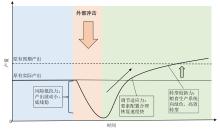
Fig. 1
Concept diagram of grain production resilience
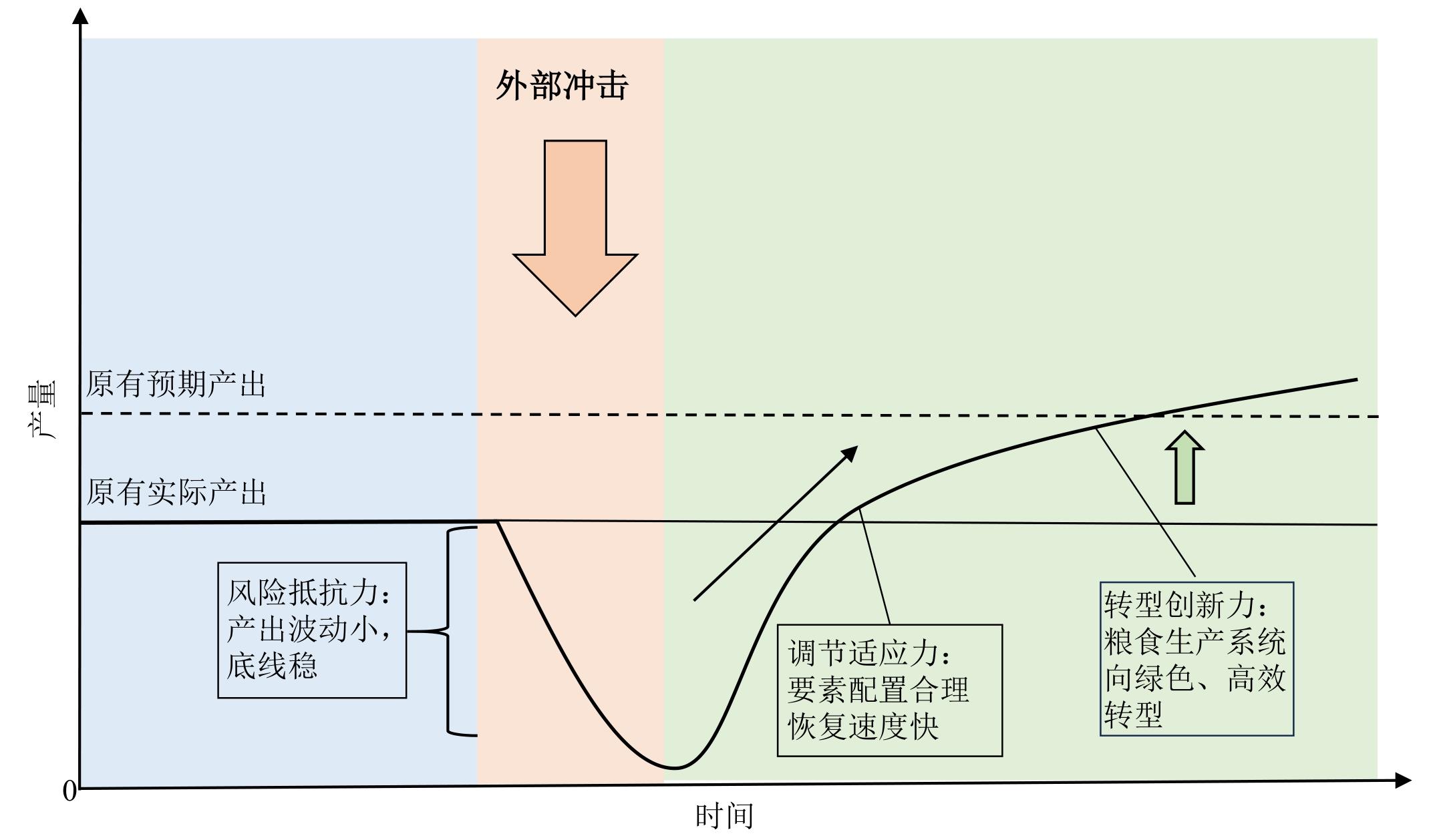
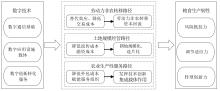
Fig. 2
The mechanism framework of digital technology improving the resilience of grain production

Table 1
Variable meaning and descriptive statistics of digital technology affecting grain production resilience
| 变量类别 | 变量名称 | 变量赋值 | 平均值 | 标准差 | 最大值 | 最小值 |
|---|---|---|---|---|---|---|
| 被解释变量 | 粮食生产韧性 | 熵值法计算 | 0.188 | 0.068 | 0.544 | 0.079 |
| 核心解释变量 | 数字技术 | 熵值法计算 | 0.157 | 0.010 | 0.704 | 0.029 |
| 机制变量 | 劳动力非农转移/% | (农村从业人员-第一产业从业人员)/农村从业人员×100% | 0.043 | 0.019 | 0.106 | 0.012 |
| 土地规模经营 | 家庭承包耕地流转总面积取对数 | 6.967 | 0.512 | 7.839 | 5.216 | |
| 农业生产性服务/% | 农林牧渔专业及辅助性活动产值/农林牧渔业总产值×100% | 0.042 | 0.019 | 0.106 | 0.012 | |
| 控制变量 | 城镇化率/% | 城镇人口/总人口×100% | 0.606 | 0.120 | 0.896 | 0.350 |
| 地区产业结构/% | (第二产业增加值+第三产业增加值)/地区生产总值×100% | 0.905 | 0.052 | 0.998 | 0.748 | |
| 农产品价格指数 | 采用上一年度农产品生产价格指数(指数,上年=100) | 4.646 | 0.059 | 4.955 | 4.472 | |
| 农村人均用电量/(kw·h/人) | 农村用电总量/乡村人口数 | 6.913 | 0.979 | 10.628 | 4.897 | |
| 公路里程数/(万km) | 区域内公路通车总里程 | 15.674 | 8.424 | 41.830 | 1.210 | |
| 农田有效灌溉率/% | 有效灌溉面积/农作物播种面积×100% | 0.440 | 0.178 | 1.234 | 0.172 | |
| 自然灾害受灾率/% | 农作物受灾面积/农作物播种面积×100% | 0.139 | 0.181 | 2.980 | 0.001 | |
| 人均可支配收入 | 农村居民人均可支配收入取对数 | 10.088 | 0.443 | 11.349 | 9.044 |
Table 2
Evaluation index system construction of grain production resilience
| 一级指标 | 二级指标 | 二级指标解释 | 属性 |
|---|---|---|---|
| 风险抵抗力 | 粮食产量波动率/% | |当年粮食总产量-过去5年粮食总产量移动平均值|/过去5年粮食总产量移动平均值 | - |
| 粮食减损潜力/(台/万亩) | 粮食每万亩脱粒机械年末拥有量 | + | |
| 耕地资源水平/(千hm2/万人) | 耕地面积/总人口 | + | |
| 粮食病虫草鼠害受灾挽回情况/% | 粮食病虫草鼠灾害挽回数量/粮食病虫草鼠灾害受灾数量 | + | |
| 调节适应力 | 农业劳动生产率/(元/人) | 农林牧渔业总产值/第一产业从业人员数 | + |
| 粮食生产综合机械化水平/% | 粮食作物机耕率×0.4+机播率×0.3+机收率×0.3 | + | |
| 土地生产率/(万t/千hm2) | 粮食总产量/粮食播种面积 | + | |
| 转型创新力 | 种质创新水平/个 | 农业植物新品种权申请数量 | + |
| 科技研发潜力/(人/千hm2) | 公有经济(国有)企事业单位农业技术人员/农作物播种面积 | + | |
| 科技研发投入/% | 区域研究与试验发展经费投入强度/国内生产总值 | + |
Table 3
Construction of digital technology evaluation index system
| 一级指标 | 二级指标 | 二级指标解释 | 属性 |
|---|---|---|---|
| 数字通信基础 | 农村有线广播电视普及率/% | 农村有线(广播)电视用户占家庭总户数比重 | + |
| 互联网业务普及率/% | 开通互联网业务的行政村占行政村总数比重 | + | |
| 基础通信网络水平/km | 长途光缆线路总长度 | + | |
| 计算机普及率/(台/每百户) | 农村居民平均每百户年末家用计算机拥有量 | + | |
| 智能手机普及率/(部/每百户) | 农村居民平均每百户年末移动电话拥有量 | + | |
| 数字应用设施载体 | 数字基地规模/个 | 区域认定的淘宝村数量 | + |
| 物联网应用支撑/km | 农村寄递物流长度 | + | |
| 农业气象观测能力/个 | 农村气象观测业务站个数 | + | |
| 邮政服务网点分布/(个/处) | 区域内邮政营业网点数量 | + | |
| 数字创新转化服务 | 农业数字创新产出/个 | 农业科技相关专利申请数量 | + |
| 数字金融广度(指数) | 数字普惠金融指数覆盖广度 | + | |
| 数字金融深度(指数) | 数字普惠金融指数使用深度 | + |
Table 4
Benchmark regression results of digital technology affecting grain production resilience
| 变量名称 | (1)粮食生产韧性 | (2)粮食生产韧性 | (3)风险抵抗力 | (4)调节适应力 | (5)转型创新力 |
|---|---|---|---|---|---|
| 数字技术 | 0.234***(0.039) | 0.309***(0.032) | -0.195***(0.027) | 0.895***(0.066) | 0.671***(0.065) |
| 控制变量一次项 | YES | YES | YES | YES | YES |
| 控制变量二次项 | NO | YES | YES | YES | YES |
| 年份固定效应 | YES | YES | YES | YES | YES |
| 省份固定效应 | YES | YES | YES | YES | YES |
| 观测值 | 390 | 390 | 390 | 390 | 390 |
Table 5
Robustness test results of digital technology affecting grain production resilience
| 变量名称 | (1)缩尾1% | (2)缩尾5% | (3)剔除直辖市 | (4)1∶2 | (5)1∶7 | (6)弹性网络回归 | (7)套索回归 |
|---|---|---|---|---|---|---|---|
| 数字技术 | 0.327*** (0.028) | 0.441*** (0.027) | 0.252*** (0.025) | 0.305*** (0.033) | 0.307*** (0.031) | 0.413*** (0.096) | 0.416*** (0.097) |
| 控制变量一次项 | YES | YES | YES | YES | YES | YES | YES |
| 控制变量二次项 | YES | YES | YES | YES | YES | YES | YES |
| 年份固定效应 | YES | YES | YES | YES | YES | YES | YES |
| 省份固定效应 | YES | YES | YES | YES | YES | YES | YES |
| 观测值 | 390 | 390 | 338 | 390 | 390 | 390 | 390 |
Table 6
Endogenous test results of digital technology affecting grain production resilience
| 变量名称 | Ⅳ:历史期1984年每百人固定电话数 | Ⅳ:滞后一期数字技术 |
|---|---|---|
| 数字技术 | 0.600*** (0.075) | 0.308*** (0.034) |
| 控制变量一次项 | YES | YES |
| 控制变量二次项 | YES | YES |
| 年份固定效应 | YES | YES |
| 省份固定效应 | YES | YES |
| 观测值 | 390 | 360 |
Table 7
Mechanism test results of digital technology affecting grain production resilience
| 变量名称 | 粮食生产韧性 | 非农劳动力转移 | 土地规模经营 | 农业生产性服务 |
|---|---|---|---|---|
| 数字技术 | 0.309*** (0.032) | 0.935*** (0.091) | 0.874*** (0.152) | 0.051*** (0.014) |
| 控制变量一次项 | YES | YES | YES | YES |
| 控制变量二次项 | YES | YES | YES | YES |
| 年份固定效应 | YES | YES | YES | YES |
| 省份固定效应 | YES | YES | YES | YES |
| 观测值 | 390 | 390 | 390 | 390 |
Table 8
Heterogeneity analysis results of digital technology affecting grain production resilience
| 变量名称 | 粮食生产区 | 地形起伏度 | 经济发展水平 | ||||
|---|---|---|---|---|---|---|---|
| 主产区 | 主销区 | 平衡区 | 高 | 低 | 高 | 低 | |
| 数字技术 | 0.272***(0.038) | 0.351***(0.056) | 0.386**(0.113) | 0.461***(0.068) | 0.198***(0.030) | 0.287***(0.031) | 0.470***(0.066) |
| 控制变量一次项 | YES | YES | YES | YES | YES | YES | YES |
| 控制变量二次项 | YES | YES | YES | YES | YES | YES | YES |
| 年份固定效应 | YES | YES | YES | YES | YES | YES | YES |
| 省份固定效应 | YES | YES | YES | YES | YES | YES | YES |
| 观测值 | 169 | 91 | 130 | 195 | 195 | 195 | 195 |
| [1] |
李国祥. 新时代国家粮食安全的目标任务及根本要求——学习习近平关于国家粮食安全论述及十九届六中全会相关精神的体会[J]. 中国农村经济, 2022(3): 2-11.
|
|
|
|
| [2] |
丁存振, 徐宣国. 国际粮食供应链安全风险与应对研究[J]. 经济学家, 2022(6): 109-118.
|
|
|
|
| [3] |
鲍国良, 姚蔚. 我国粮食生产现状及面临的主要风险[J]. 华南农业大学学报(社会科学版), 2019, 18(6): 111-120.
|
|
|
|
| [4] |
|
| [5] |
|
| [6] |
|
| [7] |
|
| [8] |
朱满德, 张青. 农业生产性服务与粮食生产韧性: 影响机制与实证检验[J]. 湖南农业大学学报(社会科学版), 2024, 25(6): 1-11.
|
|
|
|
| [9] |
|
| [10] |
李少林, 马里. 国家现代农业示范区建设影响粮食生产韧性的作用机制及政策效应[J]. 深圳大学学报(人文社会科学版), 2025, 42(3): 5-15.
|
|
|
|
| [11] |
|
| [12] |
刘佳, 秦芳. 高标准农田建设对粮食生产韧性的影响研究——基于高标准农田建设试点政策的准自然实验[J]. 农业经济与管理, 2024(6): 77-90.
|
|
|
|
| [13] |
周密, 牛浩, 魏超, 等. 农业保险保障对粮食生产韧性的影响研究[J]. 中国农业资源与区划, 2024, 45(8): 44-55.
|
|
|
|
| [14] |
|
| [15] |
|
| [16] |
高鸣, 杨新宇. 农业增效益: 数字技术赋能粮食产业高质量发展的实践进路[J]. 学习与探索, 2025(2): 23-32.
|
|
|
|
| [17] |
何可, 朱润. 数字技术赋能粮食系统绿色低碳转型[J]. 南京农业大学学报(社会科学版), 2025, 25(1): 55-67.
|
|
|
|
| [18] |
黄季焜, 苏岚岚, 王悦. 数字技术促进农业农村发展: 机遇、挑战和推进思路[J]. 中国农村经济, 2024(1): 21-40.
|
|
|
|
| [19] |
|
| [20] |
|
| [21] |
|
| [22] |
侯明利, 郝新哲. 数字技术如何推动农业高质量发展——基于要素流动的中介效应与产业结构转型的调节效应[J]. 河南师范大学学报(哲学社会科学版), 2023, 50(6): 21-28.
|
|
|
|
| [23] |
任健华, 雷宏振. 数字普惠金融、资本深化与农业全要素生产率[J]. 社会科学家, 2022(6): 86-95.
|
|
|
|
| [24] |
曾福生, 蔡林军. 劳动力转移影响粮食生产韧性的理论机制与实证检验[J]. 华南农业大学学报(社会科学版), 2024, 23(5): 84-94.
|
|
|
|
| [25] |
唐林, 罗小锋, 张俊飚. 购买农业机械服务增加了农户收入吗——基于老龄化视角的检验[J]. 农业技术经济, 2021(1): 46-60.
|
|
|
|
| [26] |
马晓河, 杨祥雪. 城乡二元结构转换过程中的农业劳动力转移——基于刘易斯第二转折点的验证[J]. 农业经济问题, 2023(1): 4-17.
|
|
|
|
| [27] |
李程钰, 侯盈伦, 刘淑云, 等. 农业数字技术发展对土地规模经营的影响——基于农业机械化与农户融资成本的中介效应[J]. 中国农机化学报, 2025, 46(9): 292-302.
|
|
|
|
| [28] |
谢帮生, 陈鎏鹏, 周子渭. 数字乡村建设能助力乡村包容性绿色增长吗?——基于双重机器学习的因果推断[J]. 中国人口·资源与环境, 2024, 34(12): 167-179.
|
|
|
|
| [29] |
郝爱民, 谭家银. 数字乡村建设对我国粮食体系韧性的影响[J]. 华南农业大学学报(社会科学版), 2022, 21(3): 10-24.
|
|
|
|
| [30] |
王笳旭, 李朝柱. 农村人口老龄化与农业生产的效应机制[J]. 华南农业大学学报(社会科学版), 2020, 19(2): 60-73.
|
|
|
|
| [31] |
|
| [32] |
|
| [33] |
张涛, 李均超. 网络基础设施、包容性绿色增长与地区差距——基于双重机器学习的因果推断[J]. 数量经济技术经济研究, 2023, 40(4): 113-135.
|
|
|
|
| [34] |
黄群慧, 余泳泽, 张松林. 互联网发展与制造业生产率提升: 内在机制与中国经验[J]. 中国工业经济, 2019(8): 5-23.
|
|
|
|
| [35] |
|
| [36] |
江艇. 因果推断经验研究中的中介效应与调节效应[J]. 中国工业经济, 2022(5): 100-120.
|
|
|
|
| [37] |
秦旺康, 凌佳旭, 薛永基. 数字乡村发展对粮食主产区农业生产效率提升的影响机制研究[J]. 农业现代化研究, 2025, 46(3): 454-469.
|
|
|
|
| [38] |
尹鹏, 李瑞庆, 王莎莎, 等. 数字技术创新对乡村旅游公共服务的影响及其空间效应[J]. 经济地理, 2026, 46(1): 256-265.
|
|
|
| [1] | DAI Xin, HAN Rui, JIANG Xiaoyu, LI Zhong. Multiple Pathways of Digital Technology Driving the Enhancement of Agricultural Economic Resilience [J]. Smart Agriculture, 2026, 8(3): 190-202. |
| [2] | YU Zetian, ZHANG Shibo, WU Yu, PENG Hua, DONG Xiaoxia. The Impact of Digital Rural Development on Rural Residents' Income Growth: Evidence from the National Digital Rural Pilot Program [J]. Smart Agriculture, 2026, 8(3): 147-158. |
| [3] | ZHU Mengshuai, HUANG Mingyi, SHEN Chen, CHI Liang, ZHANG Jing, WU Jianzhai. Digital Technology Driving Agricultural Economic Resilience: Mechanism Analysis, Empirical Test, and Policy Implications [J]. Smart Agriculture, 2026, 8(3): 203-214. |
| [4] | HE Leilei, JIANG Shuji, YANG Jun. Digital-Intelligent Technologies Empowering High-Quality Agricultural Development: Current Status, Challenges, and Pathways [J]. Smart Agriculture, 2026, 8(3): 13-25. |
| [5] | WU Yunhua, AI Liya. Impact of Digital Literacy on the Loan Behavior of Farmers and Herdsmen: Review and Prospect [J]. Smart Agriculture, 2026, 8(3): 132-146. |
| [6] | DING Fanlin. The Low-Carbon Transition of Rural Residents' Lifestyle through Digital Empowerment: A Review [J]. Smart Agriculture, 2026, 8(3): 119-131. |
| [7] | BAI Ruibin, WANG Hui, WANG Hongpeng, HONG Jiashun, ZHOU Junhui, YANG Jian. Rapid and Non-Destructive Analysis Method of Hawthorn Moisture Content Based on Hyperspectral Imaging Technology [J]. Smart Agriculture, 2025, 7(4): 95-107. |
| [8] | XU Ruifeng, WANG Yaohua, DING Wenyong, YU Junqi, YAN Maocang, CHEN Chen. Shrimp Diseases Detection Method Based on Improved YOLOv8 and Multiple Features [J]. Smart Agriculture, 2024, 6(2): 62-71. |
| [9] | ZHAO Jinling, DU Shizhou, HUANG Linsheng. Monitoring Wheat Powdery Mildew (Blumeria graminis f. sp. tritici) Using Multisource and Multitemporal Satellite Images and Support Vector Machine Classifier [J]. Smart Agriculture, 2022, 4(1): 17-28. |
| [10] | XIAO Shijie, WANG Qiaohua, LI Chunfang, ZHAO Limei, LIU Xinya, LU Shiyu, ZHANG Shujun. Construction of Milk Purchase Classification Model Based on Shuffled Frog Leaping Algorithm and Support Vector Machine [J]. Smart Agriculture, 2021, 3(4): 77-85. |
| [11] | LI Dongbo, HUANG Lyuwen, ZHAO Xubo. Detection Method of Apple Mould Core Based on Dielectric Characteristics [J]. Smart Agriculture, 2021, 3(4): 66-76. |
| [12] | FLORES Paulo, ZHANG Zhao, MATHEW Jithin, JAHAN Nusrat, STENGER John. Distinguishing Volunteer Corn from Soybean at Seedling Stage Using Images and Machine Learning [J]. Smart Agriculture, 2020, 2(3): 61-74. |
| [13] | LIU Tianlin, ZHU Xicun, BAI Xueyuan, PENG Yufeng, LI Meixuan, TIAN Zhongyu, JIANG Yuanmao, YANG Guijun. Hyperspectral Estimation Model Construction and Accuracy Comparison of Soil Organic Matter Content [J]. Smart Agriculture, 2020, 2(3): 129-138. |
| [14] | Zhou Chao, Xu Daming, Lin Kai, Chen Lan, Zhang Song, Sun Chuanheng, Yang Xinting. Evaluation of fish feeding intensity in aquaculture based on near-infrared machine vision [J]. Smart Agriculture, 2019, 1(1): 76-84. |
| Viewed | ||||||
|
Full text |
|
|||||
|
Abstract |
|
|||||