Smart Agriculture ›› 2026, Vol. 8 ›› Issue (3): 26-39.doi: 10.12133/j.smartag.SA202510009
• Special Issue--Digital Technologies Reshaping Agriculture and Agricultural Economics • Previous Articles Next Articles
FANG Hongwei, HU Ranran, REZIYAN· Wakasi( )
)
Received:2025-10-11
Online:2026-05-30
Foundation items:Key Project of the Science and Technology Commissioner of Xinjiang Uygur Autonomous Region(2023KZ016); Project of the Postgraduate Education Innovation Plan of Xinjiang Uygur Autonomous Region(XJ2025G129)
About author:FANG Hongwei, E-mail: 2109155846@qq.com
corresponding author:
CLC Number:
FANG Hongwei, HU Ranran, REZIYAN· Wakasi. Construction of A Comprehensive Evaluation System, Practice Pattern, and Driving Mechanism for Smart Agriculture Development[J]. Smart Agriculture, 2026, 8(3): 26-39.
Add to citation manager EndNote|Ris|BibTeX
URL: https://www.smartag.net.cn/EN/10.12133/j.smartag.SA202510009
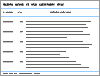
Table 1
Data sources and processing of core smart agriculture variables (2015—2023)
| | | | |
|---|---|---|---|
| | | | |
| | | | |
| | | | |
| | | | |
| | | | |
| | | | |
| | | | |
| | | | |
Table 2
Descriptive statistics of smart agriculture variables (2015—2023)
| 变量 | 观测值 | 均值 | 标准差 | 最小值 | 最大值 |
|---|---|---|---|---|---|
| 智慧农业应用水平 | 270 | 30.838 | 22.304 | 3.141 | 100.000 |
| 技术资本 | 270 | 0.074 | 0.965 | -1.558 | 2.468 |
| 数据要素 | 270 | 0.309 | 0.749 | -0.921 | 3.343 |
| 农业物质资本 | 270 | 8.084 | 9.030 | 1.353 | 10.937 |
| 数据要素×农业物质资本 | 270 | 0.020 | 1.043 | -0.390 | 6.155 |
| 受灾比例 | 270 | 5.460 | 1.714 | -1.050 | 8.349 |
| 人均农业产值 | 270 | 0.160 | 0.149 | 0.003 | 0.799 |
| 农业土地流转率 | 270 | 0.376 | 0.167 | 0.041 | 0.922 |
| 受教育年限 | 270 | 0.145 | 0.750 | -2.290 | 2.637 |
| 农林水事务支持度 | 270 | 0.000 | 0.000 | 0.000 | 0.001 |
| 工具变量 | 270 | 14.424 | 0.573 | 13.291 | 16.714 |
Table 3
Evaluation indicator system for smart agriculture development
| 一级指标 | 指标阐释 | 数据来源 |
|---|---|---|
| 生产加工数字化 | 智能农机作业面积占比 | 《中国农业机械工业年鉴》 |
| 单位面积无人机作业强度 | 《中国农业机械工业年鉴》 | |
| 智能灌溉面积占比 | EPS数据库 | |
| 智能化播种作业占比 | 《中国林业和草原统计年鉴》 | |
| 智能化养殖场占比 | 《中国畜牧兽医年鉴》 | |
| 林业智能监测覆盖率 | 《中国林业和草原统计年鉴》 | |
| 智能化渔船占比 | 《中国渔业统计年鉴》 | |
| 流通营销数字化 | 电商企业占比 | 《中国高技术产业统计年鉴》 |
| 村级物流网点覆盖率 | 《中国高技术产业统计年鉴》 | |
| 农产品网络零售额占比 | EPS数据库 | |
| 数字技术服务业 | 智慧服务组织数量密度 | 《中国统计年鉴》 |
| 高新技术企业密度 | 《中国高技术产业统计年鉴》 | |
| 农业科研创新数字化 | 发明专利占比 | 国家知识产权局 |
| 数字农业研发投入强度 | 《中国统计年鉴》 | |
| 数字农业研发人员占比 | 《中国人口与就业统计年鉴》 |
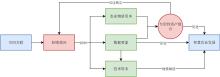
Fig.1
Theoretical analytical framework for the development of smart agriculture
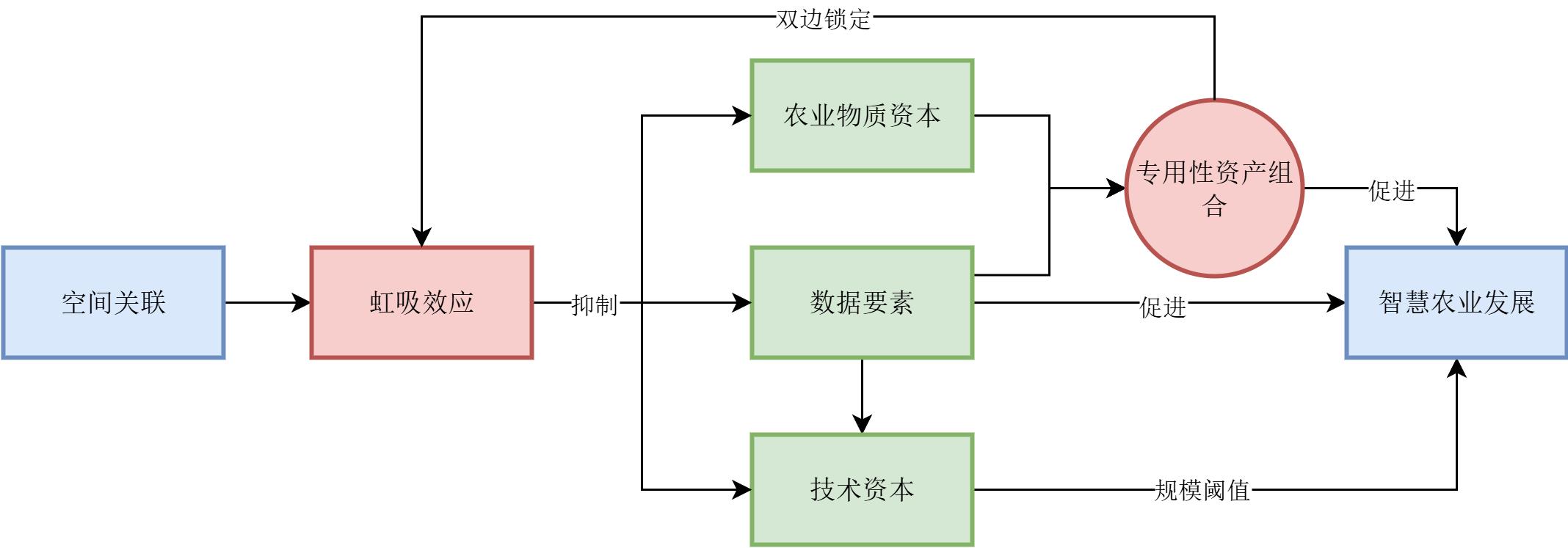
Table 4
Test results for spatial econometric model selection in smart agriculture development
| 空间权重矩阵 | LR统计量 | P值 | 模型选择 |
|---|---|---|---|
| 农业分区权重 | 15.090 | 0.002 | SDM |
| 经济权重 | 42.430 | 0.001 | SDM |
| 地理权重 | 2.630 | 0.452 | SAR |
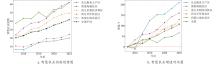
Fig. 2
Regional smart agriculture development index and growth rate
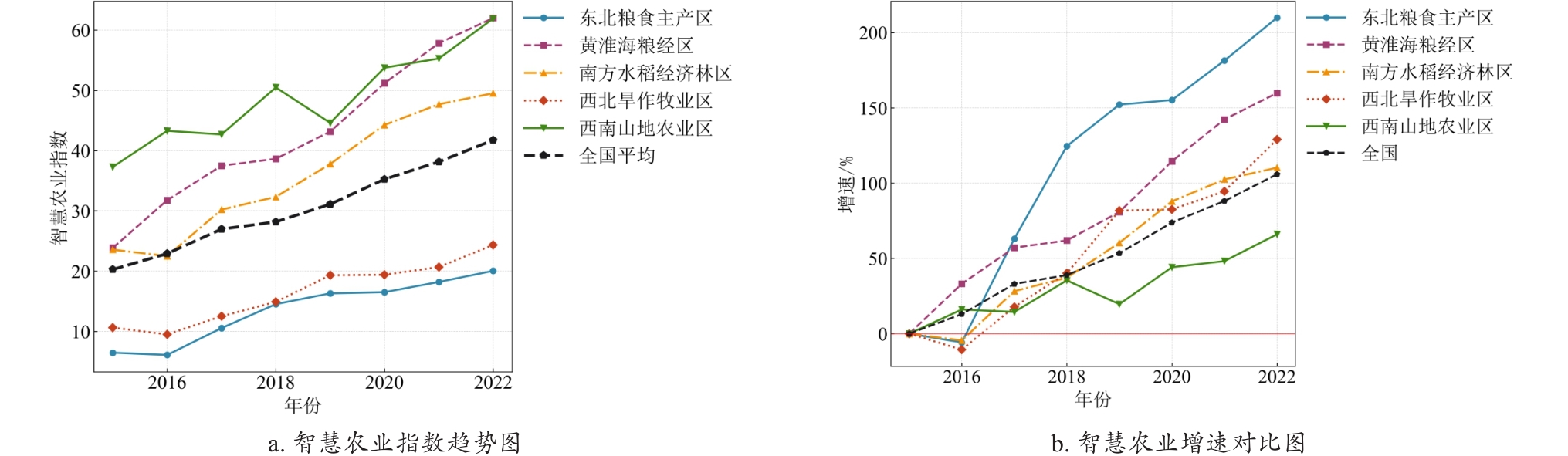
Table 5
Coefficient of variation and Moran's I in the study on dynamic convergence of provincial smart agriculture structure
| 年份 | 全国结构指数CV | 空间邻接平均差异 | 经济组内平均差异 | 莫兰指数 | Z值 |
|---|---|---|---|---|---|
| 2015 | 0.809 | 0.100 | 0.124 | 0.161* | 1.638 |
| 2016 | 0.858 | 0.112 | 0.122 | 0.159* | 1.585 |
| 2017 | 0.762 | 0.113 | 0.139 | 0.113 | 1.211 |
| 2018 | 0.816 | 0.128 | 0.165 | 0.204** | 2.015 |
| 2019 | 0.741 | 0.093 | 0.133 | 0.334*** | 3.031 |
| 2020 | 0.555 | 0.07 | 0.105 | 0.286*** | 2.632 |
| 2021 | 0.681 | 0.107 | 0.155 | 0.308*** | 2.846 |
| 2022 | 0.740 | 0.114 | 0.159 | 0.295*** | 2.720 |
| 2023 | 0.707 | 0.122 | 0.170 | 0.251** | 1.963 |
Fig. 3
Spatial distribution and evolution of China's provincial smart agriculture index
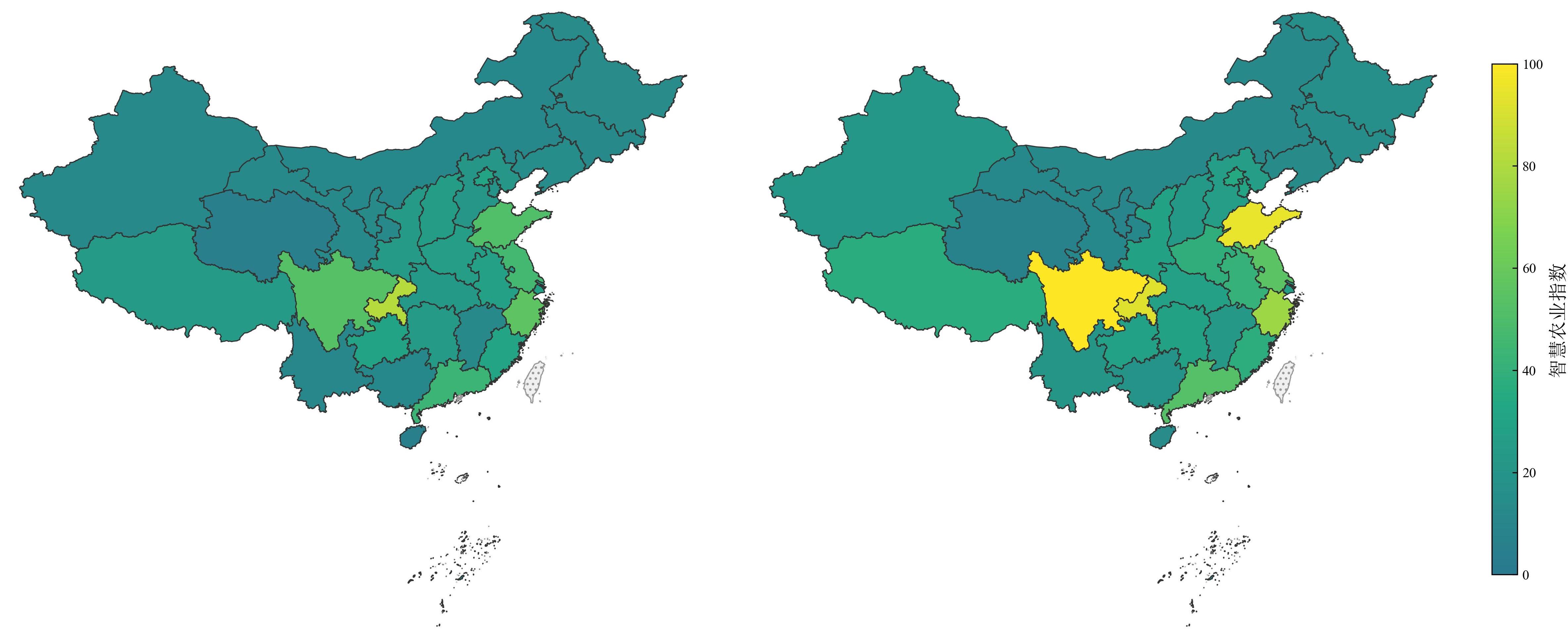
Table 6
Empirical test results on the synergistic drivers of smart agriculture development by data elements and agricultural material capital
| 变量 | OLS | 中介路径 | 直接效应 | 调节效应 | GMM | TOPSIS | 传感器企业 |
|---|---|---|---|---|---|---|---|
| (1) | (2) | (3) | (4) | (5) | (6) | (7) | |
| 数据要素 | 0.577*** | 0.017*** | 0.450** | 0.629*** | 0.300*** | 3.865 1*** | 74.907*** |
| (0.193) | (0.005) | (0.202) | (0.194) | (0.109) | (1.106) | (17.486) | |
| 农业物质资本 | 1.153* | 3.494*** | 0.001 1*** | 96.078* | |||
| (0.571) | (0.864) | (0.000) | (54.038) | ||||
| 数据要素×农业物质资本 | 1.763*** | 2.358** | 7.705 6*** | -70.306 | |||
| (0.710) | (1.045) | (2.386) | (41.580) | ||||
| 技术资本 | 7.442** | ||||||
| (3.538) | |||||||
| 滞后项 | 0.731*** | ||||||
| (0.137) | |||||||
| 常数项 | 12.173 | -0.260 | 14.110* | 12.813* | 5.595* | -10.087 | -1 247.619* |
| (7.537) | (0.255) | (8.009) | (7.336) | (3.131) | (7.200) | (657.436) | |
| AR(1)p值 | 0.014 | ||||||
| AR(2)p值 | 0.671 | ||||||
| Hansen检验p值 | 0.424 | ||||||
| 0.957 | |||||||
| 控制年份 | 是 | 是 | 是 | 是 | 是 | 是 | 是 |
| 控制省份 | 是 | 是 | 是 | 是 | 是 | 是 | 是 |
| R 2 | 0.657 | 0.555 | 0.670 | 0.668 | 0.576 | 0.746 | |
| 观测值 | 270 | 270 | 270 | 270 | 270 | 270 | 270 |
Table 7
Spatial econometric analysis results of the synergistic effects between data elements and agricultural physical capital
| 变量 | 农业分区权重 | 经济权重 | 地理权重 |
|---|---|---|---|
| 数据要素 | -8.800*** | -3.997* | -8.230*** |
| (2.235) | (2.400) | (2.292) | |
| 农业物质资本 | -0.001** | -0.002*** | -0.001* |
| (0.001) | (0.001) | (0.000) | |
| 数据要素×农业物质资本 | 9.879*** | 18.314*** | 8.269** |
| (4.054) | (5.737) | (3.867) | |
| 技术资本 | 12.299*** | 10.857*** | 11.112*** |
| (1.986) | (1.957) | (2.014) | |
| 常数项 | 42.594*** | 202.173*** | 49.546*** |
| (7.384) | (48.680) | (7.439) | |
| Rho | 0.025 | -0.326* | 0.044 |
| (0.065) | (0.313) | (0.083) | |
| LR | 13.66 | 26.41 | 1.21 |
| P值 | 0.001 0 | 0.000 0 | 0.545 1 |
| 控制年份 | 是 | 是 | 是 |
| 控制省份 | 是 | 是 | 是 |
| R 2 | 0.490 | 0.474 | 0.483 |
| 观测值 | 240 | 240 | 240 |
Table 8
Decomposition results of spatial spillover effects for smart agriculture development
| 变量 | 农业分区权重 | 经济权重 | ||||
|---|---|---|---|---|---|---|
| 直接效应 | 间接效应 | 总效应 | 直接效应 | 间接效应 | 总效应 | |
| 数据要素 | -8.832*** | 6.225*** | -2.607 | -3.638*** | -38.691*** | -42.329*** |
| (2.158) | (2.005) | (2.864) | (2.381) | (13.505) | (13.387) | |
| 农业物质资本 | -0.001** | 0.001 | -0.000 | -0.002*** | -0.02** | -0.026*** |
| (0.000) | (0.001) | (0.001) | (0.001) | (0.013) | (0.013) | |
| 数据要素×农业物质资本 | 9.395*** | -6.419 | 2.976 | 15.689*** | 181.581** | 197.271** |
| (3.795) | (5.274) | (5.168) | (5.305) | (91.371) | (95.212) | |
| RD投入强度 | 12.396*** | 0.302 | 12.699*** | 10.995*** | -2.201 | 8.794*** |
| (2.043) | (0.800) | (2.238) | (2.031) | (2.853) | (3.015) | |
| 观测值 | 240 | 240 | 240 | 240 | 240 | 240 |
Table 9
Analysis of the spatial heterogeneity mechanism of core driving factors for smart agriculture
| 变量 | 组1 | 组2 | 组3 | 组4 | 组5 | 低增长 | 中增长 | 高增长 |
|---|---|---|---|---|---|---|---|---|
| 数据要素 | 6.661*** | 13.619*** | 13.430*** | -20.722*** | 5.335*** | 2.359 | 6.575** | 7.340*** |
| (1.764) | (4.888) | (3.862) | (6.888) | (1.915) | (1.581) | (2.585) | (2.363) | |
| 农业物质资本 | -0.237*** | 0.030*** | 0.000 | -0.000 | -0.003 | 0.001 | -0.000 | -0.002 |
| (0.047) | (0.006) | (0.002) | (0.001) | (0.004) | (0.001) | (0.001) | (0.002) | |
| 数据要素×农业物质资本 | 1 784.957*** | -211.075*** | 3.355 | 2.616 | 20.976 | -4.990 | 3.741 | 10.615 |
| (337.403) | (45.468) | (11.008) | (4.649) | (29.499) | (10.248) | (4.255) | (14.022) | |
| 技术资本 | -8.862*** | -0.460 | 10.296*** | -5.378 | -0.200 | 17.355*** | 10.462*** | 12.954*** |
| (1.618) | (3.354) | (3.830) | (12.916) | (2.195) | (3.998) | (3.487) | (3.550) | |
| 滞后项 | -0.166* | 0.044 | 0.015 | 0.017 | 0.088* | 56.636*** | 25.168*** | 21.992 |
| (0.093) | (0.049) | (0.043) | (0.063) | (0.052) | (13.447) | (8.440) | (15.340) | |
| Rho | -0.920*** | -0.659 | -0.088 | -0.491** | -0.262*** | 0.086 | -0.177* | 0.049 |
| (0.311) | (0.347) | (0.165) | (0.234) | (0.098) | (0.095) | (0.091) | (0.096) | |
| r方 | 0.484 | 0.548 | 0.644 | 0.452 | 0.546 | 0.700 | 0.513 | 0.654 |
| 观测值 | 24 | 40 | 56 | 32 | 48 | 80 | 80 | 80 |
| [1] |
慕娟, 马立平. 中国农业农村数字经济发展指数测度与区域差异[J]. 华南农业大学学报(社会科学版), 2021, 20(4): 90-98.
|
|
|
|
| [2] |
周迪, 程慧平. 中国农业现代化发展水平时空格局及趋同演变[J]. 华南农业大学学报(社会科学版), 2015, 14(1): 25-35.
|
|
|
|
| [3] |
|
| [4] |
|
| [5] |
李道亮. 城乡一体化发展的思维方式变革: 论现代城市经济中的智慧农业[J]. 人民论坛·学术前沿, 2015(17): 39-47.
|
|
|
|
| [6] |
刘长全. 关于智慧农业的理论思考: 发展模式、潜在问题与推进策略[J]. 经济纵横, 2023(8): 63-70.
|
|
|
|
| [7] |
|
| [8] |
|
| [9] |
李明亮, 陈德慧, 余国新. 数字普惠金融赋能粮食体系韧性: 基于空间溢出效应视角分析[J]. 中国农业资源与区划, 2024, 45(5): 74-84.
|
|
|
|
| [10] |
柏培文, 喻理. 数字经济发展与企业价格加成: 理论机制与经验事实[J]. 中国工业经济, 2021(11): 59-77.
|
|
|
|
| [11] |
李娜, 张馨月, 张美慧. 中国智慧农业发展指数测度与分析[J]. 经济与管理评论, 2025, 41(1): 135-147.
|
|
|
|
| [12] |
|
| [13] |
|
| [14] |
|
| [15] |
李晓华, 高旭东, 李纪珍. 柔性框架: AI领域的学术创业企业如何跨越"死亡之谷"[J]. 南开管理评论, 2023, 26(3): 4-14, 27, 15-16.
|
|
|
|
| [16] |
贾利军, 陈恒烜. 构建关键核心技术攻关新型举国体制的机制创新与突破路径[J]. 经济学家, 2023(12): 46-55.
|
|
|
|
| [17] |
邵云飞, 陈燕萍, 吴晓波, 等. 从"研发"到"市场": 链主企业如何实现关键核心技术的商业化 [J]. 管理世界, 2024, 40(12): 19-43.
|
|
|
|
| [18] |
黄赜琳, 蒋鹏程. 多多益善还是过犹不及: 企业数字化投入与全要素生产率[J]. 中国农村经济, 2024(12): 108-128.
|
|
|
|
| [19] |
许恒, 张一林, 曹雨佳. 数字经济、技术溢出与动态竞合政策[J]. 管理世界, 2020, 36(11): 63-84.
|
|
|
|
| [20] |
|
| [21] |
|
| [22] |
付阳奇, 朱玉春. 数字基础设施建设对农产品市场分割的影响: 基于"宽带中国"战略试点的准自然实验[J]. 中国农村经济, 2024(1): 62-81.
|
|
|
|
| [23] |
|
| [24] |
方福前, 田鸽, 张勋. 数字基础设施与代际收入向上流动性: 基于“宽带中国”战略的准自然实验[J]. 经济研究, 2023, 58(5): 79-97.
|
|
|
|
| [25] |
田鸽, 张勋. 数字经济、非农就业与社会分工[J]. 管理世界, 2022, 38(5): 72-84, 311.
|
|
|
|
| [26] |
张勋, 万广华, 张佳佳, 等. 数字经济、普惠金融与包容性增长[J]. 经济研究, 2019, 54(8): 71-86.
|
|
|
|
| [27] |
焦豪, 崔瑜, 张亚敏. 数字基础设施建设与城市高技能创业人才吸引[J]. 经济研究, 2023, 58(12): 150-166.
|
|
|
|
| [28] |
|
| [29] |
|
| [30] |
牛子恒, 崔宝玉. 网络基础设施建设与劳动力配置扭曲: 来自“宽带中国”战略的准自然实验[J]. 统计研究, 2022, 39(10): 133-148.
|
|
|
|
| [31] |
|
| [32] |
许尔琪. 中国农业资源环境分区数据集[J]. 全球变化数据学报(中英文), 2021(1): 19-26.
|
|
|
|
| [33] |
|
| [1] | GAO Qun, LUO Yinfang. Evolution Characteristics and Optimizing Strategy of Smart Agriculture Policies in China: Based on "Tools-Topics-Objectives" Framework [J]. Smart Agriculture, 2026, 8(3): 253-269. |
| [2] | GU Xuewei, ZHAO Xianghao. Logic, Impediments and Suggestion of Smart Agriculture-Enabled Green Transition in Agriculture: Based on the Perspective of Technological Innovation [J]. Smart Agriculture, 2026, 8(3): 40-50. |
| [3] | HE Leilei, JIANG Shuji, YANG Jun. Digital-Intelligent Technologies Empowering High-Quality Agricultural Development: Current Status, Challenges, and Pathways [J]. Smart Agriculture, 2026, 8(3): 13-25. |
| [4] | WAN Zhiqian, LIU Yuzhen. The Protection Dilemma and Institutional Responses of Agricultural Operators' Data Rights and Interests in the Context of Smart Agriculture [J]. Smart Agriculture, 2026, 8(3): 270-283. |
| [5] | YANG Ming, HU Bingchuan. Comparison and Evolutionary Trends of Global Smart Agriculture Models [J]. Smart Agriculture, 2026, 8(3): 1-12. |
| [6] | HE Yong, DAI Fushuang, ZHU Jiangpeng, HE Liwen, WANG Yueying. Current Status and Trends of Application Scenarios and Industrial Development in the Agricultural Low-Altitude Economy [J]. Smart Agriculture, 2025, 7(6): 1-17. |
| [7] | LAN Yubin, WANG Chaofeng, SUN Heguang, CHEN Shengde, WANG Guobin, DENG Xiaoling, WANG Yuanjie. Low-Altitude Technology Empowering Smart Agriculture: Technical System, Application Scenarios, and Challenge Recommendations [J]. Smart Agriculture, 2025, 7(6): 18-34. |
| [8] | ZHAO Yingping, LIANG Jinming, CHEN Beizhang, DENG Xiaoling, ZHANG Yi, XIONG Zheng, PAN Ming, MENG Xiangbao. Applications Research Progress and Prospects of Multi-Agent Large Language Models in Agricultural [J]. Smart Agriculture, 2025, 7(5): 37-51. |
| [9] | ZHAO Bingting, HUA Chuanhai, YE Chenyang, XIONG Yuchun, QIAN Tao, CHENG Tao, YAO Xia, ZHENG Hengbiao, ZHU Yan, CAO Weixing, JIANG Chongya. Research Progress on Remote Sensing Monitoring and Intelligent Decision-Making Algorithms for Rice Production [J]. Smart Agriculture, 2025, 7(2): 57-72. |
| [10] | YU Fenghua, XU Tongyu, GUO Zhonghui, BAI Juchi, XIANG Shuang, GUO Sien, JIN Zhongyu, LI Shilong, WANG Shikuan, LIU Meihan, HUI Yinxuan. Research Status and Prospects of Key Technologies for Rice Smart Unmanned Farms [J]. Smart Agriculture, 2024, 6(6): 1-22. |
| [11] | CAO Bingxue, LI Hongfei, ZHAO Chunjiang, LI Jin. The Path of Smart Agricultural Technology Innovation Leading Development of Agricultural New Quality Productivity [J]. Smart Agriculture, 2024, 6(4): 116-127. |
| [12] | WANG Rujing. Agricultural Sensor: Research Progress, Challenges and Perspectives [J]. Smart Agriculture, 2024, 6(1): 1-17. |
| [13] | GUO Dafang, DU Yuefeng, WU Xiuheng, HOU Siyu, LI Xiaoyu, ZHANG Yan'an, CHEN Du. Digital Twin for Agricultural Machinery: From Concept to Application [J]. Smart Agriculture, 2023, 5(2): 149-160. |
| [14] | HU Ruifa, LIU Wanjiawen. Technological Revolution, Disruptive Technology and Smart Agriculture [J]. Smart Agriculture, 2022, 4(4): 138-143. |
| [15] | LI Li, LI Minzan, LIU Gang, ZHANG Man, WANG Maohua. Goals, Key Technologies, and Regional Models of Smart Farming for Field Crops in China [J]. Smart Agriculture, 2022, 4(4): 26-34. |
| Viewed | ||||||
|
Full text |
|
|||||
|
Abstract |
|
|||||