WEI Daochu1,2( ), WANG Zhichong1, LI Xuecheng1, WANG Jingwei1, ZHOU Mengchuang1, ZHAI Changyuan1,2(), ZOU Wei1()
Received:2026-04-18
Online:2026-07-07
Foundation items:National Key Research and Development Program of China(2022YFD2001402); China Agriculture Research System of the Ministry of Finance and the Ministry of Agriculture and Rural Affairs(CARS-30-4-01); Platform Construction and Capacity Enhancement of the Peach Industry Technology Research Institute(CYJS202601)
corresponding author:
CLC Number:
WEI Daochu, WANG Zhichong, LI Xuecheng, WANG Jingwei, ZHOU Mengchuang, ZHAI Changyuan, ZOU Wei. Research Progress on Key Technologies and Intelligent Development Trends of Orchard Trenching and Fertilization Equipment[J]. Smart Agriculture, doi: 10.12133/j.smartag.SA202604028.
Add to citation manager EndNote|Ris|BibTeX
URL: https://www.smartag.net.cn/EN/10.12133/j.smartag.SA202604028
Table 1
Advantages, disadvantages, and application scenarios of different fertilization methods
| 施肥方式 | 主要优点 | 主要缺点 | 应用场景 |
|---|---|---|---|
| 环状沟施[ | 与根系分布匹配度高、施肥均匀、适合根系外围促生新根 | 沟位规划与回转空间要求较高;行间狭窄时机动性受限 | 成年果树基肥和追肥 |
| 条沟施[ | 通过性好、作业效率高、路径规划简单 | 对单株定点性较弱,易受行间障碍影响 | 密植果园、规模化基地快速追肥 |
| 放射沟施[ | 兼顾不同根向,保护主根系 | 对转弯半径与沟间距要求高;不利于超密植 | 树体间距较大、行间较宽的果园 |
| 穴施[ | 定量与深度可精确控制,便于幼树定向供肥 | 劳动强度大、效率低,小机具效率受限 | 幼树或定植初期、补救性施肥 |
| 滴灌施肥(水肥一体化)[ | 水肥同步、利用率高、便于传感与自动控制联动 | 初期投资与维护成本高,维护要求高 | 设施园、矮化密植、旱区节水 |
| 地表撒施[ | 作业效率极高、成本低 | 肥效易受蒸发径流与反硝化影响,利用率偏低 | 平地、低成本大面积快速追施 |
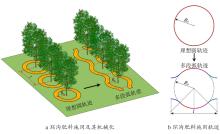
Fig. 1
Schematic diagram of the ring-furrow fertilizer application method and its mechanized operation trajectory
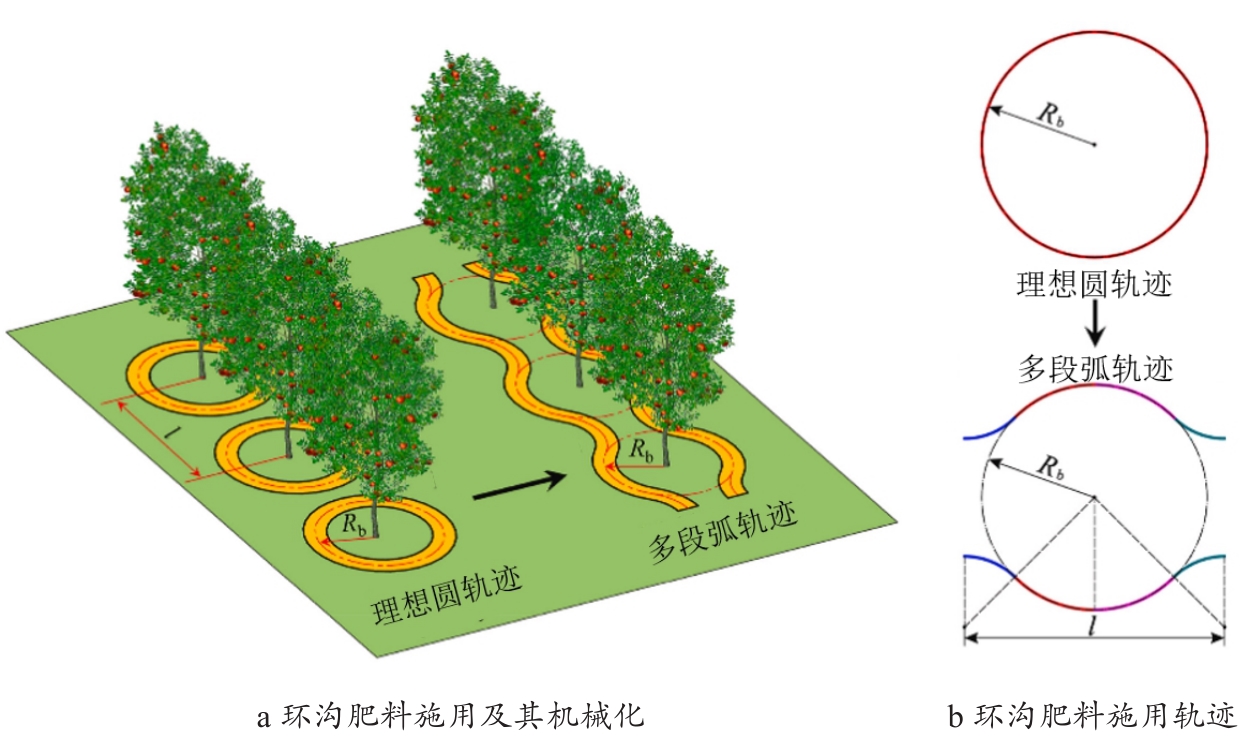
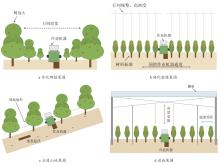
Fig. 2
Schematic diagram of different orchard types and inter-row working conditions
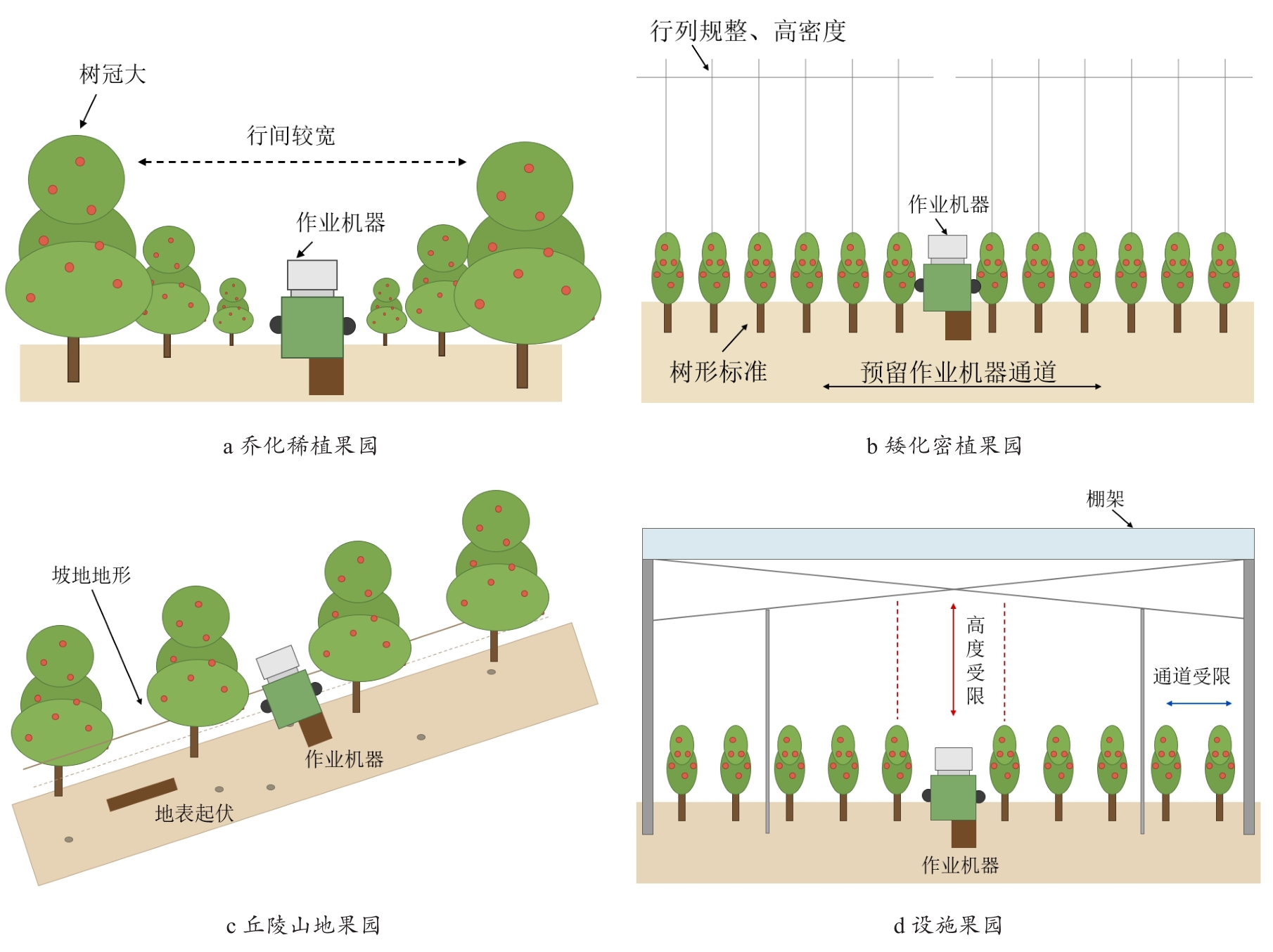
Table 2
Requirements for trenching and fertilization parameters and equipment configuration in different orchard types
| 果园类型 | 空间特征 | 适宜施肥方式 | 开沟施肥参数要求 | 适宜装备形式 | 关键控制要求 |
|---|---|---|---|---|---|
| 矮化密植果园[ | 株距相对较小,树形规整,行列标准化程度较高,根系分布较集中 | 行侧条沟施肥、近根区定向施肥、滴灌施肥 | 宜采用中浅沟、窄沟作业;施肥位置应靠近有效根区并避开主根及设施管线 | 小型自走式、窄体履带式、电动或液压驱动机型 | 行间稳定通行、沟位精确控制、施肥位置精准控制 |
| 乔化稀植/成年果园[ | 树冠大,根系分布范围广,行间空间相对宽裕 | 环状沟施肥、放射沟施肥、行侧条沟施肥 | 可采用中深沟作业;更强调开沟深度、施肥量和连续作业效率;施肥位置多布置在树冠投影边缘或根系外围吸收区 | 拖拉机配套式、悬挂式、偏置式开沟施肥机 | 沟深稳定、肥箱容量匹配、作业效率提升 |
| 丘陵山地/复杂地形果园[ | 地形起伏大,坡度变化明显,附着条件差,行间道路不规则 | 局部定向施肥、有机肥深施 | 开沟深度需具备较宽调节范围;沟深和沟形易受坡度、滑移和机具姿态影响 | 履带自走式、遥控式、低重心开沟施肥机 | 坡地稳定、仿形控制、抗滑移、作业安全 |
| 设施果园/避雨棚果园[ | 棚下通道受限、环境敏感 | 浅中沟施肥、滴灌施肥、小型定向施肥 | 开沟深度和宽度不宜过大;要求低扰动、低噪声和小型化 | 小型电动式、轻量化自走式、模块化施肥装备 | 小型化、低噪低排、低扰动作业 |
| 标准化/智慧果园[ | 行株距规整,作业路径相对明确,便于传感器和控制系统布置 | 根区定向施肥、变量施肥、处方图施肥 | 开沟深度、施肥量和作业速度需协同匹配;施肥位置可依据树体位置、冠层信息或处方图动态调整 | 自动导航式、变量施肥式、多功能一体化装备 | 路径跟踪、变量调控、施肥量闭环控制 |
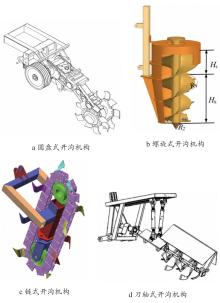
Fig. 3
Types and structural schematics of orchard trenching mechanisms
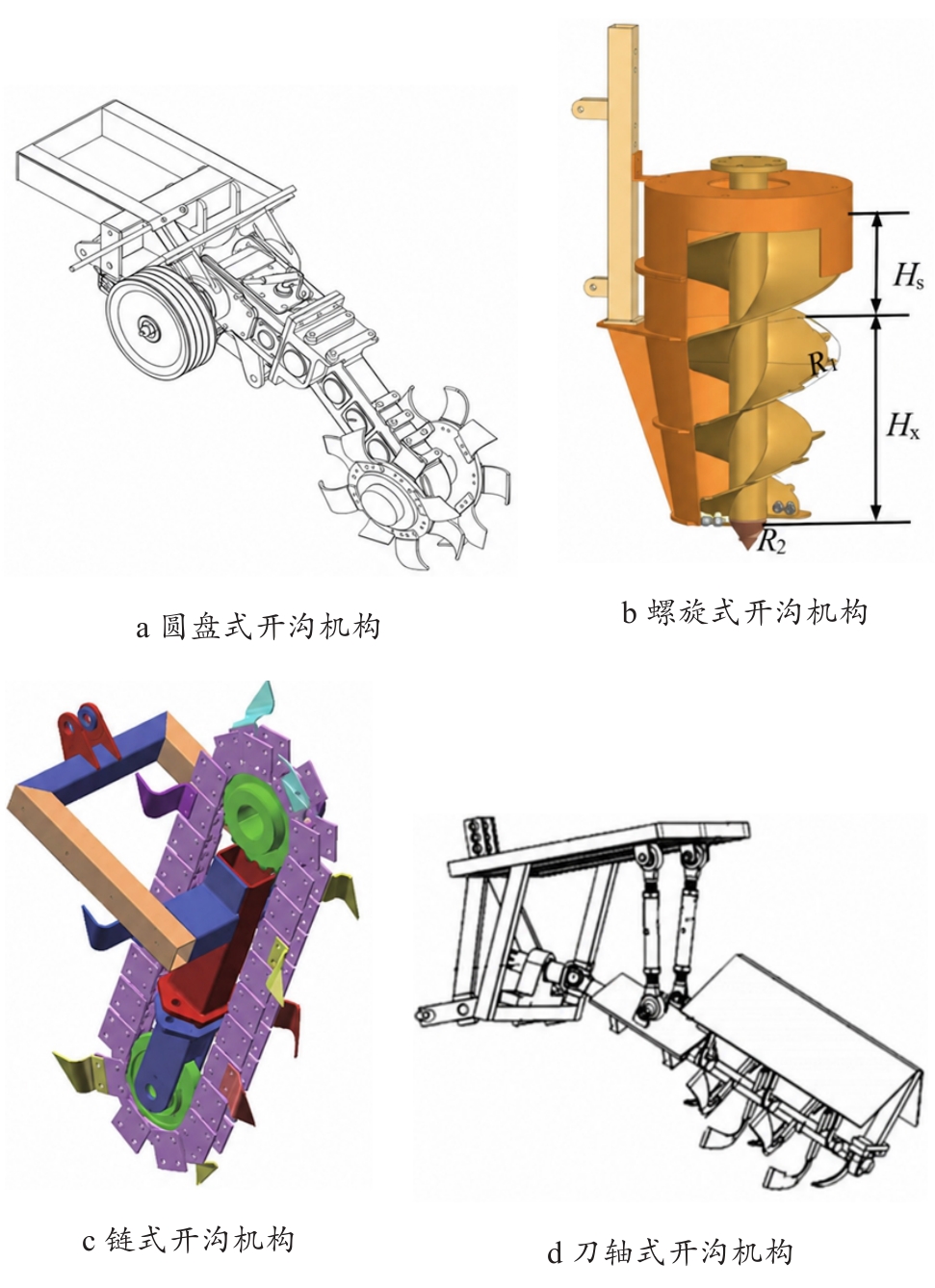
Table 3
Comparative analysis of the performance of different types of orchard trenching mechanisms
| 类型 | 优点 | 缺点 | 应用场景 |
|---|---|---|---|
| 圆盘式开沟机构[ | 结构紧凑,刀盘受力均匀;抛土能力强,沟形较规整 | 开沟深度受刀盘直径和安装角度限制 | 平地或缓坡矮砧密植果园的基肥、追肥沟施作业;土壤中等硬度、有杂草或残膜覆盖的行间施肥 |
| 螺旋式开沟机构[ | 连续切土、碎土和输土,沟壁整齐、沟底平整;深度稳定性好 | 结构相对复杂,加工成本高;功耗较大,对传动系统和动力储备要求高 | 坡地或起伏地形果园的深施作业;需要深窄沟、深松改土以及有机肥混拌施入的树盘、树行施肥 |
| 链式开沟机构[ | 开沟效率高,能形成较深且宽度可控的窄沟;沟形整齐、不易回土 | 链条和刀齿磨损快,维护保养工作量大;高负荷下振动和噪声较大 | 树行深窄沟施肥、主干道两侧基础沟开沟等需要深窄沟的作业 |
| 旋耕/刀轴式开沟机构[ | 切土、碎土能力强,可同时完成深松、碎土和部分混拌;对板结土层破碎效果好,有利于改善根系生长环境 | 功耗最高,对动力匹配和结构强度要求高;对土壤扰动大,易伤根、破坏土壤结构 | 土壤板结或有犁底层的果园基肥深施;老果园更新改造、深松配合有机肥深施;对碎土细度和混拌效果要求较高的施肥作业 |
Table 4
Types and applicability comparison of fertilizer discharge mechanisms for orchard trenching and fertilization machines
| 类型 | 适用肥料 | 主要优点 | 主要缺点 |
|---|---|---|---|
| 星轮/沟轮式排肥器[ | 颗粒肥、流动性较好的粉状肥 | 结构简单、成本低;体积计量较准确,排肥量稳定;易与小型施肥机配套 | 对粒径差异大或含水率高、易结块肥料易架桥、填充不满 |
| 螺旋式排肥器[ | 颗粒肥、部分粉状肥及流动性较好的混配肥 | 输送距离较长,可兼顾输送与计量;排肥连续、脉动较小 | 对肥料流动性敏感,含水率高、黏性大的肥料易在螺旋间黏附或堵塞 |
| 离心式排肥器[ | 流动性较好颗粒肥 | 改善肥料充填条件,减轻架桥;多腔等量排肥,计量精度高、均匀性好 | 结构相对复杂,加工精度要求高;对肥料粒径和流动性有一定要求 |
| 刮板输送式排肥装置[ | 高含水率、大块有机肥 | 克服有机肥黏性和架桥性,能实现大流量、大剂量供料;与破碎辊、螺旋排肥器组合后排肥更稳定 | 结构相对庞大,对整机尺寸和重量影响较大;刮板与箱体磨损较快,维护工作量较大 |
| 组合式排肥系统(刮板+破碎辊+螺旋排肥)[ | 高含水率有机肥及有机-无机混合肥 | 适应肥料种类多;与液压/电机驱动易于实现转速调节和变量施肥 | 结构复杂、成本较高,对动力匹配和整机布置要求高;维护点多,长期使用需定期清理与保养 |
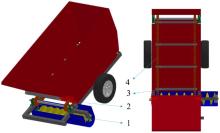
Fig. 4
Schematic diagram of a typical combined fertilizer discharge and anti-bridging structure
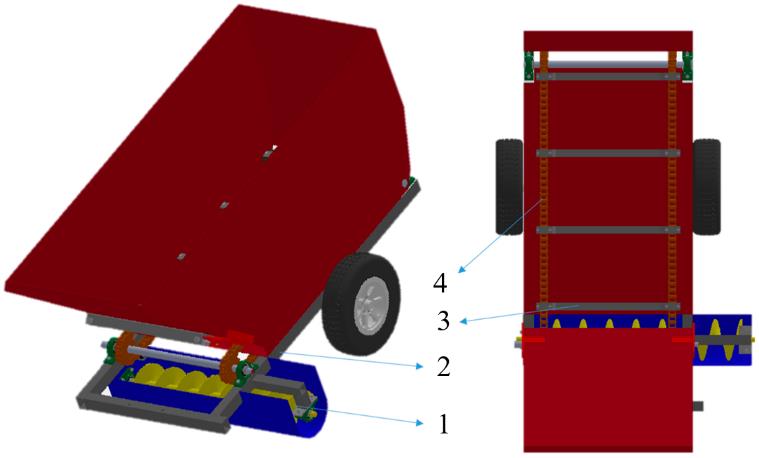
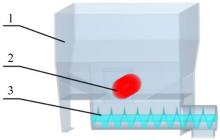
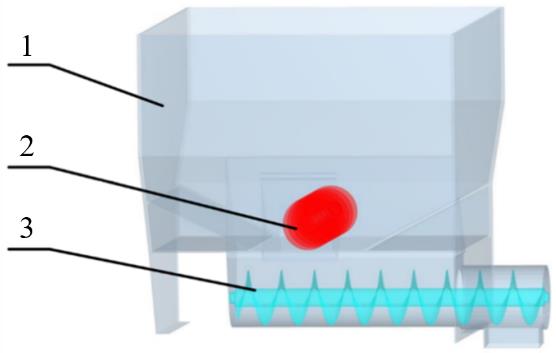
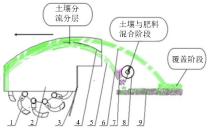
Fig. 6
Schematic diagram of the soil–fertilizer collision mixing and soil-covering process
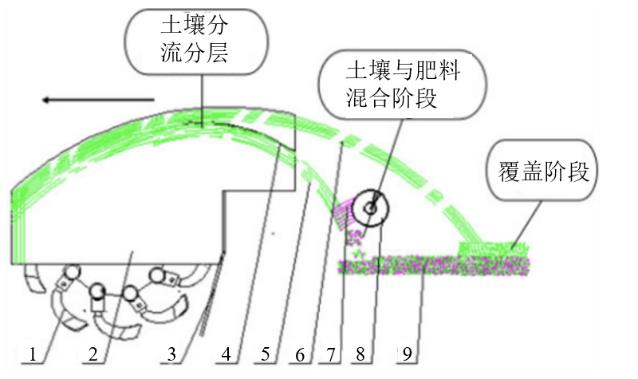
Table 5
Comparison of typical orchard trenching and fertilization machine models and key parameters
| 整机机型 | 行走形式 | 主要开沟形式 | 排肥与供肥方式 | 作业稳定性与精度特征 | 适用场景 |
|---|---|---|---|---|---|
| 牵引/悬挂式一体机[ | 拖拉机牵引/三点悬挂 | 圆盘式/链式/犁式 | 螺旋计量、星轮计量 | 沟深受地形影响较大;定深轮可改善一致性 | 平地或缓坡果园;行距较宽 |
| 自走轮式开沟施肥机[ | 轮式自走底盘 | 圆盘式/螺旋式 | 螺旋+二级计量 | 作业稳定性较牵引式提升;路径一致性较好 | 地形较复杂果园 |
| 履带自走式开沟施肥机[ | 履带底盘自走 | 螺旋式/链式 | 刮板输送+螺旋计量 | 坡地沟深与姿态稳定性高 | 丘陵山地;狭窄行距 |
| 遥控/平台化机型[ | 履带底盘+无线遥控 | 螺旋式 | 组合式供肥 | 沟深与排肥稳定性可控 | 山地果园;安全要求高 |
| 多功能复合作业机[ | 自走或牵引平台 | 螺旋式/犁式 | 多级计量/混合供肥 | 稳定性依赖动力匹配与结构协调 | 规模化果园 |
| 智能化发展型装备[ | 自走电驱/电液平台 | 可调式开沟器 | 闭环计量系统 | 沟深/施肥量可闭环控制 | 智慧果园示范应用 |
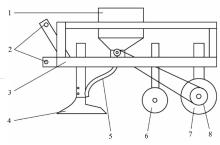
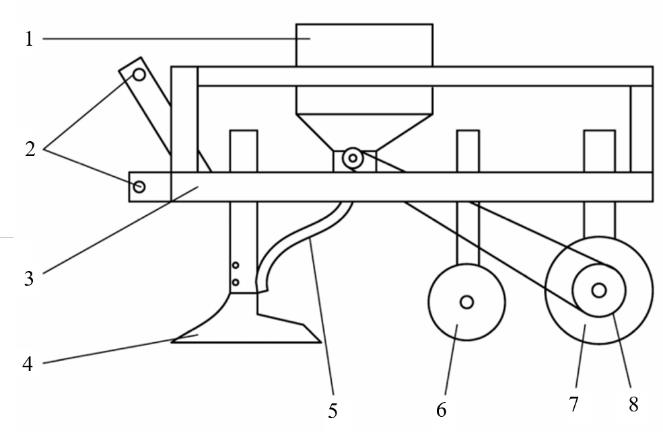
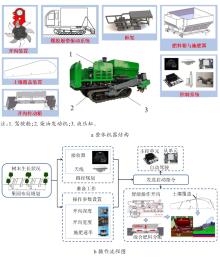
Fig. 8
Structural diagram of the self-propelled orchard trenching and fertilization machine
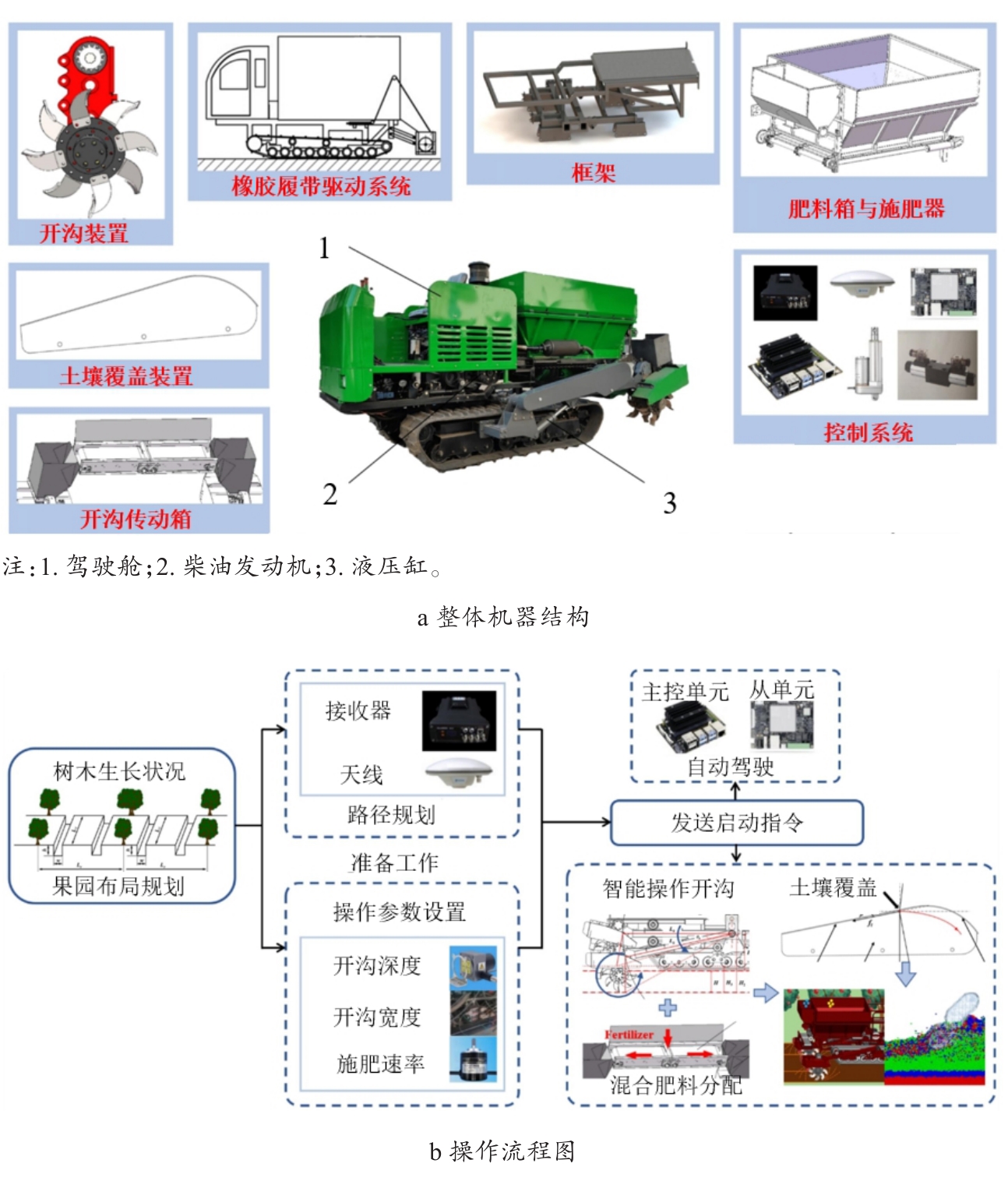
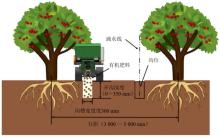
Fig. 9
Schematic diagram of the operating principle of orchard compound trenching-fertilization-soil-covering equipment
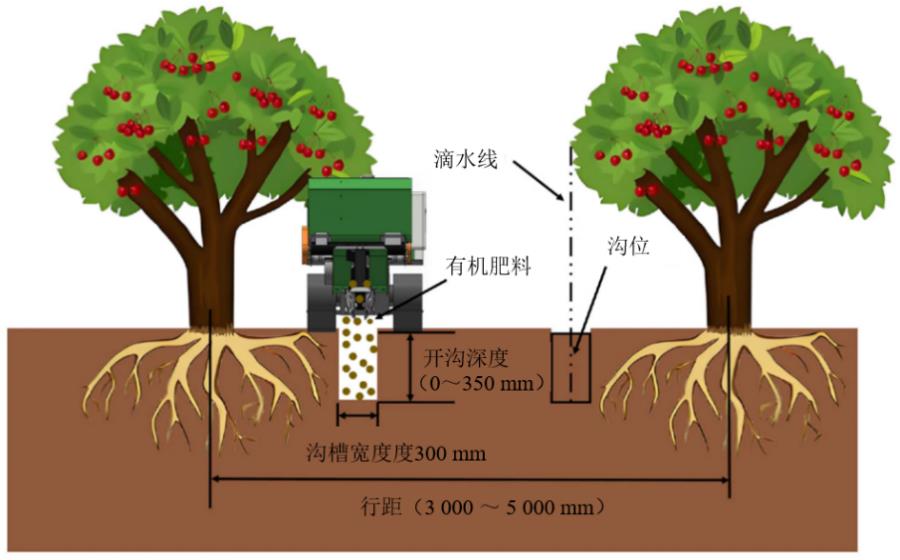
Table 6
Progress in emerging technologies and equipment for orchard trenching and fertilization in recent years
| 技术装备方向 | 代表装备形式 | 主要技术进展 | 解决的主要问题 | 现阶段局限 |
|---|---|---|---|---|
| 履带自走式开沟施肥装备[ | 履带底盘、自走式开沟施肥一体机 | 采用低重心履带底盘,集成开沟、施肥、覆土等作业部件 | 提高丘陵山地、狭窄行距果园的通过性和稳定性 | 整机成本较高,维护要求高,作业效率受地形影响明显 |
| 遥控/半自主开沟施肥装备[ | 遥控履带式开沟施肥机、山地果园遥控作业平台 | 通过无线遥控、电液控制降低人工近距离作业风险 | 改善坡地、复杂果园作业安全性 | 智能化程度有限,仍依赖人工判断和远程操控 |
| 偏置式根区定向施肥装备[ | 偏置开沟施肥机、树冠投影边缘施肥机 | 开沟部件侧向布置,施肥位置可根据树冠或根区范围调整 | 提高施肥位置与果树有效根区的匹配度 | 偏置作业对整机稳定性、转弯空间和驾驶精度要求较高 |
| 多功能复合作业装备[ | 开沟施肥覆土一体机,深松施肥混肥联合作业机 | 将开沟、输肥、排肥、覆土、镇压等多工序集成 | 减少重复进地,提高作业连续性和综合效率 | 部件耦合强,动力匹配和故障维护难度较大 |
| 有机肥与多肥种兼容装备[ | 刮板输送、破碎辊、螺旋排肥组合系统 | 增强对高含水率、大块状有机肥及混合肥的适应性 | 缓解有机肥架桥、堵塞和排肥不连续问题 | 结构复杂,占用空间大,计量精度仍需提高 |
| 自动调深与电液控制装备[ | 液压调深开沟装置、自动仿形开沟装置 | 通过液压缸、位移传感器和控制系统调节开沟深度 | 提高沟深一致性和复杂地表适应性 | 土壤阻力突变和机具振动会影响控制稳定性 |
| 变量施肥与闭环排肥装备[ | 电机驱动排肥器、称重反馈排肥系统、处方图施肥机 | 通过转速、电流、扭矩、称重或流量反馈调节施肥量 | 提高施肥量控制精度,支持精准施肥 | 对传感器可靠性、处方信息和控制算法依赖较强 |
| 导航与自主作业装备[ | RTK导航开沟施肥机、视觉/激光雷达(Light Detection and Ranging,LiDAR)辅助行间导航装备 | 引入定位导航、路径跟踪和障碍识别技术 | 提升作业路径一致性和无人化作业能力 | 树冠遮挡、地形起伏和非结构化环境影响系统稳定性 |
Table 7
Representative commercialized orchard trenching and fertilization machine models and their main characteristics
| 厂商 | 代表机型 | 适用场景 | 主要功能 | 结构特点 |
|---|---|---|---|---|
| 中颐农装 | 2~5方单侧开沟撒肥机 | 现代果园、有机肥和大化肥施用 | 可对有机肥固体物料进行开沟深施、单双侧抛撒和定向输送 | 集开沟、施肥、覆土、抛撒于一体,可选双侧开沟、底盘升降和视频监控 |
| 河北保东 | 偏置施肥机系列 | 不同行距果园、拖拉机配套作业 | 果园开沟施肥,可根据行距调整施肥位置 | 最大施肥深度约30 cm,开沟位置可偏离拖拉机中心40/60/80 cm,肥箱容量分别有0.3/0.4/0.6/2 m3可选 |
| AgPro | 160-D/160-DX2/190-DX3 applicator | 果园、葡萄园及行作 物 | 支持地表与地下结合施肥,适于干肥定量施用 | 正地轮驱动计量,施肥量不受地速影响;工作部件可适配不同行距和滴灌布局 |
| Haifa | Applicator for MulticoteTM Agri in Orchards | 各类、各树龄果园 | 近树根区定向施肥 | 可调节施肥沟与树行距离、施肥深度和排量,并借助sonar识别树干,实现按树近根施肥 |
| Rinieri | IC fertilizer burying spreader | 果园、葡萄园行间作业 | 颗粒矿质肥或有机肥埋施 | 可配置单侧或双侧埋施犁,适合行间埋肥和土壤混拌 |
| KUHN | MDS.2/.2W Fertilizer Spreader | 果园、葡萄园近根区条带施肥 | 双条带定向施肥 | 条带施肥附件可在两行内变量宽度施肥,行距100%可调,能够实现近根区施肥 |
Table 8
Comparison of practical application types and technical characteristics of orchard trenching and fertilization equipment
| 装备类型 | 主要应用场景 | 常见作业参数 | 作业效率与成本特征 | 应用技术特点 | 主要限制 |
|---|---|---|---|---|---|
| 拖拉机配套式开沟施肥机[ | 平地、缓坡、行距较宽果园 | 开沟深度多为30~40 cm,开沟宽度多为20~30 cm | 作业效率较高,购置和维护成本相对较低 | 结构成熟,配套方便,适合规模化果园 | 对拖拉机依赖强,狭窄行间和坡地适应性不足 |
| 履带自走式开沟施肥机[ | 丘陵山地、狭窄行距果园 | 开沟深度和施肥量可调,适合中低速稳定作业 | 成本较高,维护要求较高 | 通过性好,坡地稳定性强,转弯半径小 | 结构复杂,推广受购置成本和维护能力高的限制 |
| 遥控/半自主开沟施肥机[ | 坡地果园、危险作业环境 | 可实现远距离操控和作业参数调节 | 成本较高,作业效率受控制距离和地形影响 | 降低人工风险,适合复杂地形 | 智能化程度有限,仍依赖人工判断 |
| 根区定向/变量施肥装备[ | 标准化果园、葡萄园、智慧果园 | 可调节施肥位置、深度和排量 | 成本高,对传感器和控制系统依赖强 | 施肥精度高,便于与处方图和传感系统结合 | 处方信息获取困难,系统可靠性和经济性仍需验证 |
Table 9
Comparative analysis of costs and operating efficiency of different types of orchard trenching and fertilization equipment
| 装备类型 | 购置成本 | 维护成本 | 作业效率 | 适用经营规模 | 综合应用效益 | 推广限制 |
|---|---|---|---|---|---|---|
| 拖拉机配套式开沟施肥机[ | 低/中 | 低 | 较高 | 中大规模、行距较宽果园 | 依托已有拖拉机动力,单机作业效率较高,综合使用成本较低 | 对拖拉机和行间空间依赖较强,丘陵山地和窄行果园适应性不足 |
| 偏置式开沟施肥机[ | 中 | 中 | 较高 | 成年果园、标准化果园 | 可实现行侧或树冠边缘施肥,兼顾作业效率和根区定向 | 偏置作业对机具稳定性和驾驶操作要求较高 |
| 履带自走式开沟施肥机[ | 中/高 | 中/高 | 中等 | 丘陵山地果园 | 通过性和坡地稳定性较好,但购置与维护成本高 | 结构复杂,零部件维护要求较高 |
| 遥控/半自主开沟施肥机[ | 高 | 高 | 中等 | 坡地、危险或复杂作业环境 | 可降低人工风险,提高复杂地形作业安全性 | 智能化系统成本高,作业效率受人工远程控制和地形条件影响 |
| 根区定向/变量施肥装备[ | 高 | 高 | 中等/较高 | 标准化果园、智慧果园、示范园区 | 可提高施肥精度和肥料利用效率 | 前期投入大,对处方信息、传感器和控制系统依赖强 |
| 多功能复合作业机[ | 中/高 | 中/高 | 较高 | 规模化果园、有机肥深施场景 | 一次进地完成开沟、施肥、覆土等多道工序,可减少重复作业 | 功能集成度高,动力匹配和故障维护难度较大 |
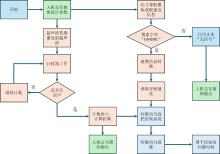
Fig. 10
Framework of the online monitoring–decision-making–execution closed-loop control system for orchard trenching and fertilization operations
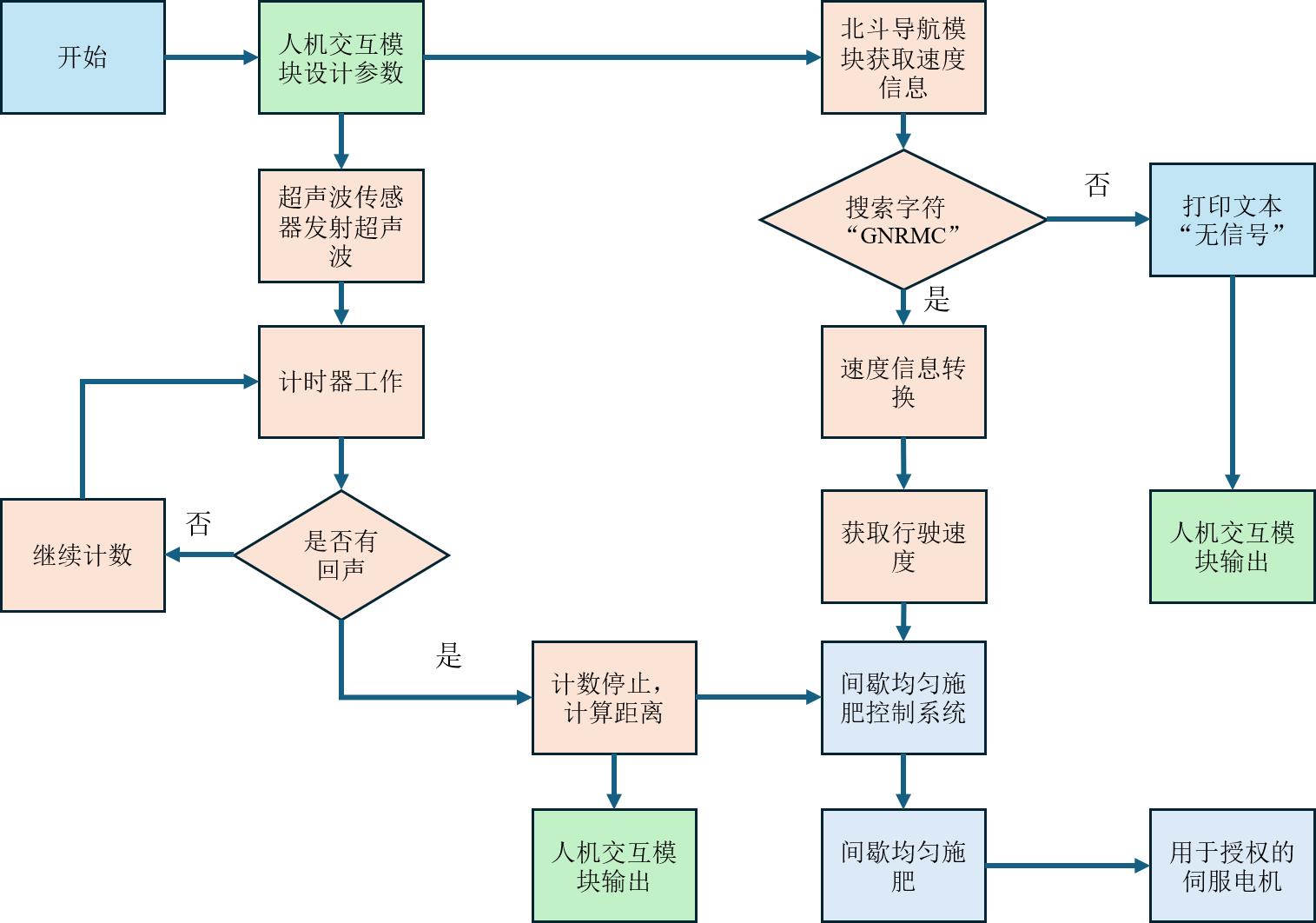
Table 10
Information sources for orchard variable-rate fertilization and their functions
| 变量信息来源 | 主要获取方式 | 反映内容 | 在变量施肥中的作用 |
|---|---|---|---|
| 土壤养分信息[ | 土壤采样、土壤传感器、养分空间插值 | 土壤氮、磷、钾、有机质等肥力差异 | 构建分区施肥处方图,确定基础施肥量 |
| 树体生长信息[ | 图像识别、多光谱、LiDAR、人工调查 | 树势强弱、冠层体积、叶面积、枝叶密度 | 根据树体生长需求调整单株或分区施肥量 |
| 冠层与根区空间信息[ | LiDAR、机器视觉、树冠滴水线检测 | 冠层边界、树体位置、潜在根系分布范围 | 辅助确定施肥位置和沟位,支持根区定向施肥 |
| 历史产量与管理信息 | 产量记录、果园档案、历年施肥记录 | 不同区域产量水平和养分投入响应 | 修正施肥处方,提高长期管理适应性 |
| 作业状态信息[ | 全球卫星导航系统(Global Navigation Satellite System, GNSS)、车速传感器、编码器、排肥轴转速传感器 | 机具位置、作业速度、排肥机构运行状态 | 实现地速补偿和排肥量动态调节 |
| 排肥反馈信息[ | 称重传感器、流量传感器、电流或扭矩监测 | 实际排肥量、堵塞风险、肥料流动状态 | 支持施肥量闭环控制和异常状态诊断 |
Table 11
Key technologies for terrain adaptability and autonomous operation of orchard trenching and fertilization equipment
| 技术方向 | 主要感知或控制对象 | 作用 | 当前主要问题 |
|---|---|---|---|
| 地形与坡度感知[ | 坡度、地表起伏、机具姿态 | 为沟深补偿、速度调节和安全控制提供依据 | 坡地振动和滑移会影响测量稳定性 |
| 底盘通过性与稳定控制[ | 履带底盘、轮速、侧倾状态 | 提高丘陵山地和狭窄行距果园通行能力 | 结构复杂,成本和维护要求较高 |
| 开沟深度自适应调节[ | 沟深、开沟器位置、地表高度 | 保持复杂地形下开沟深度一致性 | 土壤阻力突变时控制响应易滞后 |
| 自主导航与路径跟踪[ | 作业路径、果树行、行间边界 | 实现机具自动行驶和路径保持 | 树冠遮挡和非结构化环境影响定位精度 |
| 树体与障碍物识别[ | 树干、支架、石块、滴灌管等 | 支持避障、作业位置修正 | 复杂背景下识别可靠性仍不足 |
| 作业参数联动控制[ | 行驶速度、开沟深度、施肥量 | 实现地形变化下的稳定施肥 | 多参数耦合强,控制模型仍不完善 |
| [1] |
|
| [2] |
|
| [3] |
|
| [4] |
傅剑, 朱建锡, 姚爱萍. 我国丘陵山地果园机械化开沟施肥发展现状与趋势[J]. 农业装备与车辆工程, 2024, 62(10): 30-35.
|
|
|
|
| [5] |
韩冷, 何雄奎, 王昌陵, 等. 智慧果园构建关键技术装备及展望[J]. 智慧农业(中英文), 2022, 4(3): 1-11.
|
|
|
|
| [6] |
吴逸腾, 杨英正, 阴振华, 等. 果园施肥装备的排肥器研究现状与展望[J]. 农业技术与装备, 2023(7): 47-48.
|
|
|
|
| [7] |
马木提江, 阿孜古力, 阿斯古力·阿布拉, 等. 果园开沟施肥机械研究现状及发展趋势分析[J]. 中国农机装备, 2024(6): 43-45.
|
|
|
|
| [8] |
王文赞, 韩建, 倪玉雪, 等. 有机肥替代化肥氮对苹果产量、品质及温室气体排放的影响[J]. 植物营养与肥料学报, 2023, 29(3): 437-448.
|
|
|
|
| [9] |
|
| [10] |
朱新华, 李洪春, 李旭东, 等. 果园有机肥机械化环沟施肥方法及其实现[J]. 农业工程学报, 2023, 39(17): 60-70.
|
|
|
|
| [11] |
|
| [12] |
|
| [13] |
|
| [14] |
袁全春, 曾锦, 雷哓晖, 等. 果园精准施肥技术装备研究进展[J]. 中国农机化学报, 2024, 45(3): 58-65, 89.
|
|
|
|
| [15] |
|
| [16] |
|
| [17] |
李旭东, 梅方炜, 刘永帅, 等. 基于AMESim-Matlab联合仿真的果园环沟施肥轨迹控制系统[J]. 农业工程学报, 2025, 41(16): 55-65.
|
|
|
|
| [18] |
|
| [19] |
|
| [20] |
崇兴花. 果园机械化生产技术研究进展[J]. 农业机械, 2021(7): 80-82.
|
| [21] |
周逸涵, 方鹏, 刘木华, 等. 果园开沟施肥机械研究现状与展望[J]. 中国农机化学报, 2025, 46(5): 133-140.
|
|
|
|
| [22] |
|
| [23] |
|
| [24] |
崔宏伟, 路晓轩, 杨亚青, 等. 智慧化果园关键生产技术研究现状与进展[J]. 果树学报, 2025, 42(7): 1582-1609.
|
|
|
|
| [25] |
|
| [26] |
|
| [27] |
|
| [28] |
张宏建, 徐春保, 刘双喜, 等. 自动调节深度式果园双行开沟施肥机设计与试验[J]. 农业机械学报, 2021, 52(1): 62-72.
|
|
|
|
| [29] |
|
| [30] |
|
| [31] |
苏江红. 丘陵果园立式螺旋开沟施肥机的设计与试验[D]. 南昌: 江西农业大学, 2024.
|
| [32] |
|
| [33] |
刘剑飞. 果园双螺旋开沟施肥装置设计与试验[D]. 长沙: 湖南农业大学, 2024.
|
| [34] |
|
| [35] |
|
| [36] |
陈睿, 张建军. 基于SPH方法的果园螺旋开沟器功耗分析[J]. 西南大学学报(自然科学版), 2015, 37(12): 168-172.
|
|
|
|
| [37] |
陈平录, 苏江红, 许静, 等. 丘陵果园立式螺旋开沟施肥机设计与试验[J]. 农业机械学报, 2024, 55(10): 223-233, 274.
|
|
|
|
| [38] |
|
| [39] |
|
| [40] |
韩英, 贾如, 唐汉. 精准变量施肥机械研究现状与发展建议[J]. 农业工程, 2019, 9(5): 1-6.
|
|
|
|
| [41] |
朱新华, 李旭东, 高翔, 等. 自走式果园有机肥条铺机设计与试验[J]. 农业机械学报, 2022, 53(5): 136-146.
|
|
|
|
| [42] |
薛忠, 赵亮, 王凤花, 等. 基于EDEM的螺旋式排肥器排肥性能研究[J]. 农机化研究, 2020, 42(6): 87-95.
|
|
|
|
| [43] |
徐勇, 宋明翰, 孙国峻, 等. 刮板输送式大棚有机肥排肥装置的设计与试验[J]. 华南农业大学学报, 2021, 42(6): 79-87.
|
|
|
|
| [44] |
|
| [45] |
|
| [46] |
|
| [47] |
|
| [48] |
柳国光, 王涛, 楼婷婷. 果园履带式偏置开沟施肥机研制与试验[J]. 农业工程, 2022, 12(7): 114-117.
|
|
|
|
| [49] |
|
| [50] |
|
| [51] |
张轩, 陈中武, 李君略, 等. 果园遥控开沟施肥机设计与试验[J]. 现代农业装备, 2023, 44(3): 39-46.
|
|
|
|
| [52] |
张建路, 王鹏飞, 陈春皓, 等. 苹果园开沟施肥机排肥装置设计与试验[J]. 中国农机化学报, 2024, 45(1): 83-89.
|
|
|
|
| [53] |
|
| [54] |
吴平凡, 周岭, 王龙杰, 等. 有机肥施用技术与装备研究进展[J]. 塔里木大学学报, 2024, 36(3): 1-10.
|
|
|
|
| [55] |
程梅. 果园开沟深施肥机机械结构设计[J]. 安徽农业科学, 2014, 42(23): 8086-8088.
|
|
|
|
| [56] |
|
| [57] |
郭振华, 陈换美. 后悬挂式果园开沟施肥覆土机设计与试验[J]. 农机化研究, 2022, 44(3): 120-123, 136.
|
|
|
|
| [58] |
苏子昊, 兰峰, 黎子明, 等. 果园定向施肥机施肥系统结构设计[J]. 农业工程, 2014, 4(4): 116-119, 124.
|
|
|
|
| [59] |
|
| [60] |
张轩, 王斌斌, 李沐桐. 南方丘陵果园多功能遥控电动履带底盘设计与试验[J]. 现代农业装备, 2025, 46(6): 77-83, 115.
|
|
|
|
| [61] |
|
| [62] |
|
| [63] |
|
| [64] |
周滨, 赵荣繁, 曾维刚, 等. 基于ANSYS的果园开沟施肥机机架的有限元分析[J]. 新疆农机化, 2025(4): 9-12.
|
|
|
|
| [65] |
江政鑫, 赵振江, 王拓辉, 等. 农家果园一体化施肥机的设计与应用研究[J]. 河北农机, 2025(6): 15-17.
|
| [66] |
柴明慧. 尧都区葡萄园生产管护机械化开沟施肥对比试验报告[J]. 农业开发与装备, 2024(5): 145-147.
|
| [67] |
|
| [68] |
赵明明, 郝向泽, 赵天才, 等. 基于激光传感器的开沟深度控制系统的设计与试验[J]. 华南农业大学学报, 2018, 39(6): 91-96.
|
|
|
|
| [69] |
|
| [70] |
|
| [71] |
刘羊, 刘宇洋, 陈江春, 等. 标准化果园多功能作业平台关键技术研究现状与趋势[J]. 智能化农业装备学报(中英文), 2024, 5(1): 31-39.
|
|
|
|
| [72] |
|
| [73] |
|
| [74] |
|
| [75] |
余洪锋, 丁永前, 谭星祥, 等. 施肥机施肥性能检测装置的设计与试验[J]. 南京农业大学学报, 2016, 39(3): 511-517.
|
|
|
|
| [76] |
高文杰,宋学锋,戴飞,等. 智能排肥试验台的设计与性能试验[J]. 林业机械与木工设备, 2022, 50(4): 41-47.
|
|
|
|
| [77] |
万仕军, 何瑞银, 余洪峰, 等. 具有自适应标定功能的施肥控制系统的设计与试验[J]. 华南农业大学学报, 2024, 45(1): 88-96.
|
|
|
|
| [78] |
|
| [79] |
|
| [80] |
景子奇, 袁逸萍, 张俊三, 等. 果园开沟施肥机控制系统的设计[J]. 农机化研究, 2022, 44(6): 59-64.
|
|
|
|
| [81] |
|
| [82] |
|
| [83] |
谭好超, 沈聪聪, 马俊龙, 等. 林果园有机肥双参联控系统设计与试验[J]. 农业工程学报, 2025, 41(16): 66-76.
|
|
|
|
| [84] |
王儒敬. 农业传感器: 研究进展、挑战与展望[J]. 智慧农业(中英文), 2024, 6(1): 1-17.
|
|
|
|
| [85] |
|
| [86] |
|
| [1] | WANG Jian, ZHAO Haosen, MA Yue, XING Bin, ZHU Wenying. Research Progress and Prospects of Intelligent Control Technology for Facility Vegetable [J]. Smart Agriculture, 2026, 8(1): 104-119. |
| [2] | LIU lining, ZHANG Hongqi, ZHANG Ziwen, ZHANG Zhenghui, WANG Jiayu, LI Xuanxuan, ZHU Ke, LIU Pingzeng. Key Technologies and Construction model for Unmanned Smart Farms: Taking the "1.5-Ton Grain per Mu" Unmanned Farm as An Example [J]. Smart Agriculture, 2025, 7(1): 70-84. |
| Viewed | ||||||
|
Full text |
|
|||||
|
Abstract |
|
|||||