PEI Lina1, GAN Xinzhe1( ), CHEN Ming1,2(), GUO Qinhong1
Received:2026-06-18
Online:2026-10-09
Foundation items:National Key Research and Development Program of China "Germplasm Resource Mining, Genetic Identification and Utilization of Largemouth Bass and Tilapia"(2022YFD2400801); Guangdong Provincial Key-Area R&D Program "Key Technologies and Demonstration of Smart Land-Based Pond Aquaculture Farms"(2021B0202070001)
About author:PEI Lina, E-mail: Lnpei@shou.edu.cn.
corresponding author:
CLC Number:
PEI Lina, GAN Xinzhe, CHEN Ming, GUO Qinhong. A Retrieval-Augmented Generation Method for Rice Cultivation Based on Domain-HyDE Query Enhancement and LightRAG[J]. Smart Agriculture, doi: 10.12133/j.smartag.SA202606037.
Add to citation manager EndNote|Ris|BibTeX
URL: https://www.smartag.net.cn/EN/10.12133/j.smartag.SA202606037
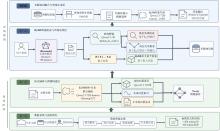
Fig. 1
General Technical Architecture Diagram for the HyDE-LightRAG System
Table 1
Key evaluation metrics and rationale for value selection in HyDE-LightRAG
| 计算量 | 判定规则 | 依据 | |
|---|---|---|---|
| 实体是否召回 | sim(q′, de ) | 按相似度取实体Top-8 | 低层关键词反映具体实体和术语 |
| 语义边是否召回 | sim(q′, dr ) | 按相似度取关系Top-8 | 高层关键词反映主题、因果和关联意图 |
| 文本块是否补充 | sim(q′, dc ) | LightRAG直接文本候选Top-5;Naive RAG为Top-8 | 补充原文证据并弥补图抽取遗漏 |
| 证据是否进入上下文 | 加权排序、RRF与Lenchar | 最终Top-8;领域融合上下文≤5 000字符,单块≤1 200字符 | 控制LLM输入长度和噪声 |
| 答案可信性判定 | F claim(a, Sq ) | 论断支持度取0、0.5或1并计算平均 | 降低专业领域知识幻觉 |
Table 2
Key LoRA fine-tuning parameters of the rice-domain model
| 参数 | 数值 |
|---|---|
| 秩(rank) | 16 |
| 缩放参数(alpha) | 32 |
| 丢弃概率(dropout) | 0.05 |
| LoRA目标模块 | q_proj、k_proj、v_proj、o_proj、gate_proj、up_proj、down_proj |
| 学习率 | 2e-4 |
| 批量大小 | 1×8(梯度累积,有效批量为8) |
| 混合精度 | 16位脑浮点格式(16-bit Brain Floating Point, BF16) |
| 量化 | 未量化 |
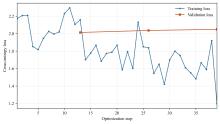
Fig. 2
Training and validation loss curves of the rice-domain model
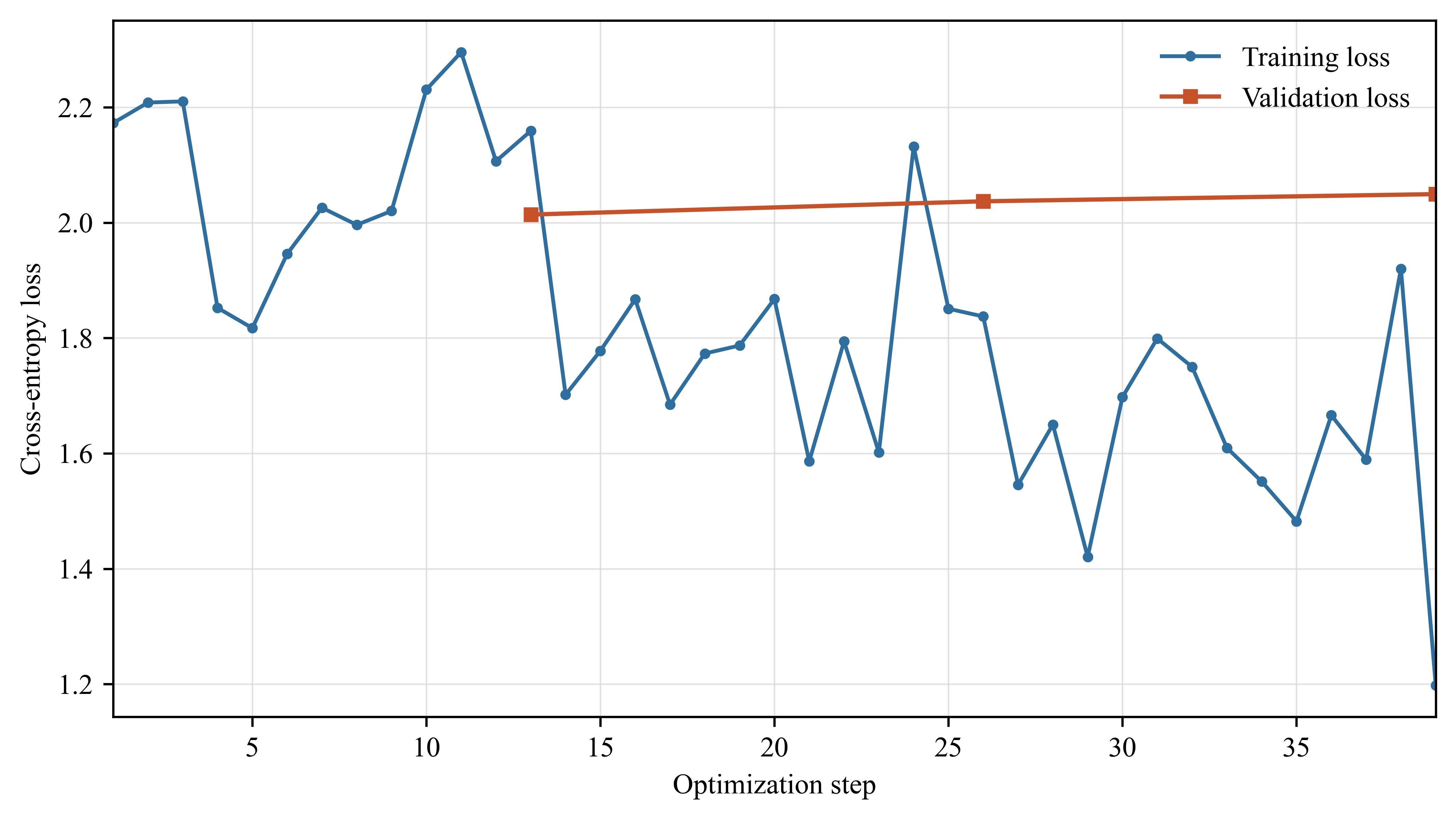
Table 3
Main node categories and semantic edge categories of rice cultivation knowledge graph
| 对象 | 主要类别 | 检索作用 |
|---|---|---|
| 节点 | 栽培措施 | 支撑栽培措施和农事操作检索 |
| 节点 | 生育时期 | 支撑返青、分蘖、孕穗和抽穗等时期管理检索 |
| 节点 | 环境条件 | 支撑气象、土壤和胁迫条件检索 |
| 节点 | 品种资源、病虫草害、产量性状等 | 支撑品种选择、防控和产量问题检索 |
| 关系 | 措施适配关联 | 支撑技术措施与适用对象之间的关联召回 |
| 关系 | 生育时期关联 | 支撑不同生育时期的管理知识组织 |
| 关系 | 病虫草害治理关联 | 支撑病虫草害识别、防控和用药知识检索 |
| 关系 | 综合语义关联 | 支撑时序、条件、作用和效果关系检索 |
Table 4
Blinded multi-rater results on RCOQ-H100
| 方法 | 正确性 | 完整性 | 实用性 | 三维平均分 |
|---|---|---|---|---|
| 领域HyDE+LightRAG(词法融合,冻结配置) | 3.626 | 3.576 | 3.686 | 3.629 |
| LightRAG | 3.504 | 3.456 | 3.584 | 3.515 |
| 通用HyDE+LightRAG | 3.474 | 3.444 | 3.548 | 3.489 |
| Few-shot HyDE+LightRAG(诊断组) | 3.434 | 3.388 | 3.490 | 3.437 |
| Naive RAG | 2.604 | 2.572 | 2.690 | 2.622 |
Table 5
Case study: Comparison of answer summaries among different methods
| 方法类型 | 回答内容 |
|---|---|
| Naive RAG | 在干旱条件下,确保水稻正常生长需要综合运用多种灌溉技术和管理措施。根据提供的文档内容,适时的灌溉管理和科学施肥是关键环节。 插秧后的2至5天内进行第一次灌溉,以维持土壤湿润度,防止因风干引起的稻苗损伤,并帮助新根系快速生长和稳定。初次灌水量要适中,保持田面有薄层水即可。 在整个秧苗生长期,根据天气状况、土壤湿度及水稻生长状态灵活调整灌溉策略。干旱条件下应适当增加灌溉次数,确保水肥供应充足…… |
| LightRAG | 在干旱条件下保证水稻正常生长,需要综合考虑水源、土壤和肥料管理等多个方面。 一、科学灌溉:采用浅水勤灌的方式,可以有效提高水稻对水分的吸收效率,同时避免过度湿润导致根系生长不良或病害的发生。……在水资源紧张的情况下,滴灌是一种高效的灌溉方式。 二、施肥管理:干旱条件下施用肥料应以有机肥为主,并根据土壤测试结果科学施用化肥。……在干旱期间,应避免一次大量施肥导致土壤过于湿润…… 三、病虫害防治:…… |
| 领域HyDE+LightRAG | 在干旱条件下,应优先围绕水源保障、关键生育期保水、土壤墒情监测和养分调控制定综合管理方案。(1)水分管理:根据移栽返青、分蘖、孕穗和抽穗等关键时期调整灌溉策略,在水源不足时优先保障对产量形成影响较大的阶段;可采用浅水湿润或干湿交替管理,避免长期断水造成根系和叶片受损。(2)根系和养分调控:在干旱胁迫下避免一次性大量施肥,宜结合土壤肥力和苗情进行分次追肥;叶面肥、微量元素或调节剂的使用应依据检索来源、产品标签和地方农技建议确定,不能脱离品种和生育时期给出固定剂量。(3)品种与田间管理:在易旱区域优先选择经当地审定或示范验证的耐旱、节水型品种,配合整地保墒、合理密植和覆盖保墒等措施。(4)风险监测:持续关注高温、大风、病虫害和土壤水分变化,必要时结合地方农技部门意见调整灌溉、追肥和防控方案。该回答将干旱管理拆分为水分、养分、品种和风险监测等证据链条,并对缺乏来源支撑的具体剂量保持保守表述。 |
| 评估结果 | 正确性:回答能够围绕干旱胁迫下的水分、关键生育期和养分管理组织内容,但具体剂量仍需来源核验。 完整性:回答覆盖水分、养分、品种和风险监测等主要环节。 实用性:回答给出分层管理思路,同时明确应结合当地条件、产品标签和农技建议。 |
Table 6
Four core ablations and the Few-shot diagnostic results
| 方法 | 是否使用LightRAG | HyDE来源 | RCOQ-H100三维平均分/分 | 排序 |
|---|---|---|---|---|
| Naive RAG | 否 | 无 | 2.622 | 5 |
| LightRAG | 是 | 无 | 3.515 | 2 |
| 通用HyDE+LightRAG | 是 | 未微调Qwen2.5-7B-Instruct | 3.489 | 3 |
| 领域HyDE+LightRAG | 是 | LoRA适配器(冻结) | 3.629 | 1 |
| Few-shot HyDE+LightRAG(诊断) | 是 | 未微调Qwen2.5-7B-Instruct+固定3条问题—假设性文档示例 | 3.437 | 4 |
Table 7
Topological audit of the original rice knowledge graph
| 指标 | 数值 | 统计口径 |
|---|---|---|
| 节点数 | 11 682 | Neo4j原始计数 |
| 关系数 | 14 043 | Neo4j原始计数 |
| 无向唯一边 | 13 495 | 合并方向重复后计数 |
| 孤立节点 | 1 721(14.732%) | 无向度为0 |
| 最大连通分量 | 8 346(71.443%) | 无向连通分量 |
| 连通分量数 | 2 284 | 无向连通分量 |
| 平均无向度 | 2.310 | 2E/N,E=13 495(无向唯一边) |
| 平均聚类系数 | 0.032 5 | 无向图 |
| 最大连通分量直径 | 20 | 最大连通分量(Largest Connected Component,LCC)的无向最短路径 |
Table 8
Statistics of the water_rice_zh_demo v1 dataset and actual LoRA training
| 统计项 | 数值 |
|---|---|
| 总样本数 | 133个问答/假设性文档对 |
| 训练/验证/测试 | 102 / 14 / 17(按源文档划分) |
| 平均问题长度 | 27.23字符;17.71个Qwen token |
| 平均假设性文档长度 | 181.87字符;124.62个Qwen token |
| LoRA配置 | r=16,alpha=32,dropout=0.05;q/k/v/o/gate/up/down_proj |
| 实际训练 | 3 epoch,学习率2e-4,有效批量8,最大长度1 024,BF16,未量化 |
| 验证损失 | 基座2.496 6;适配器2.049 5 |
Table 9
Question-level statistics for all pairwise comparisons of the five methods on RCOQ-H100
| 比较(左-右) | 均值差 | Bootstrap 95%置信区间(Confidence Interval,CI) | Wilcoxon p(原始/Holm) | Cohen dz |
|---|---|---|---|---|
| 领域-LightRAG | 0.115 | [-0.077, 0.305] | 0.226 / 0.903 | 0.118 |
| 领域-通用HyDE | 0.141 | [-0.040, 0.325] | 0.149 / 0.746 | 0.150 |
| 领域-Few-shot | 0.192 | [-0.010, 0.389] | 0.016 5 / 0.099 | 0.186 |
| 领域-Naive | 1.007 | [0.809, 1.212] | <0.001 / <0.001 | 0.968 |
| LightRAG-通用HyDE | 0.026 | [-0.134, 0.188] | 0.707 / 1.000 | 0.032 |
| LightRAG-Few-shot | 0.077 | [-0.086, 0.242] | 0.269 / 0.903 | 0.093 |
| LightRAG-Naive | 0.893 | [0.692, 1.101] | <0.001 / <0.001 | 0.852 |
| 通用HyDE-Few-shot | 0.051 | [-0.084, 0.187] | 0.513 / 1.000 | 0.073 |
| 通用HyDE-Naive | 0.867 | [0.668, 1.071] | <0.001 / <0.001 | 0.846 |
| Few-shot-Naive | 0.815 | [0.627, 1.012] | <0.001 / <0.001 | 0.815 |
Table 10
Overall retrieval re-evaluation on RCOQ-H100 (Top-8)
| 方法 | 召回率Recall@8 | Hit@8 | MRR@8 | NDCG@8 |
|---|---|---|---|---|
| Naive RAG | 0.045 | 0.050 | 0.011 | 0.018 |
| LightRAG | 0.497 | 0.580 | 0.121 | 0.207 |
| 通用HyDE+LightRAG | 0.476 | 0.560 | 0.109 | 0.192 |
| Few-shot HyDE+LightRAG | 0.484 | 0.590 | 0.113 | 0.195 |
| 领域HyDE+LightRAG(固定词法融合) | 0.646 | 0.740 | 0.577 | 0.554 |
Table 11
Actual runtime parameters for RCOQ-H100
| 项目 | 实际取值 |
|---|---|
| 图谱抽取模型 | Qwen/Qwen2.5-72B-Instruct(API) |
| HyDE与答案基座 | Qwen2.5-7B-Instruct;领域HyDE加载LoRA,最终答案关闭适配器 |
| 嵌入模型 | bge-m3,1 024维 |
| 标准检索 | 最终TopK=8;直接文本候选5;实体和关系候选各8;权重0.60/0.45 |
| 领域词法融合 | 语义与字符n-gram BM25各取16项;词法权重0.5;RRF k=5 |
| 相似度阈值 | τₑ、τᵣ、τc未独立启用;由TopK和融合排序截断 |
| 上下文预算 | 单块最多1 200字符;领域融合总预算5 000字符 |
| 生成长度 | HyDE 192 token;增强查询128 token;最终答案256 token |
| 解码方式 | do_sample=False,确定性贪心解码,不设置采样温度 |
| 配置选择 | 仅H001~H025;其余75题不参与融合参数选择 |
| 知识库分块 | 评测阶段沿用冻结文本块、chunk ID及来源映射 |
Table 12
Sensitivity of lexical-fusion parameters on the H001-H025 development set
| 词法权重 | RRF k | NDCG@8(无量纲) |
|---|---|---|
| 0.25 | 5 | 0.516 8 |
| 0.50 | 5 | 0.524 4(选用) |
| 0.50 | 20 | 0.503 0 |
| 0.75 | 5 | 0.471 3 |
| 1.00 | 20 | 0.448 3 |
Table 13
Token-length distributions of RCOQ-H100 answers
| 方法 | (均值±标准差)/token | 中位数[四分位距] /token | 第5~95百分位数/token | 最小~最大/token |
|---|---|---|---|---|
| 领域HyDE+LightRAG(词法融合) | 194.4±57.8 | 201.0 [150.0, 256.0] | 96.0~256.0 | 67~256 |
| LightRAG | 176.5±61.9 | 173.5 [128.5, 237.0] | 72.8~256.0 | 43~256 |
| 通用HyDE+LightRAG | 179.4±57.5 | 176.5 [134.8, 235.0] | 90.9~256.0 | 60~256 |
| Few-shot HyDE+LightRAG | 175.1±58.3 | 176.0 [131.0, 222.0] | 75.7~256.0 | 52~256 |
| Naive RAG | 175.1±58.9 | 172.0 [124.8, 232.2] | 88.0~256.0 | 72~256 |
Table 14
Qualitative comparison of related RAG methods
| 方法名称 | 任务对象 | 查询增强方式 | 检索架构 | 图结构作用 | 适用边界 |
|---|---|---|---|---|---|
| 杨俊等[ | 农作物病虫害问答 | 按问题复杂度路由 | BM25单跳/多跳混合检索 | 用于检索路径组织,非实体—关系双层检索核心 | 侧重复杂度路由,适合病虫害问答 |
| ReG-RAG[ | 农业问答 | 查询重写 | 查询重写+图谱增强检索 | 图谱提供结构化证据增强 | 侧重重写与图谱增强;实验设置与本研究不同 |
| LightRAG[ | 通用RAG | 关键词抽取 | 低层实体+高层关系检索 | 组织实体与关系候选 | 通用框架;受图谱连通性和关系质量约束 |
| 本研究方法 | 水稻种植问答 | 领域LoRA-HyDE;通用/Few-shot诊断 | LightRAG+文本块+字符n-gram BM25融合 | 当前稀疏图谱上仅提供有限关系辅助 | 侧重查询端术语补充与同域工程诊断;不代表跨来源泛化 |
Table 15
Batch-stability diagnostic of repeated web-model scoring on 20 fixed blinded items
| 评委模型 | 三轮总体均值/分 | 批间方差/分² | 批间标准差/分 | 组内相关系数ICC(3,1) |
|---|---|---|---|---|
| Gemini 3.5 Flash | 3.263 / 3.547 / 3.463 | 0.021 2 | 0.145 6 | 0.896 |
| GPT-5.6 Sol | 3.163 / 2.960 / 2.950 | 0.014 5 | 0.120 4 | 0.901 |
| DeepSeek-V4-Flash | 3.187 / 2.863 / 2.890 | 0.032 2 | 0.179 5 | 0.737 |
Table 16
Hop-stratified coverage and Top-8 retrieval diagnostic on the independent 60-question set
| 跳数层级 | 题数/题(占比/%) | 预定义图路径覆盖率/% | “实体—文本”Recall@8 | 关系增强Recall@8 | ΔRecall@8 [95% CI] |
|---|---|---|---|---|---|
| 0-hop | 20(33.3) | 100 | 0.875 | 0.910 | 0.035 [0.000, 0.095] |
| 1-hop | 20(33.3) | 100 | 0.900 | 0.950 | 0.050 [0.000, 0.150] |
| 2-hop+ | 20(33.3) | 100 | 0.713 | 0.796 | 0.083 [0.000, 0.217] |
| 总体 | 60(100) | 100 | 0.829 | 0.885 | 0.056 [0.012, 0.117] |
Table 17
Hop-stratified coverage and Top-8 retrieval re-evaluation on RCOQ-H100
| 跳数层级 | 题数/题(占比/%) | 金源块图关联覆盖率/% | LightRAG Recall@8 | 固定词法融合Recall@8 | 固定条件关系通道消融 ΔRecall@8 [95% CI] |
|---|---|---|---|---|---|
| 0-hop | 59(59) | 100 | 0.525 | 0.678 | 0.016 9 [0.000 0, 0.050 8] |
| 1-hop | 2(2) | 100 | 0.250 | 0.250 | 0.000 0 [0.000 0, 0.000 0] |
| 2-hop+ | 39(39) | 100 | 0.466 | 0.618 | 0.032 1 [0.000 0, 0.089 7] |
| 总体 | 100(100) | 100 | 0.497 | 0.646 | 0.022 5 [0.000 0, 0.055 0] |
Table 18
Reference-keypoint overlap re-evaluation on RCOQ-H100
| 方法 | ROUGE-L F1(无量纲) | BERTScore-F1(无量纲) |
|---|---|---|
| Naive RAG | 0.181 | 0.659 |
| LightRAG | 0.259 | 0.700 |
| 通用HyDE+LightRAG | 0.249 | 0.693 |
| Few-shot HyDE+LightRAG | 0.253 | 0.694 |
| 领域HyDE+LightRAG(固定词法融合) | 0.241 | 0.693 |
| [1] |
张洪程, 胡雅杰, 杨建昌, 等. 中国特色水稻栽培学发展与展望[J]. 中国农业科学, 2021, 54(7): 1301-1321.
|
|
|
|
| [2] |
刘烨宸, 李华昱. 领域知识图谱研究综述[J]. 计算机系统应用, 2020, 29(6): 1-12.
|
|
|
|
| [3] |
|
| [4] |
|
| [5] |
|
| [6] |
|
| [7] |
|
| [8] |
|
| [9] |
|
| [10] |
|
| [11] |
|
| [12] |
|
| [13] |
|
| [14] |
吴春志, 赵玉龙, 刘鑫, 等. 大语言模型微调方法研究综述[J]. 中文信息学报, 2025, 39(2): 1-26.
|
|
|
|
| [15] |
QWEN,
|
| [16] |
GUU K,
|
| [17] |
|
| [18] |
|
| [19] |
|
| [20] |
|
| [21] |
|
| [22] |
ES S,
|
| [23] |
|
| [24] |
李晓雨, 张佳仪, 张海涛, 等. ReG-RAG:融合查询重写与图谱增强的大模型问答生成方法[J/OL]. 智慧农业(中英文), 2025[2026-09-29].
|
|
|
|
| [25] |
杨俊, 杨婉霞, 杨森, 等. 自适应混合检索增强大模型的农作物病虫害智能问答方法[J]. 智慧农业(中英文), 2026, 8(1): 52-61.
|
|
|
|
| [26] |
|
| [27] |
|
| [28] |
|
| [29] |
|
| [30] |
|
| [31] |
|
| [32] |
|
| [33] |
DEEPSEEK-AI,
|
| [1] | ZHAO Bingting, HUA Chuanhai, YE Chenyang, XIONG Yuchun, QIAN Tao, CHENG Tao, YAO Xia, ZHENG Hengbiao, ZHU Yan, CAO Weixing, JIANG Chongya. Research Progress on Remote Sensing Monitoring and Intelligent Decision-Making Algorithms for Rice Production [J]. Smart Agriculture, 2025, 7(2): 57-72. |
| [2] | CUI Jiale, ZENG Xiangfeng, REN Zhengwei, SUN Jian, TANG Chen, YANG Wanneng, SONG Peng. Detection Method of Effective Tillering of Rice in Field Based on Lightweight Ghost-YOLOv8 and Smart Phone [J]. Smart Agriculture, 2024, 6(5): 98-107. |
| Viewed | ||||||
|
Full text |
|
|||||
|
Abstract |
|
|||||