Smart Agriculture ›› 2026, Vol. 8 ›› Issue (3): 159-175.doi: 10.12133/j.smartag.SA202512003
• Special Issue--Digital Technologies Reshaping Agriculture and Agricultural Economics • Previous Articles Next Articles
QIAO Rong, QIAN Guixia( )
)
Received:2025-12-04
Online:2026-05-30
Foundation items:General Program of the National Natural Science Foundation of China(72564032); General Program of the Natural Science Foundation of Inner Mongolia Autonomous Region(2025MS07022)
About author:QIAO Rong, E-mail: 269290179@qq.com
corresponding author:
CLC Number:
QIAO Rong, QIAN Guixia. Can the National Rural E-Commerce Comprehensive Demonstration Policy Enhance Rural Households' Livelihood Resilience[J]. Smart Agriculture, 2026, 8(3): 159-175.
Add to citation manager EndNote|Ris|BibTeX
URL: https://www.smartag.net.cn/EN/10.12133/j.smartag.SA202512003
Table 1
Index system of farmers' livelihood resilience
| 一级指标 | 二级指标 | 三级指标 | 影响方向 |
|---|---|---|---|
| 缓冲能力 | 家庭总房产 | 所有家庭成员家庭房屋调查当年的市场总价值/万元 | + |
| 耐用消费品价值和农用机械价值 | 家里拥有的所有耐用消费品和农用机械调查当年的市场总价值/元 | + | |
| 现金和存款总值 | 所有家庭成员的现金及存款总额/元 | + | |
| 金融产品总值 | 家庭股票、基金、国债等金融产品总额/元 | + | |
| 土地资产 | 家庭所拥有土地的市场价值/元 | + | |
| 能源使用 | 家庭做饭使用采用液化气、天然气、太阳能、电等能源赋值为1,使用柴草和煤炭赋值为0 | + | |
| 劳动力人数 | 家庭劳动力总数,指家庭中年龄在18~55周岁的人数 | + | |
| 健康状况 | 家庭成员的健康程度的平均值:取值范围1~5,数值越大,表示越健康 | + | |
| 生计多样性 | 家庭成员从事种植业、养殖业、私营经营三类活动分别赋值:从事该项经营赋值为 1,未从事赋值为 0,三项分值求和 | + | |
| 工资性收入占比 | 家庭成员所获得工资性收入与家庭总收入之比 | + | |
| 自组织能力 | 人情礼支出 | 所有家庭成员的人情礼支出/元 | + |
| 对邻居的信任程度 | 农户对邻居的信任程度的平均值:1~5,数值越大,表示信任度越高 | + | |
| 学习能力 | 文化程度 | 家庭成员受教育水平的平均值:1~8分别表示文盲(半文盲)、小学、初 中、高中(中专、技校、职高)、大专、大学本科、硕士、博士 | + |
| 网络学习 | 家庭成员是否使用网络学习的最高值 | + |
Table 2
Definition and descriptive statistics of core variables
| 变量 | 变量名称 | 定义 | 样本数 | 均值 | 标准差 |
|---|---|---|---|---|---|
| 解释变量 | 生计韧性指数 | 基于 | 13 410 | 0.433 | 0.150 |
| 政策 | 电商进村政策 | 所在县是否实施示范政策:是=1,否=0 | 13 410 | 0.283 | 0.449 |
| 控制变量 | 户主性别 | 户主性别:男=1,女=0 | 13 410 | 0.585 | 0.492 |
| 年龄 | 户主年龄/岁 | 13 410 | 51.50 | 12.230 | |
| 年龄平方 | 户主年龄(岁)的平方 | 13 410 | 28.160 | 12.750 | |
| 婚姻状况 | 是否已婚:是=1,否=0 | 13 410 | 0.902 | 0.297 | |
| 家庭规模 | 家庭人口规模/人 | 13 410 | 3.151 | 1.361 | |
| 医疗支出 | 过去12个月医疗支出/元 | 13 410 | 4 960.508 | 13 861.720 | |
| 保险支出 | 过去12个月保险支出/元 | 13 410 | 741.395 | 3 135.017 | |
| 原国家级贫困县 | 试点前是否为原国家级贫困县:是=1,否=0 | 13 410 | 0.330 | 0.470 | |
| 革命老区县 | 试点前是否为革命老区县:是=1,否=0 | 13 410 | 0.420 | 0.493 | |
| 机制变量 | 网络对工作重要性 | 评价取值范围1~5,数值越大,表示越重要 | 13 410 | 1.615 | 1.287 |
| 网络对学习重要性 | 评价取值范围1~5,数值越大,表示越重要 | 13 410 | 1.693 | 1.343 | |
| 网络对生活重要性 | 评价取值范围1~5,数值越大,表示越重要 | 13 410 | 1.782 | 1.384 | |
| 互联网使用 | 受访者是否接入互联网:是=1,否=0 | 13 410 | 0.303 | 0.459 | |
| 移动上网 | 是否使用移动设备,如手机、平板,上网:是=1,否=0 | 13 410 | 0.279 | 0.448 | |
| 是否网购 | 家庭成员是否网购:是=1,否=0 | 13 410 | 0.127 | 0.332 | |
| 组织成员 | 家庭成员中参与协会、工会等正式组织的人数 | 13 410 | 0.196 | 0.535 |
Table 3
Benchmark regression test results of rural e-commerce policy on farmers' livelihood resilience
| 变量 | (1) | (2) | (3) | (4) | ||||
|---|---|---|---|---|---|---|---|---|
| 系数 | 标准误差 | 系数 | 标准误差 | 系数 | 标准误差 | 系数 | 标准误差 | |
| 电商进村政策 | 0.018*** | (0.004) | 0.016*** | (0.003) | 0.016*** | (0.003) | 0.016*** | (0.003) |
| 性别 | 0.018*** | (0.003) | 0.018*** | (0.003) | 0.017*** | (0.003) | ||
| 年龄 | -0.003*** | (0.001) | -0.003*** | (0.001) | -0.003*** | (0.001) | ||
| 年龄平方 | -0.001 | (0.001) | -0.001 | (0.001) | -0.001 | (0.001) | ||
| 婚姻状况 | -0.024*** | (0.006) | -0.026*** | (0.005) | -0.026*** | (0.005) | ||
| 家庭规模 | 0.007*** | (0.001) | 0.007*** | (0.001) | ||||
| 医疗支出 | -0.001** | (0.003) | -0.001 | (0.003) | ||||
| 保险支出 | 0.001*** | (0.001) | 0.001*** | (0.001) | ||||
| 原国家级贫困县 | 0.000 | (0.001) | ||||||
| 革命老区县 | -0.001*** | (0.001) | ||||||
| 常数项 | 0.413*** | (0.001) | 0.561*** | (0.018) | 0.546*** | (0.018) | 0.553*** | (0.018) |
| 年份固定效应 | 已控制 | 已控制 | 已控制 | 已控制 | ||||
| 家庭固定效应 | 已控制 | 已控制 | 已控制 | 已控制 | ||||
| 观测值数 | 13 410 | 13 410 | 13 410 | 13 410 | ||||
| 调整后的R 2 | 0.562 | 0.593 | 0.597 | 0.597 | ||||
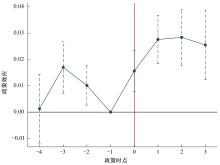
Fig. 1
Dynamic effect graph of parallel trend test for rural e-commerce demonstration policy
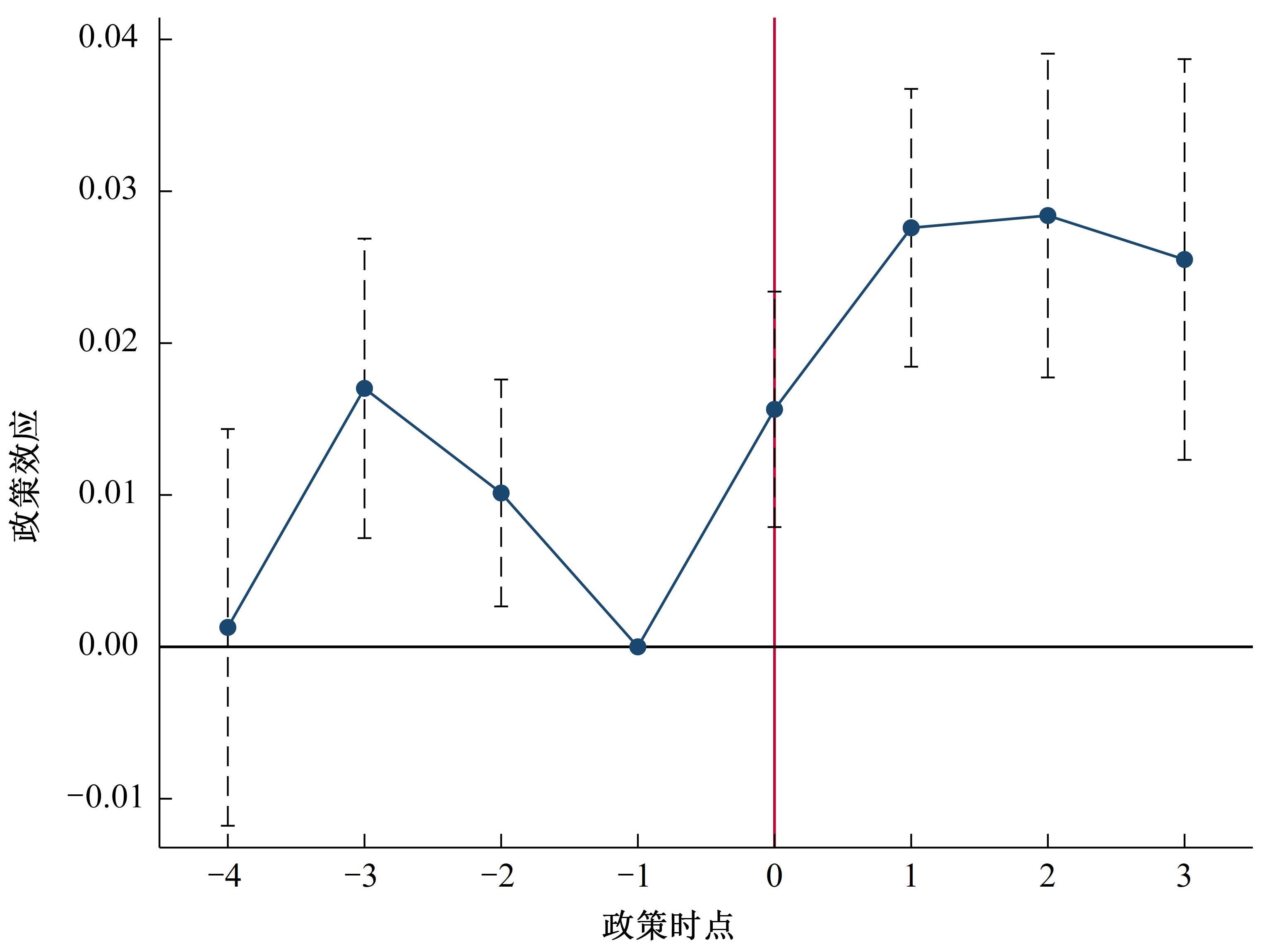
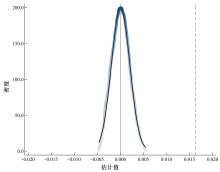
Fig. 2
Coefficient distribution histogram of placebo test with 500 random permutations
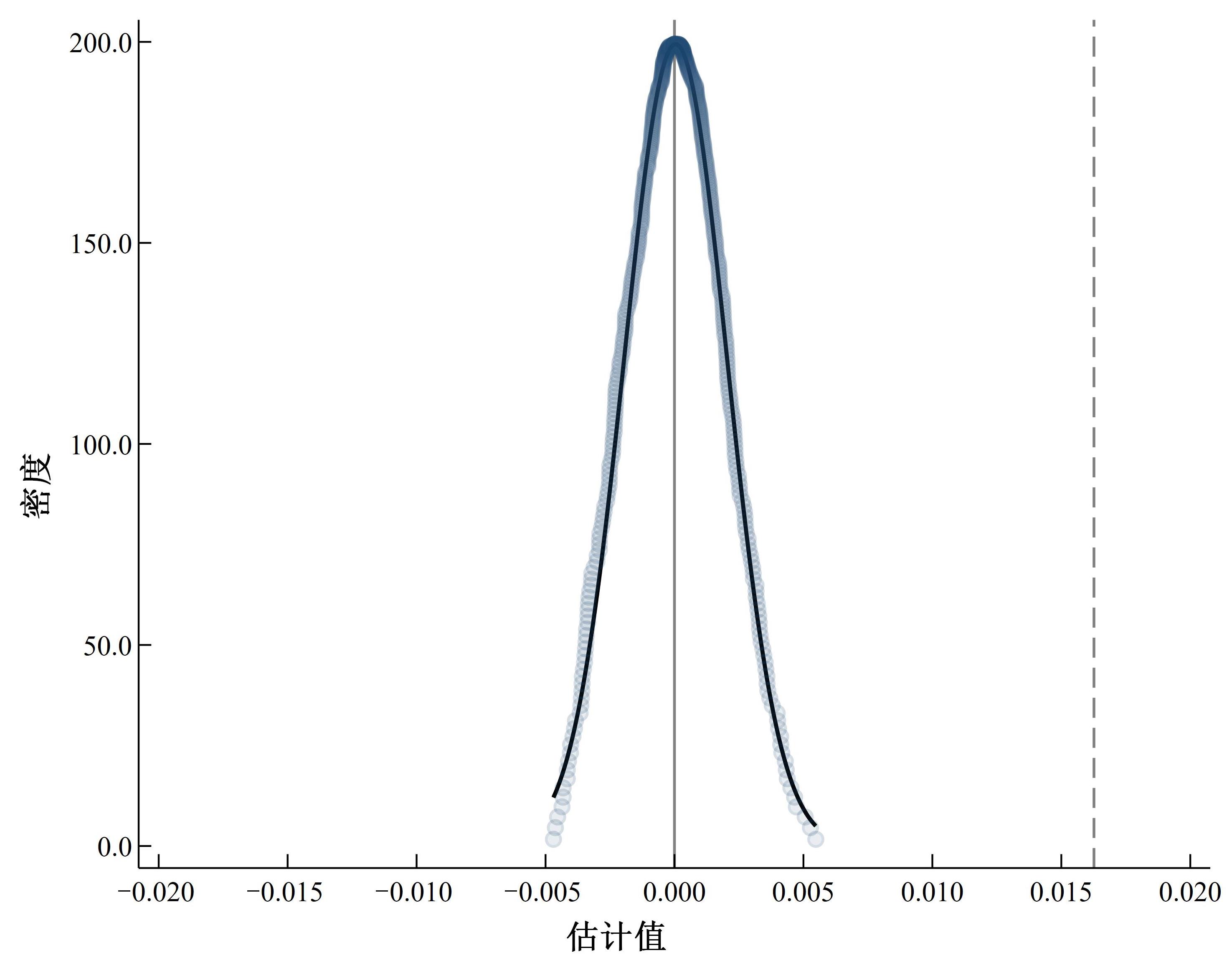
Table 4
Bacon decomposition results addressing heterogeneous bias of staggered DID estimates
| DID分组类型 | DID估计量 | 权重 |
|---|---|---|
| 早期处理组vs. 晚期处理组 | 0.014 | 0.118 |
| 晚期处理组vs. 早期处理组 | 0.015 | 0.114 |
| 从未受到处理组vs. 处理组 | 0.019 | 0.768 |
Table 5
Regression results of policy effects after controlling concurrent digital policies
| 变量 | 控制信息进村入户试点政策 | 控制宽带中国政策 | 控制国家电子商务示范政策 | 同时控制三个政策 | ||||
|---|---|---|---|---|---|---|---|---|
| 系数 | 标准误差 | 系数 | 标准误差 | 系数 | 标准误差 | 系数 | 标准误差 | |
| 电商进村政策 | 0.016*** | (0.003) | 0.016*** | (0.003) | 0.016*** | (0.003) | 0.016*** | (0.003) |
| 信息进村入户试点 | 0.001 | (0.002) | 0.001 | (0.002) | ||||
| 宽带中国 | 0.001 | (0.001) | 0.001 | (0.001) | ||||
| 国家电子商务示范城市 | 0.001 | (0.001) | 0.001 | (0.001) | ||||
| 年份固定效应 | 已控制 | 已控制 | 已控制 | 已控制 | ||||
| 家庭固定效应 | 已控制 | 已控制 | 已控制 | 已控制 | ||||
| 观测值 | 13 410 | 13 410 | 13 410 | 13 410 | ||||
| 调整后的R² | 0.597 | 0.597 | 0.597 | 0.597 | ||||
Table 6
Results of multiple robustness tests
| 变量 | 剔除部分样本 | 县级固定效应 | 市级固定效应 | PSM-DID | 控制滞后中介变量 | 中介效应回归 |
|---|---|---|---|---|---|---|
| 电商进村政策 | 0.018*** | 0.016*** | 0.020** | 0.023** | 0.016*** | 0.013*** |
| (0.004) | (0.005) | (0.005) | (0.007) | (0.004) | (0.003) | |
| 互联网使用 | 0.091*** | |||||
| (0.003) | ||||||
| 年份固定效应 | 已控制 | 已控制 | 已控制 | 已控制 | 已控制 | 已控制 |
| 固定效应 | 已控制 | 已控制 | 已控制 | 已控制 | 已控制 | 已控制 |
| 观测值数 | 11 778 | 13 410 | 13 410 | 6 015 | 11 175 | 13 410 |
| 调整后的R 2 | 0.598 | 0.370 | 0.366 | 0.719 | 0.287 | 0.400 |
Table 7
Mechanism test results for the effect of rural e-commerce policy on farmers' livelihood resilience
| 变量 | 网络重要性认知 | 组织参与 | 数字能力 | ||||
|---|---|---|---|---|---|---|---|
| 网络对工作重要性 | 网络对学习重要性 | 网络对生活重要性 | 家庭加入组织人数 | 互联网使用 | 移动上网 | 网购 | |
| 电商进村政策 | 0.074** | 0.092** | 0.105** | 0.033** | 0.036*** | 0.029** | 0.023* |
| (0.033) | (0.035) | (0.038) | (0.016) | (0.012) | (0.013) | (0.012) | |
| 控制变量 | 已控制 | 已控制 | 已控制 | 已控制 | 已控制 | 已控制 | 已控制 |
| 年份固定效应 | 已控制 | 已控制 | 已控制 | 已控制 | 已控制 | 已控制 | 已控制 |
| 家庭固定效应 | 已控制 | 已控制 | 已控制 | 已控制 | 已控制 | 已控制 | 已控制 |
| 观测值数 | 13 410 | 13 410 | 13 410 | 13 410 | 13 410 | 13 410 | 13 410 |
| 调整后的R 2 | 0.544 | 0.558 | 0.548 | 0.413 | 0.572 | 0.564 | 0.419 |
Table 8
Heterogeneous regression results of policy effects across four major economic zones
| 变量 | 东部 | 中部 | 西部 | 东北部 |
|---|---|---|---|---|
| 电商进村政策 | 0.014 | 0.013** | 0.027*** | -0.003* |
| (0.009) | (0.006) | (0.006) | (0.011) | |
| 年份固定效应 | 已控制 | 已控制 | 已控制 | 已控制 |
| 家庭固定效应 | 已控制 | 已控制 | 已控制 | 已控制 |
| 观测值数 | 3 390 | 3 336 | 4 836 | 1 848 |
| 调整后的R² | 0.583 | 0.603 | 0.581 | 0.624 |
Table 9
Heterogeneity test of policy support background and county-level logistics infrastructure
| 变量 | 贫困县 | 非贫困县 | 革命老区 | 非革命老区 | 物流基础较高组 | 物流基础较低组 |
|---|---|---|---|---|---|---|
| 电商进村政策 | 0.020*** | 0.014** | 0.014** | 0.018*** | 0.027*** | 0.013*** |
| (0.006) | (0.004) | (0.005) | (0.005) | (0.008) | (0.004) | |
| 年份固定效应 | 已控制 | 已控制 | 已控制 | 已控制 | 已控制 | 已控制 |
| 家庭固定效应 | 已控制 | 已控制 | 已控制 | 已控制 | 已控制 | 已控制 |
| 观测值数 | 4 432 | 8 978 | 5 624 | 7 768 | 2 490 | 10 920 |
| 调整后的R² | 0.581 | 0.605 | 0.608 | 0.587 | 0.579 | 0.603 |
| [1] |
张媛,李枝霖,毛亚娟. 基于DEA模型的辽河流域土地利用效率提升研究[J]. 沈阳农业大学学报, 2025, 56(6): 165-173.
|
|
|
|
| [2] |
|
| [3] |
孙彦, 赵雪雁. 山区农户的生计干预效率及其影响因素——以陇南山区为例[J]. 地理研究, 2023, 42(7): 1874-1891.
|
|
|
|
| [4] |
易法敏. 数字技能、生计抗逆力与农村可持续减贫[J]. 华南农业大学学报(社会科学版), 2021, 20(3): 1-13.
|
|
|
|
| [5] |
范燕丽, 丛树海. 财政转移支付与农户生计韧性: "驱动" 还是 "制约"[J]. 中国农村经济, 2024(1): 125-148.
|
|
|
|
| [6] |
王奇, 牛耕, 赵国昌. 电子商务发展与乡村振兴: 中国经验[J]. 世界经济, 2021, 44(12): 55-75.
|
|
|
|
| [7] |
林硕延, 夏子轩, 李佳展, 等. 新结构经济学视角下释放农村居民消费潜力研究[J]. 农业展望, 2024, 20(9): 114-119.
|
|
|
|
| [8] |
唐跃桓, 杨其静, 李秋芸, 等. 电子商务发展与农民增收——基于电子商务进农村综合示范政策的考察[J]. 中国农村经济, 2020(6): 75-94.
|
|
|
|
| [9] |
邱泽奇, 乔天宇. 电商技术变革与农户共同发展[J]. 中国社会科学, 2021(10): 145-166, 207.
|
|
|
|
| [10] |
|
| [11] |
贾男, 王赫. 脱贫农户返贫风险防范政策研究[J]. 经济研究, 2022, 57(10): 121-137.
|
|
|
|
| [12] |
李晗, 陆迁. 无条件现金转移支付与家庭发展韧性——来自中国低保政策的经验证据[J]. 中国农村经济, 2022(10): 82-101.
|
|
|
|
| [13] |
|
| [14] |
|
| [15] |
汪樱, 唐兰云, 王卫雯, 等. 农户生计韧性驱动机理及其生计环境效应[J]. 长江流域资源与环境, 2023, 32(3): 665-677.
|
|
|
|
| [16] |
郑黎阳, 黄荟婕, 张鑫. 人力资本与脱贫地区农户生计韧性——基于门槛回归模型的检验[J]. 干旱区资源与环境, 2023, 37(5): 69-75.
|
|
|
|
| [17] |
郭霖珂, 党国英, 麦强盛. 新农保参与如何影响老年农户生计韧性: 理论机制与实证检验[J]. 农业现代化研究, 2025, 46(4): 729-740.
|
|
|
|
| [18] |
吕晓, 张启岚, 张学波, 等. 共同富裕目标下农地流转对农户生计韧性的影响——基于沈阳市典型农户的实证研究[J]. 自然资源学报, 2025, 40(3): 636-651.
|
|
LYU X,
|
|
| [19] |
常洁, 谢萍, 别小娟. 旅游驱动乡村农户生计韧性的变化及提升对策研究——兼顾不同社区参与模式的比较[J]. 国土资源科技管理, 2022, 39(4): 27-39.
|
|
|
|
| [20] |
高帅, 史婵, 唐建军. 基于增能赋权视角的农户贫困脆弱性缓解研究——以太行山连片特困地区为例[J]. 中国农村观察, 2020(1): 61-75.
|
|
|
|
| [21] |
林泽宇, 杜婵. 农民合作社参与行为能否提高农户生计韧性 ——基于四川涉藏地区的样本[J]. 农村经济, 2023(8): 122-133.
|
|
|
|
| [22] |
吴诗嫚, 祝浩, 卢新海. 土地综合整治对农户生计韧性的影响效应及机制分析——以湖北省部分县市为例[J]. 农业现代化研究, 2023, 44(6): 1002-1013.
|
|
|
|
| [23] |
张德元, 张耀文. 城镇化发展如何提升农户生计韧性——基于夜间灯光和中国家庭追踪调查(CFPS)的证据[J]. 河北农业大学学报(社会科学版), 2025, 27(5): 76-89.
|
|
|
|
| [24] |
洪名勇, 姜月. 农地确权对农户生计韧性的影响研究[J]. 农业经济与管理, 2025(4): 43-52.
|
|
|
|
| [25] |
涂勤, 曹增栋. 电子商务进农村能促进农户创业吗 ——基于电子商务进农村综合示范政策的准自然实验[J]. 中国农村观察, 2022(6): 163-180.
|
|
|
|
| [26] |
尹志超, 吴子硕. 电商下乡能缩小农村家庭消费不平等吗——基于“电子商务进农村综合示范”政策的准自然实验[J]. 中国农村经济, 2024(3): 61-85.
|
|
|
|
| [27] |
宣智翀, 李欣荣, 陈哲, 等. 电子商务发展对农村居民膳食质量的影响——基于“电子商务进农村综合示范”政策的实证研究[J]. 中国农村经济, 2025(12): 84-105.
|
|
|
|
| [28] |
陈佩, 张为付. 电商下乡有助于农业企业创业吗 ——基于“电子商务进农村综合示范”政策的准自然实验[J]. 经济与管理研究, 2025, 46(4): 99-116.
|
|
|
|
| [29] |
张俊, 方诗琪, 田雅. 电商下乡的碳减排效应——基于电子商务进农村综合示范政策的准自然实验[J]. 中南林业科技大学学报(社会科学版), 2024, 18(6): 22-35.
|
|
|
|
| [30] |
孙哲远, 刘艳. 电商下乡对农村三产融合的影响——基于电商示范县设立的准自然实验[J]. 中国流通经济, 2022, 36(11): 49-59.
|
|
|
|
| [31] |
周亚虹, 邱子迅, 任欣怡, 等. 数字金融的发展提高了电商助农的效率吗——基于电子商务进农村综合示范项目的分析[J]. 数量经济技术经济研究, 2023, 40(7): 70-89.
|
|
|
|
| [32] |
尹志超, 吴子硕. 电子商务能降低农村家庭贫困脆弱性吗 ——基于“电子商务进农村综合示范”项目的准自然实验研究[J]. 经济科学, 2024(3): 138-157.
|
|
|
|
| [33] |
李明贤, 贺佳斌. 数字经济赋能农业高质量发展研究——基于湖南省2012—2020年面板数据的分析[J]. 湖南农业大学学报(社会科学版), 2023, 24(1): 14-23.
|
|
|
|
| [34] |
马亚飞, 米运生, 马丁丑, 等. 数字金融使用对农户农业投资的影响及其作用机制[J]. 经济经纬, 2025, 42(6): 31-44.
|
|
|
|
| [35] |
朱海波, 张学彪. 产业链重塑视角下的贫困地区农产品电商发展路径选择研究——基于建始县农产品电商发展的案例分析[J]. 中国食物与营养, 2018, 24(3): 39-43.
|
|
|
|
| [36] |
荣旖旎, 欧阳文静. 公路可达性对农村居民县城就医行为的影响——来自村庄月度数据[J]. 经济地理, 2024, 44(3): 45-54.
|
|
|
|
| [37] |
马彪, 张琛, 郭军, 等. 电子商务会促进农户家庭的消费吗 ——基于“电子商务进农村综合示范”项目的准自然实验研究[J]. 经济学(季刊), 2023, 23(5): 1846-1864.
|
|
|
|
| [38] |
郭凯凯, 高启杰. 农村电商高质量发展机遇、挑战及对策研究[J]. 现代经济探讨, 2022(2): 103-111.
|
|
|
|
| [39] |
张夏力, 李静爽, 王岩, 等. 组织嵌入与韧性建构: 农户参与新型农村集体经济如何提升其生计韧性 [J/OL]. 中国农业资源与区划. (2026-01-28) [2026-02-04].
|
|
|
|
| [40] |
高帅, 程炜, 唐建军. 风险冲击视角下革命老区农户生计韧性研究——以太行革命老区为例[J]. 中国农村经济, 2024(3): 107-125.
|
|
|
|
| [41] |
|
| [42] |
马泽波. 农户禀赋、区域环境与电商扶贫参与意愿——基于边疆民族地区630个农民的问卷调查[J]. 中国流通经济, 2017, 31(5): 47-54.
|
|
|
|
| [43] |
周静, 马丽霞, 唐立强. 农户参与农产品电商的意愿及影响因素——基于TPB和SEM的实证分析[J]. 江苏农业科学, 2018, 46(4): 312-315.
|
| [44] |
潘嗣同, 盖庆恩, 史清华. 电子商务进农村综合示范政策对乡村产业主体培育的影响[J]. 中国农村观察, 2025(6): 40-61.
|
|
|
|
| [45] |
于海云, 汪长玉, 赵增耀. 乡村电商创业集聚的动因及机理研究——以江苏沭阳“淘宝村”为例[J]. 经济管理, 2018, 40(12): 39-54.
|
|
|
|
| [46] |
王小华, 刘云, 宋檬. 数字能力与家庭风险金融资产配置[J]. 中国农村经济, 2023(11): 102-121.
|
|
|
|
| [47] |
朱波, 周思彤, 裴珊, 等. "数"造韧性: 数字经济参与如何赋能农户生计韧性提升[J]. 中国软科学, 2025(10): 50-60.
|
|
|
|
| [48] |
周升强, 孙鹏飞, 丁文强. 草原生态补奖对农牧民生计韧性的影响研究——以宁夏盐池县与内蒙古鄂托克旗为例[J]. 干旱区资源与环境, 2026, 40(1): 20-30.
|
|
|
|
| [49] |
|
| [50] |
田鸽, 张勋. 数字经济、非农就业与社会分工[J]. 管理世界, 2022, 38(5): 72-83.
|
|
|
|
| [51] |
闫贝贝, 赵佩佩, 刘天军. 信息素养对农户参与电商的影响——基于农户内在感知的中介作用和政府推广的调节作用[J]. 华中农业大学学报(社会科学版), 2021(5): 54-65, 193-194.
|
|
|
|
| [52] |
杨碧云, 王艺璇, 易行健. 数字鸿沟与消费鸿沟——基于个体消费不平等视角[J]. 经济学动态, 2023(3): 87-103.
|
|
|
|
| [53] |
李晓琴, 谢婷婷, 刘星麟. 电子商务发展与农村居民收入包容性增长研究——基于湖南省122个县级行政区的数据分析[J]. 当代农村财经, 2025(7): 22-29.
|
| [1] | HAN Xiaoyan, WANG Xingwei, HUANG Zehao, CHEN Jing, CHEN Di. Impact of the Digital Economy on the Total Factor Productivity of Agricultural Product Processing Industry [J]. Smart Agriculture, 2026, 8(3): 215-225. |
| [2] | YU Zetian, ZHANG Shibo, WU Yu, PENG Hua, DONG Xiaoxia. The Impact of Digital Rural Development on Rural Residents' Income Growth: Evidence from the National Digital Rural Pilot Program [J]. Smart Agriculture, 2026, 8(3): 147-158. |
| [3] | YI Hongmei, HE Xu, ZHI Huayong, HUANG Jikun, CHEN Xi. Adoption and Challenges of Digital and Intelligent Technologies in Agriculture: Evidence from Two Representative Household Surveys [J]. Smart Agriculture, 2026, 8(3): 51-66. |
| [4] | LIU Miao, ZHANG Jiayi, LI Zhenhai, CHEN Jing. Analysis of the Spatiotemporal Evolution and Driving Forces of Rural Settlements in Relation to Terrain Differences [J]. Smart Agriculture, 2025, 7(6): 210-224. |
| Viewed | ||||||
|
Full text |
|
|||||
|
Abstract |
|
|||||