Smart Agriculture ›› 2026, Vol. 8 ›› Issue (5): 219-237.doi: 10.12133/j.smartag.SA202605024
• 信息处理与决策 • 上一篇
宋祥硕, 王钧( )
收稿日期:2026-05-18
出版日期:2026-09-30
通信作者:
SONG Xiangshuo, WANG Jun()
Received:2026-05-18
Online:2026-09-30
Foundation items:中央引导地方科技发展资金项目(25ZYJA035); 甘肃省科技重大专项计划(25ZDFA011); 甘肃农业大学学科团队建设项目(GAU-XKTD-2026-076)
About author:宋祥硕,硕士研究生,研究方向为智慧农业和深度学习。E-mail:songxiangshuo@gsau.edu.cn
SONG Xiangshuo, E-mail: songxiangshuo@gsau.edu.cn
Corresponding author:摘要:
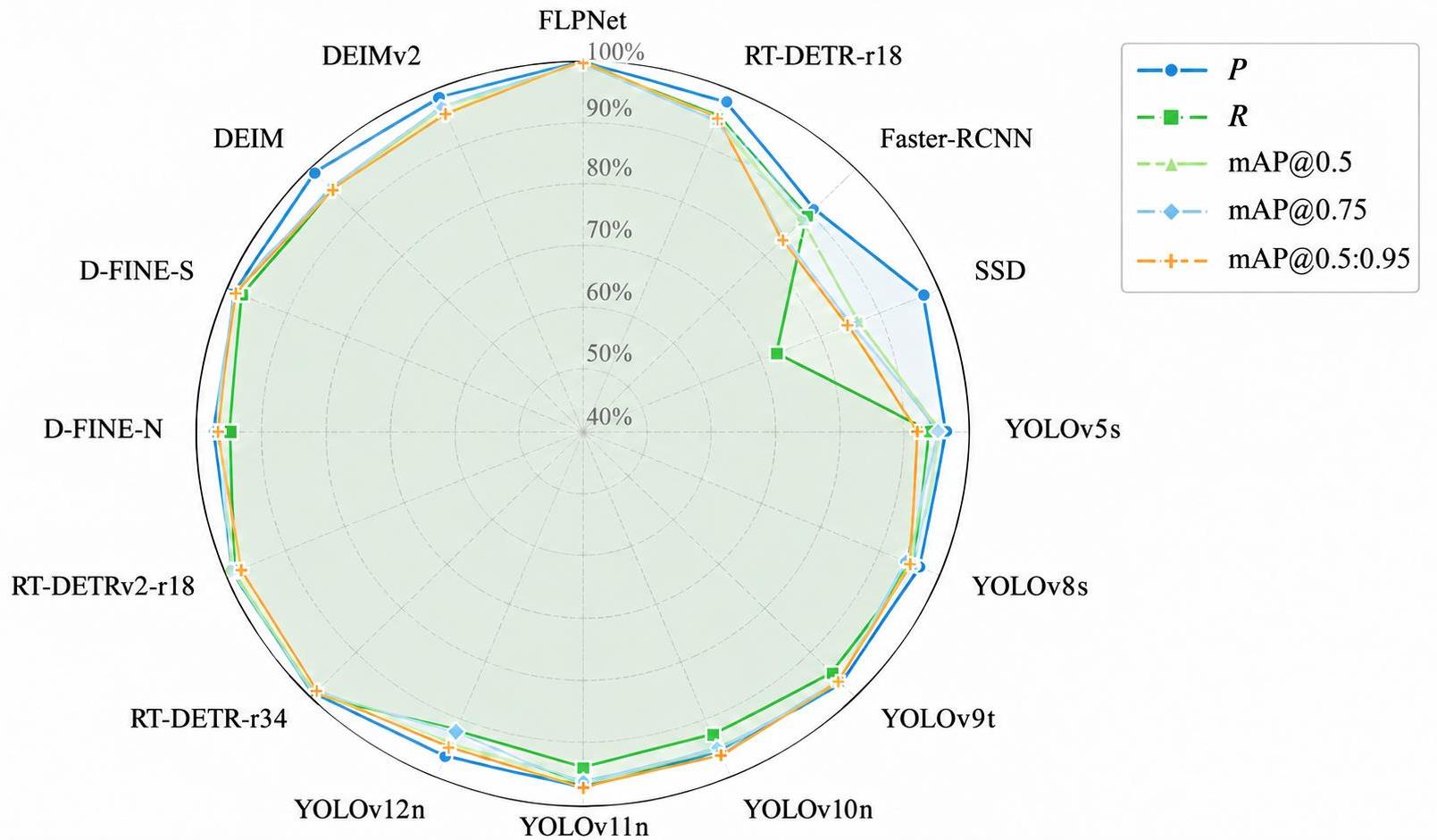
【目的/意义】 在复杂成像环境中,动态光照变化和叶片遮挡会降低病斑特征的可见性,使现有模型难以准确识别早期微小病斑。为解决自然环境中显著光照干扰所带来的苹果叶片病害检测难题,提出了一种改进的RT-DETR(Real-Time Detection Transformer)模型,命名为频域-光照感知网络(Frequency-Lighting-Aware Perception Network, FLPNet),用于复杂成像条件下的病害检测。 【方法】 为克服传统卷积神经网络在空间域特征提取方面的局限性,FLPNet引入了频域解耦与增强模块(Frequency-Domain Decoupling and Enhancement Module, FDEM)。通过利用小波变换与傅里叶分析的互补特性,FDEM有效解耦并重构了受遮挡病斑的细粒度纹理特征。此外,引入了物理驱动Retinex层,该层作为一种基于Retinex理论的特征增强模块,用于减轻非受控光照的影响。同时,还嵌入了低分辨率全局注意力模块,以在保留全局上下文信息的同时减少计算冗余。 【结果和讨论】 FLPNet的mAP@0.50达到85.7%,较基线模型提高了5.0个百分点,同时参数量减少了3.3 M,计算量降低了9.1 GFLOPs。与YOLOv12n相比,FLPNet的mAP@0.75提高了4.1个百分点。实验结果表明,FLPNet在整体检测性能上优于YOLOv12n和DEIM等先进模型。 【结论】 FLPNet在显著降低计算复杂度的同时,有效提升了复杂自然成像条件下苹果叶片病害的检测性能。该模型在检测性能与计算效率之间取得了较好的平衡,适合部署于资源受限的农业边缘设备。这些特性可为苹果叶片病害检测的实际应用提供重要的理论支持和技术指导。
中图分类号:
宋祥硕, 王钧. FLPNet:一种基于频空双域解耦的轻量级实时苹果叶片病害检测模型[J]. 智慧农业(中英文), 2026, 8(5): 219-237.
SONG Xiangshuo, WANG Jun. FLPNet: A Lightweight Real-Time Apple Leaf Disease Detection Model Based on Frequency-Spatial Dual-Domain Decoupling[J]. Smart Agriculture, 2026, 8(5): 219-237.
| Disease type | Scientific name | Symptoms | Period of high incidence |
|---|---|---|---|
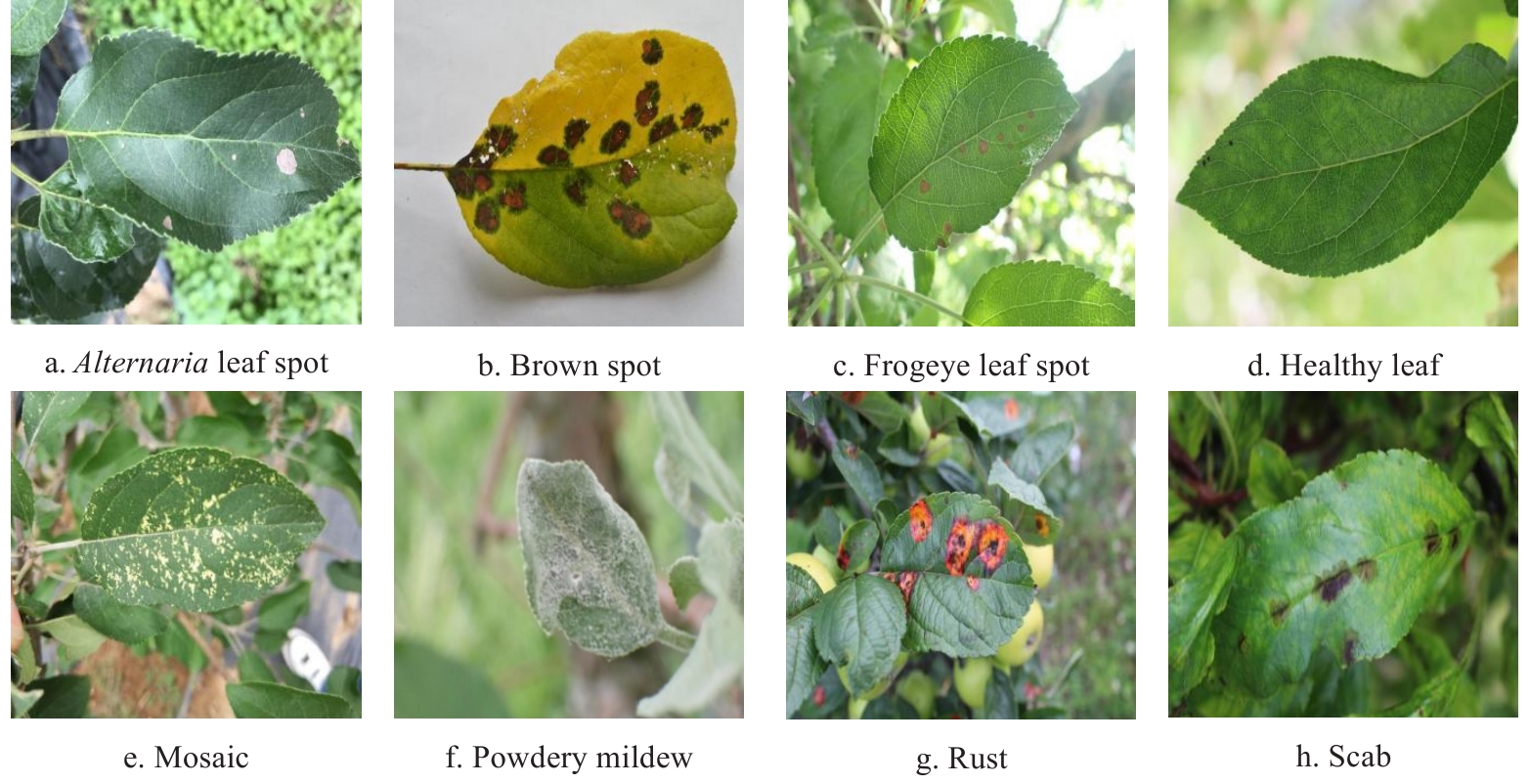
| Alternaria leaf spot[ | Alternaria spp | Dark brown spots appear on the leaves, evolving into circular or irregular lesions characterized by grayish-brown centers and occasionally concentric rings. The necrotic tissue leads to premature wilting and dropping of the leaves | It mainly occurs between 70 and 110 days after flowering, with infection typically starting around 20 days after flowering |
| Brown spot[ | Alternaria alternata f. sp. mali | Dark brown spots expand into larger lesions, accompanied by a rapid yellowing of the surrounding tissue, forming a distinct "halo". This process leads to extensive premature leaf defoliation | From summer to early September, conditions favoring early defoliation disease are prevalent due to the hot and rainy climate. The peak period for this disease extends until early September |
| Frogeye leaf spot[ | Botryosphaeria dothidea | Purple-brown specks develop into circular spots characterized by light centers and dark margins, resembling a "frog's eye". The necrotic center may detach, potentially leading to leaf drop | Its peak period usually occurs from late spring to early summer |
| Mosaic[ | Apple mosaic virus | Light and dark green mosaic patterns appear on leaves, with yellow patches reducing chlorophyll. This impairs photosynthesis and weakens the tree | Symptoms can occur throughout the year, but are often more pronounced during the spring shoot growth period |
| Powdery mildew[ | Podosphaera leucotricha | White powdery patches form on the leaves, causing them to curl and distort. The affected areas become stunted, potentially leading to premature leaf loss | Spring is the peak season for the occurrence of diseases; however, the severity of these diseases varies across different regions. In some areas, diseases may persist throughout other periods of the growing season |
| Rust[ | Gymnosporangium yamadae | Yellow-orange spots appear on the leaf surface, accompanied by corresponding cup-shaped structures forming beneath. The leaves may curl, desiccate, and abscise prematurely | Spring and early summer represent the peak periods for rust disease, particularly in the Shaanxi production area, where a high incidence of rust primarily occurs during the early to middle stages of the growing season |
| Scab[ | Venturia inaequalis | Velvety, olive-green to black spots develop on the leaves, evolving into raised, scabby lesions. The surrounding tissue may exhibit yellowing, which can lead to curling and premature leaf drop | Spring is a critical period for the occurrence of apple scab, as it is closely linked to the rainfall and humidity conditions prevalent during this season |
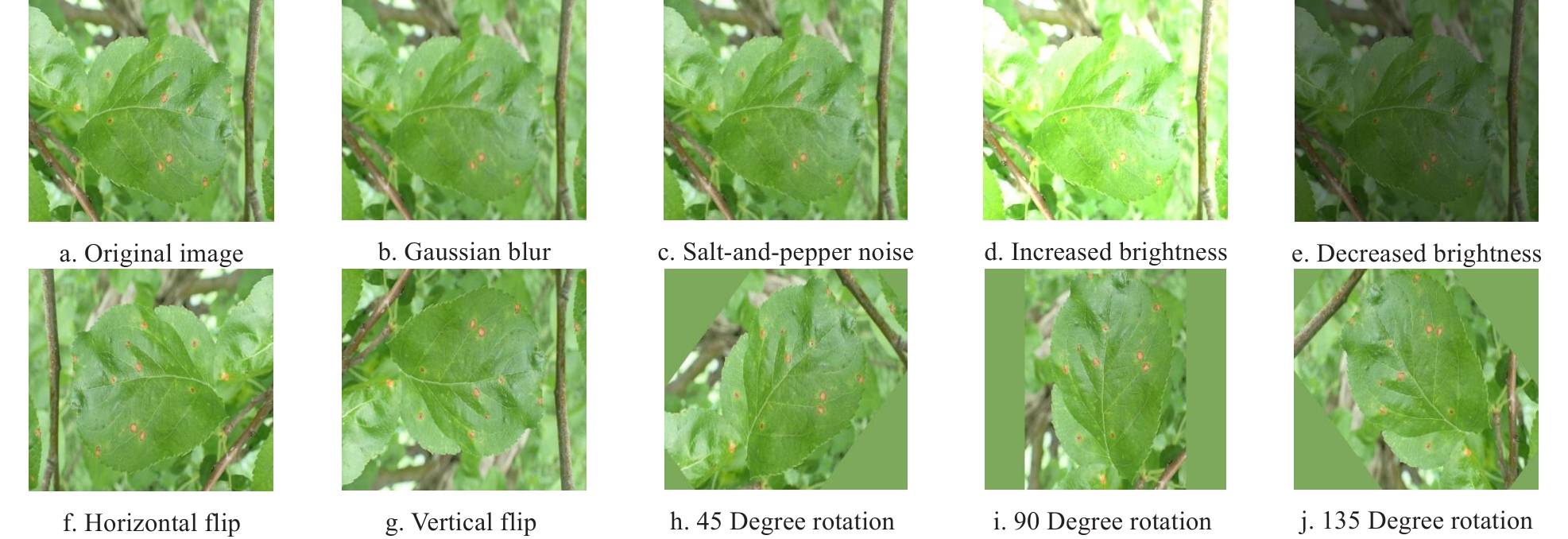
| | | | | |
|---|---|---|---|---|
| | | | | |
| | | | | |
| | | | | |
| | | | | |
| | | | | |
| | | | | |
| | | | | |
| | | | | |
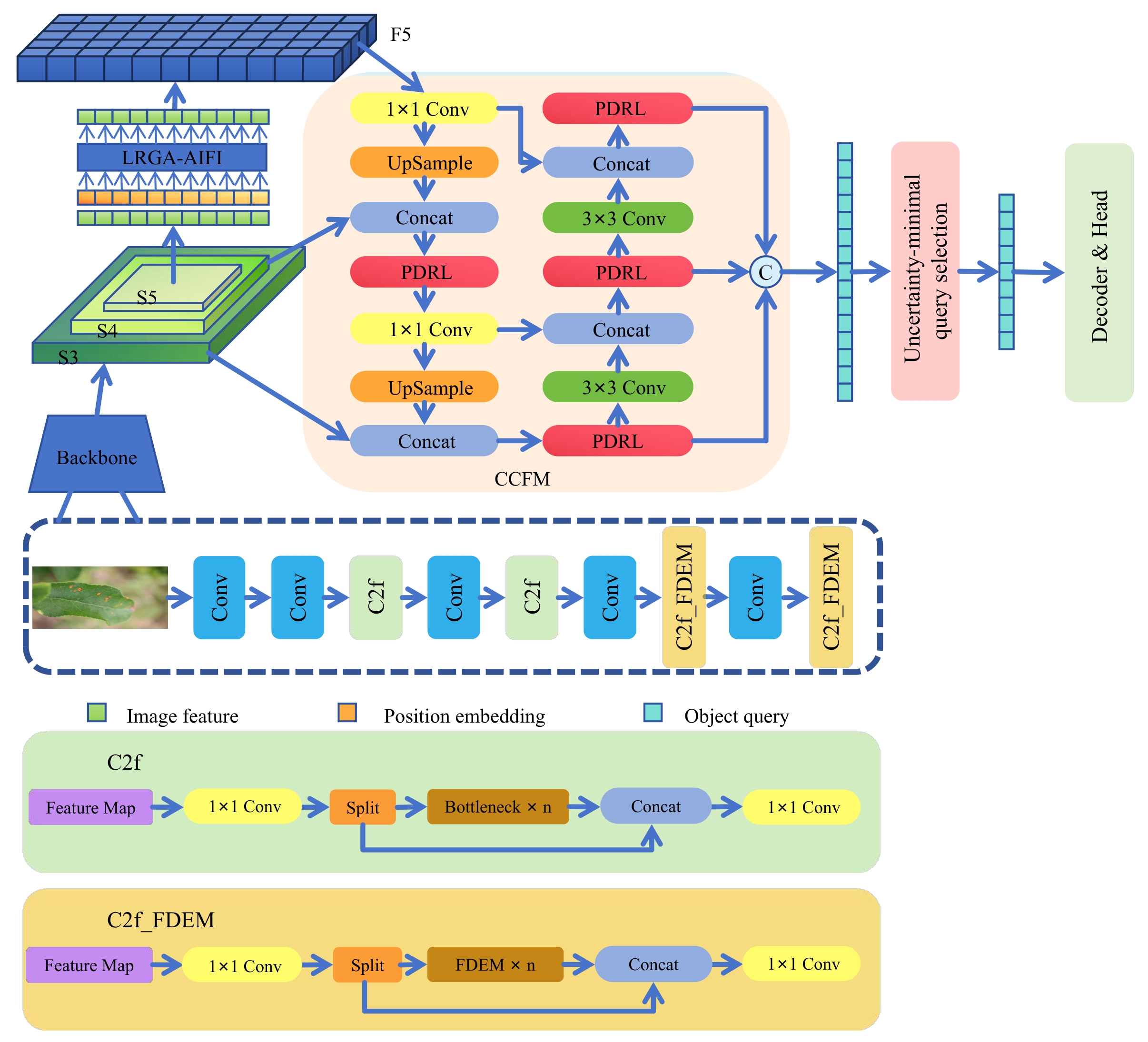

| | | | | | | | | | | |
|---|---|---|---|---|---|---|---|---|---|---|
| | | | | | | | | | | |
| | | | | | | | | | | |
| | | | | | | | | | | |
| | | | | | | | | | | |
| | | | | | | | | | | |
| | | | | | | | | | | |
| | | | | | | | | | | |
| | | | | | | | | | | |
|---|---|---|---|---|---|---|---|---|---|---|
| | | | | | | | | | | 115.6 |
| | | | | | | | | | | |
| | | | | | | | | | | |
| | | | | | | | | | | |
| | | | | | | | | | | |
| | | | | | | | | | | |
|---|---|---|---|---|---|---|---|---|---|---|
| | | | | | | | | | | |
| | | | | | | | | | | |
| | | | | | | | | | | |
| | | | | | | | | | | |
| | | | | | | | | | | |
|---|---|---|---|---|---|---|---|---|---|---|
| | | | | | | | | | | |
| | | | | | | | | | | |
| | | | | | | | | | | |
| | | | | | | | | | | |
| | | | | | | | | | | |
| | | | | | | | | | | |
| | | | | | | | | | | |
| | | | | | | | | | | |
| | | | | | | | | | | |
| | | | | | | | | | | |
| | 88.7 | 81.7 | 84.7 | 50.9 | 50.8 | 85.1 | 58.2 | 20.1 | 78.1 | 109.8 |
| | 87.2 | 78.6 | 83.0 | 50.5 | 50.3 | 82.7 | 8.4 | 4.2 | 16.4 | 252.7 |
| | 88.5 | 80.7 | 84.5 | 51.5 | 51.3 | 84.4 | 24.6 | 10.7 | 42.2 | 161.3 |
| | | | | | | | | | | 158.4 |
| | | | | | | | | | | 162.5 |
| | | | | | | | | | | 119.6 |
| | | | | | | | | | | | | | |
|---|---|---|---|---|---|---|---|---|---|---|---|---|---|
| | | | | | | | | | | | | | |
| | | | | | | | | | | | | | |
| | | | | | | | | | | | | | |
| | | | | | | | | | | | | | |
| | | | | | | | | | | | | | |
| | | | | | | | | | | | | | |
| | | | | | | | | | | | | | |
| a. Ground-truth annotations | b. Prediction results of RT-DETR-r18 | c. Prediction results of FLPNet |
| Input image | RT-DETR-r18 | YOLOv8s | FLPNet | |
| Alternaria | | |||
| Frogeye leaf spot | ||||
| Mosaic | ||||
| Rust | ||||
| Scab | ||||
| | | | | | | | | | |
|---|---|---|---|---|---|---|---|---|---|
| | | | | | | | | | |
| | | | | | | | | | |
| | | | | | | | | | |
| | | | | | | | | | |
| | | | | | | | | | |
| | | | | | | | | | |
| | | | | | | | | | |
| | | | | | | | | | |
| | | | | | | | | | |
| | | | | | | | | | |
|---|---|---|---|---|---|---|---|---|---|
| | | | | | | | | | |
| | | | | | | | | | |
| [1] |
|
| [2] |
|
| [3] |
|
| [4] |
|
| [5] |
|
| [6] |
|
| [7] |
|
| [8] |
|
| [9] |
|
| [10] |
|
| [11] |
|
| [12] |
|
| [13] |
|
| [14] |
|
| [15] |
|
| [16] |
|
| [17] |
|
| [18] |
|
| [19] |
|
| [20] |
|
| [21] |
|
| [22] |
|
| [23] |
|
| [24] |
|
| [25] |
|
| [26] |
|
| [27] |
|
| [28] |
|
| [29] |
|
| [30] |
|
| [31] |
|
| [32] |
|
| [33] |
|
| [34] |
|
| [35] |
|
| [36] |
|
| [37] |
|
| [38] |
|
| [39] |
|
| [40] |
|
| [41] |
|
| [1] | 张坤, 张春雨, 陈龙梅, 刘启程, 李永康, 柳凯, 曾文豪. 基于改进YOLOv11n的芡实外观缺陷检测算法[J]. 智慧农业(中英文), 2026, 8(5): 194-206. |
| [2] | 周霖, 王妍, 黎海欣, 郑吉澍, 李脉, 曹中华, 吴兆娟. 基于YOLOv11n-A3的油菜角果检测与计数方法[J]. 智慧农业(中英文), 2026, 8(5): 182-193. |
| [3] | 沈学利, 张越, 金海波, 张旭旭. 多尺度异构特征协同的棉花叶片病害检测模型[J]. 智慧农业(中英文), 2026, 8(4): 204-216. |
| [4] | 史绮梦, 汪军, 徐晓峰, 张玮逸. 基于改进RT-DETR的棉花成熟度检测算法[J]. 智慧农业(中英文), 2026, 8(4): 100-113. |
| [5] | 李传孟, 杨洁, 张晓宇. 基于Flor-YOLO的香石竹鲜切花分级轻量化检测方法[J]. 智慧农业(中英文), 2026, 8(4): 85-99. |
| [6] | 李夏溪, 冀荣华, 常宏瑞, 张所向. DC-YOLO:应对遮挡和光照变化的湖羊行为检测[J]. 智慧农业(中英文), 2026, 8(4): 127-147. |
| [7] | 杨玉, 张轶博, 毛波, 章磊. LiteFocus-Net:面向玉米叶片病虫害小目标检测的三点式轻量化增强框架[J]. 智慧农业(中英文), 2026, 8(4): 217-237. |
| [8] | 苏玉杰, 李玥, 魏霖静, 吴兵, 郭林海, 剡斌, 周慧, 高玉红, 康亮河, 刘欢, 苏舜昌. 基于轻量化改进YOLOv11n-Seg的胡麻倒伏区域识别方法[J]. 智慧农业(中英文), 2026, 8(2): 35-47. |
| [9] | 赵丽成, 卢鑫羽, 吴茜, 任妮, 周玲莉, 程雅雯, 胡安琦, 戚超. 基于改进YOLOv10和LAMP通道剪枝的串番茄成熟度检测算法研发[J]. 智慧农业(中英文), 2026, 8(2): 133-146. |
| [10] | 刘浩然, 王宇, 赵学观, 吴华瑞, 付豪, 庞树杰, 翟长远. CD-YOLO:基于改进YOLOv11s的田间胡萝卜苗检测方法[J]. 智慧农业(中英文), 2026, 8(2): 158-174. |
| [11] | 巫晨旭, 左浩龙, 李刚. 面向云遮挡与复杂地块场景下的跨模态注意力多源遥感农作物分类[J]. 智慧农业(中英文), 2026, 8(2): 118-132. |
| [12] | 刘恩奇, 刘淼, 王拓, 朱耀辉, 陈日强, 徐波, 高美玲, 张静, 杨耘, 杨贵军. 基于时序气温特征增强的苹果始花期Bi-LSTM预测方法[J]. 智慧农业(中英文), 2026, 8(2): 86-97. |
| [13] | 蔡玉琴, 刘大铭, 徐琴, 李波洋, 刘博杰. 基于自适应Kalman滤波与GWO-LSTM-Attention的温室温湿度预测方法[J]. 智慧农业(中英文), 2026, 8(1): 148-155. |
| [14] | 胡雨萌, 关非凡, 谢东辰, 马萍, 余有本, 周杰, 聂炎明, 黄铝文. 基于增强型轻量U-Net3+的茶叶病害诊断方法[J]. 智慧农业(中英文), 2026, 8(1): 15-27. |
| [15] | 黄先果, 朱启兵, 黄敏. 基于时序多源信息融合的果蔬新鲜度在线检测系统[J]. 智慧农业(中英文), 2026, 8(1): 203-212. |
| 阅读次数 | ||||||
|
全文 |
|
|||||
|
摘要 |
|
|||||