Smart Agriculture ›› 2026, Vol. 8 ›› Issue (3): 67-84.doi: 10.12133/j.smartag.SA202602016
• 专刊--数字技术赋能与农业经济范式转型 • 上一篇 下一篇
徐启玉1, 郑波1,2( ), 钟上威1,3
收稿日期:2026-02-09
出版日期:2026-05-30
基金项目:作者简介:徐启玉,博士,副研究员,研究方向为作物分子育种。E-mail:xuqiyu@nwafu.edu.cn
通信作者:
XU Qiyu1, ZHENG Bo1,2(), ZHONG Shangwei1,3
Received:2026-02-09
Online:2026-05-30
Foundation items:National Natural Science Foundation of China(32300248); Natural Science Foundation of Shandong Province(ZR2022QC010)
About author:XU Qiyu, E-mail: xuqiyu@nwafu.edu.cn
Corresponding author:摘要:
【目的/意义】 随着基因型-表型-环境互作复杂性的增加及组学大数据的爆发式增长,传统育种已难以满足高效精准育种需求。驱动作物育种从经验选择向智能设计转型,对于保障全球粮食安全、实现农业可持续发展具有重要战略意义。本文旨在系统探究人工智能(Artificial Intelligence, AI)驱动植物育种范式变革的底层逻辑,梳理智慧育种的代际演变及其在表型解析、基因组预测和分子设计等关键环节的技术进展,并深入探讨育种大模型对育种全流程的重构作用,以期为中国种业科技实现自立自强提供理论参考。 【进展】 本文系统回顾了作物育种的代际演变历程,深入探讨了AI技术在现代育种中的应用现状和前景。重点阐述了AI在种质资源高效挖掘、高通量表型精准解析、全基因组选择模型预测及分子设计育种等关键环节的技术逻辑与实证案例。同时,剖析了农业大模型在重构农业知识体系、实现多模态数据融合建模以及辅助精准育种决策中的核心作用,并总结了当前AI驱动下育种技术框架的最新研究成果。 【结论/展望】 针对当前面临的跨学科数据壁垒、深度学习算法的可解释性不足,以及复杂变动环境下的模型泛化能力弱等核心挑战进行了深入分析。未来应致力于构建标准化育种大数据共享平台,开发具有生物学启发性的可解释算法,并加强AI与合成生物学的深度融合,通过多学科交叉协同,最终实现育种全流程的数字化、智能化与自动化演进。
中图分类号:
徐启玉, 郑波, 钟上威. 人工智能赋能现代农业生物育种[J]. 智慧农业(中英文), 2026, 8(3): 67-84.
XU Qiyu, ZHENG Bo, ZHONG Shangwei. Artificial Intelligence Empowering Modern Agricultural Biological Breeding[J]. Smart Agriculture, 2026, 8(3): 67-84.
图1
作物育种技术的历史发展
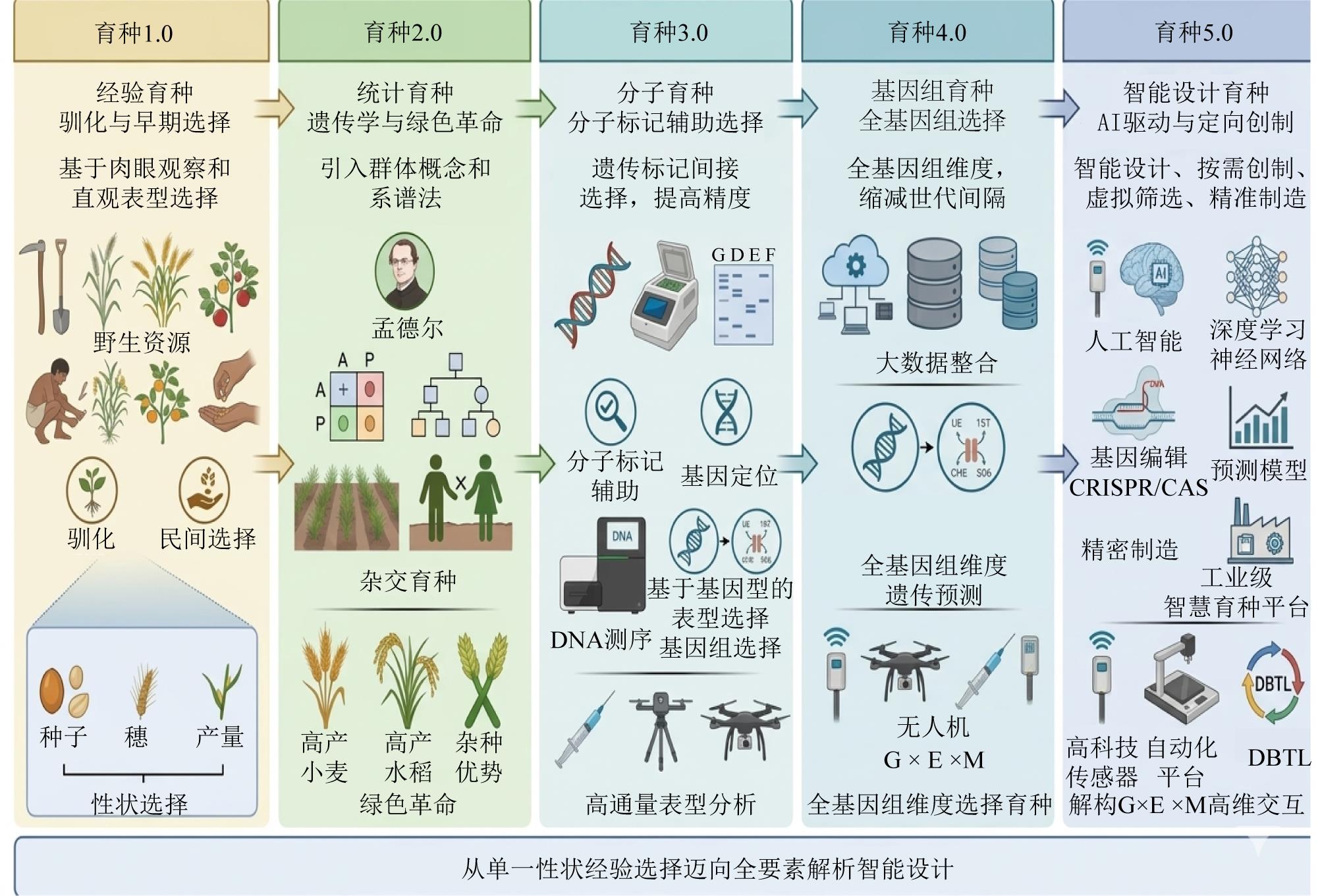
图2
AI赋能作物育种路线图
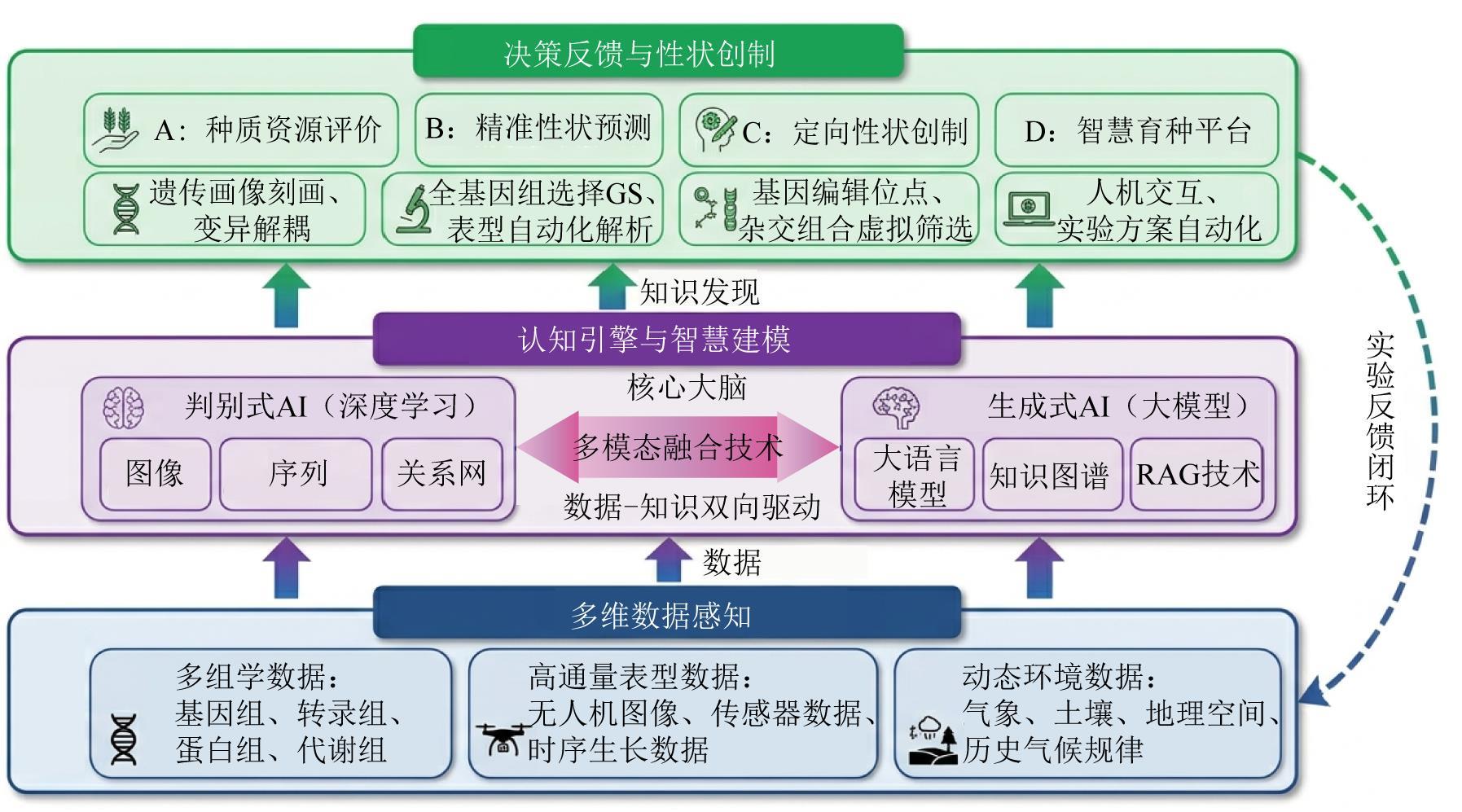
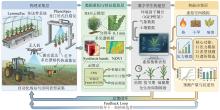
图3
作物高通量表型解析与数字孪生工作流程
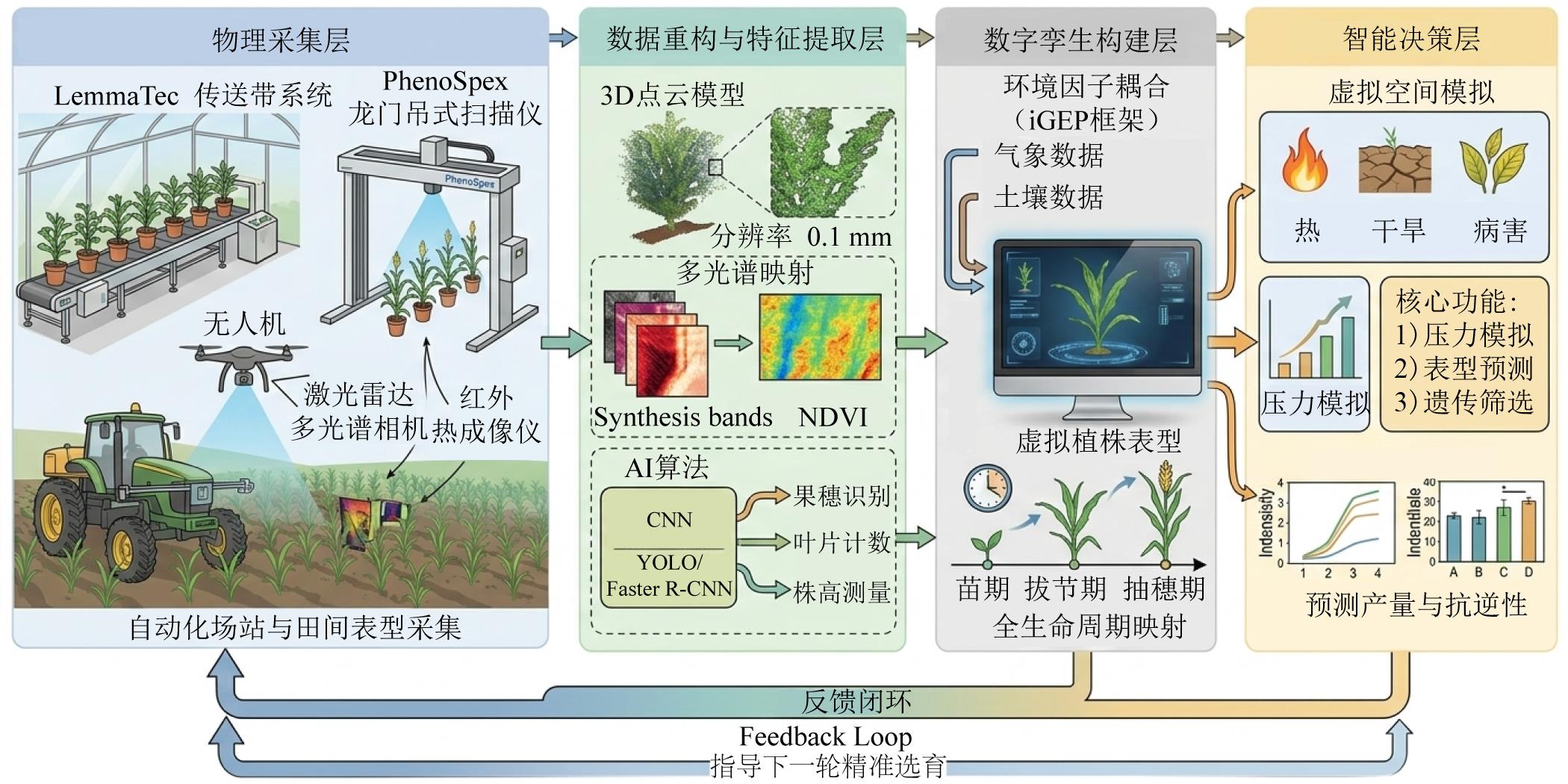
表1
主要作物育种大模型
| 名称 | 类型 | 主要功能描述 | 发布机构及时间 |
|---|---|---|---|
| 司农(Sinong) | 通用农业领域垂直大模型 | 全学科知识检索与农业生产问题诊断 | 南京农业大学,2026 |
| 农业科学发现大模型 | 农业科研领域大模型 | 基因挖掘、性状预测、方案设计、种植系统智慧管理 | 中国农业科学院生物技术研究所/华为云,2025 |
| 神农大模型 3.0 | 农业垂直领域大模型 | 智慧育种、智慧种植、智慧养殖、遥感气象、智慧教育 | 中国农业大学,2025 |
| AI Breeder for Crops (ABC) | 集成化智慧育种平台 | 棉花一站式育种平台,并逐步拓展至水稻等多作物平台 | 浙江大学/北京大学,2025 |
| 西南种芯 V1 | 玉米智慧育种大模型 | 西南特色玉米的遗传演化分析、特异性状挖掘及改良 | 四川农业大学/博瑞迪,2025 |
| 天工开悟 2.0 | 农业大语言模型 | 病虫害预警、产量预测及生产要素的动态优化配置 | 哈尔滨工业大学,2025 |
| 作物育种大模型(BreedingGPT) | 育种专业辅助模型 | 科研问答,基因解析,文献检索,科研助手 | 北京大学现代农业研究院,2025 |
| PlantGPT | 大语言模型人工智能助手 | 植物功能基因组学智能问答、普及农业知识 | 华南农业大学,2025 |
| SeedBench | 多模态大模型测评基准 | 评估大模型在基因信息获取与分析、基因功能与调控机制分析、品种选育与农艺特性优化中的效用 | 上海人工智能实验室、崖州湾国家实验室,2025 |
| CropGPT | 生物大数据模型 | 协同应用AI、基因组编辑、多组学等前沿技术,丰富基础种质资源,提高育种精准 | 华中农业大学,2024 |
| 丰登(SeedLLM) | 种业大语言模型 | 品种选育、栽培管理、种子经营、种业管理 | 上海人工智能实验室/崖州湾国家实验室/中国农业大学,2024 |
| WBLM(Wheat Breeding LLM) | 多模态育种大模型 | 融合基因型、表型、遥感、环境数据;性状预测与育种决策 | 康奈尔大学/浙江大学,2025 |
| CropOS | 工业AI育种平台 | 基因型-表型预测、候选品系筛选、目标性状设计 | 美国Benson Hill公司,2025 |
| SEEDesign™ | AI+基因编辑设计平台 | in-silico性状设计、预测编辑位点、加速品种创制 | 美国农业科技公司(Inari),2025 |
| PlantCaduceus | 植物特异DNA基础模型 | 专门针对植物基因组训练;增强跨物种预测能力 | 开源植物基因组AI项目,2024 |
| PLLaMA | 植物科学基础开源大模型 | 植物学知识问答、实验设计辅助及育种决策咨询 | 加州大学圣巴巴拉分校/林肯大学等,2024 |
| AgroNT | 植物基因组基础模型(DNA LLM) | 多作物基因组预训练;调控元件识别、表达预测、功能变异优先级评估、跨物种迁移学习 | InstaDeep/先正达,2024 |
| Mineral | 农业机器人+ AI感知基础模型 | 高通量田间表型采集,作物个体级识别与监测,病害/营养状态检测,数据驱动育种与管理决策 | Alphabet X(Google Moonshot)农业AI项目,2024 |
| FarmVibes AI | 多模态农业基础模型平台 | 融合卫星、气候、土壤、农机数据,作物生长预测与产量分析,精准播种与施肥决策,农田“what-if”模拟分析 | 微软,2022 |
表2
AI驱动育种面临的挑战与应对策略
| 维度 | 挑战 | 对策 |
|---|---|---|
| 数据 | 数据孤岛、标准化缺失 | FAIR原则、联邦学习、国家级数据版权平台 |
| 算力 | 算力不对称、成本高 | 育种专用算力集群、LoRA量化/轻量化技术 |
| 算法 | 黑盒模型、缺少生物学因果 | iGEP框架、知识引导的自监督学习、RAG技术 |
| 人才 | 复合型人才匮乏 | 农学+AI数据科学交叉学科培养 |
| [1] |
王术坤, 韩磊. 中国种业发展形势与国际比较[J]. 农业现代化研究, 2022, 43(5): 814-822.
|
|
|
|
| [2] |
|
| [3] |
种聪, 郭雨溪, 岳希明. 中国种业振兴: 发展历程、关键问题与机制构建[J]. 农业现代化研究, 2023, 44(2): 205-213.
|
|
|
|
| [4] |
|
| [5] |
|
| [6] |
|
| [7] |
|
| [8] |
|
| [9] |
|
| [10] |
|
| [11] |
谷晓峰, 张立超, 李慧慧, 等. 农业生物智能设计育种[J]. 中国农业科技导报, 2025, 27(12): 1-13.
|
|
|
|
| [12] |
|
| [13] |
|
| [14] |
|
| [15] |
|
| [16] |
|
| [17] |
|
| [18] |
|
| [19] |
|
| [20] |
简六梅, 肖英杰, 严建兵. 从头驯化: 作物品种设计与培育的新方向[J]. 遗传, 2023, 45(9): 741-753.
|
|
|
|
| [21] |
|
| [22] |
|
| [23] |
|
| [24] |
张丰勇, 应晓平, 张健, 等. 半矮秆基因sd1调控水稻重要农艺性状的研究进展[J]. 中国水稻科学, 2025, 39(1): 24-32.
|
|
|
|
| [25] |
|
| [26] |
|
| [27] |
|
| [28] |
|
| [29] |
方宣钧. 育种5.0: 人工智能驱动的设计育种革命[J]. 分子植物育种(网络版), 2024, 22(3): 29-38.
|
|
|
|
| [30] |
徐云碧. 大数据与智慧育种[C]// 第二十届中国作物学会学术年会论文集. 长沙, 中国, 2023: 96.
|
| [31] |
|
| [32] |
|
| [33] |
|
| [34] |
|
| [35] |
|
| [36] |
|
| [37] |
|
| [38] |
周济, 陈佳玮, 沈利言, 等. 人工智能——推动植物研究发展的新动力[J]. 南京农业大学学报, 2022, 45(5): 1060-1071.
|
|
|
|
| [39] |
|
| [40] |
|
| [41] |
|
| [42] |
|
| [43] |
|
| [44] |
|
| [45] |
杨莹莹, 郭嘉, 芦天罡, 等. 深度学习助力智慧农业高质量发展[J]. 农业工程, 2025, 15(12): 16-21.
|
|
|
|
| [46] |
|
| [47] |
|
| [48] |
|
| [49] |
|
| [50] |
李媛媛. 卷积神经网络优化及其在图像识别中的应用[D]. 沈阳: 沈阳工业大学, 2016.
|
|
|
|
| [51] |
|
| [52] |
吉文翰, 郑恒彪, 王迪, 等. 基于无人机影像和卷积神经网络的水稻育种材料产量预测研究[J]. 南京农业大学学报, 2025, 48(5): 1001-1012.
|
|
|
|
| [53] |
|
| [54] |
|
| [55] |
|
| [56] |
乔磊, 陈雷, 袁媛. 基于双意图建模和知识图谱扩散的水稻品种选育推荐方法[J]. 智慧农业(中英文), 2025, 7(2): 73-80.
|
|
|
|
| [57] |
鲍艳春, 石彩霞, 张传强, 等. 深度学习在基因组学中的研究进展[J]. 遗传, 2024, 46(9): 701-715.
|
|
|
|
| [58] |
|
| [59] |
|
| [60] |
|
| [61] |
|
| [62] |
|
| [63] |
|
| [64] |
陈亦男, 史展. 改进DeepLabv3+模型的图像语义分割算法[J]. 黑龙江科技大学学报, 2026, 36(1): 163-168.
|
|
|
|
| [65] |
|
| [66] |
|
| [67] |
|
| [68] |
|
| [69] |
|
| [70] |
|
| [71] |
|
| [72] |
|
| [73] |
黄勃, 吴申奥, 王文广, 等. 图模互补: 知识图谱与大模型融合综述[J]. 武汉大学学报(理学版), 2024, 70(4): 397-412.
|
|
|
|
| [74] |
|
| [75] |
|
| [76] |
|
| [77] |
|
| [78] |
张子悦, 周欣智, 吕斌. 人工智能驱动的基因编辑技术及其应用[J]. 中国生物化学与分子生物学报, 2025, 41(4): 522-532.
|
|
|
|
| [79] |
|
| [80] |
郭旺, 杨雨森, 吴华瑞, 等. 农业大模型: 关键技术、应用分析与发展方向[J]. 智慧农业(中英文), 2024, 6(2): 1-13.
|
|
|
|
| [81] |
冯在文, 许多, 田芳, 等. 设施农业智能决策大模型关键技术与发展方向[J]. 农业工程学报, 2025, 41(13): 50-61.
|
|
|
|
| [82] |
|
| [83] |
|
| [84] |
|
| [85] |
|
| [86] |
|
| [87] |
|
| [88] |
|
| [89] |
|
| [90] |
|
| [91] |
|
| [92] |
|
| [93] |
|
| [94] |
|
| [95] |
|
| [96] |
|
| [97] |
|
| [98] |
|
| [99] |
欧阳峥峥, 马毓聪, 寇远涛, 等. 中国农业大模型数据治理、核心技术与应用挑战[J]. 农业工程学报, 2025, 41(24): 153-162.
|
|
|
|
| [100] |
|
| [101] |
|
| [102] |
|
| [103] |
|
| [104] |
|
| [105] |
|
| [106] |
|
| [107] |
|
| [108] |
|
| [109] |
王可依. “粮农大讲堂” 第五期: 就我国种业振兴行动进行集中学习[J]. 世界农业, 2025(5): 138.
|
| [110] |
何玮萱, 刘琳, 胡博隆. 都市田园——互联网现代农业平台需求分析与开发推广研究[J]. 科技视界, 2018, 8(6): 28-29, 33.
|
|
|
|
| [111] |
|
| [112] |
|
| [113] |
|
| [114] |
|
| [115] |
万志前, 刘玉珍. 智慧农业背景下农业经营者数据权益保护困境与制度因应[J/OL]. 智慧农业(中英文), [2026-06-20]. Doi: 10.12133/j.smartag.SA202603023 .
|
|
|
|
| [116] |
郭小东. 从“可解释”到“可信任”: 人工智能治理的逻辑重构[J]. 北京工业大学学报(社会科学版), 2025(6): 117-135.
|
|
|
|
| [117] |
|
| [118] |
|
| [119] |
|
| [120] |
|
| [121] |
|
| [122] |
|
| [123] |
|
| [124] |
|
| [1] | 王剑, 赵浩森, 马越, 邢斌, 朱文颖. 设施蔬菜智能管控技术研究进展与展望[J]. 智慧农业(中英文), 2026, 8(1): 104-119. |
| [2] | 张志勇, 曹姗姗, 孔繁涛, 刘继芳, 孙伟. 母牛发情精准感知与智能鉴定技术研究进展、问题与挑战[J]. 智慧农业(中英文), 2025, 7(3): 48-68. |
| [3] | 张乐, 李爱学, 陈立平. 电化学传感器应用于植物活性小分子检测综述[J]. 智慧农业(中英文), 2025, 7(3): 69-88. |
| [4] | 韩佳伟, 杨信廷. 农产品智慧供应链:内涵、关键技术与未来方向[J]. 智慧农业(中英文), 2025, 7(3): 1-16. |
| [5] | 乔磊, 陈雷, 袁媛. 基于双意图建模和知识图谱扩散的水稻品种选育推荐方法[J]. 智慧农业(中英文), 2025, 7(2): 73-80. |
| [6] | 刘继芳, 周向阳, 李敏, 韩书庆, 郭雷风, 迟亮, 杨璐, 吴建寨. 人工智能驱动畜牧新质生产力高质量发展:制约因素、生成逻辑与推进路径[J]. 智慧农业(中英文), 2025, 7(1): 165-177. |
| [7] | 张帆, 周梦婷, 熊本海, 杨振刚, 刘民泽, 冯文晓, 唐湘方. 肉牛生理指标智能监测技术研究进展与展望[J]. 智慧农业(中英文), 2024, 6(4): 1-17. |
| [8] | 郭旺, 杨雨森, 吴华瑞, 朱华吉, 缪祎晟, 顾静秋. 农业大模型:关键技术、应用分析与发展方向[J]. 智慧农业(中英文), 2024, 6(2): 1-13. |
| [9] | 毛克彪, 张晨阳, 施建成, 王旭明, 郭中华, 李春树, 董立新, 吴门新, 孙瑞静, 武胜利, 姬大彬, 蒋玲梅, 赵天杰, 邱玉宝, 杜永明, 徐同仁. 基于人工智能的地球物理参数反演范式理论及判定条件[J]. 智慧农业(中英文), 2023, 5(2): 161-171. |
| [10] | 桂泽春, 赵思健. 人工智能在农业风险管理中的应用研究综述[J]. 智慧农业(中英文), 2023, 5(1): 82-98. |
| [11] | 赵瑞雪, 杨晨雪, 郑建华, 李娇, 王剑. 农业智能知识服务研究现状及展望[J]. 智慧农业(中英文), 2022, 4(4): 105-125. |
| [12] | 杨亮, 熊本海, 王辉, 陈睿鹏, 赵一广. 家畜饲喂机器人研究进展与发展展望[J]. 智慧农业(中英文), 2022, 4(2): 86-98. |
| [13] | 耿闻轩, 赵俊晔, 阮继伟, 侯跃辉. 人工智能辅助种植策略对温室草莓生产调控效果对比研究[J]. 智慧农业(中英文), 2022, 4(2): 183-193. |
| [14] | 张宇, 赵春江, 林森, 郭文忠, 文朝武, 龙洁花. 基于Penman-Monteith模型和路径排序算法相结合的草莓灌溉方法与验证[J]. 智慧农业(中英文), 2021, 3(3): 116-128. |
| [15] | 李道亮, 刘畅. 人工智能在水产养殖中研究应用分析与未来展望[J]. 智慧农业(中英文), 2020, 2(3): 1-20. |
| 阅读次数 | ||||||
|
全文 |
|
|||||
|
摘要 |
|
|||||