Smart Agriculture ›› 2026, Vol. 8 ›› Issue (1): 120-147.doi: 10.12133/j.smartag.SA202507028
戴维娇1( ), 梁禹东辰1(), 周勇2, 姚超1, 章程1,3, 宋永健4, 李国亮1, 田芳1,3()
收稿日期:2025-07-28
出版日期:2026-01-30
作者简介:通信作者:
DAI Weijiao1(), LIANG Yudongchen1(), ZHOU Yong2, YAO Chao1, ZHANG Cheng1,3, SONG Yongjian4, LI Guoliang1, TIAN Fang1,3()
Received:2025-07-28
Online:2026-01-30
Foundation items:甘肃省现代农业产业技术体系建设专项(GSARS02)
About author:梁禹东辰,硕士研究生,研究方向为计算机视觉。E-mail:YudongchenLiang@webmail.hzau.edu.cn LIANG Yudongchen, E-mail: YudongchenLiang@webmail.hzau.edu.cn.
Corresponding author:摘要:
[目的/意义] 在精准育种的全基因组选择工作中,羊的体尺参数是评价其生长发育与育种价值的重要依据。传统人工测量方法效率低、误差大,且易导致羊应激,难以满足精准养殖需求。本文概述了羊只体尺测量技术的研究进展、应用以及分析发展方向,为羊只体尺非接触测量提供理论参考与实践指引。 [进展] 系统综述了基于二维图像、三维点云,以及二维与三维融合技术的三类主流羊体尺特征提取方法的技术原理、关键算法、测量精度及应用现状。基于二维图像的方法,通过人工构建几何特征或采用深度学习关键点识别算法实现测量,其优势在于成本低廉、操作便捷,但其测量结果易受拍摄视角与光照条件干扰,且难以获取关键的围度参数。基于三维点云的技术能精准重建羊只三维模型,可全面获取包括围度在内的各类体尺数据,精度显著提升,然而该技术面临设备成本高、点云数据处理复杂,以及对动物姿态变化敏感等挑战。作为前两者的结合,二维与三维融合技术旨在取长补短,在牛、猪等家畜上已得到有效验证并展现出优异性能,为羊只体尺测量提供了重要的技术借鉴与实践思路。 [结论/展望] 综合分析显示,未来研究应构建大规模高质量数据集;研发轻量级、泛化性强的人工智能模型;优化三维点云处理流程,推动低成本高鲁棒性视觉系统在养殖场景中的集成应用;通过位姿标准化、精细三维分割策略和多模态数据融合,重点提高曲线参数测量(如胸围、腹围和小腿围)的精度;将羊只与其他动物体尺测量技术相互借鉴和协同发展以加速羊只体尺自动化测量技术的产业化,支撑智慧牧场建设。
中图分类号:
戴维娇, 梁禹东辰, 周勇, 姚超, 章程, 宋永健, 李国亮, 田芳. 羊只体尺测量的研究进展:从二维视觉到三维重建及2D-3D融合[J]. 智慧农业(中英文), 2026, 8(1): 120-147.
DAI Weijiao, LIANG Yudongchen, ZHOU Yong, YAO Chao, ZHANG Cheng, SONG Yongjian, LI Guoliang, TIAN Fang. Advances and Prospects in Body-Size Measurement of Sheep: From 2D Vision to 3D Reconstruction and 2D-3D Fusion[J]. Smart Agriculture, 2026, 8(1): 120-147.


| Subjects | Camera setup | Image algorithms | Individual number | Traits & accuracy | Main limitations | Year | Work |
|---|---|---|---|---|---|---|---|
| Sheep | Logitech C920 hdpro webcam | Partial least squares algorithm | 27 | BL: 3.5%; BH: 3.5%; CD: 3.5% | Colour-contrast sensitive | 2014 | [ |
| Sheep | CCD wide-angle camera | Background difference method | NA | BL: 2%; BH: 2% | Cluttered background leaks | 2014 | [ |
| Sheep | MV-EM120C | SLIC + FCM clustering | 27 | BL: 2.03%; BH: 1.13%; CD: 4.45%; CW: 2.25%; HH: 1.54%; HW: 2.41% | Cluster number must be tuned | 2018 | [ |
| Pig | Kinect v1 (RGB) | Semi-global matching + image subtraction | 200 | BL, BH, HH, HW, SW: < 2.83 % | Depth not used; Lighting sensitive | 2019 | [ |
| Cow | Single RGB | Canny algorithm | NA | BL: 0.06%; BH: 2.28% | Edge gaps need manual repair | 2020 | [ |
| Yak | Single RGB | Sobel operator + SLIC | 33 | BH: 1.95%; BL: 3.11%; CD: 4.91% | K-value manually tuned | 2021 | [ |
| Cattle | Azure Kinect DK | Shadow aberration method + Watershed segmentation | 34 | BL: 2.7 cm; BH: 2.07 cm; AW: 1.47 cm | High-contrast uniform background required | 2022 | [ |
| Sheep | Single RGB | PreciseEdge | 75 | BL: r=0.943; BH: r=0.931; CG: r=0.893 | High-contrast uniform background required | 2022 | [ |
| Sheep, Cattle | Intel RealSense D415 | U-Net | 55 | BL: 2.42 %; BH: 1.86 %; HH: 2.07 %; CD: 2.72 % | Heavy model, embedded-unfriendly | 2022 | [ |
| Cattle | Hikvision RGB | SOLOv2 | 200 | BL: 1.36 %; BH: 0.44 %; CD: 2.05 %; CW: 2.80 % | Extreme-pose drift | 2022 | [ |
| Cattle | Smartphone RGB | YOLOv5s+Lite-HRNet | 30 | BL: 7.55%; BH: 6.75%; CD: 8.00%; SC: 8.97% | Key-point occlusion drift | 2024 | [ |
| Cattle | RealSense D455 | Improved Mask2former | 137 | BH: 4.32%; HH: 3.71%; BL: 5.58%; SC: 6.25% | High posture sensitivity, large errors in girth measurements | 2024 | [ |
| Subjects | Method | Principle | Time complexity | Advantage | Disadvantage | Work |
|---|---|---|---|---|---|---|
| Sheep | Corner (inflection-point) detection | Compute curvature or angle discontinuities along the contour | O(n) | Very fast; accurate localization | Noise-sensitive | [ |
| Sheep | Convex-hull analysis | Compute the convex hull of a point set and retain its vertices | O(n log n) | Parameter-free; fast execution | Keeps only "most convex" points; loses concavities | [ |
| Sheep | Edge detection | Detect gray-level discontinuities via gradient/entropy/filtering | O(n) | Highly general-purpose | Fragile edges; post-processing required | [ |
| Sheep | Maximum-curvature extraction | Locate curvature extrema along the edge | O(n) | Mathematically well-defined | Requires smoothing; prone to burrs | [ |
| Sheep | Region-based U-chord curvature | Compute curvature with a fixed-chord sliding window | O(n) | Balances local & global shape | Extra chord-length parameter to tune | [ |
| Subjects | Method | Principle | Advantage | Disadvantage | Work |
|---|---|---|---|---|---|
| Sheep, Cattle | Multi-stage dense hourglass | Multi-scale fusion with iterative up/down-sampling for end-to-end key-point detection | Highest localization accuracy and strong robustness to pose and coat variations | Large parameter count, high GPU memory usage, slow inference speed | [ |
| Cattle | YOLOv5s +Lite high-resolution network(Lite-HRNet) | YOLOv5s proposes regions; Lite-HRNet refines keypoints | Excellent speed-accuracy trade-off, lightweight design, and suitable for edge deployment | Relies on detection box quality; key points tend to drift under dense occlusion | [ |
| Pig | Faster R-CNN +Neural Architecture Search (NAS) | Faster R-CNN defines the search region; NAS refines the keypoints | High detection accuracy and strong generalizability | Slowest inference speed, difficult to meet real-time requirements, and long training and hyper-parameter tuning cycles | [ |
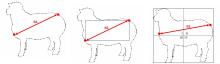
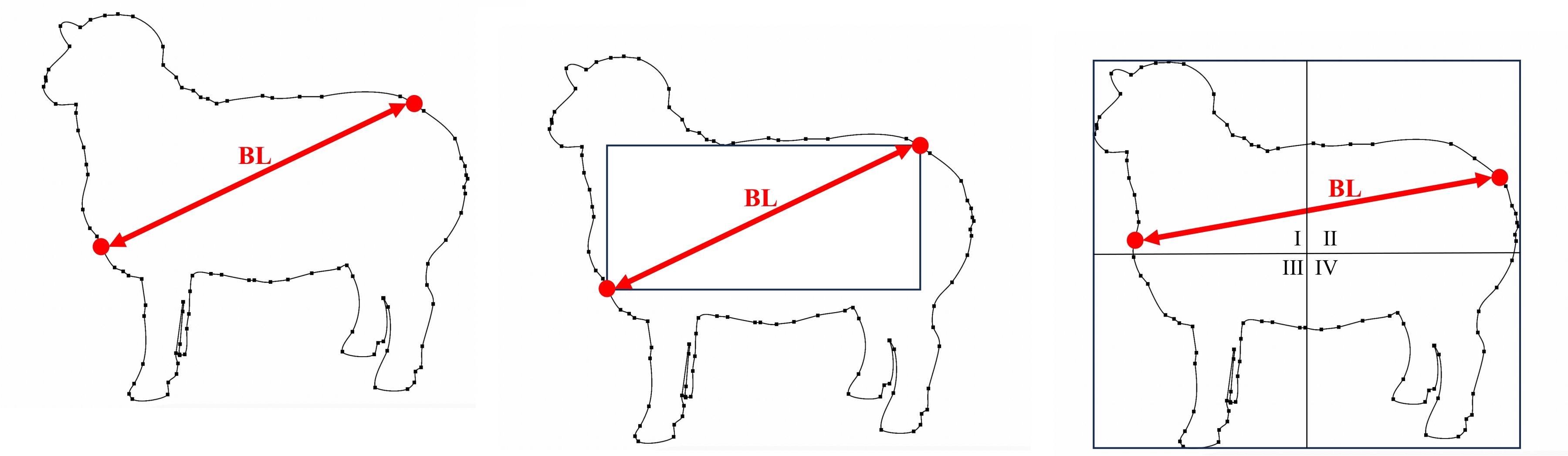
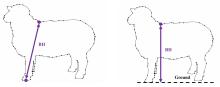

| Subjects | Camera type | Algorithms | Animal Numbers | Body traits & accuracy | Year | Work |
|---|---|---|---|---|---|---|
| Sheep | REVscan_3D | Octary tree+ Delaunay triangulation | 1 | BL / BH / CW / HH / HW: 1.01 % | 2019 | [ |
| Cow | Binocular Vision | Scale-invariant feature transform(SIFT) Algorithms | 20 | BL:1.14%; BH:1.57%; SW:2.24% | 2020 | [ |
| Sheep | TOF 3D camera | Principal component analysis Random sampling consistency algorithm Improved regional growth method | 1 | BL / BH / CD / HH: 2.36 % | 2020 | [ |
| Cattle | Kinect v2 | Background subtraction, ROR Algorithms, Iterative Closest Point (ICP), ISS3D | 103 | BL / BH / CD / HH: <3 % | 2020 | [ |
| Pig | Intel RealSense D720 | Depthwise Separable Convolution | 239 | BL: 0.75 cm; HW: 0.38 cm; BH: 1.23 cm; SW: 0.33 cm; HH: 0.66 cm | 2021 | [ |
| Cattle | Kinect DK | Five-point clustering gradient boundary recognition algorithm | 10 | BL: 2.3%; BH: 2.8%; CG: 2.6%; AD: 2.8%; SW: 1.6% | 2022 | [ |
| Pig | Kinect v2 | Variance classification algorithms | 50 | BL: 0.7%; BH: 1.8%; SW: 3.3% | 2022 | [ |
| Pig | RealSense L515 | DeepLabCut+EfficientNet-b6 | 12 | BL / BH / HH / HW / SW: 1.79 cm | 2023 | [ |
| Pig | NA | Improved PointNet++ | 25 | BL: 2.57%; BH: 2.18%; HH: 2.28%; SW: 4.56%; CG: 2.50%; AD: 3.14% | 2023 | [ |
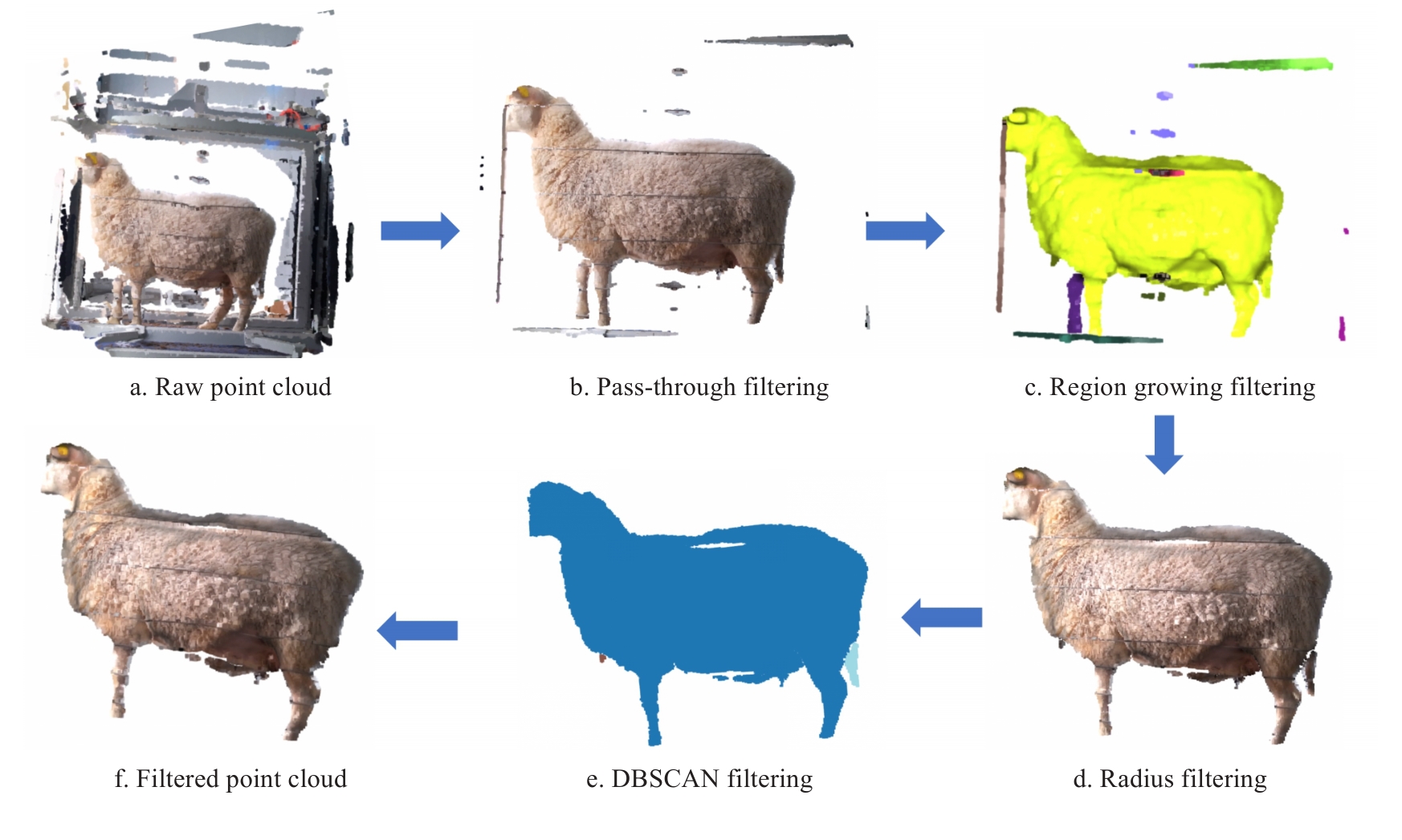
| Sheep | Kinect v2 | ICP,pass-through filtering, statistical filtering, RANSAC | 2 | BL / BH / HH / HW: <5 % | 2024 | [ |
| Sheep | MV-EM120C GigE | YOLOv11n-Pose, CNN, ElasticNet | 51 | BL: 3.11%; BH: 1.93%; CW: 3.38%; CD: 2.52% | 2025 | [ |
| Sheep | KinectV2 | PointNet++ | 24 | BH: 1.67%; CW: 3.63%;HH: 1.14%; BL: 2.71%; CG: 3.57%; HW: 3.71% | 2025 | [ |
| Sheep | Kinect DK | Improved PointNet++, CPD | 120 | BL: 3.34%; BH: 3.07%; HH: 3.32%; CD: 3.63%; CG: 2.81% | 2025 | [ |


| Subjects | Method | Principle | Advantages | Limitations | Work |
|---|---|---|---|---|---|
| Sheep | Normal-vector and curvature fusion simplification algorithm | Simplify point cloud by combining normal vectors and curvature, automatically extract body measurement points on cow back | Preserves key feature points, offers high extraction accuracy, and adapts to various postures | Relies heavily on point cloud quality and pre-processing, high computational complexity | [ |
| Sheep | Spatial distribution statistical method | Based on spatial distribution features of point cloud, set thresholds through pass through filtering, combined with extremum method and dimensionality reduction projection to locate measurement points | High computational-efficiency, real-time-capability, robust-to wool-thickness-interference | Dependent-on fixed-postures and prior spatial-proportion-knowledge, limited breed/growth-stage adaptability, sensitive-to outlier point clouds | [ |
| Subjects | Method | Pose-handling strategy | Advantages | Limitations | Work |
|---|---|---|---|---|---|
| Sheep | Global-local non-rigid warping | Use dynamic position encoding with a similarity transformation group to obtain the pose, followed by template alignment | No reliance on strict symmetry or complete point clouds, enabling non-rigid pose recovery | Heavy computation; template library required | [ |
| Sheep | CNN micro-pose classification + ElasticNet regression | An error-correction model based on CNN micro-pose classification and ElasticNet regression | Lightweight deployment | Still sensitive to resolution/angle; extreme poses fail | [ |
| Sheep | PointNet++ region segmentation and re-projected coordinate frame | Multi-view local pose normalization, PointNet++ segmentation, re-projected coordinate frame | Suppresses drifting landmarks under sudden poses | Relies solely on geometric coordinates without fusing RGB or other modalities, resulting in limited discriminative power under occlusion or specular reflection | [ |
| Animal numbers | Body size indicators | Number of indicators | Year | Work |
|---|---|---|---|---|
| 882 | BL, BH, CG, SC, HH, HW, etc. | 7 | 2018 | [ |
| 94 | BL, BH, CG, SC | 4 | 2018 | [ |
| 50 | BL, BH, CD, CG, CW, SC, HW, etc. | 9 | 2019 | [ |
| 706 | BL, BH, CG, SC | 4 | 2020 | [ |
| 145 | BL, BH, CD, CG, CW, HW | 6 | 2020 | [ |
| 32 | BL, BH, CD, CG, CW, SC | 6 | 2021 | [ |
| 136 | BL, BH, CD, CG, CW, SC, SH, HW | 8 | 2021 | [ |
| 745 | BL, BH, CD, CG, CW, SC, HH | 7 | 2021 | [ |
| 653 | BL, BH, CD, CG, CW, HW | 6 | 2021 | [ |
| 408 | BL, BL, BH, CD, CG, CW, SC, etc. | 10 | 2022 | [ |
| 558 | BL, BH, CG | 3 | 2022 | [ |
| 12 500 | BL, BH, CD, CG, CW, SC, HH, BW, etc. | 13 | 2022 | [ |
| 507 | BL, BH, CG, etc. | 5 | 2022 | [ |
| 56 | BL, BH, CG, SC, HH, HW | 6 | 2022 | [ |
| 100 | BL, CG, HH, SH | 4 | 2022 | [ |
| 334 | BL, BH, CG, SC | 4 | 2023 | [ |
| 1 289 | BL, BH, CD, CG, CW, SC | 6 | 2023 | [ |
| 150 | BL, CG, SH | 3 | 2023 | [ |
| 210 | BL, CD, CG, CW, HH, BH、etc. | 7 | 2023 | [ |
| 239 | BL, BH, CD, CG, CW, etc. | 6 | 2024 | [ |
| 916 | BL, BH, CG, SC | 4 | 2024 | [ |
| 239 | BL, BH, CG, CW, SC, etc. | 6 | 2024 | [ |
| 100 | BL, CG, HH, HW, AD, SW, etc. | 14 | 2024 | [ |
| Subjects | Methods | Animal numbers | Body traits & accuracy | Year | Work |
|---|---|---|---|---|---|
| Sheep | 2D | 27 | BL: 2.03%; BH: 1.13%; CD: 4.45%; CW: 2.25%; HH:1.54%; HW: 2.41% | 2018 | [ |
| Cattle | 2D | NA | BL: 0.06%; BH: 2.28% | 2020 | [ |
| Sheep | 2D | 55 | BL: 2.42 %; BH: 1.86 %; HH: 2.07 %; CD: 2.72 % | 2022 | [ |
| Cattle | 2D | 30 | BL: 7.55%; BH: 6.75%; CD: 8.00%; SC: 8.97% | 2024 | [ |
| Sheep | 3D | 1 | BL / BH / CD / HH: 2.36% | 2020 | [ |
| Cattle | 3D | 103 | BL/BH/CDP/HH: <3% | 2020 | [ |
| Sheep | 3D | 239 | BL: 0.75 cm; HW: 0.38 cm; BH: 1.23 cm; SW: 0.33 cm; HH: 0.66 cm | 2021 | [ |
| Cattle | 3D | 10 | BL: 2.3%; BH: 2.8%; CDM: 2.6%; AD: 2.8%; SW: 1.6% | 2022 | [ |
| Sheep | 3D | 2 | BOL/BH/HH/HW: <5% | 2024 | [ |
| Sheep | 3D | 24 | BH: 1.67%; CW: 3.63%; HH: 1.14%; BL: 2.71%; CDM: 3.57%; HW: 3.71% | 2025 | [ |
| Cattle | 2D-3D | NA | BL: 2.14%; BH: 0.76%; HH: 0.76% | 2022 | [ |
| Pig | 2D-3D | NA | BL: 2.33%; BH: 1.92%; SW: 1.29%; HW: 1.26% | 2021 | [ |
| Horse | 2D-3D | 80 | BH/BL/HH/CG/AD: <2.29% | 2024 | [ |

| [1] |
|
| [2] |
|
| [3] |
|
| [4] |
|
| [5] |
|
| [6] |
|
| [7] |
|
| [8] |
|
| [9] |
|
| [10] |
|
| [11] |
|
| [12] |
|
| [13] |
|
| [14] |
|
| [15] |
|
| [16] |
|
| [17] |
|
| [18] |
|
| [19] |
|
| [20] |
|
| [21] |
|
| [22] |
|
| [23] |
|
| [24] |
|
| [25] |
|
| [26] |
|
| [27] |
|
| [28] |
|
| [29] |
|
| [30] |
|
| [31] |
|
| [32] |
|
| [33] |
|
| [34] |
|
| [35] |
|
| [36] |
|
| [37] |
|
| [38] |
|
| [39] |
|
| [40] |
|
| [41] |
|
| [42] |
|
| [43] |
|
| [44] |
|
| [45] |
|
| [46] |
|
| [47] |
|
| [48] |
|
| [49] |
|
| [50] |
|
| [51] |
|
| [52] |
|
| [53] |
|
| [54] |
|
| [55] |
|
| [56] |
|
| [57] |
|
| [58] |
|
| [59] |
|
| [60] |
|
| [61] |
|
| [62] |
|
| [63] |
|
| [64] |
|
| [65] |
|
| [66] |
|
| [67] |
|
| [68] |
|
| [69] |
|
| [70] |
|
| [71] |
|
| [72] |
|
| [73] |
|
| [74] |
|
| [75] |
|
| [76] |
|
| [77] |
|
| [78] |
|
| [79] |
|
| [80] |
|
| [81] |
|
| [82] |
|
| [83] |
|
| [84] |
|
| [85] |
|
| [86] |
|
| [87] |
|
| [88] |
|
| [89] |
|
| [90] |
|
| [91] |
|
| [92] |
|
| [93] |
|
| [94] |
|
| [1] | 杨启良, 禹璐, 梁嘉平. 基于改进YOLOv11的采后芦笋分级检测方法[J]. 智慧农业(中英文), 2025, 7(4): 84-94. |
| [2] | 彭秋珺, 李蔚然, 刘业强, 李振波. 基于改进HRNet的高精度鱼类姿态估计方法[J]. 智慧农业(中英文), 2025, 7(3): 160-172. |
| [3] | 马巍巍, 陈悦, 王咏梅. 基于深度网络集成的复杂背景甘蔗叶片病害识别[J]. 智慧农业(中英文), 2025, 7(1): 136-145. |
| [4] | 范铭铄, 周平, 李淼, 李华龙, 刘先旺, 麻之润. 羊场自动导航喷药机器人设计与实验[J]. 智慧农业(中英文), 2024, 6(4): 103-115. |
| [5] | 翁智, 范琦, 郑志强. 基于多模态图像信息及改进实例分割网络的肉牛体尺自动测量方法[J]. 智慧农业(中英文), 2024, 6(4): 64-75. |
| [6] | 李明煌, 苏力德, 张永, 宗哲英, 张顺. 基于改进YOLOv8n-pose和三维点云分析的蒙古马体尺自动测量方法[J]. 智慧农业(中英文), 2024, 6(4): 91-102. |
| [7] | 许瑞峰, 王瑶华, 丁文勇, 於俊琦, 闫茂仓, 陈琛. 基于改进YOLOv8和多元特征的对虾发病检测方法[J]. 智慧农业(中英文), 2024, 6(2): 62-71. |
| [8] | 束宏伟, 王玉伟, 饶元, 朱浩杰, 侯文慧, 王坦. 融合三维结构光和叶绿素荧光的植株光合表型成像系统[J]. 智慧农业(中英文), 2024, 6(1): 63-75. |
| [9] | 刘又夫, 肖德琴, 周家鑫, 卞智逸, 招胜秋, 黄一桂, 王文策. 水禽智能化养殖研究现状及发展趋势[J]. 智慧农业(中英文), 2023, 5(1): 99-110. |
| [10] | 叶文帅, 康熙, 贺志将, 李孟飞, 刘刚. 基于深度图像的多姿态肉牛体尺自动测量方法[J]. 智慧农业(中英文), 2022, 4(4): 144-155. |
| [11] | 康熙, 刘刚, 初梦苑, 李前, 王彦超. 基于计算机视觉的奶牛生理参数监测与疾病诊断研究进展及挑战[J]. 智慧农业(中英文), 2022, 4(2): 1-18. |
| [12] | 朱荣胜, 李帅, 孙永哲, 曹阳杨, 孙凯, 郭益鑫, 姜伯峰, 王雪莹, 李杨, 张战国, 辛大伟, 胡振帮, 陈庆山. 作物三维重构技术研究现状及前景展望[J]. 智慧农业(中英文), 2021, 3(3): 94-115. |
| 阅读次数 | ||||||
|
全文 |
|
|||||
|
摘要 |
|
|||||