Smart Agriculture ›› 2026, Vol. 8 ›› Issue (3): 270-283.doi: 10.12133/j.smartag.SA202603023
• Special Issue--Digital Technologies Reshaping Agriculture and Agricultural Economics • Previous Articles
WAN Zhiqian1( ), LIU Yuzhen2
Received:2026-03-21
Online:2026-05-30
Foundation items:The National Social Science Fund of China(23BFX078)
corresponding author:
CLC Number:
WAN Zhiqian, LIU Yuzhen. The Protection Dilemma and Institutional Responses of Agricultural Operators' Data Rights and Interests in the Context of Smart Agriculture[J]. Smart Agriculture, 2026, 8(3): 270-283.
Add to citation manager EndNote|Ris|BibTeX
URL: https://www.smartag.net.cn/EN/10.12133/j.smartag.SA202603023
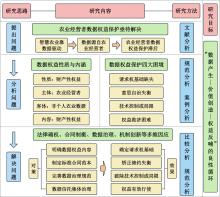
Fig. 1
Research framework on the protection dilemma and institutional responses of agricultural operators' data rights and interests in the context of smart agriculture

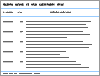
Table 1
Classification and protection basis of agricultural operators' data
| 数据类别 | 核心内涵 | 保护依据 | |
|---|---|---|---|
| 个人农业数据 | 直接识别数据 | 包含农业经营者个人身份信息,或直接反映个人劳作习惯、独特种植经验的可识别数据 | 《民法典》《个人信息保护法》 |
| 间接识别数据 | 可通过分析追溯到特定农户个人,实现身份关联的数据 | ||
| 非个人农业数据 | 农场数据 | 农场及其运营管理数据,包括农学数据、合规数据、牲畜数据 | 相关政策 |
| 机器数据 | 用于机器操作(例如在系统控制器和机器传感器之间流动)的数据 | ||
| 服务数据 | 农机保养、维修等运维数据 | ||
| 农业投入数据 | 肥料、饲料、植保产品等投入品的性质、成分与使用数据 | ||
| 农业产量数据 | 农业经营者收获的各类农产品的种类、面积与实物产出量等数据 | ||
Table 2
Agricultural data governance rules of major foreign countries and regions
| 国家/地区 | 治理规则 | 主要内容 |
|---|---|---|
| 欧盟 | 《数据法》《欧盟关于通过合同协议共享农业数据行为准则》 | 数据知情权、可携带权、访问权、透明度等;标准合同规范 |
| 澳大利亚 | 《澳大利亚农场数据准则》 | 农场数据原则:透明度、公平、控制权原则、可移植性、安全性、合规性 |
| 美国 | 《美国农业数据隐私与安全原则》 | 农业数据的所有权,知情同意、访问控制与数据可移植,规范合同透明性,禁止未经授权的数据共享、出售与滥用 |
| 新西兰 | 《新西兰农场数据操作准则》 | 农场数据的所有权与控制权、知情同意、可携带、更正等 |
| [1] |
赵春江. 智慧农业发展现状及战略目标研究[J]. 智慧农业, 2019, 1(1): 1-7.
|
|
|
|
| [2] |
|
| [3] |
杨翱宇. 数据财产权益的归属判定[J]. 重庆大学学报(社会科学版), 2023, 29(1): 241-254.
|
|
|
|
| [4] |
肖冬梅, 文禹衡. 数据权谱系论纲[J]. 湘潭大学学报(哲学社会科学版), 2015, 39(6): 69-75.
|
|
|
|
| [5] |
管辉, 雷娟利. 数据要素赋能农业现代化: 机理、挑战与对策[J]. 中国流通经济, 2022, 36(6): 72-84.
|
|
|
|
| [6] |
申卫星. 论数据来源者权[J]. 比较法研究, 2024(4): 104-117.
|
|
|
|
| [7] |
孙山. 知识产权请求权原论[M]. 北京: 法律出版社, 2021.
|
| [8] |
龙卫球. 民法总论[M]. 北京: 中国法治出版社, 2001: 116.
|
| [9] |
王利明. 数据的民法保护[J]. 数字法治, 2023(1): 43-56.
|
|
|
|
| [10] |
|
| [11] |
COPA‑COGECA, CEMA,
|
| [12] |
|
| [13] |
|
| [14] |
唐忠, 贾亚楠, 李晶. 小农户、家庭经营与农业现代化[J]. 教学与研究, 2025(5): 90-101.
|
|
|
|
| [15] |
王定祥, 杜雨潼, 邓琳钰. 机遇还是挑战: 数字化转型对农业企业经营绩效的影响[J]. 农业技术经济, 2025(2): 129-144.
|
|
|
|
| [16] |
李颖明, 王子彤, 汪明月, 等. 大数据支撑现代农业产业高质量发展的内在逻辑与政策建议[J]. 中国科学院院刊, 2025, 40(1): 172-180.
|
|
|
|
| [17] |
|
| [18] |
郑维炜. 个人信息权的权利属性、法理基础与保护路径[J]. 法制与社会发展, 2020, 26(6): 125-139.
|
|
|
|
| [19] |
|
| [20] |
|
| [21] |
程啸. 论数据权益[J]. 国家检察官学院学报, 2023, 31(5): 77-94.
|
|
|
|
| [22] |
熊丙万. 数据产权制度的理论挑战与现代回应[EB/OL]. (2022-12-20)[2026-03-15].
|
| [23] |
丁晓东. 论数据来源者权利[J]. 比较法研究, 2023(3): 14-25.
|
|
|
|
| [24] |
王利明. 论数据来源者权利[J]. 法制与社会发展, 2023, 29(6): 36-57.
|
|
|
|
| [25] |
程啸. 论数据来源者权益[J]. 比较法研究, 2024(6): 28-41.
|
|
|
|
| [26] |
申卫星. 数据产权的力度和限度[J]. 东方法学, 2025(1): 31-45.
|
|
|
|
| [27] |
克里斯蒂安·福克斯, 著. 周延云, 译. 数字劳动与卡尔·马克思[M]. 北京: 人民出版社, 2020: 360.
|
| [28] |
周健. 智己汽车注册成立 核心员工持股平台占比 5.1% 用户权益平台持股 4.9%[N/OL]. 上海证券报. (2020-12-28) [2026-06-13].
|
| [29] |
朱庆育. 民法总论[M]. 2版. 北京: 北京大学出版社, 2016: 563.
|
| [30] |
中国发展网. 为乡村振兴筑牢数字法治屏障——周口市涉农数字权利保护的实践与思考[EB/OL]. (2026-03-09)[2026-05-05].
|
| [31] |
|
| [32] |
国家数据局.数据流通安全治理典型案例之五:基于数据可信流通设施环境番茄生长模型场景的数据流通案例 [EB/OL]. (2025-07-08)[2026-06-14].
|
| [33] |
|
| [34] |
|
| [35] |
In re: Deere company repairservice antitrust litigation[EB/OL]. (2026-04-06) [2026-05-13].
|
| [36] |
梁玉成, 张咏雪. 算法治理、数据鸿沟与数据基础设施建设[J]. 西安交通大学学报(社会科学版), 2022, 42(2): 94-102.
|
|
|
|
| [37] |
宋保振. "数字弱势群体" 信息权益保障的法律路径[J]. 东北师大学报(哲学社会科学版), 2021(5): 91-100, 107.
|
|
|
|
| [38] |
齐英程. 个人数据收益共享的法实现[J]. 法律科学(西北政法大学学报), 2024, 42(3): 83-93.
|
|
|
|
| [39] |
|
| [40] |
王利明. 论数据权益: 以"权利束"为视角[J]. 政治与法律, 2022(7): 99-113.
|
|
|
|
| [41] |
|
| [42] |
侯晨亮, 杨东. 平台剥削用户数据的形态、成因及规制[J]. 中国特色社会主义研究, 2022(S1): 76-83.
|
|
|
|
| [43] |
袁俐雯, 张露, 张俊飚. 农业服务信息化对农户生产效率的影响——基于服务环节与服务对象的双重考察[J]. 农业现代化研究, 2023, 44(6): 1059-1069.
|
|
|
|
| [44] |
|
| [45] |
|
| [46] |
王洪亮, 叶翔. 数据访问权的构造——数据流通实现路径的再思考[J]. 社会科学研究, 2023(1): 71-84.
|
|
|
|
| [47] |
汪庆华. 数据可携带权的权利结构、法律效果与中国化[J]. 中国法律评论, 2021(3): 189-201.
|
|
|
|
| [48] |
孙晗冰, 马云志. 全球治理倡议下数据要素收益分配的风险表征与正义秩序建构[J]. 当代经济管理, 2026, 48(6): 32-41.
|
|
|
|
| [49] |
崔聪聪. 数据权利初始配置的法理基础与制度构建[J]. 法律科学(西北政法大学学报), 2024, 42(4): 105-113.
|
|
|
|
| [50] |
|
| [51] |
朱丹丹, 郑智杰, 潘士远, 等. 数据产权初始分配、私有数据共享与社会福利——基于“谁投入、谁贡献、谁受益”的产权分配原则[J]. 经济学(季刊), 2025, 25(5): 1128-1146.
|
|
|
|
| [52] |
CGIAR. Responsible data guidelines: Managing privacy and personally identifiable information in the research project data lifecycle[Z/OL]. [2026-03-15].
|
| [53] |
|
| [54] |
Janzen Schroeder Agricultural Law. Ag data transparent[EB/OL].[2026-03-15].
|
| [55] |
席月民. 数据安全: 数据信托目的及其实现机制[J]. 法学杂志, 2021, 42(9): 29-41, 52.
|
|
|
|
| [56] |
冉从敬, 唐心宇, 何梦婷. 数据信托: 个人数据交易与管理新机制[J]. 图书馆论坛, 2022, 42(3): 56-68.
|
|
|
|
| [57] |
丁凤玲. 个人数据治理模式的选择: 个人、国家还是集体[J]. 华中科技大学学报(社会科学版), 2021, 35(1): 64-76.
|
|
|
|
| [58] |
|
| [59] |
|
| [60] |
李民. 农业数据确权困境与机制创新研究——基于信托理论视角[J]. 天府新论, 2026(2): 58-67.
|
|
|
|
| [61] |
李智, 周智皓. 个人数据信托的发展困境与制度设计[J]. 学术交流, 2024(8): 43-58.
|
|
|
|
| [62] |
路文成, 魏建, 贺新宇. 数据税: 理论基础与制度设计[J]. 江海学刊, 2022(1): 91-97, 255.
|
|
|
|
| [63] |
Demonstrating and measuring accountability: A Discussion Document[R/OL]. (2010-10-01)[2026-04-25].
|
| [64] |
林少伟, 陈泓升. 数据治理的信托逻辑: 功能优势、理论困境与制度建构[J]. 湖北社会科学, 2025(10): 106-116.
|
|
|
| [1] | GAO Qun, LUO Yinfang. Evolution Characteristics and Optimizing Strategy of Smart Agriculture Policies in China: Based on "Tools-Topics-Objectives" Framework [J]. Smart Agriculture, 2026, 8(3): 253-269. |
| [2] | GU Xuewei, ZHAO Xianghao. Logic, Impediments and Suggestion of Smart Agriculture-Enabled Green Transition in Agriculture: Based on the Perspective of Technological Innovation [J]. Smart Agriculture, 2026, 8(3): 40-50. |
| [3] | FANG Hongwei, HU Ranran, REZIYAN· Wakasi. Construction of A Comprehensive Evaluation System, Practice Pattern, and Driving Mechanism for Smart Agriculture Development [J]. Smart Agriculture, 2026, 8(3): 26-39. |
| [4] | HE Leilei, JIANG Shuji, YANG Jun. Digital-Intelligent Technologies Empowering High-Quality Agricultural Development: Current Status, Challenges, and Pathways [J]. Smart Agriculture, 2026, 8(3): 13-25. |
| [5] | YANG Ming, HU Bingchuan. Comparison and Evolutionary Trends of Global Smart Agriculture Models [J]. Smart Agriculture, 2026, 8(3): 1-12. |
| [6] | HE Yong, DAI Fushuang, ZHU Jiangpeng, HE Liwen, WANG Yueying. Current Status and Trends of Application Scenarios and Industrial Development in the Agricultural Low-Altitude Economy [J]. Smart Agriculture, 2025, 7(6): 1-17. |
| [7] | LAN Yubin, WANG Chaofeng, SUN Heguang, CHEN Shengde, WANG Guobin, DENG Xiaoling, WANG Yuanjie. Low-Altitude Technology Empowering Smart Agriculture: Technical System, Application Scenarios, and Challenge Recommendations [J]. Smart Agriculture, 2025, 7(6): 18-34. |
| [8] | ZHAO Yingping, LIANG Jinming, CHEN Beizhang, DENG Xiaoling, ZHANG Yi, XIONG Zheng, PAN Ming, MENG Xiangbao. Applications Research Progress and Prospects of Multi-Agent Large Language Models in Agricultural [J]. Smart Agriculture, 2025, 7(5): 37-51. |
| [9] | GUO Wei, WU Huarui, ZHU Huaji, WANG Feifei. Agricultural Big Data Governance: Key Technologies, Applications Analysis and Future Directions [J]. Smart Agriculture, 2025, 7(3): 17-34. |
| [10] | ZHAO Bingting, HUA Chuanhai, YE Chenyang, XIONG Yuchun, QIAN Tao, CHENG Tao, YAO Xia, ZHENG Hengbiao, ZHU Yan, CAO Weixing, JIANG Chongya. Research Progress on Remote Sensing Monitoring and Intelligent Decision-Making Algorithms for Rice Production [J]. Smart Agriculture, 2025, 7(2): 57-72. |
| [11] | YU Fenghua, XU Tongyu, GUO Zhonghui, BAI Juchi, XIANG Shuang, GUO Sien, JIN Zhongyu, LI Shilong, WANG Shikuan, LIU Meihan, HUI Yinxuan. Research Status and Prospects of Key Technologies for Rice Smart Unmanned Farms [J]. Smart Agriculture, 2024, 6(6): 1-22. |
| [12] | CAO Bingxue, LI Hongfei, ZHAO Chunjiang, LI Jin. The Path of Smart Agricultural Technology Innovation Leading Development of Agricultural New Quality Productivity [J]. Smart Agriculture, 2024, 6(4): 116-127. |
| [13] | WANG Rujing. Agricultural Sensor: Research Progress, Challenges and Perspectives [J]. Smart Agriculture, 2024, 6(1): 1-17. |
| [14] | GUO Dafang, DU Yuefeng, WU Xiuheng, HOU Siyu, LI Xiaoyu, ZHANG Yan'an, CHEN Du. Digital Twin for Agricultural Machinery: From Concept to Application [J]. Smart Agriculture, 2023, 5(2): 149-160. |
| [15] | HU Ruifa, LIU Wanjiawen. Technological Revolution, Disruptive Technology and Smart Agriculture [J]. Smart Agriculture, 2022, 4(4): 138-143. |
| Viewed | ||||||
|
Full text |
|
|||||
|
Abstract |
|
|||||