Smart Agriculture ›› 2026, Vol. 8 ›› Issue (3): 253-269.doi: 10.12133/j.smartag.SA202603016
• Special Issue--Digital Technologies Reshaping Agriculture and Agricultural Economics • Previous Articles Next Articles
GAO Qun1,2( ), LUO Yinfang2
Received:2026-03-12
Online:2026-05-30
Foundation items:National Natural Science Foundation of China(72563022); National College Students' Innovation and Entrepreneurship Training Program(202510403097)
corresponding author:
CLC Number:
GAO Qun, LUO Yinfang. Evolution Characteristics and Optimizing Strategy of Smart Agriculture Policies in China: Based on "Tools-Topics-Objectives" Framework[J]. Smart Agriculture, 2026, 8(3): 253-269.
Add to citation manager EndNote|Ris|BibTeX
URL: https://www.smartag.net.cn/EN/10.12133/j.smartag.SA202603016
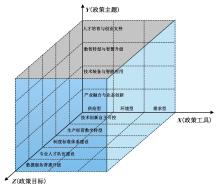
Fig. 1
Three-dimensional analytical framework for smart agriculture policies
Table 1
Policy instrument dimension and definitions of smart agriculture policies
| 工具类型 | 政策工具名称 | 具体释义 |
|---|---|---|
| 供给型 | 基础建设 | 智慧农业产品和服务设施、智能设备等基础设施建设 |
| 财政支持 | 政府财政拨款、资金投入支持智慧农业发展 | |
| 人才培养 | 培育智慧农业技术操作、研发与管理专业人才 | |
| 科研支持 | 支持智慧农业传感器、智能算法等核心技术攻关 | |
| 环境型 | 目标规划 | 政府对发展智慧农业所达成的目标或者规划、实施路径 |
| 宣传引导 | 宣传智慧农业典型案例、技术成果,引导各类主体积极参与 | |
| 标准规范 | 为促进智慧农业高质量发展提供一系列行业规范或标准 | |
| 金融支持 | 利用社会融资发展智慧农业 | |
| 需求型 | 试点示范 | 政府培育智慧农业试点项目,评选示范建设点 |
| 合作交流 | 开展智慧农业经验交流分享,推动各方力量合作交流 | |
| 产研结合 | 促进研发机构与产业主体对接,落地智慧农业技术 | |
| 社会参与 | 鼓励企业、合作社、社会公众积极参与智慧农业建设运营 |
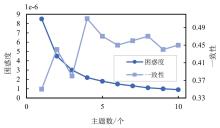
Fig. 2
Perplexity and coherence curves of smart agriculture policies
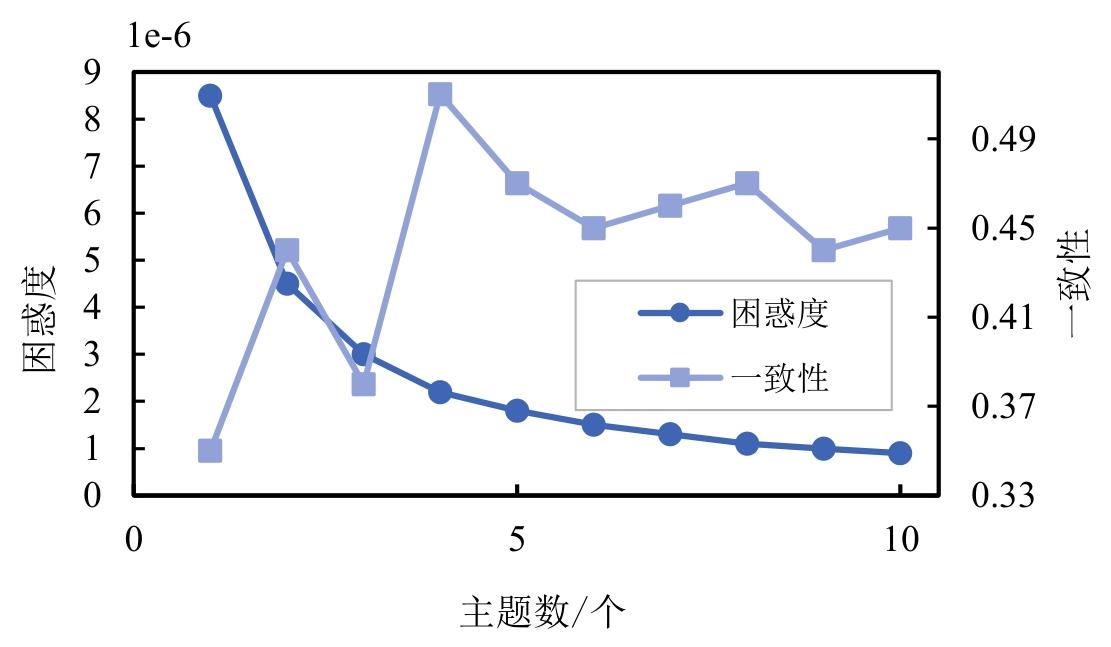
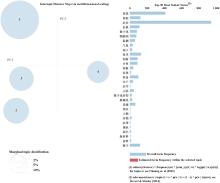
Fig. 3
pyLDAvis visualization results of smart agriculture policies
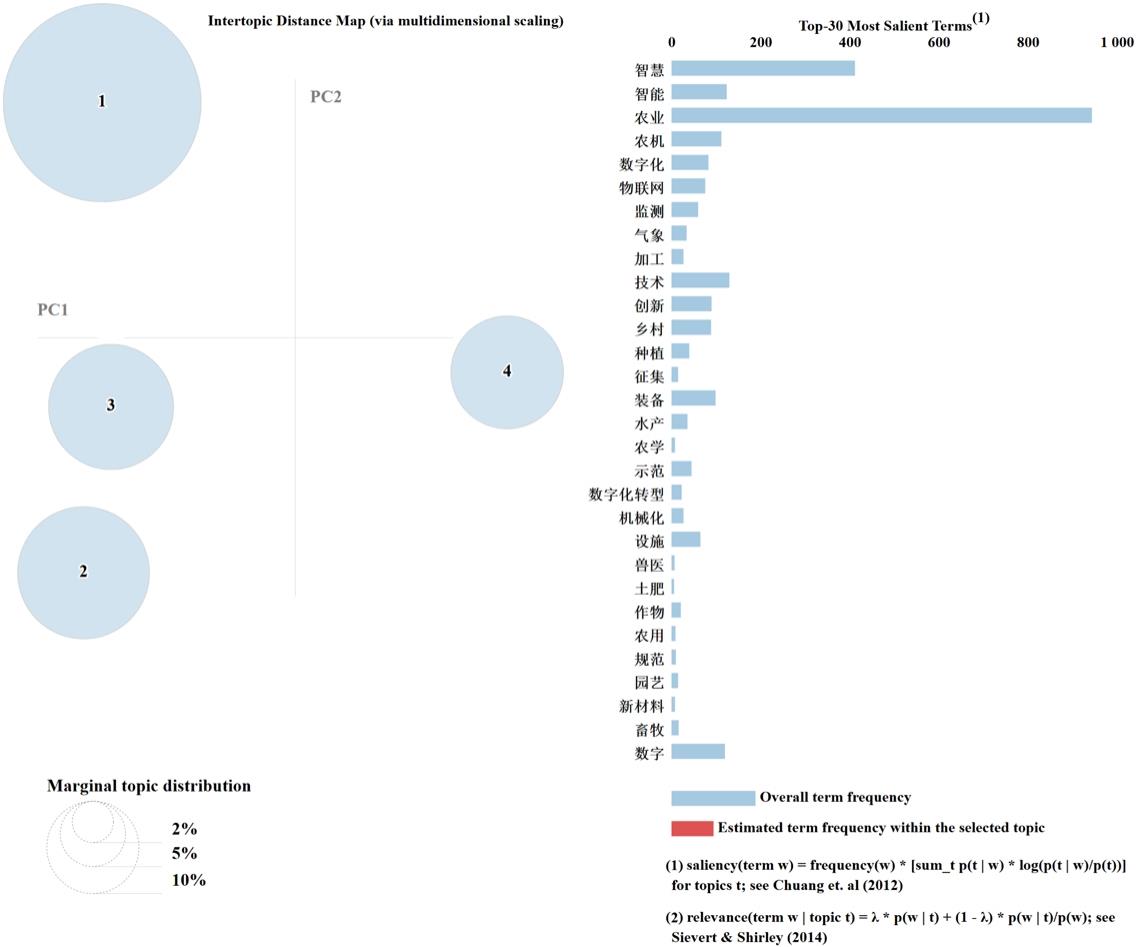
Table 2
Policy objective dimension and definitions of smart agriculture policies
| 政策目标 | 具体释义 |
|---|---|
| 技术创新自主可控 | 突破智慧农业关键核心技术,构建自主知识产权体系,保障技术供给安全可控 |
| 生产经营数智转型 | 推动农业生产、管理、流通全链条数字化、智能化改造,提升生产效率与经营水平 |
| 制度标准体系建设 | 建立健全智慧农业数据、技术、安全等相关标准与规范,完善行业治理体系 |
| 专业人才队伍建设 | 推动产学研深度融合,创新培训方式,通过职业开发与技能认定强化智慧农业发展的人才支撑 |
| 数据服务普惠升级 | 强化数据要素保障,推动农业数据资源开放共享,为各类经营主体提供便捷、高效的数字化服务 |
Table 3
Example of smart agriculture policy coding
| 序号 | 政策名称 | 内容分析单元 | 编码 | 政策工具 | 政策主题 | 政策目标 |
|---|---|---|---|---|---|---|
| 42 | 《农业农村部关于大力发展智慧农业的指导意见》 | 二、全方位提升智慧农业应用水平(一)推进主要作物种植精准化…… | 42-2-1 | 环境型— 宣传引导 | 产业融合与业态创新 | 生产经营数智转型 |
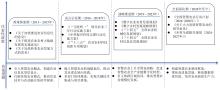
Fig. 4
Evolution trajectory of smart agriculture policies
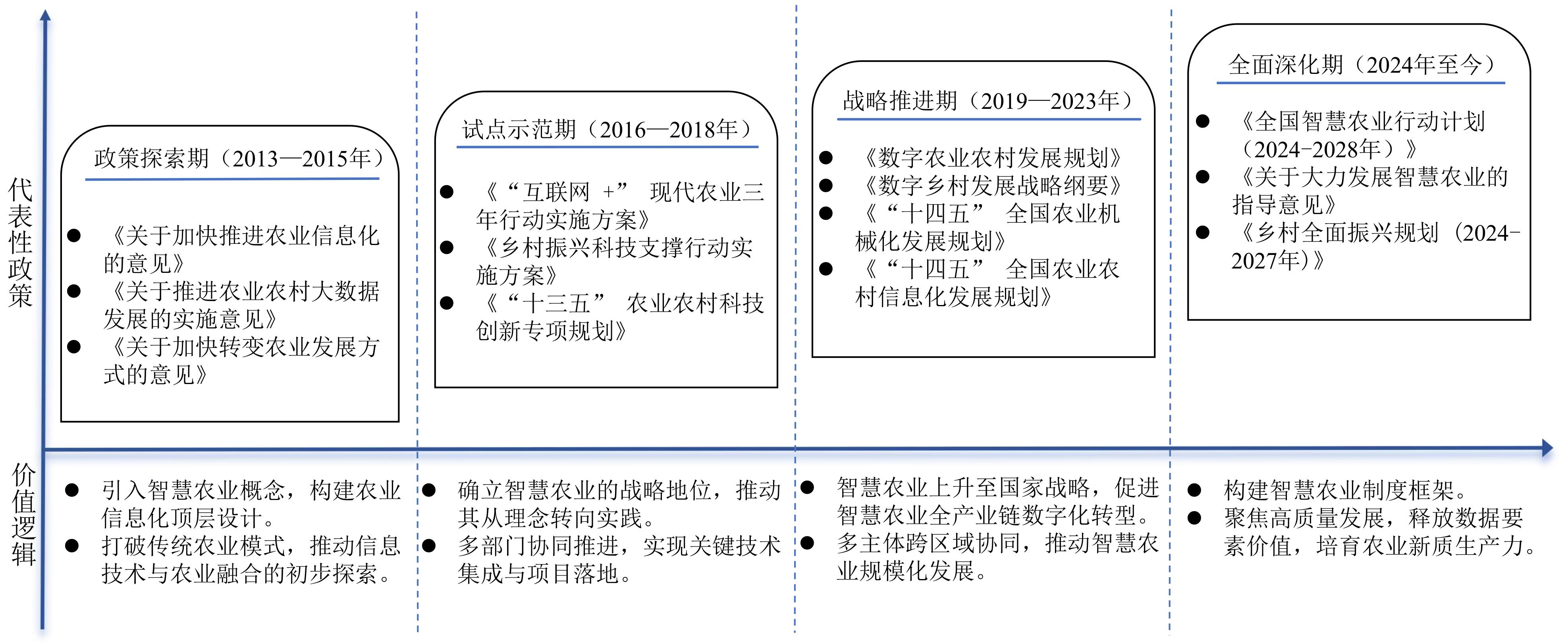
Table 4
Statistical results on usage frequency and proportional distribution of smart agriculture policy instruments
| 工具类型 | 政策工具名称 | 占比/% | 工具占比/% |
|---|---|---|---|
| 供给型 | 基础建设 | 42.55 | 37.90 |
| 财政支持 | 5.67 | ||
| 人才培养 | 19.86 | ||
| 科研支持 | 31.91 | ||
| 环境型 | 目标规划 | 19.66 | 31.45 |
| 宣传引导 | 52.99 | ||
| 标准规范 | 17.95 | ||
| 金融支持 | 9.40 | ||
| 需求型 | 试点示范 | 41.23 | 30.65 |
| 合作交流 | 16.67 | ||
| 产研结合 | 23.68 | ||
| 社会参与 | 18.42 |
Table 5
Topic classification results of smart agriculture policies
| 政策主题 | 主题特征词 | 主题强度/% |
|---|---|---|
| 数字转型与智慧升级 | 数字化、大数据、智能、精准、生产经营、示范、研发、人工智能、物联网 | 57.92 |
| 产业融合与业态创新 | 融合发展、业态、种业、康养、休闲、旅游、森林修复、营养、新兴、碳汇 | 16.67 |
| 人才培育与创业支持 | 培训、农民、技能、创业、专业、推荐、创新、培育、素养、带头人 | 14.58 |
| 技术装备与智能应用 | 农机、装备、无人机、物联网、人工智能、精准、标准化、高端、质量、冷链 | 10.83 |
Table 6
Statistics on smart agriculture policy objectives by stages
| 阶段 | 政策数量/项 | 技术创新自主可控/频次 | 生产经营数智转型/频次 | 制度标准体系建设/频次 | 专业人才队伍建设/频次 | 数据服务普惠升级/频次 |
|---|---|---|---|---|---|---|
| 政策探索期 | 15 | 11 | 17 | 5 | 5 | 7 |
| 试点示范期 | 64 | 21 | 38 | 8 | 9 | 19 |
| 战略推进期 | 125 | 27 | 82 | 15 | 18 | 28 |
| 全面深化期 | 36 | 14 | 27 | 11 | 10 | 13 |
Fig. 5
Variation trend chart of frequency for each policy objective of smart agriculture policies
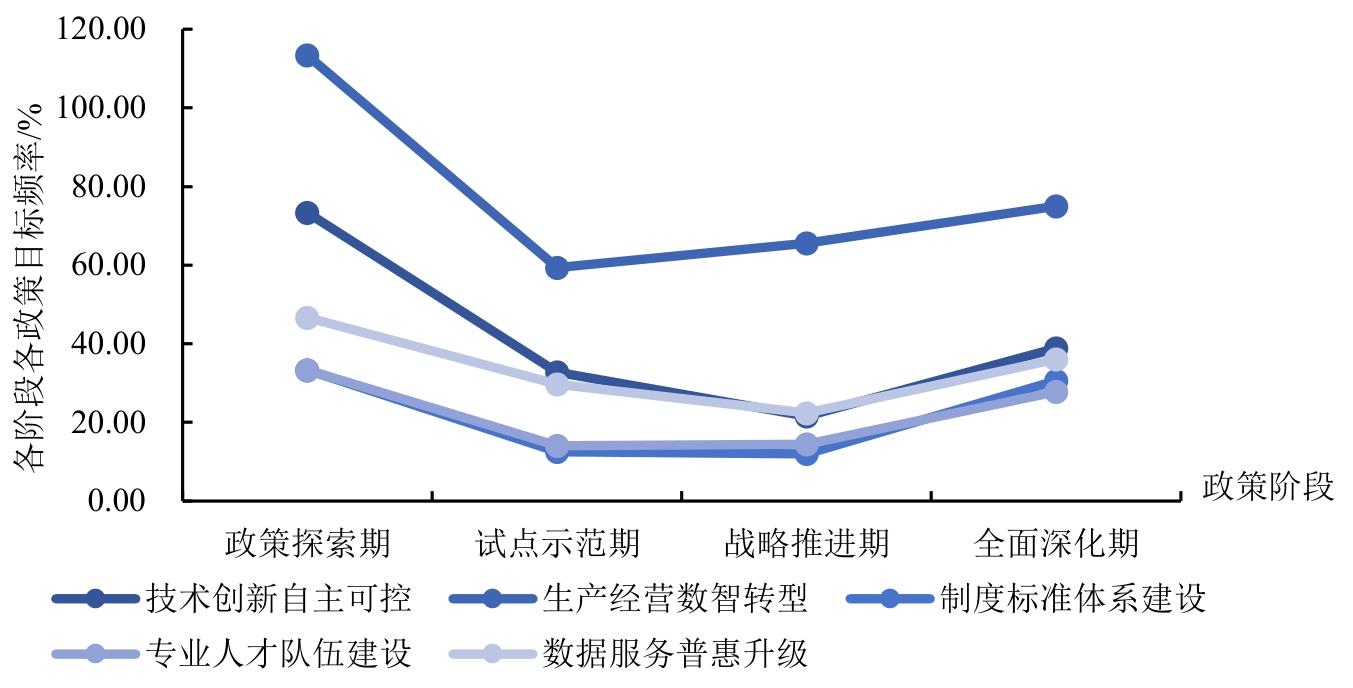
Table 7
Cross-frequency distribution of policy instruments and topics in smart agriculture policies
| 维度 | 产业融合与业态创新 | 技术装备与智能应用 | 人才培育与创业支持 | 数字转型与智慧升级 | 总计/频次 | 占比/% | |
|---|---|---|---|---|---|---|---|
| 供给型 | 财政支持 | 2 | 4 | 2 | 3 | 11 | 1.94 |
| 基础建设 | 22 | 38 | 4 | 43 | 107 | 18.87 | |
| 科研支持 | 19 | 22 | 6 | 20 | 67 | 11.82 | |
| 人才培养 | 7 | 5 | 24 | 7 | 43 | 7.58 | |
| 总计/频次 | 50 | 69 | 36 | 73 | 228 | 40.21 | |
| 环境型 | 标准规范 | 7 | 4 | 2 | 14 | 27 | 4.76 |
| 金融支持 | 4 | 1 | 0 | 3 | 8 | 1.41 | |
| 目标规划 | 9 | 10 | 1 | 13 | 33 | 5.82 | |
| 宣传引导 | 33 | 20 | 9 | 35 | 97 | 17.11 | |
| 总计/频次 | 53 | 35 | 12 | 65 | 165 | 29.10 | |
| 需求型 | 产研结合 | 12 | 15 | 6 | 11 | 44 | 7.76 |
| 合作交流 | 9 | 5 | 3 | 8 | 25 | 4.41 | |
| 社会参与 | 11 | 5 | 2 | 9 | 27 | 4.76 | |
| 试点示范 | 22 | 18 | 8 | 30 | 78 | 13.76 | |
| 总计/频次 | 54 | 43 | 19 | 58 | 174 | 30.69 | |
| 占比/% | 27.69 | 25.92 | 11.82 | 34.57 | |||
Table 8
Cross-frequency distribution of policy instruments, topics, and effectiveness of smart agriculture policies
| 维度 | 政策目标 | |||||||
|---|---|---|---|---|---|---|---|---|
| 技术创新自主可控 | 生产经营数智转型 | 制度标准体系建设 | 专业人才队伍建设 | 数据服务普惠升级 | 合计 | |||
| 政策工具 | 供给型 | 财政支持 | 6 | 8 | 0 | 1 | 3 | 18 |
| 基础建设 | 22 | 48 | 6 | 4 | 28 | 108 | ||
| 科研支持 | 28 | 28 | 7 | 4 | 13 | 80 | ||
| 人才培养 | 3 | 7 | 2 | 21 | 3 | 36 | ||
| 合计 | 59 | 91 | 15 | 30 | 47 | 242 | ||
| 环境型 | 标准规范 | 3 | 12 | 17 | 2 | 6 | 40 | |
| 金融支持 | 4 | 9 | 0 | 0 | 3 | 16 | ||
| 目标规划 | 7 | 15 | 4 | 0 | 7 | 33 | ||
| 宣传引导 | 16 | 46 | 7 | 10 | 18 | 97 | ||
| 合计 | 30 | 82 | 28 | 12 | 34 | 186 | ||
| 需求型 | 产研结合 | 13 | 16 | 3 | 6 | 7 | 45 | |
| 合作交流 | 5 | 12 | 1 | 4 | 5 | 27 | ||
| 社会参与 | 5 | 16 | 0 | 3 | 6 | 30 | ||
| 试点示范 | 12 | 34 | 5 | 9 | 15 | 75 | ||
| 合计 | 35 | 78 | 9 | 22 | 33 | 177 | ||
| 政策主题 | 产业融合与业态创新 | 23 | 58 | 8 | 7 | 24 | 120 | |
| 技术装备与智能应用 | 32 | 45 | 5 | 7 | 25 | 114 | ||
| 人才培育与创业支持 | 2 | 6 | 1 | 19 | 4 | 32 | ||
| 数字转型与智慧升级 | 27 | 72 | 21 | 12 | 39 | 171 | ||
| 合计 | 84 | 181 | 35 | 45 | 92 | 437 | ||
| [1] |
曹冰雪, 李鸿飞, 赵春江, 等. 智慧农业科技创新引领农业新质生产力发展路径[J]. 智慧农业(中英文), 2024, 6(4): 116-127.
|
|
|
|
| [2] |
黄季焜. 农业新质生产力: 内涵与外延、潜力与挑战和发展思路[J]. 中国农村观察, 2024(5): 19-34.
|
|
|
|
| [3] |
冯献, 李瑾, 崔凯, 等. 数据要素驱动农业高质量发展的作用机理——基于4个典型案例的探索性分析[J]. 中国农业大学学报, 2025, 30(9): 319-335.
|
|
|
|
| [4] |
王容宽, 胡蝶. 跨界农机技术创新的双向信息黏性与合法性门槛跨越——农户共创视角下的单案例研究[J]. 中国农村经济, 2024(12): 87-107.
|
|
|
|
| [5] |
宋凯, 冉从敬. 基于主题挖掘与专利评估的技术机会识别研究——以智慧农业为例[J]. 图书情报工作, 2023, 67(3): 61-71.
|
|
|
|
| [6] |
张星民, 徐晨曦, 张建清, 等. 智慧农业政策实施的新质劳动者需求效应研究——基于生成式人工智能大数据挖掘的经验证据[J]. 中国农村经济, 2025(12): 63-83.
|
|
|
|
| [7] |
易法敏, 古飞婷, 罗必良. 乡村数字经济包容性发展的政策组合及其治理——基于"电子商务进农村综合示范"的案例研究[J]. 管理世界, 2025, 41(5): 101-116, 197, 246.
|
|
|
|
| [8] |
仲嘉维, 郑军, 张明月. 特色农业发展政策能否激发农业新业态创业活力——基于中国特色农产品优势区的评估[J]. 中南财经政法大学学报, 2025(5): 123-134.
|
|
|
|
| [9] |
崔宁波. 智慧农业赋能乡村振兴的意义、挑战与实现路径[J]. 人民论坛, 2022(5): 26-28.
|
|
|
|
| [10] |
李建军, 白鹏飞. 我国智慧农业创新实践的现实挑战与应对策略[J]. 科学管理研究, 2023, 41(2): 127-134.
|
|
|
|
| [11] |
崔宁波, 刘紫薇, 董晋. 智慧农业助力粮食生产减损的内在逻辑与长效机制构建[J]. 农业经济问题, 2023(10): 116-128.
|
|
|
|
| [12] |
高群, 王宏杨, 陈诗瑶. 长江经济带智慧农场发展的时空特征及驱动因子研究[J]. 智慧农业(中英文), 2024, 6(6): 168-179.
|
|
|
|
| [13] |
宁甜甜. 新发展阶段我国智慧农业: 机遇、挑战与优化路径[J]. 科学管理研究, 2022, 40(2): 131-138.
|
|
|
|
| [14] |
白鹏飞, 李建军. 智慧农业创新动力机制: 基于推拉理论的分析框架[J]. 科学管理研究, 2022, 40(1): 130-136.
|
|
|
|
| [15] |
蒙慧, 刘允秀, 刘光旭. DeepSeek何以赋能智慧农业高质量发展: 内在机理与路径选择[J]. 西北农林科技大学学报(社会科学版), 2026, 26(1): 48-58.
|
|
|
|
| [16] |
曾学文, 王雪, 张正平. 智慧农业发展中的农村金融转型: 理论逻辑、实践困境与突破路径[J]. 北京联合大学学报(人文社会科学版), 2024, 22(2): 23-33.
|
|
|
|
| [17] |
李家辉, 李晗, 牛永泽, 等. 精准农业技术对农户生产效率和家庭收入的协同影响及机制[J]. 资源科学, 2025, 47(11): 2466-2479.
|
|
|
|
| [18] |
李伟嘉, 苏昕. 数字乡村背景下智慧农业的场景、效应与路径[J]. 科学管理研究, 2023, 41(3): 140-150.
|
|
|
|
| [19] |
|
| [20] |
|
| [21] |
|
| [22] |
|
| [23] |
|
| [24] |
|
| [25] |
|
| [26] |
|
| [27] |
|
| [28] |
谢明. 公共政策导论[M]. 5版. 北京: 中国人民大学出版社, 2020.
|
|
|
|
| [29] |
陈乐宾, 姜海. 公共政策与社会共识的协调治理——以土地增值收益分配改革为例[J]. 中国土地科学, 2024, 38(9): 11-20.
|
|
|
|
| [30] |
张赛楠, 宋昌耀, 厉新建. 中国旅游用地政策历史演进及变迁逻辑——基于"主体-工具-主题"三维框架[J]. 旅游学刊, 2026, 41(3): 113-128.
|
|
|
|
| [31] |
江亚洲, 郁建兴. 重大公共卫生危机治理中的政策工具组合运用——基于中央层面新冠疫情防控政策的文本分析[J]. 公共管理学报, 2020, 17(4): 1-9, 163.
|
|
|
|
| [32] |
赵春江. 智慧农业发展现状及战略目标研究[J]. 智慧农业, 2019, 1(1): 1-7.
|
|
|
|
| [33] |
高群, 陈衡洋, 张新亮. 中国农业绿色发展政策的历史演变与焦点特征——基于注意力视角的文本分析[J]. 资源科学, 2023, 45(12): 2433-2448.
|
|
|
|
| [34] |
张晓娟, 部闫若, 莫富传. 政策工具视角下我国地方政府公共数据治理政策研究[J]. 情报理论与实践, 2024, 47(6): 21-30.
|
|
|
|
| [35] |
姚怡帆, 张相, 叶中华. 目标-工具-效力: 中国数字政府建设政策的三维图景[J]. 管理评论, 2024, 36(5): 248-259.
|
|
|
|
| [36] |
周德, 金凤芝, 李思媛, 等. 乡村振兴产业用地政策工具: 选择偏好与优化路径——基于扎根理论的浙江省政策文本分析[J]. 中国土地科学, 2025, 39(2): 23-32.
|
|
|
|
| [37] |
彭澎, 周月书. 新世纪以来农村金融改革的政策轨迹、理论逻辑与实践效果——基于2004—2022年中央 "一号文件" 的文本分析[J]. 中国农村经济, 2022(9): 2-23.
|
|
|
|
| [38] |
党晓虹, 杨莉, 云立新. 中国共产党乡村治理政策变迁过程及其逻辑——基于历次党代会报告及涉农决议的扎根分析[J]. 西北农林科技大学学报(社会科学版), 2026, 26(2): 34-49.
|
|
|
|
| [39] |
陈远星. "全面健康建设" 的形成: 基于词频和工具的政策变迁分析[J]. 社会科学, 2023(3): 106-120.
|
|
|
|
| [40] |
曲靖野, 陈震, 胡轶楠. 共词分析与LDA模型分析在文本主题挖掘中的比较研究[J]. 情报科学, 2018, 36(2): 18-23.
|
|
|
|
| [41] |
刘美忆. 媒介化治理视角下乡村文化政策主题演化与区域适配研究——基于LDA的央地政策文本分析[J]. 中州学刊, 2025(12): 171-176.
|
|
|
|
| [42] |
张祚, 侯文姣, 刘晓歌. 基于"主题—目标—工具"的耕地保护政策文本分析: 框架、方法及其应用[J]. 中国土地科学, 2024, 38(12): 52-66.
|
|
|
|
| [43] |
陈振明, 张敏. 国内政策工具研究新进展: 1998—2016[J]. 江苏行政学院学报, 2017(6): 109-116.
|
|
|
|
| [44] |
宋林霖, 王鹏霖. 可预期营商政策环境治理的可能性及其创新逻辑[J]. 中国行政管理, 2025, 41(5): 14-24.
|
|
|
|
| [45] |
B. 盖伊·彼得斯, 弗兰斯 ·K. M. 冯尼斯潘, 编. 顾建光, 译. 公共政策工具——对公共管理工具的评价[M]. 北京: 中国人民大学出版社, 2007: 39-40.
|
|
|
|
| [46] |
|
| [47] |
|
| [48] |
|
| [49] |
|
| [50] |
段尧清, 王丽娜, 易明. 政策计算视角下乡村振兴效应研究[J]. 图书情报工作, 2023, 67(6): 4-12, 3.
|
|
|
|
| [51] |
张梅, 张涵野. 黑土地保护政策工具对农业绿色全要素生产率影响及其空间差异[J]. 经济地理, 2024, 44(7): 165-174.
|
|
|
| [1] | GU Xuewei, ZHAO Xianghao. Logic, Impediments and Suggestion of Smart Agriculture-Enabled Green Transition in Agriculture: Based on the Perspective of Technological Innovation [J]. Smart Agriculture, 2026, 8(3): 40-50. |
| [2] | FANG Hongwei, HU Ranran, REZIYAN· Wakasi. Construction of A Comprehensive Evaluation System, Practice Pattern, and Driving Mechanism for Smart Agriculture Development [J]. Smart Agriculture, 2026, 8(3): 26-39. |
| [3] | HE Leilei, JIANG Shuji, YANG Jun. Digital-Intelligent Technologies Empowering High-Quality Agricultural Development: Current Status, Challenges, and Pathways [J]. Smart Agriculture, 2026, 8(3): 13-25. |
| [4] | WAN Zhiqian, LIU Yuzhen. The Protection Dilemma and Institutional Responses of Agricultural Operators' Data Rights and Interests in the Context of Smart Agriculture [J]. Smart Agriculture, 2026, 8(3): 270-283. |
| [5] | YANG Ming, HU Bingchuan. Comparison and Evolutionary Trends of Global Smart Agriculture Models [J]. Smart Agriculture, 2026, 8(3): 1-12. |
| [6] | HE Yong, DAI Fushuang, ZHU Jiangpeng, HE Liwen, WANG Yueying. Current Status and Trends of Application Scenarios and Industrial Development in the Agricultural Low-Altitude Economy [J]. Smart Agriculture, 2025, 7(6): 1-17. |
| [7] | LAN Yubin, WANG Chaofeng, SUN Heguang, CHEN Shengde, WANG Guobin, DENG Xiaoling, WANG Yuanjie. Low-Altitude Technology Empowering Smart Agriculture: Technical System, Application Scenarios, and Challenge Recommendations [J]. Smart Agriculture, 2025, 7(6): 18-34. |
| [8] | ZHAO Yingping, LIANG Jinming, CHEN Beizhang, DENG Xiaoling, ZHANG Yi, XIONG Zheng, PAN Ming, MENG Xiangbao. Applications Research Progress and Prospects of Multi-Agent Large Language Models in Agricultural [J]. Smart Agriculture, 2025, 7(5): 37-51. |
| [9] | ZHAO Bingting, HUA Chuanhai, YE Chenyang, XIONG Yuchun, QIAN Tao, CHENG Tao, YAO Xia, ZHENG Hengbiao, ZHU Yan, CAO Weixing, JIANG Chongya. Research Progress on Remote Sensing Monitoring and Intelligent Decision-Making Algorithms for Rice Production [J]. Smart Agriculture, 2025, 7(2): 57-72. |
| [10] | YU Fenghua, XU Tongyu, GUO Zhonghui, BAI Juchi, XIANG Shuang, GUO Sien, JIN Zhongyu, LI Shilong, WANG Shikuan, LIU Meihan, HUI Yinxuan. Research Status and Prospects of Key Technologies for Rice Smart Unmanned Farms [J]. Smart Agriculture, 2024, 6(6): 1-22. |
| [11] | CAO Bingxue, LI Hongfei, ZHAO Chunjiang, LI Jin. The Path of Smart Agricultural Technology Innovation Leading Development of Agricultural New Quality Productivity [J]. Smart Agriculture, 2024, 6(4): 116-127. |
| [12] | WANG Rujing. Agricultural Sensor: Research Progress, Challenges and Perspectives [J]. Smart Agriculture, 2024, 6(1): 1-17. |
| [13] | GUO Dafang, DU Yuefeng, WU Xiuheng, HOU Siyu, LI Xiaoyu, ZHANG Yan'an, CHEN Du. Digital Twin for Agricultural Machinery: From Concept to Application [J]. Smart Agriculture, 2023, 5(2): 149-160. |
| [14] | HU Ruifa, LIU Wanjiawen. Technological Revolution, Disruptive Technology and Smart Agriculture [J]. Smart Agriculture, 2022, 4(4): 138-143. |
| [15] | LI Li, LI Minzan, LIU Gang, ZHANG Man, WANG Maohua. Goals, Key Technologies, and Regional Models of Smart Farming for Field Crops in China [J]. Smart Agriculture, 2022, 4(4): 26-34. |
| Viewed | ||||||
|
Full text |
|
|||||
|
Abstract |
|
|||||