Smart Agriculture ›› 2026, Vol. 8 ›› Issue (5): 194-206.doi: 10.12133/j.smartag.SA202602012
• Information Processing and Decision Making • Previous Articles
ZHANG Kun1, ZHANG Chunyu1( ), CHEN Longmei2, LIU Qicheng1, LI Yongkang1, LIU Kai1, ZENG Wenhao1
Received:2026-02-04
Online:2026-09-30
Foundation items:Anhui Provincial Department of Education Natural Science Major Project(2025AHGXZK20066); Anhui Provincial Department of Industry and Information Technology Manufacturing Challenge Project(JB25116)
About author:ZHANG Kun, E-mail: 2749512547@qq.com
corresponding author:
CLC Number:
ZHANG Kun, ZHANG Chunyu, CHEN Longmei, LIU Qicheng, LI Yongkang, LIU Kai, ZENG Wenhao. Appearance Defect Detection Algorithm of Euryale Ferox Based on Improved YOLOv11n[J]. Smart Agriculture, 2026, 8(5): 194-206.
Add to citation manager EndNote|Ris|BibTeX
URL: https://www.smartag.net.cn/EN/10.12133/j.smartag.SA202602012
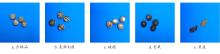
Fig. 1
Images of appearance defect of Euryale ferox
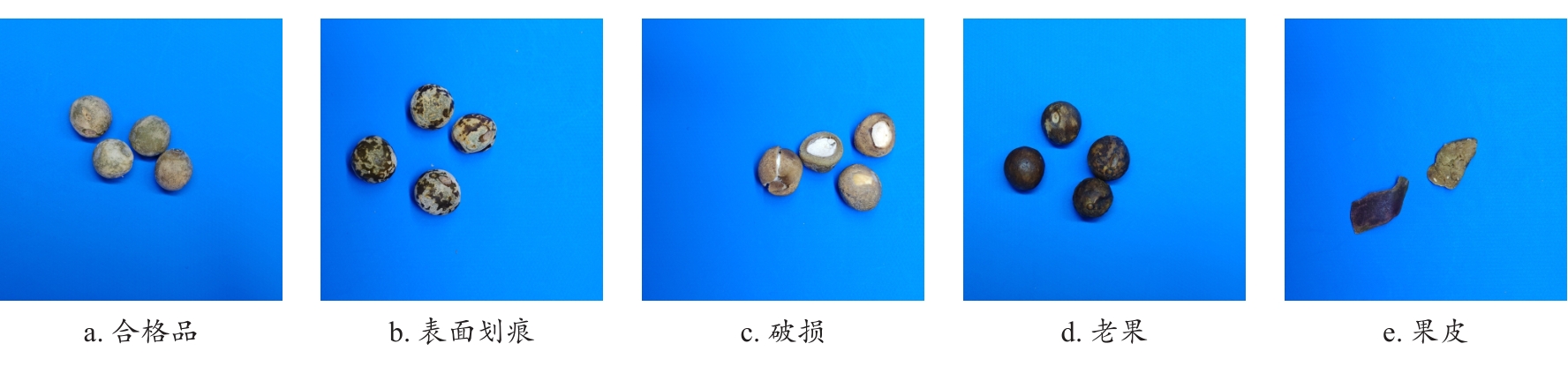
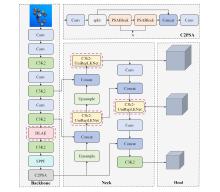
Fig. 2
Improved network architecture of YOLOv11n
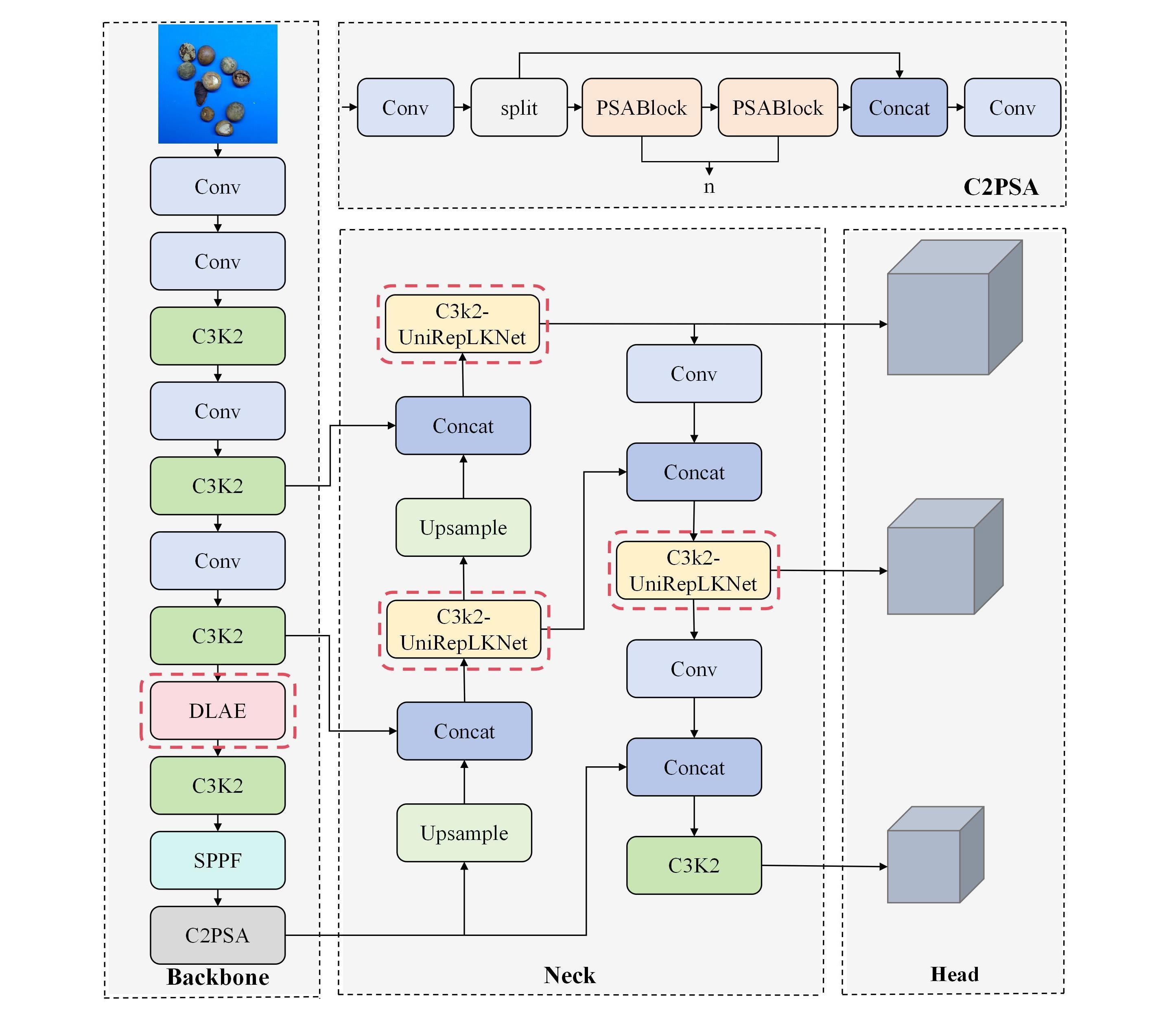
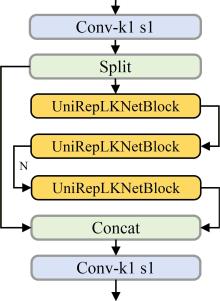
Fig. 3
Structure diagram of the CURK module
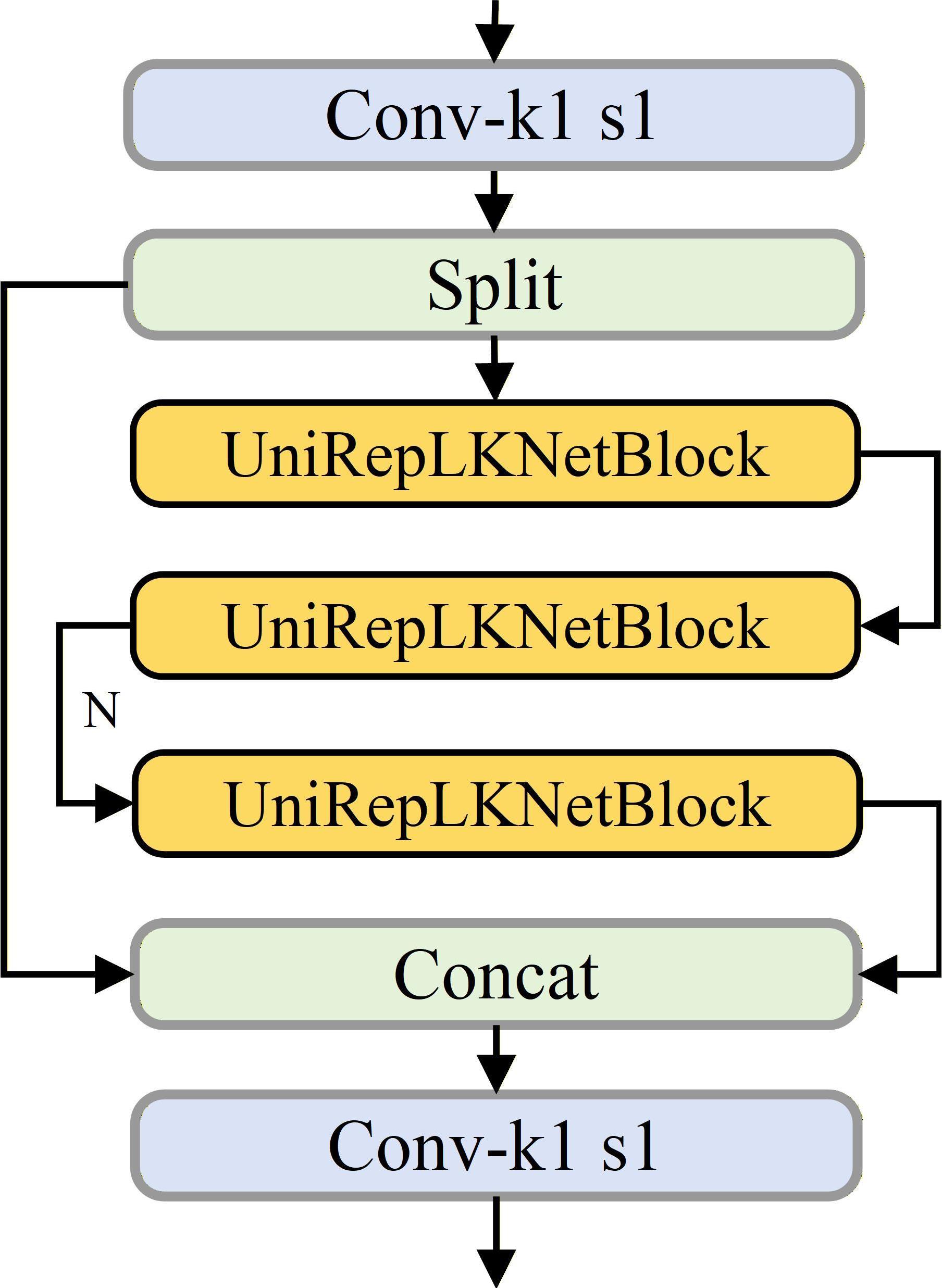
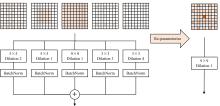
Fig. 4
Structural diagram of UniRepLKNetBlock
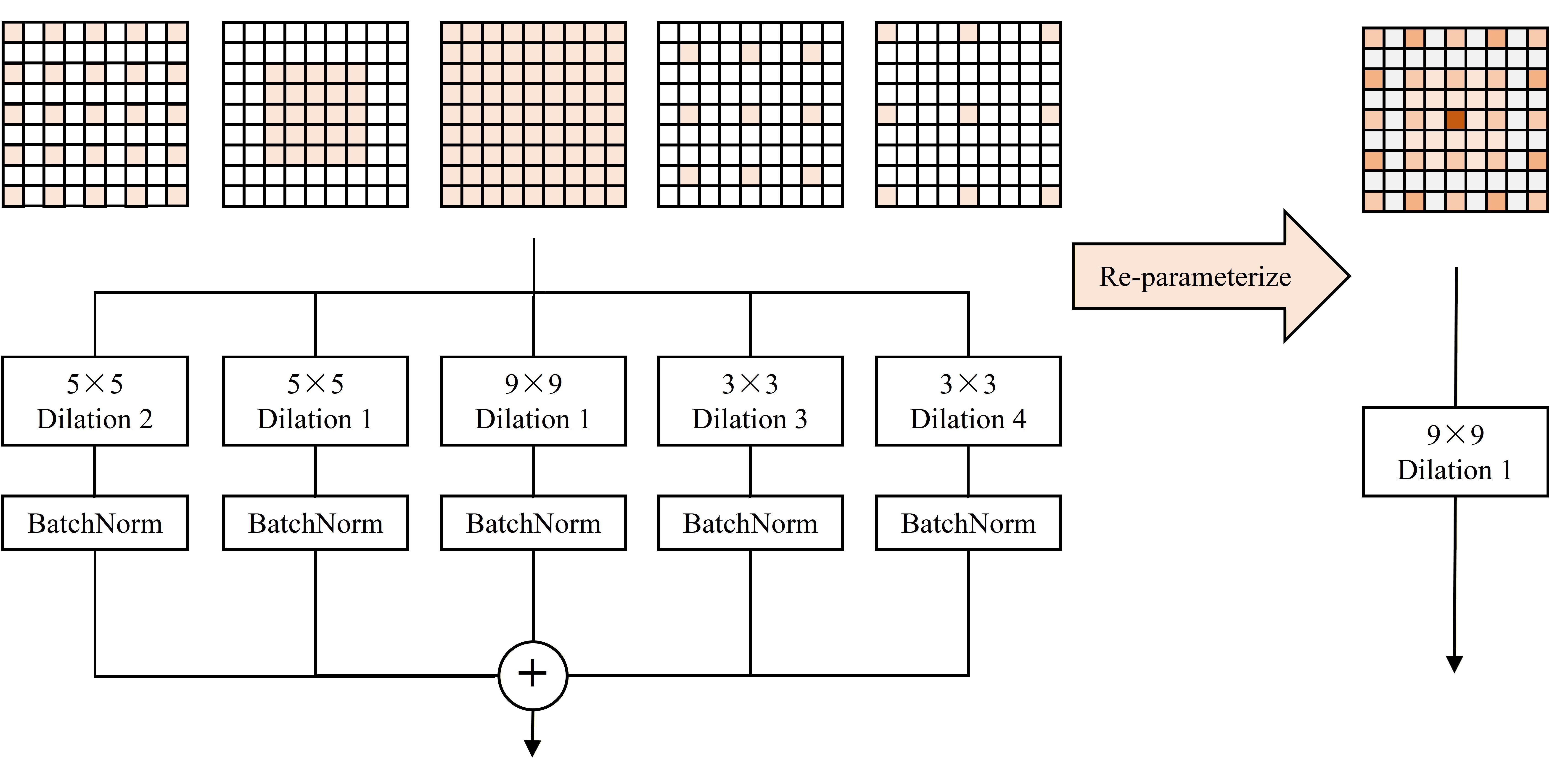
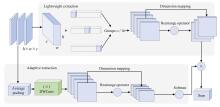
Fig. 5
Structure of DLAE
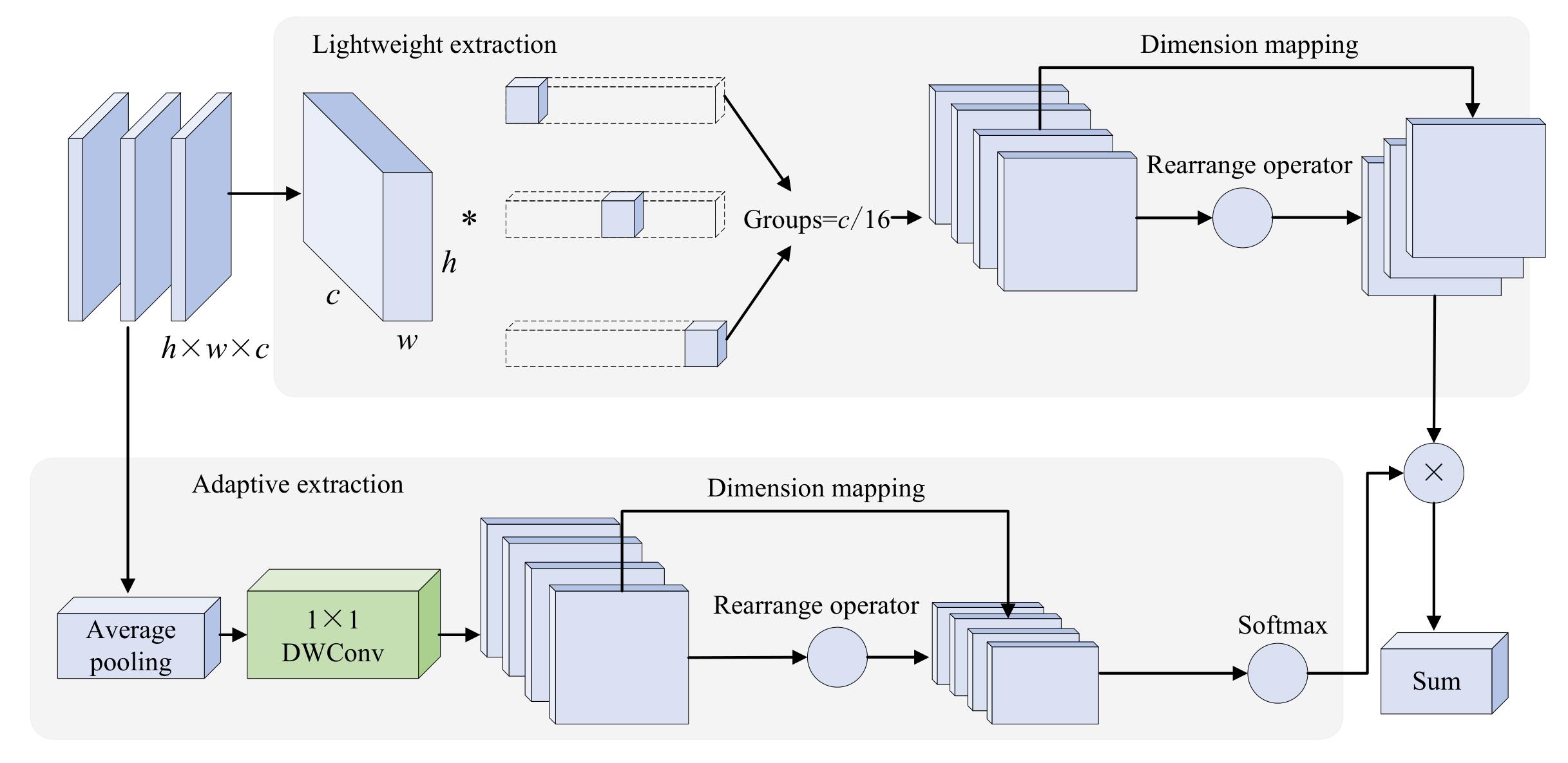
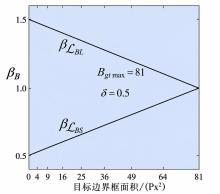
Fig. 6
Dynamic weights of Sloss and Lloss in SDIoU
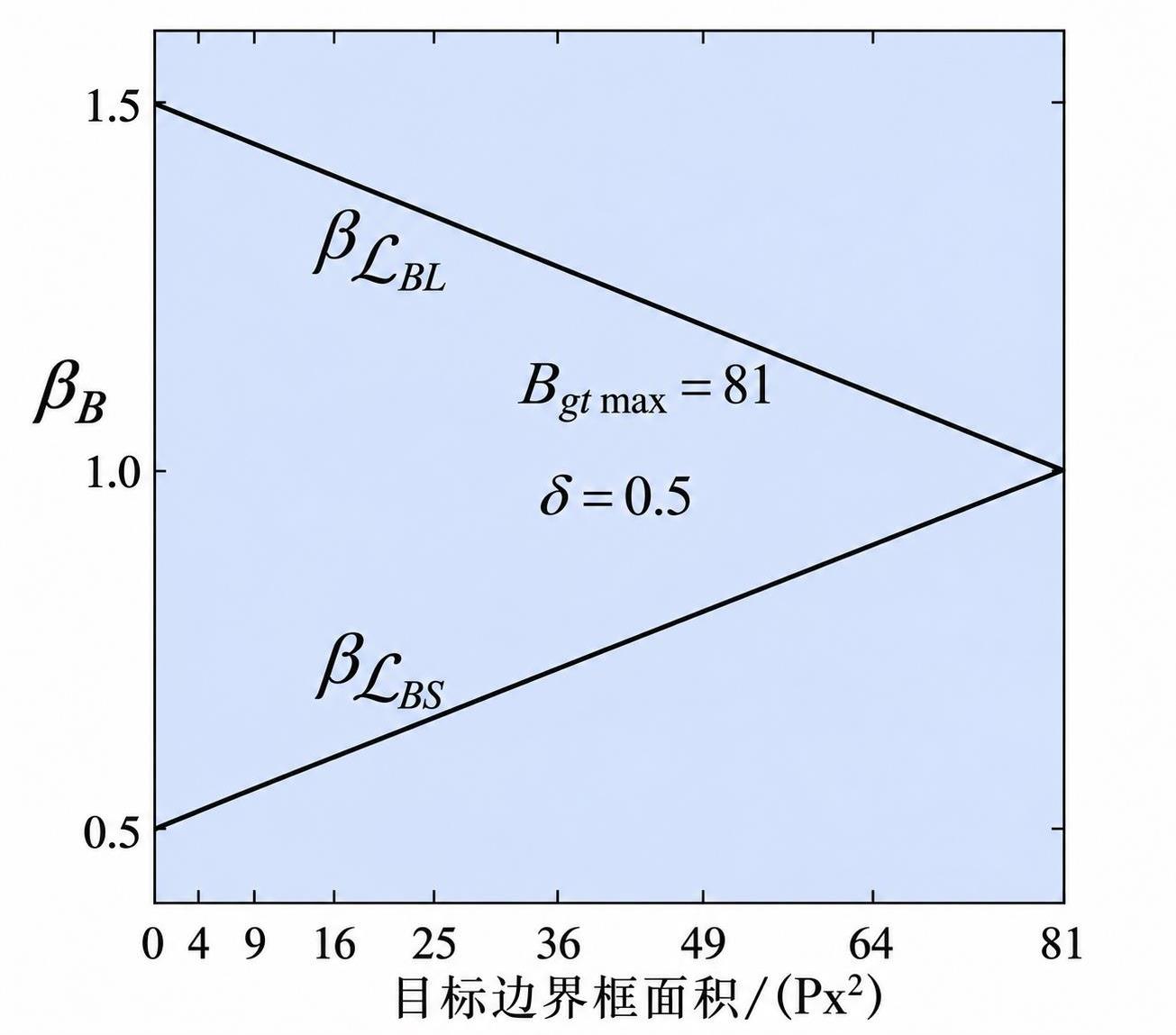
Table 1
Experimental environment and hyperparameter configuration for Euryale ferox defect detection model training
| 参数 | 参数值 | 参数 | 参数值 |
|---|---|---|---|
| 操作系统 | Ubuntu22.04 | 输入大小 | 640×640 |
| 运行内存 | 90 GB | 轮数 | 100 |
| 显卡 | GeForceRTX5090 | 批次大小 | 16 |
| 显存 | 32 GB | 学习率 | 0.01 |
| CPU | 25vCPUIntel(R)Xeon(R)Platinum8470Q | 动量 | 0.937 |
| Pytorch框架 | 2.7.0 | 权重衰减 | 0.000 5 |
| CUDA版本 | 12.8 | 线程数 | 16 |
| Python版本 | 3.12.3 |
Table 2
Ablation experiment results of different improvement module combinations on Euryale ferox defect detection performance
| CURK | DLAE | SDIoU | 准确率/% | 召回率/% | 平均精度均值/% | 参数量/M | 权重文件/MB | 计算量/GFLOPs |
|---|---|---|---|---|---|---|---|---|
| × | × | × | 95.4 | 89.9 | 97.0 | 2.58 | 5.5 | 6.3 |
| √ | × | × | 95.9 | 94.7 | 97.3 | 2.60 | 5.5 | 6.4 |
| × | √ | × | 92.7 | 87.4 | 94.0 | 2.29 | 4.9 | 6.1 |
| × | × | √ | 94.8 | 94.2 | 97.7 | 2.58 | 5.5 | 6.3 |
| √ | √ | × | 94.5 | 92.3 | 97.1 | 2.31 | 4.9 | 6.1 |
| √ | √ | √ | 95.4 | 92.8 | 97.4 | 2.31 | 4.9 | 6.1 |
Table 3
Comparison of results of different algorithms on the dataset for Euryale ferox defect detection research
| 模型 | 准确率/% | 召回率/% | 平均精度均值 /% | 参数量/M | 权重文件/MB | 计算量/GFLOPs | 帧率/(帧/s) |
|---|---|---|---|---|---|---|---|
| YOLOv8n-Worldv2 | 94.3 | 92.1 | 97.2 | 2.58 | 7.3 | 9.8 | 232.3 |
| YOLOv9t | 94.9 | 92.2 | 97.2 | 2.60 | 4.6 | 7.6 | 142.1 |
| YOLOv10n | 92.7 | 91.4 | 96.8 | 2.29 | 5.7 | 6.5 | 235.7 |
| YOLOv11n | 95.4 | 89.9 | 97.0 | 2.58 | 5.5 | 6.3 | 273.2 |
| YOLOv12n | 93.4 | 91.7 | 96.6 | 2.58 | 5.5 | 6.3 | 169.5 |
| YOLOv13n | 92.5 | 92.8 | 96.9 | 2.31 | 5.4 | 6.2 | 133.5 |
| Faster R-CNN | 92.7 | 92.9 | 96.1 | 136.77 | 108.3 | 401.7 | 66.3 |
| SSD | 93.8 | 89.3 | 95.7 | 4.08 | 16.3 | 6.3 | 157.4 |
| 改进YOLOv11n | 95.4 | 92.8 | 97.4 | 2.31 | 4.9 | 6.1 | 189.2 |
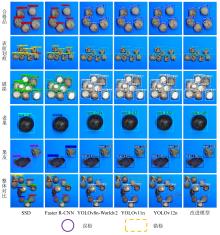
Fig. 7
Visual comparison of detection performance of different models in Euryale ferox defect detection research

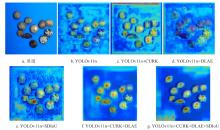
Fig. 8
Heatmap analysis results of different improvement modules in Euryale ferox defect detection research
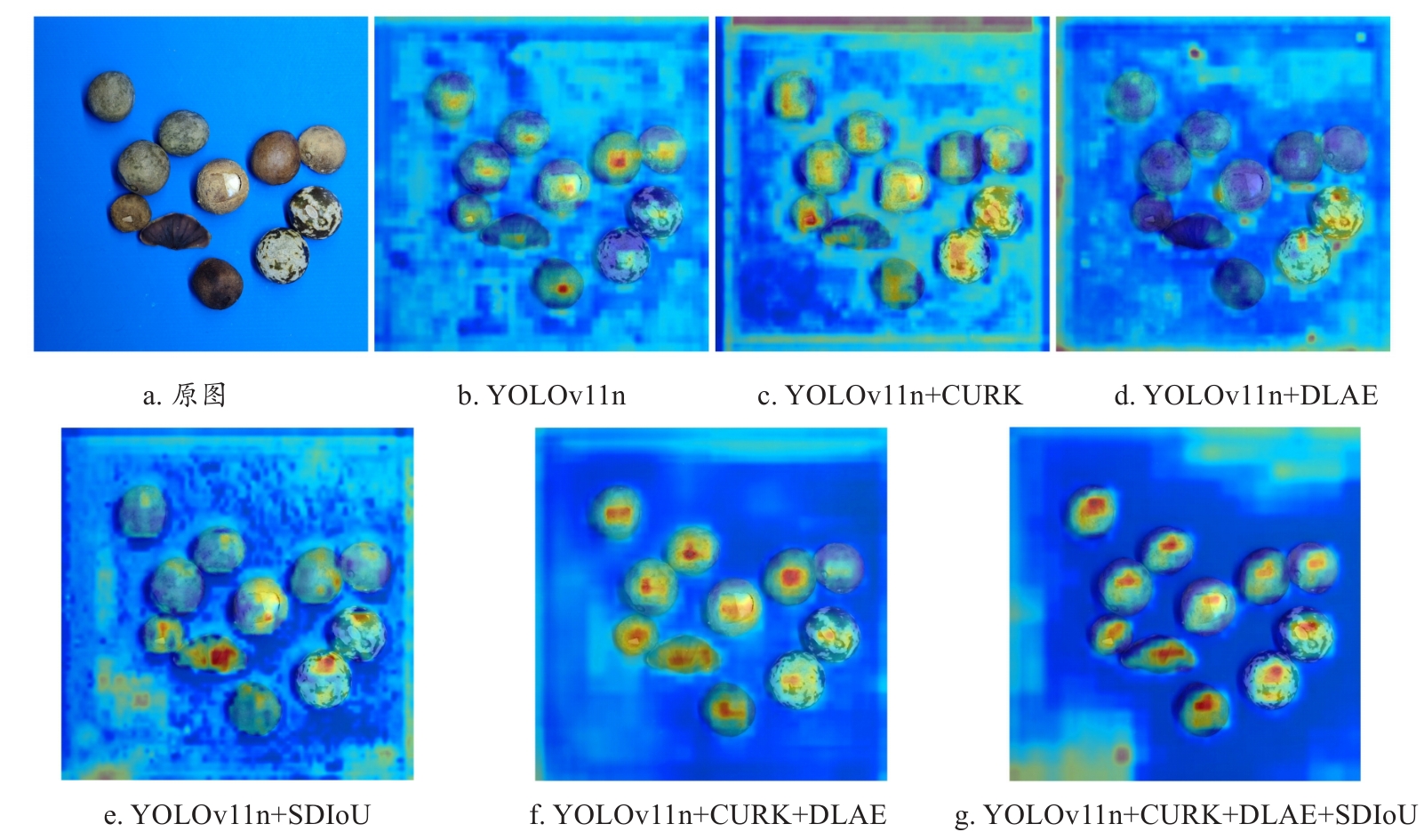
Fig. 9
Detection and validation platform for the improved YOLOv11n-based appearance defect detection model of Euryale ferox
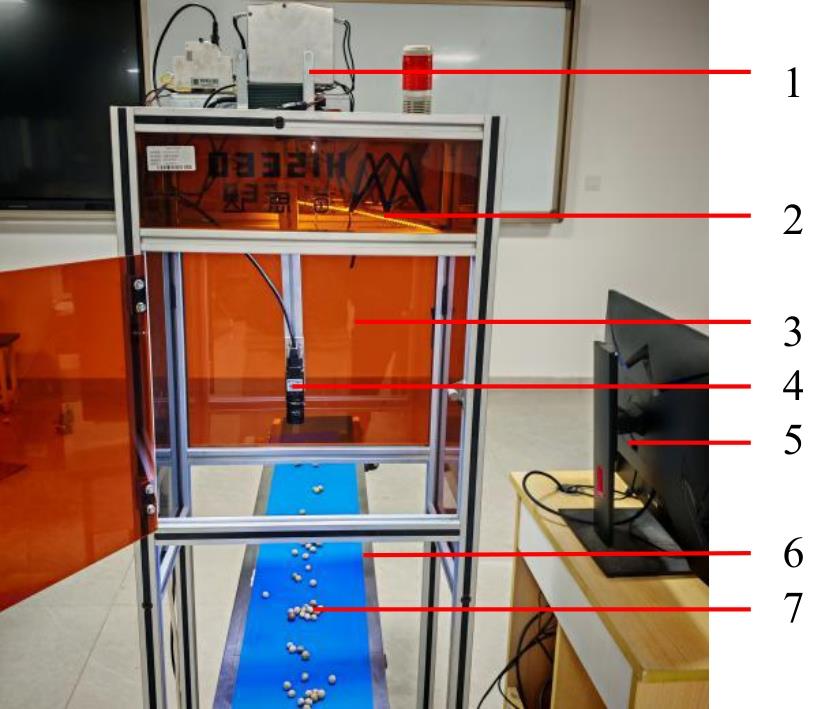
Table 4
Statistical results of defect detection in Euryale ferox across different regions
| 地区 | 合格芡实总数/个 | 正检数1/个 | 缺陷芡实总数/个 | 正检数2/个 | 缺陷查准率/% | 缺陷查全率/% | 总体准确率/% |
|---|---|---|---|---|---|---|---|
| 天长市 | 200 | 188 | 202 | 192 | 94.1 | 95.1 | 94.5 |
| 阜南县 | 200 | 178 | 202 | 184 | 89.3 | 91.1 | 90.0 |
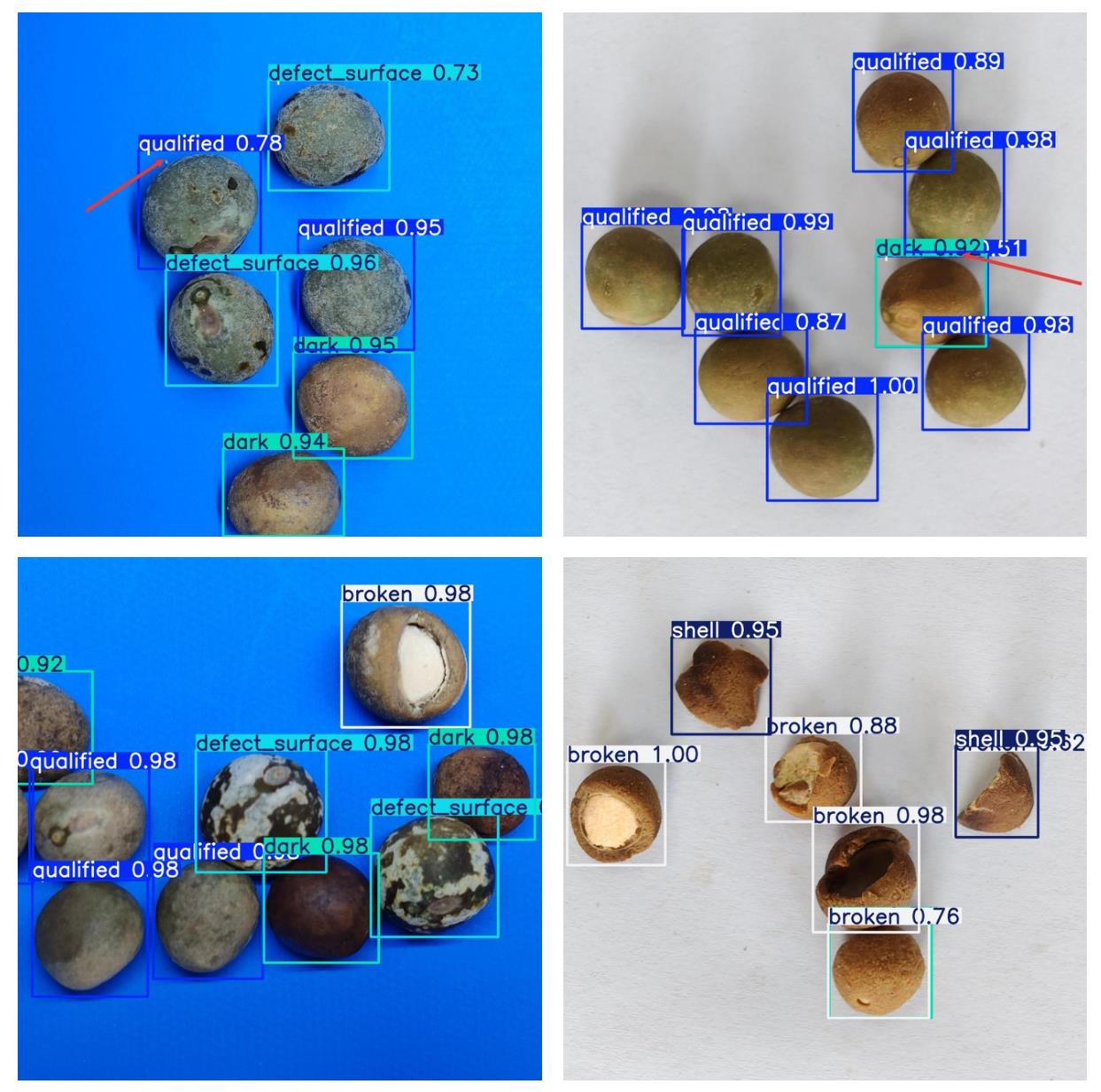
Fig. 10
Comparison of detection results on the validation platform for the improved YOLOv11n-based appearance defect detection research of Euryale ferox
| [1] |
杨校, 王新宇, 朱恒岳, 等. 重构本草——芡实[J]. 吉林中医药, 2024, 44(5): 576-578.
|
|
|
|
| [2] |
徐旭, 刘娴, 李良俊. 芡实研究进展[J]. 长江蔬菜, 2017(18): 62-68.
|
|
|
|
| [3] |
陆娴, 雷根平, 杨东, 等. 芡实化学成分及现代药理研究进展[J]. 新乡医学院学报, 2026, 43(5): 410-416.
|
|
|
|
| [4] |
|
| [5] |
潘复生, 鲍忠洲, 谢贻格. 苏芡优质高效精准栽培管理技术[J]. 长江蔬菜, 2016(10): 29-32.
|
| [6] |
张良. 浅议芡实生产和初加工的机械化[J]. 农业装备技术, 2024, 50(6): 38-39.
|
| [7] |
唐彦嵩, 徐锐豪, 王夙加. 机器视觉在食品无损检测中的应用研究进展[J]. 中国食品学报, 2024, 24(12): 13-27.
|
|
|
|
| [8] |
|
| [9] |
魏堂伟, 张津诚, 王晶, 等. 基于改进YOLOv7的茶叶嫩芽识别模型研究[J]. 智能化农业装备学报(中英文), 2024, 5(2): 42-50.
|
|
|
|
| [10] |
成军虎, 曾弘, 郭鸿樟, 等. 机器学习在生鲜农产品质量与安全快速无损智能检测中的应用与展望[J]. 现代食品科技, 2025, 41(12): 334-345.
|
|
|
|
| [11] |
山显英, 张琳, 李泽慧. 深度学习驱动下的目标检测研究进展综述[J]. 计算机工程与应用, 2025, 61(1): 24-41.
|
|
|
|
| [12] |
|
| [13] |
|
| [14] |
|
| [15] |
|
| [16] |
|
| [17] |
|
| [18] |
叶秉良, 丰睿, 唐涛, 等. 基于改进YOLOv10n的自然环境下莲蓬成熟度检测方法[J]. 农业工程学报, 2025, 41(22): 145-153.
|
|
|
|
| [19] |
黎祖胜, 唐吉深, 匡迎春. 基于改进YOLOv10n的轻量化荔枝虫害小目标检测模型[J]. 智慧农业(中英文), 2025, 7(2): 146-159.
|
|
|
|
| [20] |
陈龙梅, 张春雨. 改进YOLOv8模型的芡种成熟度检测[J]. 安徽科技学院学报, 2025, 39(1): 70-76.
|
|
|
|
| [21] |
|
| [22] |
常永雷, 张熔龙, 惠振阳, 等. 一种基于深度学习的芡实中药材遥感识别方法: CN121354094A[P]. 2026-01-16.
|
| [23] |
修贤超, 费士祺, 黄文倩, 等. 基于轻量化Mamba-YOLO模型的梨表面缺陷检测方法[J]. 智慧农业(中英文), 2026, 8(2): 147-157.
|
|
|
|
| [24] |
朱然辉, 王相友, 吴海涛, 等. 基于YOLOv11-MML的马铃薯表面缺陷实时检测方法[J]. 农业工程学报, 2025, 41(15): 117-126.
|
|
|
|
| [25] |
|
| [26] |
|
| [27] |
徐君, 孙芳芳, 尹渝来, 等. 江苏省芡实冻鲜米产业发展现状与对策[J]. 农村经济与科技, 2025, 36(15): 88-90.
|
| [28] |
|
| [29] |
|
| [30] |
|
| [31] |
|
| [32] |
|
| [33] |
|
| [34] |
|
| [35] |
|
| [36] |
|
| [37] |
|
| [1] | YANG Yu, ZHANG Yibo, MAO Bo, ZHANG Lei. LiteFocus-Net: A Three-Point Lightweight Enhancement Framework for Small-Target Detection of Corn Leaf Diseases and Pests [J]. Smart Agriculture, 2026, 8(4): 217-237. |
| [2] | SHEN Xueli, ZHANG Yue, JIN Haibo, ZHANG Xuxu. Multi-Scale Heterogeneous Feature Synergistic Model for Cotton Leaf Disease Detection [J]. Smart Agriculture, 2026, 8(4): 204-216. |
| [3] | XIU Xianchao, FEI Shiqi, HUANG Wenqian, LI Nan, MIAO Zhonghua. A Lightweight Method for Pear Surface Defect Detection Based on Improved Mamba-YOLO Architecture [J]. Smart Agriculture, 2026, 8(2): 147-157. |
| [4] | SU Yujie, LI Yue, WEI Linjing, WU Bing, GUO Linhai, YAN Bin, ZHOU Hui, GAO Yuhong, KANG Lianghe, LIU Huan, SU Shunchang. Lodging Region Detection Method in Flax Based on Lightweight Improved YOLOv11n-seg Model [J]. Smart Agriculture, 2026, 8(2): 35-47. |
| [5] | DAI Weijiao, LIANG Yudongchen, ZHOU Yong, YAO Chao, ZHANG Cheng, SONG Yongjian, LI Guoliang, TIAN Fang. Advances and Prospects in Body-Size Measurement of Sheep: From 2D Vision to 3D Reconstruction and 2D-3D Fusion [J]. Smart Agriculture, 2026, 8(1): 120-147. |
| [6] | YANG Qilang, YU Lu, LIANG Jiaping. Grading Asparagus officinalis L. Using Improved YOLOv11 [J]. Smart Agriculture, 2025, 7(4): 84-94. |
| [7] | MA Weiwei, CHEN Yue, WANG Yongmei. Recognition of Sugarcane Leaf Diseases in Complex Backgrounds Based on Deep Network Ensembles [J]. Smart Agriculture, 2025, 7(1): 136-145. |
| [8] | HU Chengxi, TAN Lixin, WANG Wenyin, SONG Min. Lightweight Tea Shoot Picking Point Recognition Model Based on Improved DeepLabV3+ [J]. Smart Agriculture, 2024, 6(5): 119-127. |
| [9] | YANG Feng, YAO Xiaotong. Lightweighted Wheat Leaf Diseases and Pests Detection Model Based on Improved YOLOv8 [J]. Smart Agriculture, 2024, 6(1): 147-157. |
| [10] | XIA Xue, CHAI Xiujuan, ZHANG Ning, ZHOU Shuo, SUN Qixin, SUN Tan. A Lightweight Fruit Load Estimation Model for Edge Computing Equipment [J]. Smart Agriculture, 2023, 5(2): 1-12. |
| [11] | ZHAO Yu, REN Yiping, PIAO Xinru, ZHENG Danyang, LI Dongming. Lightweight Intelligent Recognition of Saposhnikovia Divaricata (Turcz.) Schischk Originality Based on Improved ShuffleNet V2 [J]. Smart Agriculture, 2023, 5(2): 104-114. |
| [12] | XIA Ye, LEI Xiaohui, QI Yannan, XU Tao, YUAN Quanchun, PAN Jian, JIANG Saike, LYU Xiaolan. Detection of Pear Inflorescence Based on Improved Ghost-YOLOv5s-BiFPN Algorithm [J]. Smart Agriculture, 2022, 4(3): 108-119. |
| Viewed | ||||||
|
Full text |
|
|||||
|
Abstract |
|
|||||