Smart Agriculture ›› 2026, Vol. 8 ›› Issue (2): 59-71.doi: 10.12133/j.smartag.SA202508021
• Topic--Multi-source Remote Sensing Driven Digital Agriculture Innovation and Practice • Previous Articles Next Articles
WU Tingting1, GUO Junrui1, TAO Qiujie1, CHEN Shihua2, GUO Shanli2( )
)
Received:2025-08-21
Online:2026-03-30
Foundation items:Key Research Project of Shandong Province for Agricultural Superior Varieties(2023LZGC011)
About author:WU Tingting, E-mail: tt_wu@nwsuaf.edu.cn
corresponding author:
CLC Number:
WU Tingting, GUO Junrui, TAO Qiujie, CHEN Shihua, GUO Shanli. YOLOv8n-SSND: An Improved Lightweight Model for Aerial Chenopodium Chenopodium quinoa Willd. Spike Target[J]. Smart Agriculture, 2026, 8(2): 59-71.
Add to citation manager EndNote|Ris|BibTeX
URL: https://www.smartag.net.cn/EN/10.12133/j.smartag.SA202508021
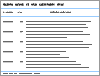
Table 1
Channel parameters of the multispectral camera
| 通道 | 中心波长/nm | 半波宽/nm | 反射率校正系数/% |
|---|---|---|---|
| Blue | 475 | 20 | 48.871 |
| Green | 560 | 20 | 49.028 |
| Red | 668 | 10 | 49.028 |
| Red-edge | 717 | 10 | 48.969 |
| NIR | 840 | 40 | 48.758 |
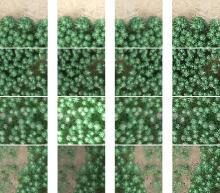
Fig. 1
The enhanced dataset of Chenopodium quinoa Willd spikelets
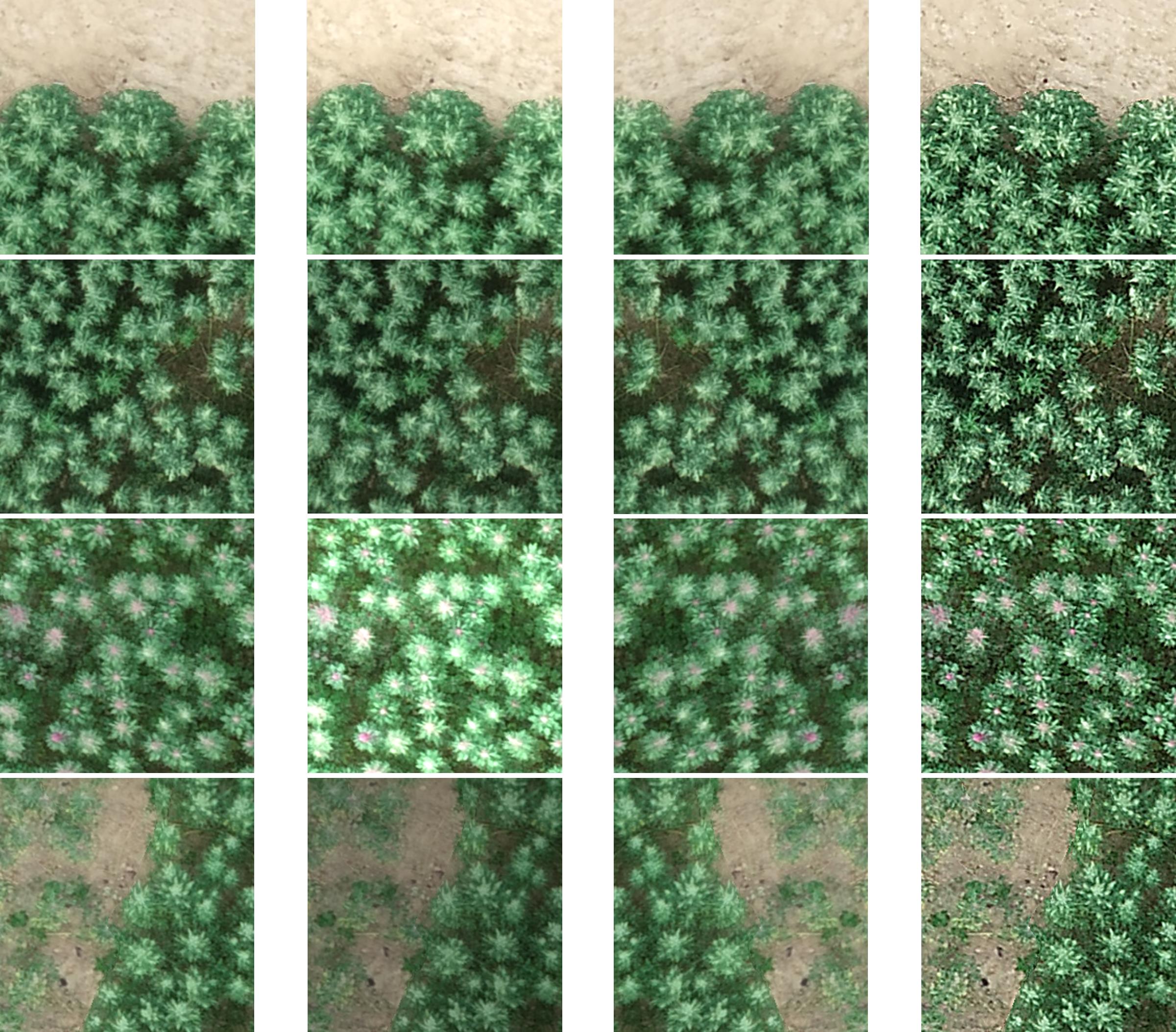
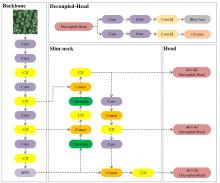
Fig. 2
Network structure of YOLOv8n
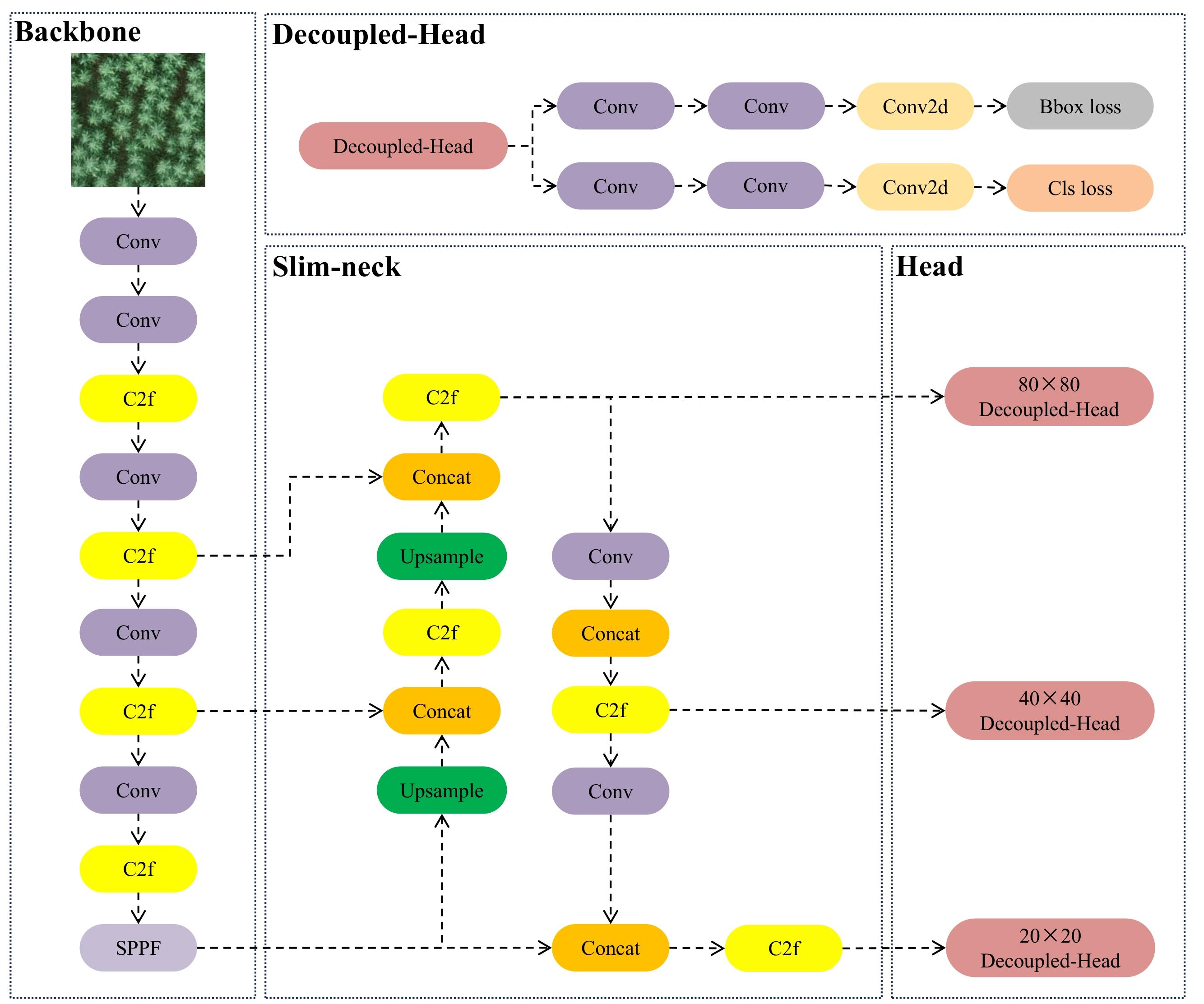
Fig. 3
Improved structure of YOLOv8n network
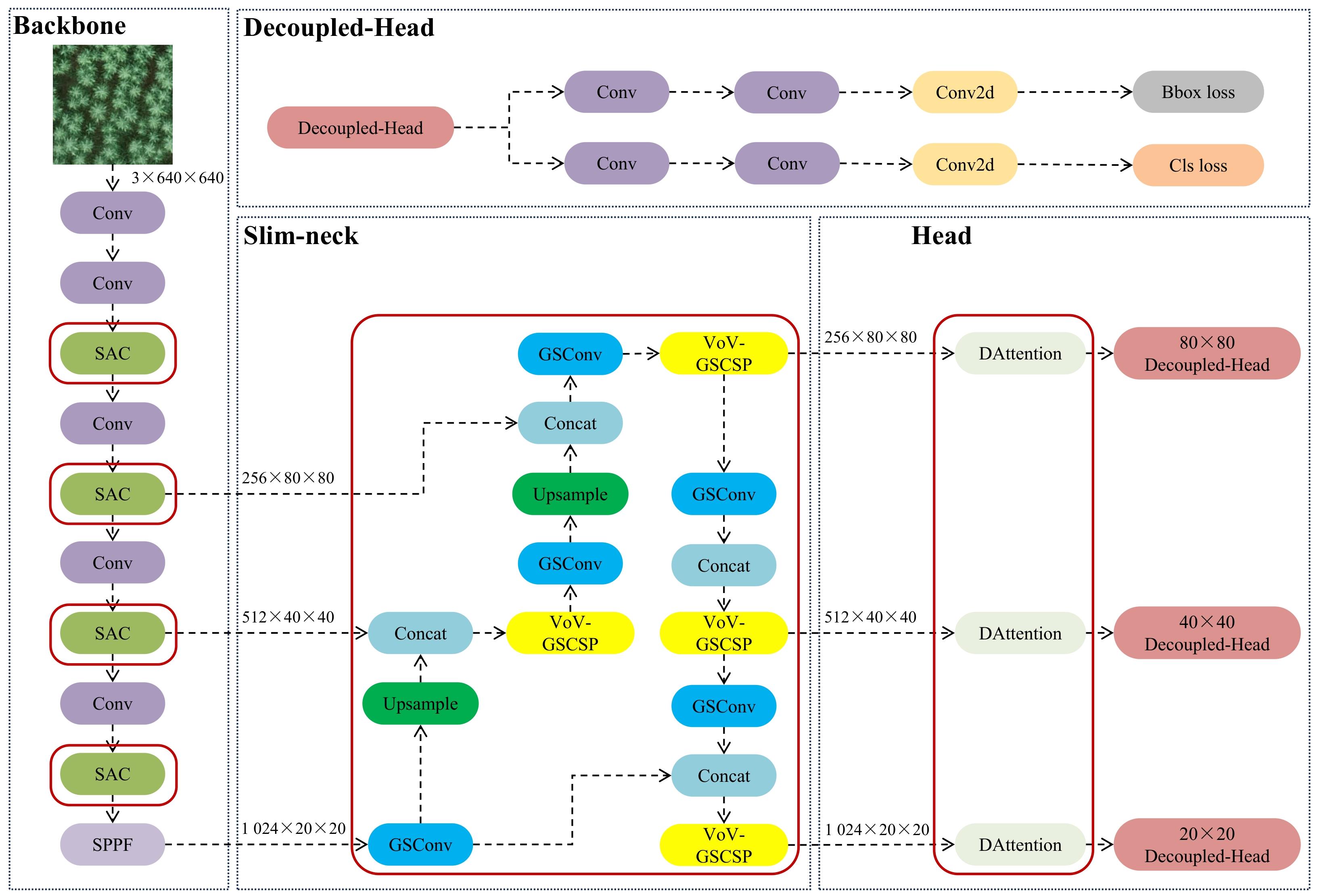
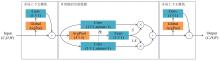
Fig. 4
Specific implementation of SAC
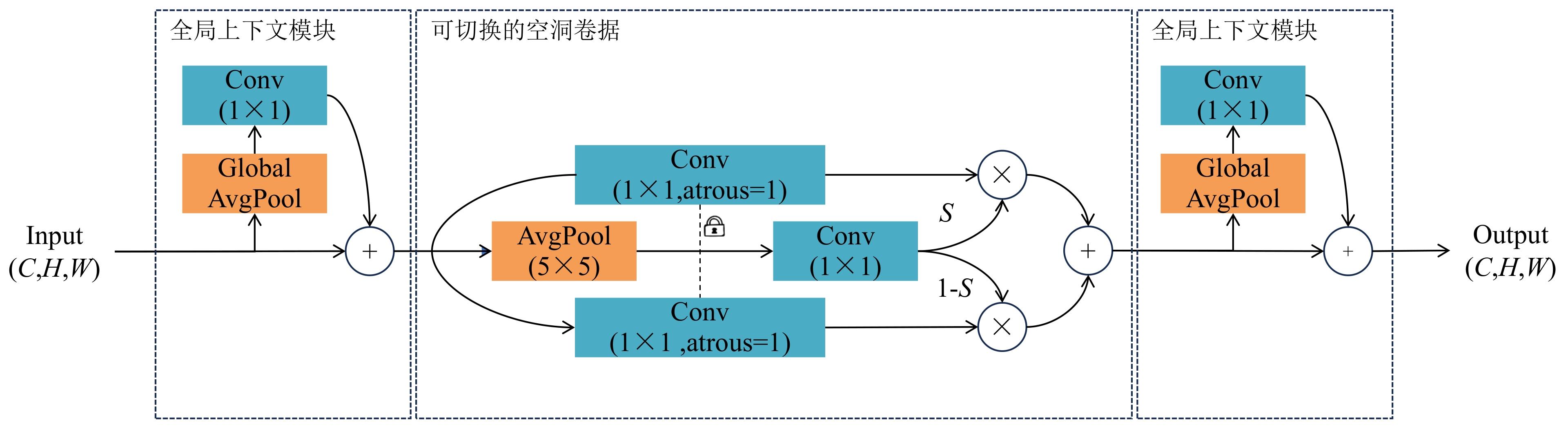
Fig. 5
Structure of the GSConv module
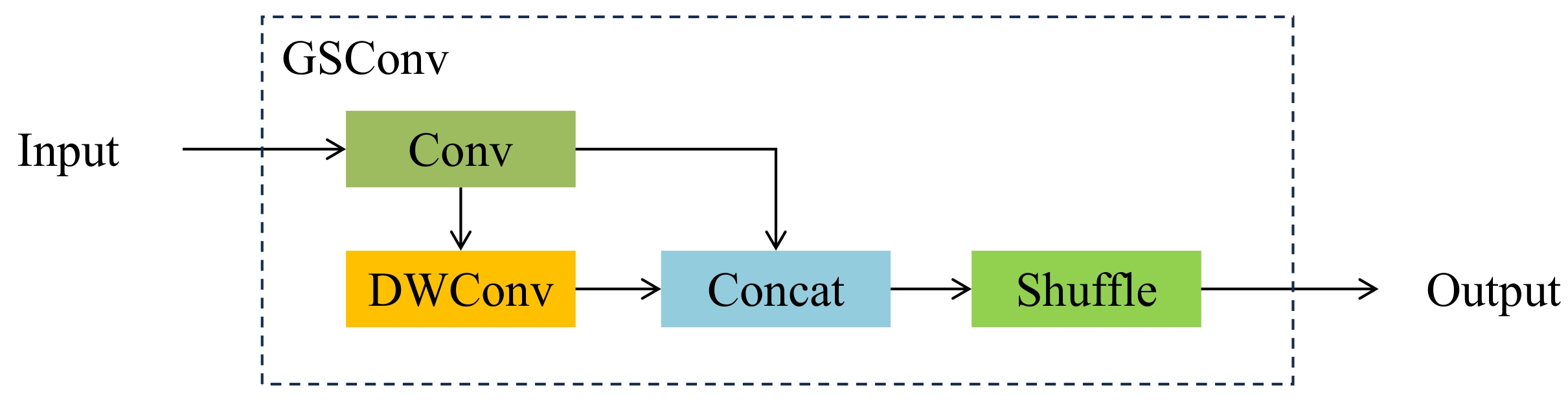
Fig. 6
Structure of the VoV-GSCSP module
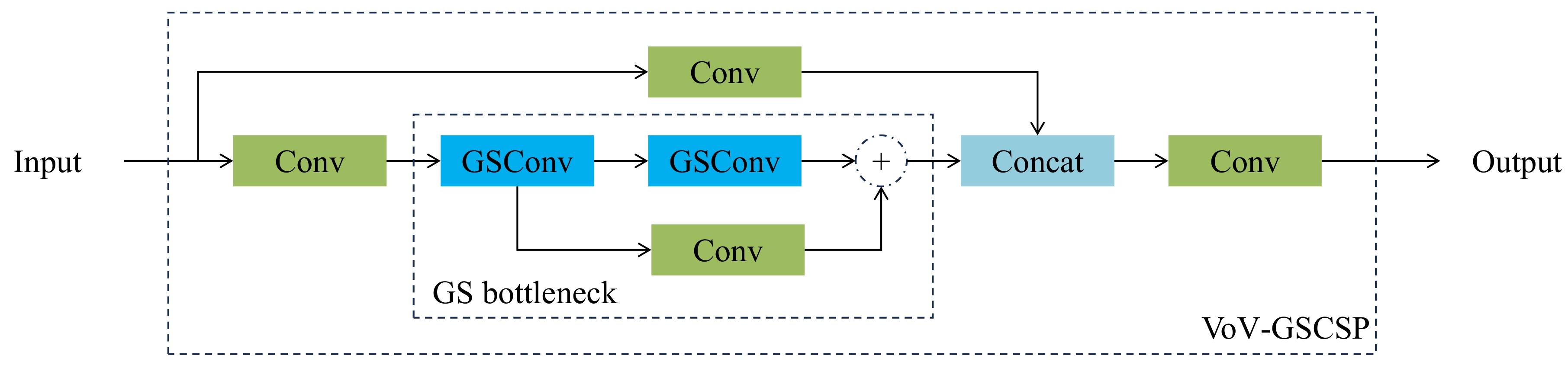
Fig. 7
Schematic diagram of DA implementation
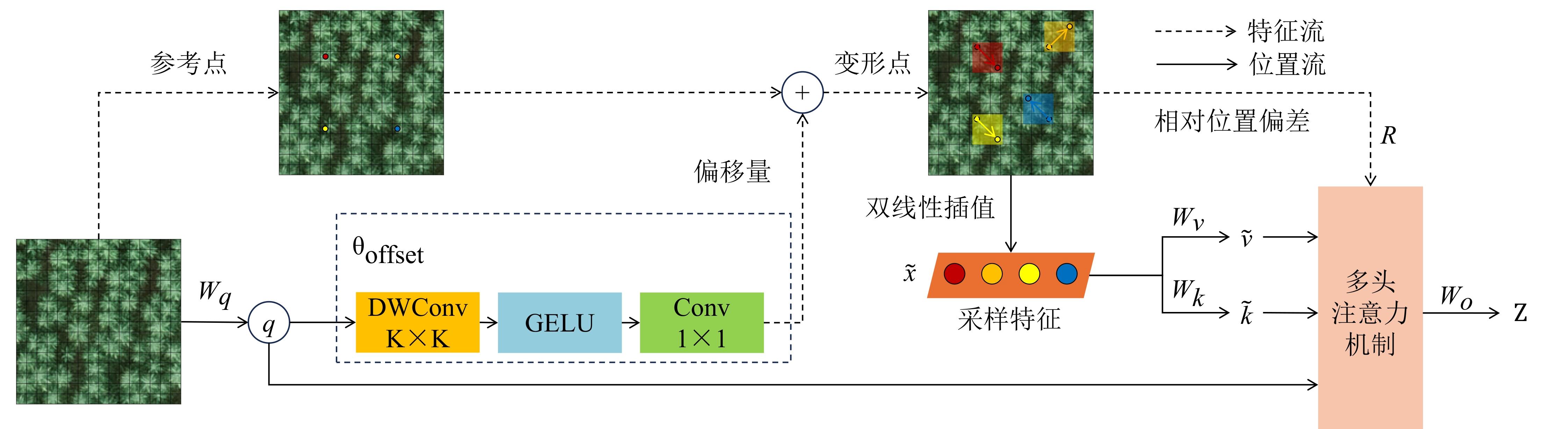
Fig. 8
Comparison chart of detection results of aerial images of Chenopodium quinoa Willd grains by YOLOv8n-SSND and YOLOv8n
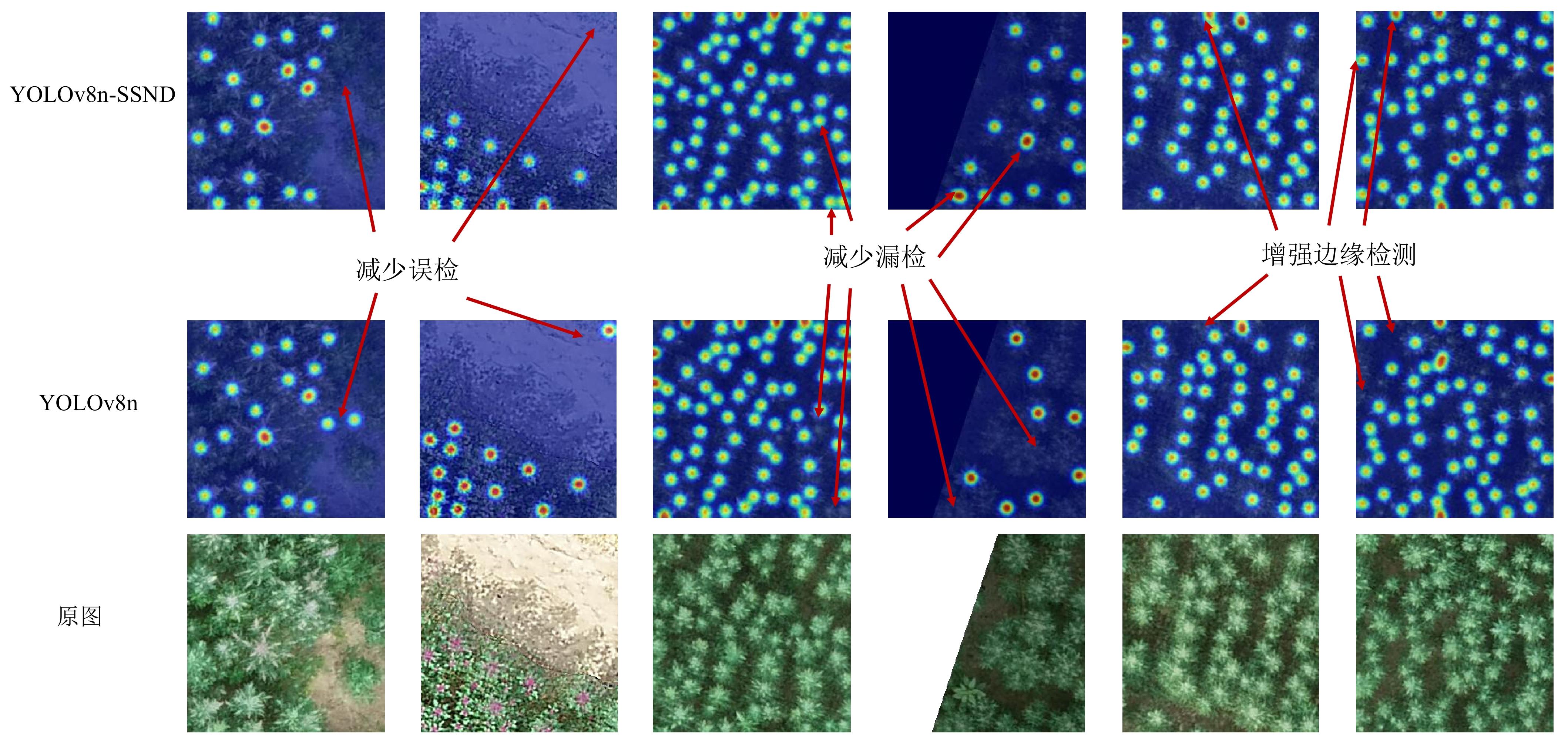
Table 2
Comparison of DA and other attention mechanisms in the aerial photography-based Chenopodium quinoa willd spike target detection model
| 模型 | 模型大小/MB | P/% | R/% | mAP50/% | 计算量/GFLOPs | Params/M | FPS/(帧/s) |
|---|---|---|---|---|---|---|---|
| YOLOv8n-DA | 6.8 | 89.1 | 86.7 | 93.6 | 8.3 | 3.3 | 87.7 |
| YOLOv8n-HA | 16.9 | 89.8 | 85.7 | 93.4 | 8.1 | 8.2 | 294.1 |
| YOLOv8n-DLKA | 9.8 | 89.0 | 85.9 | 93.2 | 9.5 | 4.8 | 185.2 |
Table 3
Aerial photography-based comparison experiment of benchmark models for Chenopodium quinoa Willd grain target detection
| 模型 | 模型大小/MB | P/% | R/% | mAP50/% | 计算量/GFLOPs | Params/M | FPS/(帧/s) |
|---|---|---|---|---|---|---|---|
| YOLOv8n | 6.3 | 90.4 | 84.0 | 92.5 | 8.1 | 3.0 | 131.6 |
| YOLOv11n | 5.5 | 89.6 | 85.0 | 93.4 | 6.3 | 2.6 | 59.5 |
| YOLOv12n | 5.4 | 87.9 | 83.9 | 92.2 | 5.8 | 2.5 | 243.9 |
Table 4
Ablation experiments on the aerial Chenopodium quinoa Willd spike target detection model based on by YOLOv8n
| YOLOv8n | SAC | Slim-Neck | DA | 模型大小/MB | P/% | R/% | mAP50/% | 计算量/GFLOPs | Params/M | FPS/(帧/s) |
|---|---|---|---|---|---|---|---|---|---|---|
| √ | × | × | × | 6.3 | 90.4 | 84.0 | 92.5 | 8.1 | 3.0 | 131.6 |
| √ | √ | × | × | 6.9 | 89.0 | 87.6 | 93.8 | 7.4 | 3.3 | 108.7 |
| √ | × | √ | × | 5.9 | 87.9 | 84.9 | 92.7 | 7.3 | 2.8 | 204.1 |
| √ | × | × | √ | 6.8 | 89.1 | 86.7 | 93.6 | 8.3 | 3.3 | 87.7 |
| √ | √ | √ | × | 6.5 | 89.6 | 85.7 | 93.4 | 6.6 | 3.4 | 208.3 |
| √ | √ | × | √ | 7.5 | 89.6 | 86.9 | 93.9 | 7.6 | 3.6 | 270.3 |
| √ | × | √ | √ | 6.5 | 88.3 | 86.8 | 93.2 | 7.5 | 3.1 | 227.3 |
| √ | √ | √ | √ | 7.1 | 90.8 | 86.2 | 94.3 | 6.8 | 3.4 | 166.7 |
Table 5
Ablation experiments on the aerial Chenopodium quinoa Willd spike target detection model based on by YOLOv11n
| YOLOv11 | SAC | Slim-Neck | DA | 模型大小/MB | P/% | R/% | mAP50/% | 计算量/GFLOPs | Params/M | FPS/(帧/s) |
|---|---|---|---|---|---|---|---|---|---|---|
| √ | × | × | × | 5.5 | 89.6 | 85.0 | 93.4 | 6.3 | 2.6 | 59.5 |
| √ | √ | × | × | 7.8 | 90.4 | 85.8 | 93.8 | 6.5 | 3.7 | 166.7 |
| √ | × | √ | × | 5.9 | 88.9 | 84.7 | 92.7 | 6.4 | 2.8 | 217.4 |
| √ | × | × | √ | 6.1 | 89.7 | 83.3 | 92.2 | 6.5 | 2.9 | 222.2 |
| √ | √ | √ | × | 8.9 | 89.0 | 86.1 | 93.2 | 7.8 | 4.2 | 125.0 |
| √ | √ | × | √ | 8.4 | 89.7 | 85.1 | 93.6 | 6.7 | 4.0 | 131.6 |
| √ | × | √ | √ | 6.5 | 88.4 | 85.7 | 93.2 | 6.6 | 3.1 | 172.4 |
| √ | √ | √ | √ | 9.4 | 89.2 | 85.9 | 93.6 | 8.1 | 4.5 | 137.0 |
Table 6
Comparison performance results of different models for target detection of Chenopodium quinoa Willd grains
| 模型 | 模型大小/MB | P/% | R/% | mAP50/% | 计算量/GFLOPs | Params/M | FPS/(帧/s) |
|---|---|---|---|---|---|---|---|
| YOLOv8n-SSND | 7.1 | 90.8 | 86.2 | 94.3 | 6.8 | 3.4 | 166.7 |
| YOLOv11n-SSND | 9.4 | 89.2 | 85.9 | 93.6 | 8.1 | 4.5 | 136.7 |
| YOLOv11n | 5.5 | 89.6 | 85.0 | 93.4 | 6.3 | 2.6 | 250.0 |
| YOLOv12n | 5.4 | 87.9 | 83.9 | 92.2 | 5.8 | 2.5 | 243.9 |
| YOLOv7 | 71.3 | 88.0 | 86.4 | 92.9 | 103.2 | 36.9 | 53.2 |
| YOLOv5s | 3.9 | 89.4 | 86.2 | 92.3 | 4.1 | 7.0 | 119.1 |
| SSD | 90.6 | 79.0 | 62.6 | 71.2 | 30.4 | 23.3 | 135.3 |
| Fast R-CNN | 108.0 | 79.3 | 74.9 | 74.7 | 369.7 | 41.3 | 13.7 |
| [1] |
姚燕辉. 苗菜型藜麦新品系筛选及遗传多样性评价[D]. 太谷: 山西农业大学, 2022.
|
|
|
|
| [2] |
朱丽丽, 张发玉, 安宁, 等. 116份藜麦种质资源萌发期抗旱性综合评价[J]. 干旱地区农业研究, 2024, 42(1): 23-31.
|
|
|
|
| [3] |
|
| [4] |
姜睿, 刘文瑜, 王旺田, 等. 50份藜麦种质材料萌发期耐低温综合评价[J/OL]. 草业科学, 2025: 1-17. (2025-06-20)[2020-08-15].
|
|
|
|
| [5] |
|
| [6] |
龙拥兵, 李坤, 刘丹丹, 等. 基于无人机遥感图像的水稻稻穗识别与估产方法研究[J]. 农业机械学报, 2026, 57(3): 109-118.
|
|
|
|
| [7] |
彭小丹, 陈锋军, 朱学岩, 等. 基于无人机图像和改进LSC-CNN模型的密集苗木检测和计数方法[J]. 智慧农业(中英文), 2024, 6(5): 88-97.
|
|
|
|
| [8] |
杨福芹, 李昌浩, 张英发, 等. 融合高光谱和数码影像的冬小麦氮营养指数遥感监测[J]. 光谱学与光谱分析, 2025, 45(6): 1719-1728.
|
|
|
|
| [9] |
|
| [10] |
井梅秀, 穆天红, 肖明, 等. 基于无人机多光谱影像的藜麦长势分析[J]. 现代农业科技, 2025(2): 179-182.
|
|
|
|
| [11] |
|
| [12] |
|
| [13] |
|
| [14] |
赵峻, 聂志刚, 李广, 等. 基于无人机低空近景图像的玉米螟虫害检测方法[J]. 智慧农业(中英文), 2025, 7(6): 111-123.
|
|
|
|
| [15] |
翁海勇, 姚越, 黄德耀, 等. 无人机低空遥感结合YOLOv7快速评估水稻穗颈瘟抗性[J]. 农业工程学报, 2024, 40(21): 110-118.
|
|
|
|
| [16] |
|
| [17] |
|
| [18] |
张晓勐. 无人机遥感图像中玉米雄穗检测模型研究及应用[D]. 重庆: 重庆师范大学, 2023.
|
|
|
|
| [19] |
高姻燕, 孙义, 李葆春. 基于无人机RGB影像估测田间小麦穗数[J]. 中国农业科技导报, 2022, 24(3): 103-110.
|
|
|
|
| [20] |
|
| [21] |
|
| [22] |
|
| [23] |
|
| [24] |
|
| [25] |
|
| [26] |
沈德宇, 陈锋军, 朱学岩, 等. 基于无人机航拍与改进YOLOv5s的油茶果实检测[J]. 中国农机化学报, 2024, 45(12): 238-244.
|
|
|
|
| [27] |
杨启良, 禹璐, 梁嘉平. 基于改进YOLOv11的采后芦笋分级检测方法[J]. 智慧农业(中英文), 2025, 7(4): 84-94.
|
|
|
| [1] | LIU Haoran, WANG Yu, ZHAO Xueguan, WU Huarui, FU Hao, PANG Shujie, ZHAI Changyuan. CD-YOLO: A Method for Detecting Carrot Seedlings in Field Based on Improved YOLOv11s [J]. Smart Agriculture, 2026, 8(2): 158-174. |
| [2] | GAO Guangfu, WANG Qilei, SONG Liwen, FENG Haikuan, SHI Lei, YANG Hao, LIU Yang, YUE Jibo. Object Detection Method of Maize Ears Within Canopy Based on CornYOLO [J]. Smart Agriculture, 2026, 8(1): 167-177. |
| [3] | LIU Xiaojun, WU Qian, SUN Chuanliang, QI Chao, ZHANG Gufeng, LEI Tianjie, LIANG Wanjie. Rice Disease Identification Method Based on Improved MobileViT Model and System Development [J]. Smart Agriculture, 2026, 8(1): 28-39. |
| [4] | XIAO Ruihong, TAN Lixin, WANG Rifeng, SONG Min, HU Chengxi. Multi-Scale Tea Leaf Disease Detection Method Based on Improved YOLOv11n [J]. Smart Agriculture, 2026, 8(1): 62-71. |
| [5] | SONG Mingxuan, BAI Bo, YANG Juntao, ZHANG Yutao, LI Sa, LI Zhenhai, WAN Shubo, LI Guowei. Robust UAV-Based Method for Peanut Plant Height Estimation Using Bare-Soil Invariant Constraints [J]. Smart Agriculture, 2025, 7(6): 124-135. |
| [6] | CAO Yuying, LIU Yinchuan, GAO Xinyue, JIA Yinjiang, DONG Shoutian. LightTassel-YOLO: A Real-Time Detection Method for Maize Tassels Based on UAV Remote Sensing [J]. Smart Agriculture, 2025, 7(6): 96-110. |
| [7] | WANG Xuechang, XU Wenbo, ZHENG Yongjun, YANG Shenghui, LIU Xingxing, SU Daobilige, WANG Zimeng. Current Status and Development Trend of Low-Altitude Economy Industry in Orchards [J]. Smart Agriculture, 2025, 7(6): 35-57. |
| [8] | ZHAO Jun, NIE Zhigang, LI Guang, LIU Jiayu. Corn Borer Pests Infestations Detection Method Using Low-Altitude Close-Range UAV Imagery [J]. Smart Agriculture, 2025, 7(6): 111-123. |
| [9] | LAN Yubin, WANG Chaofeng, SUN Heguang, CHEN Shengde, WANG Guobin, DENG Xiaoling, WANG Yuanjie. Low-Altitude Technology Empowering Smart Agriculture: Technical System, Application Scenarios, and Challenge Recommendations [J]. Smart Agriculture, 2025, 7(6): 18-34. |
| [10] | WANG Fengyun, WANG Xuanyu, AN Lei, FENG Wenjie. Detection Method for Log-Cultivated Shiitake Mushrooms Based on Improved RT-DETR [J]. Smart Agriculture, 2025, 7(5): 67-77. |
| [11] | LUO Xuelun, GOUDA Mostafa, SONG Xinbei, HU Yan, ZHANG Wenkai, HE Yong, ZHANG Jin, LI Xiaoli. Detection Method of Ectropis Grisescens Larvae in Canopy Environments Based on YOLO and Diffusion Models [J]. Smart Agriculture, 2025, 7(5): 156-168. |
| [12] | YANG Qilang, YU Lu, LIANG Jiaping. Grading Asparagus officinalis L. Using Improved YOLOv11 [J]. Smart Agriculture, 2025, 7(4): 84-94. |
| [13] | LIU Chang, SUN Yu, YANG Jing, WANG Fengchao, CHEN Jin. Grape Recognition and Localization Method Based on 3C-YOLOv8n and Depth Camera [J]. Smart Agriculture, 2024, 6(6): 121-131. |
| [14] | YE Dapeng, JING Jun, ZHANG Zhide, LI Huihuang, WU Haoyu, XIE Limin. MSH-YOLOv8: Mushroom Small Object Detection Method with Scale Reconstruction and Fusion [J]. Smart Agriculture, 2024, 6(5): 139-152. |
| [15] | PENG Xiaodan, CHEN Fengjun, ZHU Xueyan, CAI Jiawei, GU Mengmeng. Dense Nursery Stock Detecting and Counting Based on UAV Aerial Images and Improved LSC-CNN [J]. Smart Agriculture, 2024, 6(5): 88-97. |
| Viewed | ||||||
|
Full text |
|
|||||
|
Abstract |
|
|||||