Smart Agriculture ›› 2026, Vol. 8 ›› Issue (5): 238-250.doi: 10.12133/j.smartag.SA202605015
• Information Processing and Decision Making • Previous Articles
HE Yating, LUO Youlu, PAN Yonghao( ), ZHAO Taotao, MOU Guoyu, WU Pengju
Received:2026-05-11
Online:2026-09-30
Foundation items:National Natural Science Foundation of China(72501197); Natural Science Foundation Project of Sichuan Province(2025ZNSFSC0162)
About author:HE Yating, E-mail: 2785758611@qq.com
corresponding author:
CLC Number:
HE Yating, LUO Youlu, PAN Yonghao, ZHAO Taotao, MOU Guoyu, WU Pengju. RT-DETR-DPF: A Lightweight Kiwifruit Leaf Disease Detection Algorithm[J]. Smart Agriculture, 2026, 8(5): 238-250.
Add to citation manager EndNote|Ris|BibTeX
URL: https://www.smartag.net.cn/EN/10.12133/j.smartag.SA202605015
Table 1
Dataset for kiwifruit leaf disease detection research
| 猕猴桃叶片病害类别 | 增强前训练集样本数量/张 | 增强后训练集样本数量/张 | 验证集样本数量/张 | 测试集样本数量/张 |
|---|---|---|---|---|
| 褐斑病 | 670 | 1 073 | 52 | 43 |
| 炭疽病 | 1 016 | 1 578 | 64 | 64 |
| 细菌性溃疡病 | 450 | 721 | 31 | 40 |
Table 2
Specific characteristics of three kiwifruit leaf diseases
| 病害类型 | 特征 | 病害表现 |
|---|---|---|
| 褐斑病 | 早期会在叶片上出现黄绿色的小斑点,随后不断扩大至2~3 mm,病斑中部为灰褐色,后期会形成不规则病斑,病斑中部呈褐色轮纹状,最大病斑直径可达10 mm | |
| 炭疽病 | 叶片初期呈水渍状褐色斑,后期病斑中间呈灰白色,边缘深褐色,并伴有叶片卷曲 | |
| 细菌性溃疡病 | 幼叶时会出现不规则褐色斑点,边缘有黄色晕圈,叶片皱缩畸形;成叶的病斑中间灰白色,边缘深褐色,后期会腐蚀掉叶片,导致叶片提前脱落 | |
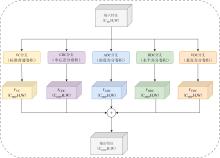
Fig. 1
Architecture diagram of the DEConv module
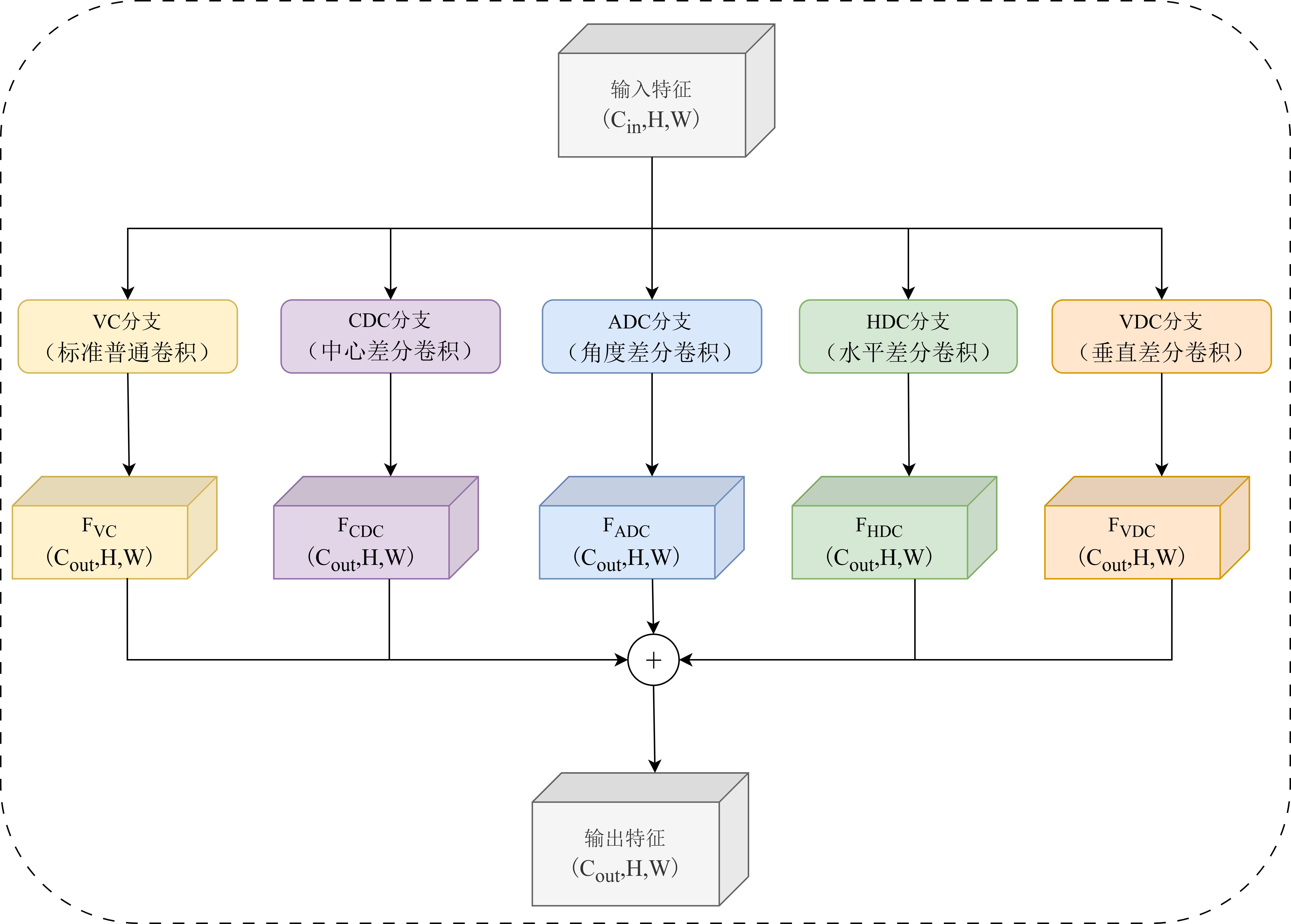
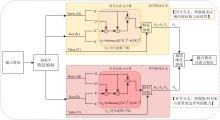
Fig. 2
PolaFormer dual branch network model structure diagram
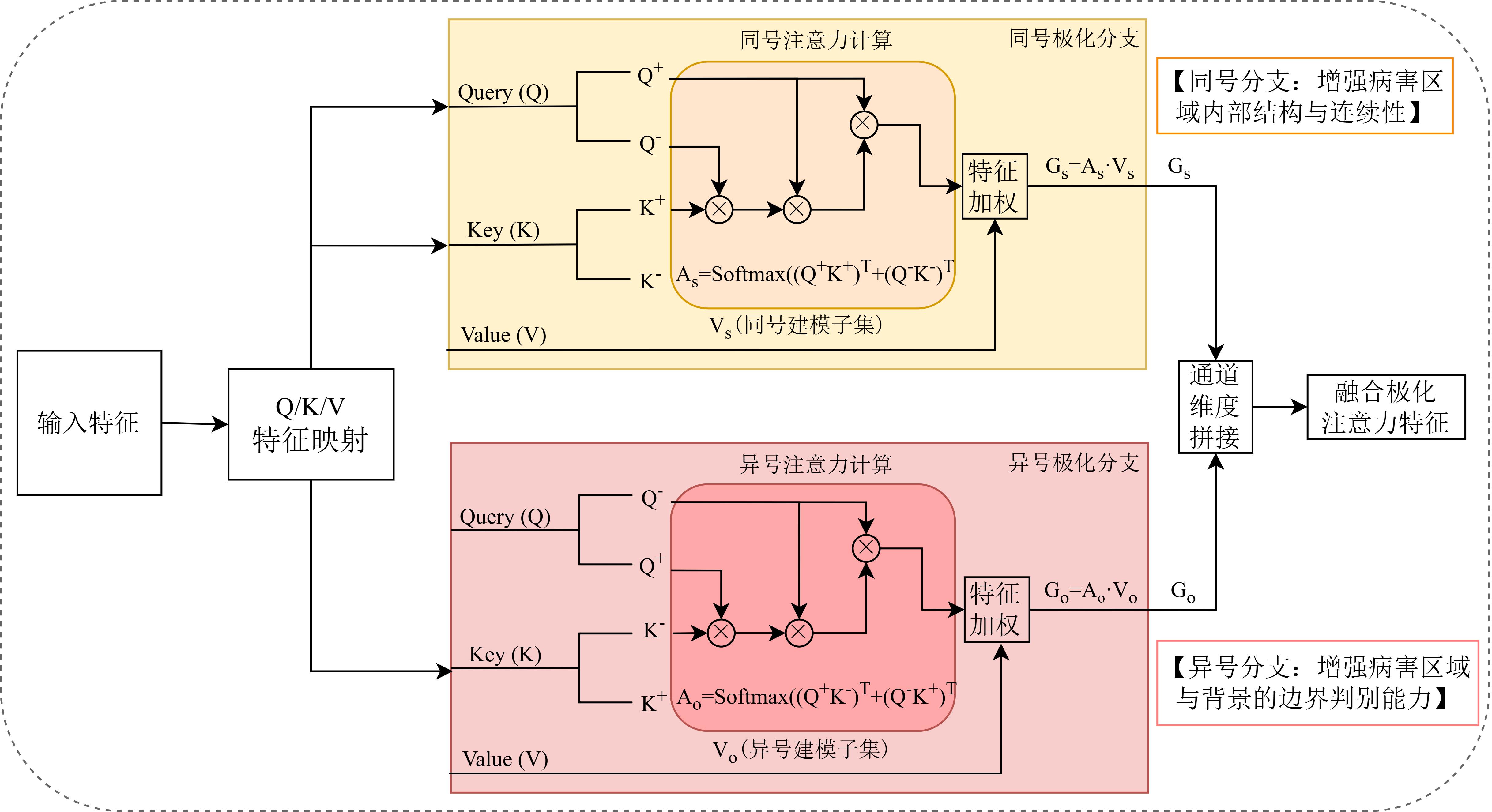
Fig. 3
Structure diagram of FocusFeature network module
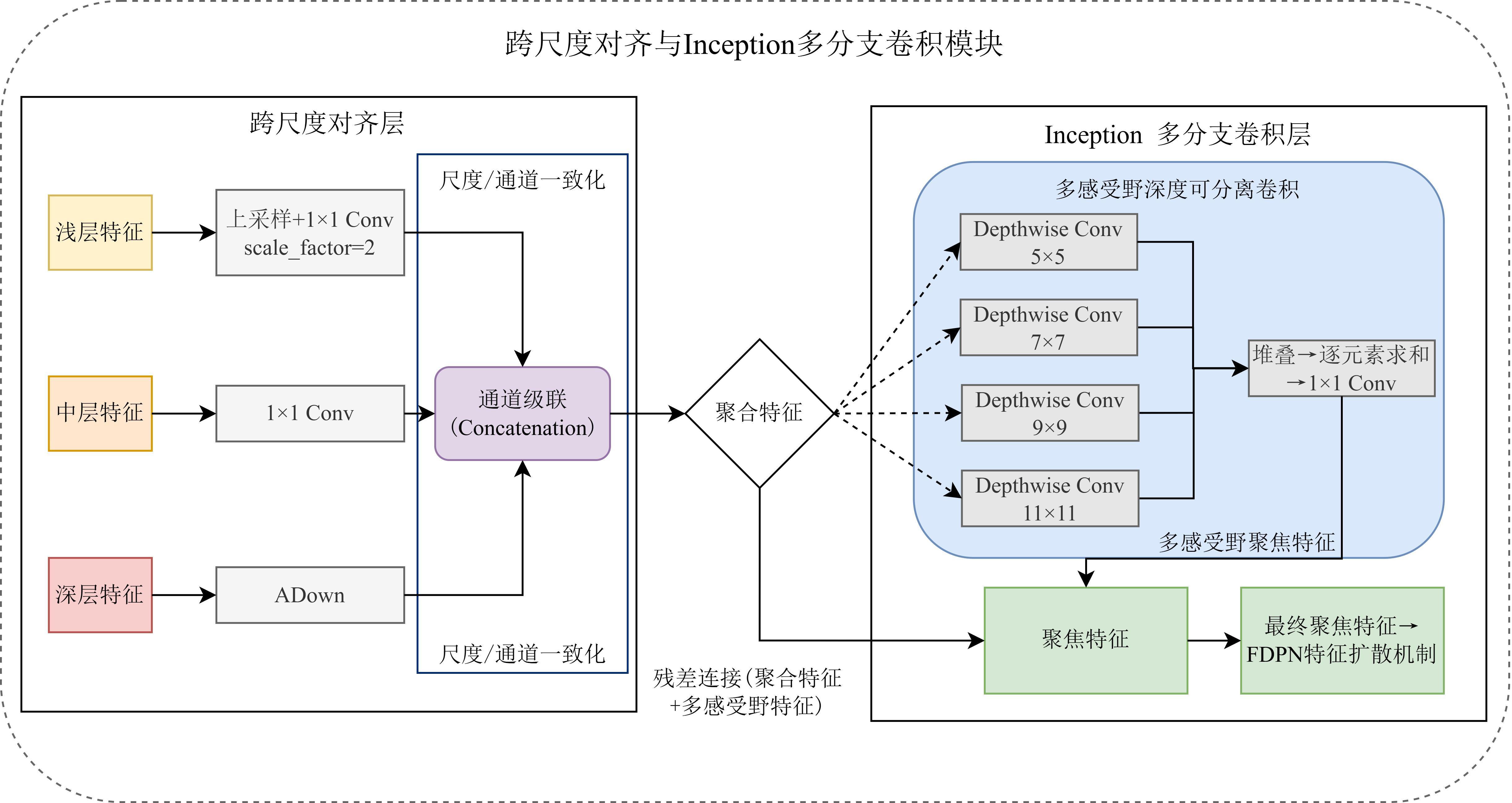
Fig. 4
Architecture diagram of the RT-DETR-DPF model
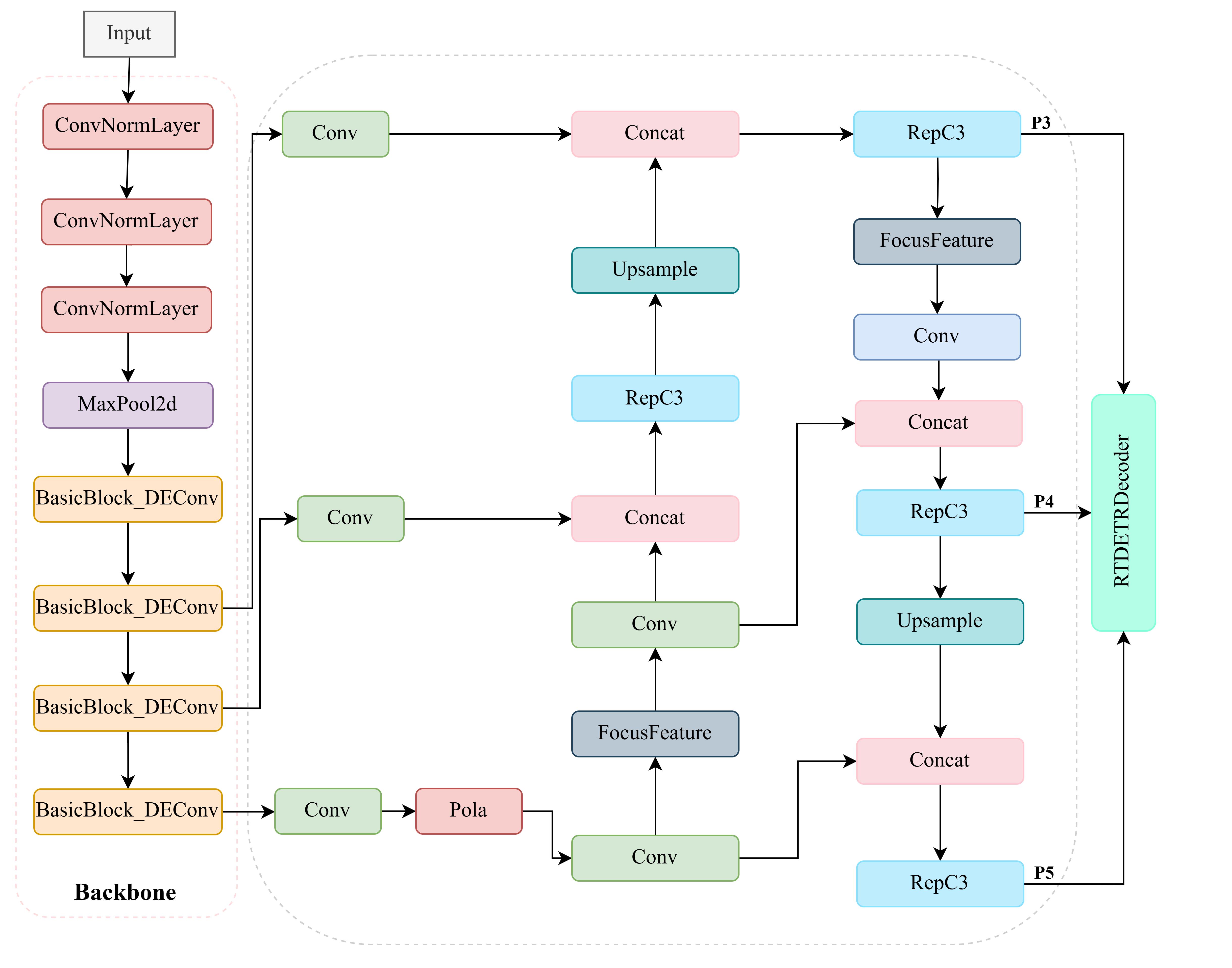
Table 3
Effect of the position of PolaFormer on model performance
| 试验 | 添加位置 | 精确率/% | 召回率/% | mAP50/% | mAP50∶95/% | 参数量/M | 计算量/GFLOPs |
|---|---|---|---|---|---|---|---|
| 1 | 无添加 | 88.1 | 84.2 | 89.7 | 69.3 | 19.9 | 56.9 |
| 2 | 一号位置 | 89.8 | 85.3 | 90.9 | 70.2 | 20.0 | 57.2 |
| 3 | 二号位置 | 88.3 | 85.7 | 89.9 | 69.5 | 23.0 | 61.9 |
| 4 | 三号位置 | 87.5 | 83.1 | 90.1 | 67.4 | 20.0 | 57.2 |
Table 4
Ablation experiments on object detection of kiwifruit leaf diseases
| 实验 | DEConv | PolaFormer | FDPN | 精确率/% | 召回率/% | mAP50/% | mAP50∶95/% | 计算量/GFLOPs | 参数量/M | 帧率/(帧/s) |
|---|---|---|---|---|---|---|---|---|---|---|
| 1 | × | × | × | 88.1 | 84.2 | 89.7 | 69.3 | 56.9 | 19.9 | 77.2 |
| 2 | √ | × | × | 89.4 | 84.9 | 89.8 | 70.1 | 57.0 | 19.9 | 67.3 |
| 3 | × | √ | × | 89.8 | 85.3 | 90.9 | 70.2 | 57.2 | 20.0 | 91.5 |
| 4 | × | × | √ | 90.1 | 83.9 | 91.1 | 72.6 | 66.1 | 22.2 | 69.9 |
| 5 | √ | √ | × | 92.5 | 85.0 | 90.3 | 71.9 | 57.3 | 20.0 | 57.4 |
| 6 | √ | × | √ | 91.9 | 84.5 | 90.5 | 75.4 | 69.9 | 27.0 | 67.3 |
| 7 | × | √ | √ | 92.7 | 85.4 | 91.8 | 74.6 | 66.3 | 22.4 | 65.2 |
| 8 | √ | √ | √ | 93.1 | 85.7 | 92.3 | 75.6 | 37.7 | 13.2 | 67.0 |
Table 5
Comparison of results of RT-DETR-r18 model before and after improvement in kiwifruit leaf disease detection
| 模型 | 精确率/% | 召回率/% | mAP50/% | mAP50∶95/% | 参数量/M | 计算量/GFLOPs | 帧率/(帧/s) |
|---|---|---|---|---|---|---|---|
| RT-DETR-r18 | 88.1 | 84.2 | 89.7 | 69.3 | 19.9 | 56.9 | 77.2 |
| RT-DETR-DPF | 93.1 | 85.7 | 92.3 | 75.6 | 13.2 | 37.7 | 67.0 |
Fig. 5
Comparison of GIoU loss convergence curves
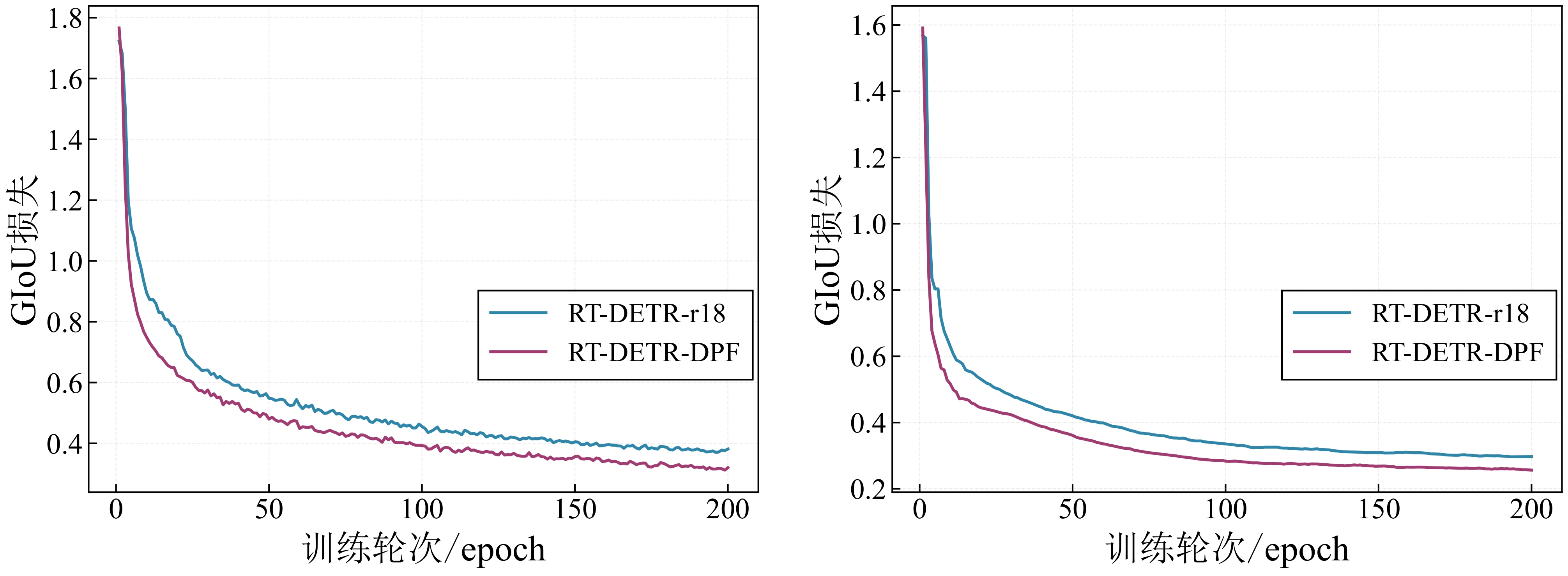
Table 6
Results of kiwifruit leaf disease detection using different models
| 模型 | 精确率/% | 召回率/% | mAP50/% | mAP50∶95/% | 参数量/M | 计算量/GFLOPs | 帧率/(帧/s) |
|---|---|---|---|---|---|---|---|
| RT-DETR-r34 | 85.3 | 83.6 | 88.2 | 71.0 | 31.1 | 88.8 | 54.9 |
| RT-DETR-r50 | 86.8 | 84.2 | 88.2 | 67.9 | 42.0 | 129.6 | 39.9 |
| RT-DETR-r101 | 87.8 | 82.1 | 86.7 | 66.3 | 74.7 | 247.1 | 28.3 |
| RT-DETR-l | 85.7 | 80.6 | 85.0 | 65.1 | 32.0 | 103.4 | 46.2 |
| RT-DETR-x | 86.4 | 81.6 | 86.3 | 67.8 | 65.5 | 222.5 | 30.9 |
| RetinaNet | 80.6 | 75.4 | 79.2 | 60.0 | 32.0 | 127.5 | 31.1 |
| YOLOv8m | 89.7 | 84.7 | 89.6 | 74.5 | 25.8 | 78.7 | 67.2 |
| YOLOv11l | 88.7 | 84.7 | 89.7 | 75.6 | 25.3 | 86.6 | 81.4 |
| YOLOv12m | 89.4 | 84.2 | 89.6 | 75.9 | 19.6 | 59.5 | 81.8 |
| Faster R-CNN | 75.7 | 70.2 | 80.8 | 68.9 | 41.3 | 134.0 | 26.0 |
| RT-DETR-DPF | 93.1 | 85.7 | 92.3 | 75.6 | 13.2 | 37.7 | 67.0 |
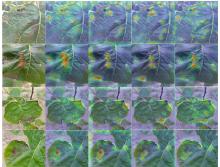
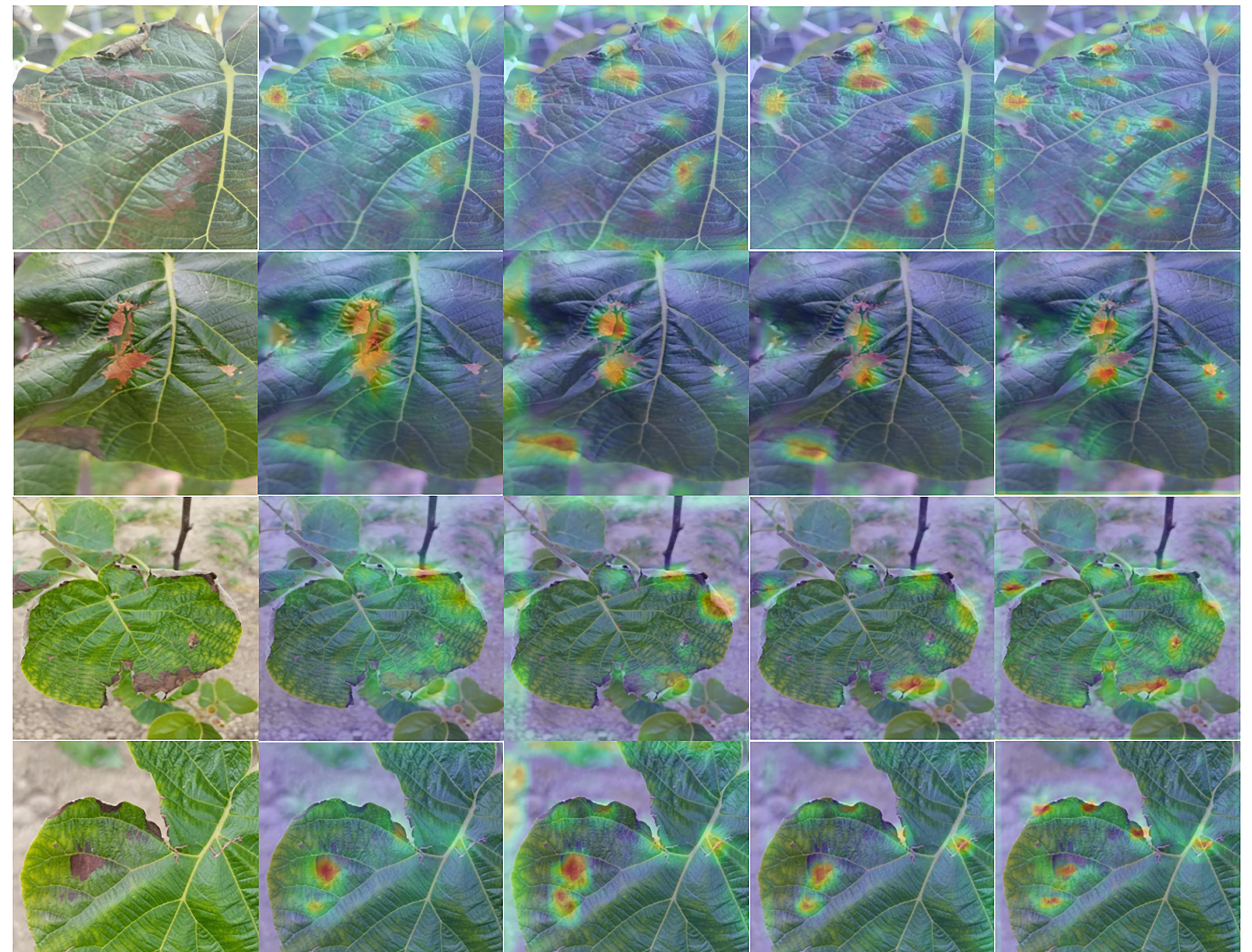
Fig. 6
Model feature response heatmaps for multi-disease detection of kiwifruit leaves
| [1] |
|
| [2] |
乔世成, 赵晨雨, 李成镛, 等. 基于改进YOLOv10n的轻量化复杂背景葡萄叶片病害检测方法[J]. 沈阳农业大学学报, 2025, 56(6): 45-54.
|
|
|
|
| [3] |
朱锐, 张家瑜, 黄继超, 等. 基于卷积神经网络的农作物叶片病害检测研究进展[J]. 农业工程学报, 2025, 41(17): 15-28.
|
|
|
|
| [4] |
何文博, 张君豪, 刘玥, 等. 基于RS_FUJII动态散斑算法的苹果损伤检测方法研究[J]. 智能化农业装备学报(中英文), 2026, 7(2): 169-181.
|
|
|
|
| [5] |
麻剑钧, 刘晓慈, 金龙新, 等. 基于机器视觉的农作物病害识别研究进展[J]. 湖南农业科学, 2023(9): 97-100.
|
|
|
|
| [6] |
|
| [7] |
|
| [8] |
|
| [9] |
|
| [10] |
|
| [11] |
|
| [12] |
|
| [13] |
叶赵兵, 薛娟, 曾强, 等. 基于改进YOLOv5s的苹果叶片病害检测研究[J]. 计算机与网络, 2026, 52(2): 169-177.
|
|
|
|
| [14] |
党珊珊, 乔世成, 白明宇, 等. 基于DCC-YOLOv10n的玉米叶片病害小目标检测方法[J]. 智慧农业(中英文), 2025, 7(5): 124-135.
|
|
|
|
| [15] |
罗友璐, 潘勇浩, 夏顺兴, 等. 基于改进YOLOv8的苹果叶病害轻量化检测算法[J]. 智慧农业(中英文), 2024, 6(5): 128-138.
|
|
|
|
| [16] |
秦皓翔, 赵霞, 王敏, 等. 基于改进YOLO11的番茄叶片病害检测方法[J]. 华中农业大学学报, 2026, 45(3): 115-126.
|
|
|
|
| [17] |
姚晓通, 曲绍业. 基于改进YOLOv12s的辣椒叶片病虫害轻量化检测方法[J]. 智慧农业(中英文), 2026, 8(1): 1-14.
|
|
|
|
| [18] |
张净, 华玟, 刘晓梅, 等. 基于改进YOLO v8n的轻量化番茄叶片病害检测方法[J]. 农业机械学报, 2025, 56(11): 538-549.
|
|
|
|
| [19] |
|
| [20] |
|
| [21] |
郑争兵, 张乂邦, 孙璐超, 等. 基于改进YOLOv5的柑橘叶片病害小目标检测方法[J]. 农业工程学报, 2025, 41(21): 203-211.
|
|
|
|
| [22] |
甄元元, 刘平, 金雨纯, 等. 基于改进YOLOv8的葡萄叶片病害检测与识别[J]. 农业工程学报, 2025, 41(14): 148-154.
|
|
|
|
| [23] |
|
| [24] |
|
| [25] |
石展鲲, 杨风, 韩建宁, 等. 基于Faster-RCNN的自然环境下苹果识别[J]. 计算机与现代化, 2023(2): 62-65.
|
|
|
|
| [26] |
|
| [27] |
|
| [1] | ZHANG Kun, ZHANG Chunyu, CHEN Longmei, LIU Qicheng, LI Yongkang, LIU Kai, ZENG Wenhao. Appearance Defect Detection Algorithm of Euryale Ferox Based on Improved YOLOv11n [J]. Smart Agriculture, 2026, 8(5): 194-206. |
| [2] | ZHOU Lin, WANG Yan, LI Haixin, ZHENG Jishu, LI Mai, CAO Zhonghua, WU Zhaojuan. Rapeseed Silique Detection and Counting Based on YOLOv11n-A3 [J]. Smart Agriculture, 2026, 8(5): 182-193. |
| [3] | SONG Xiangshuo, WANG Jun. FLPNet: A Lightweight Real-Time Apple Leaf Disease Detection Model Based on Frequency-Spatial Dual-Domain Decoupling [J]. Smart Agriculture, 2026, 8(5): 219-237. |
| [4] | SHEN Xueli, ZHANG Yue, JIN Haibo, ZHANG Xuxu. Multi-Scale Heterogeneous Feature Synergistic Model for Cotton Leaf Disease Detection [J]. Smart Agriculture, 2026, 8(4): 204-216. |
| [5] | SHI Qimeng, WANG Jun, XU Xiaofeng, ZHANG Weiyi. Cotton Maturity Detection Algorithm Based on Improved RT-DETR [J]. Smart Agriculture, 2026, 8(4): 100-113. |
| [6] | LI Chuanmeng, YANG Jie, ZHANG Xiaoyu. Lightweight Detection Method for Grading Fresh Cut Dianthus caryophyllus L. Based on Flor-YOLO [J]. Smart Agriculture, 2026, 8(4): 85-99. |
| [7] | LI Xiaxi, JI Ronghua, CHANG Hongrui, ZHANG Suoxiang. DC-YOLO: A Behavior Detection Model for Hu Sheep Addressing Occlusion and Illumination Variations [J]. Smart Agriculture, 2026, 8(4): 127-147. |
| [8] | LIANG Wanjie, LIU Xiaojun, WU Qian, SUN Chuanliang, LEI Tianjie, XU Deze, ZHENG Xingfei, ZHU Guanglong, TANG Quan. Recognition of Wheat Waterlogging Stress and Regulation Effect Based on UAV Multispectral Images and VGG21 Model [J]. Smart Agriculture, 2026, 8(4): 60-69. |
| [9] | WANG Yi, XIONG Baowei, WANG Gang, SHAO Guomin, ZHANG Liyuan, LI Guang. County-Level Winter Wheat Yield Prediction Based on Phenological-Stage Progressive Multi-Source Data Fusion [J]. Smart Agriculture, 2026, 8(4): 70-84. |
| [10] | WANG Haiyan, LI Zechen, CAO Jusong, LI Xuan, LI Jiawei, LI Guoliang, XU Xuewen. Research Progress on Intelligent Measurement Technologies for Livestock Body-Size Phenotypes Based on 3D Point Clouds [J]. Smart Agriculture, 2026, 8(4): 17-34. |
| [11] | YANG Yu, ZHANG Yibo, MAO Bo, ZHANG Lei. LiteFocus-Net: A Three-Point Lightweight Enhancement Framework for Small-Target Detection of Corn Leaf Diseases and Pests [J]. Smart Agriculture, 2026, 8(4): 217-237. |
| [12] | SU Yujie, LI Yue, WEI Linjing, WU Bing, GUO Linhai, YAN Bin, ZHOU Hui, GAO Yuhong, KANG Lianghe, LIU Huan, SU Shunchang. Lodging Region Detection Method in Flax Based on Lightweight Improved YOLOv11n-seg Model [J]. Smart Agriculture, 2026, 8(2): 35-47. |
| [13] | WU Tingting, GUO Junrui, TAO Qiujie, CHEN Shihua, GUO Shanli. YOLOv8n-SSND: An Improved Lightweight Model for Aerial Chenopodium Chenopodium quinoa Willd. Spike Target [J]. Smart Agriculture, 2026, 8(2): 59-71. |
| [14] | ZHAO Licheng, LU Xinyu, WU Qian, REN Ni, ZHOU Lingli, CHENG Yawen, HU Anqi, QI Chao. An Improved YOLOv10-Based Tomato Ripeness Detection Algorithm with LAMP Channel Pruning [J]. Smart Agriculture, 2026, 8(2): 133-146. |
| [15] | ZHANG Wenbo, JIANG Yijue, SONG Wei, HE Qi, ZHANG Wenbo. CAGE-YOLO: A Dense Small Object Detection Model for Aquaculture Net Cages Based on Remote Sensing Images [J]. Smart Agriculture, 2026, 8(2): 98-117. |
| Viewed | ||||||
|
Full text |
|
|||||
|
Abstract |
|
|||||