Smart Agriculture ›› 2026, Vol. 8 ›› Issue (5): 251-262.doi: 10.12133/j.smartag.SA202606016
• Information Processing and Decision Making • Previous Articles
WANG Mei1, ZHOU Yuanqing1, WANG Wenhui1, LIU Ping1( ), ZHU Meilin2
Received:2026-06-09
Online:2026-09-30
Foundation items:National Natural Science Foundation of China(61861037); Natural Science Foundation of Ningxia Hui Autonomous Region(2026AAC030133)
About author:WANG Mei, E-mail: 1753646656@qq.com
corresponding author:
CLC Number:
WANG Mei, ZHOU Yuanqing, WANG Wenhui, LIU Ping, ZHU Meilin. Lightweight Pest Detection for Goji Berry Fields via Collaborative Semantic Enhancement of YOLOv11[J]. Smart Agriculture, 2026, 8(5): 251-262.
Add to citation manager EndNote|Ris|BibTeX
URL: https://www.smartag.net.cn/EN/10.12133/j.smartag.SA202606016
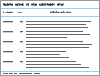
Table 1
Image augmentation operations and parameter settings for the goji berry pest dataset
| 数据增强操作 | 具体参数 |
|---|---|
| 随机水平/垂直翻转 | 水平、垂直方向独立随机翻转,无角度限制 |
| 随机缩放裁剪 | 缩放范围0%~20%,全程保持原图宽高比 |
| 随机旋转 | 旋转角度范围±15°,超出边界区域采用零值填充 |
| 随机仿射剪切 | 水平剪切角度±10°,垂直剪切角度±10° |
| 随机灰度化 | 15%的概率将RGB图像转换为单通道灰度图像 |
| 饱和度扰动 | 饱和度调整因子范围±25% |
| 亮度扰动 | 亮度调整因子范围±15% |
| 曝光扰动 | 曝光量调整因子范围±10% |
| 高斯模糊 | 模糊核尺寸最大值2.5 px,标准差随核尺寸自适应调整 |
| 高斯噪点注入 | 噪点像素占比最大值1.6%,采用均值为0的正态分布 |
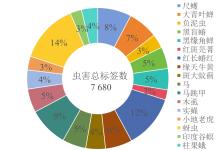
Fig. 1
Distribution of label counts for each pest category
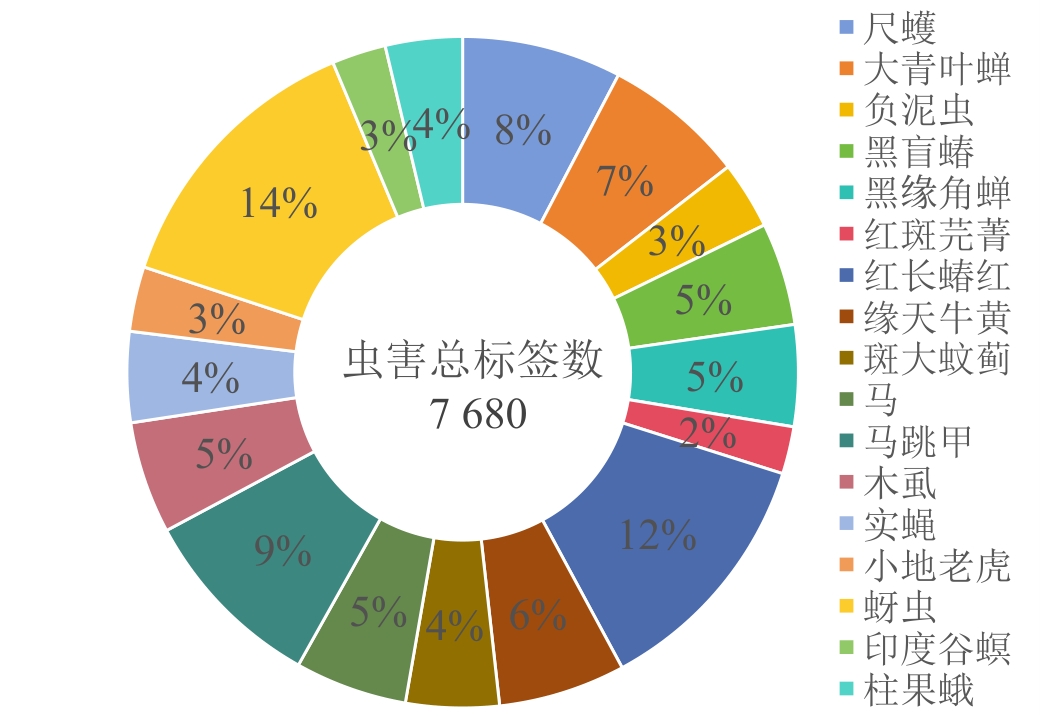

Fig. 2
Real field images of wolfberry pests in local orchards
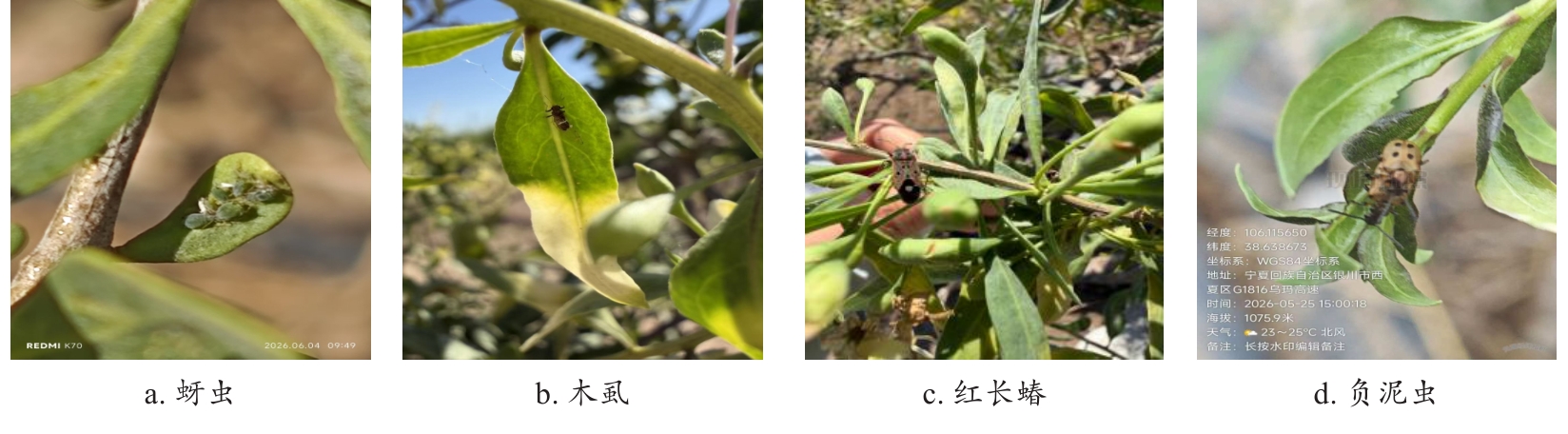
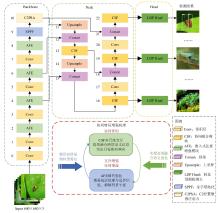
Fig. 3
Network structure of CSFE-YOLOv11
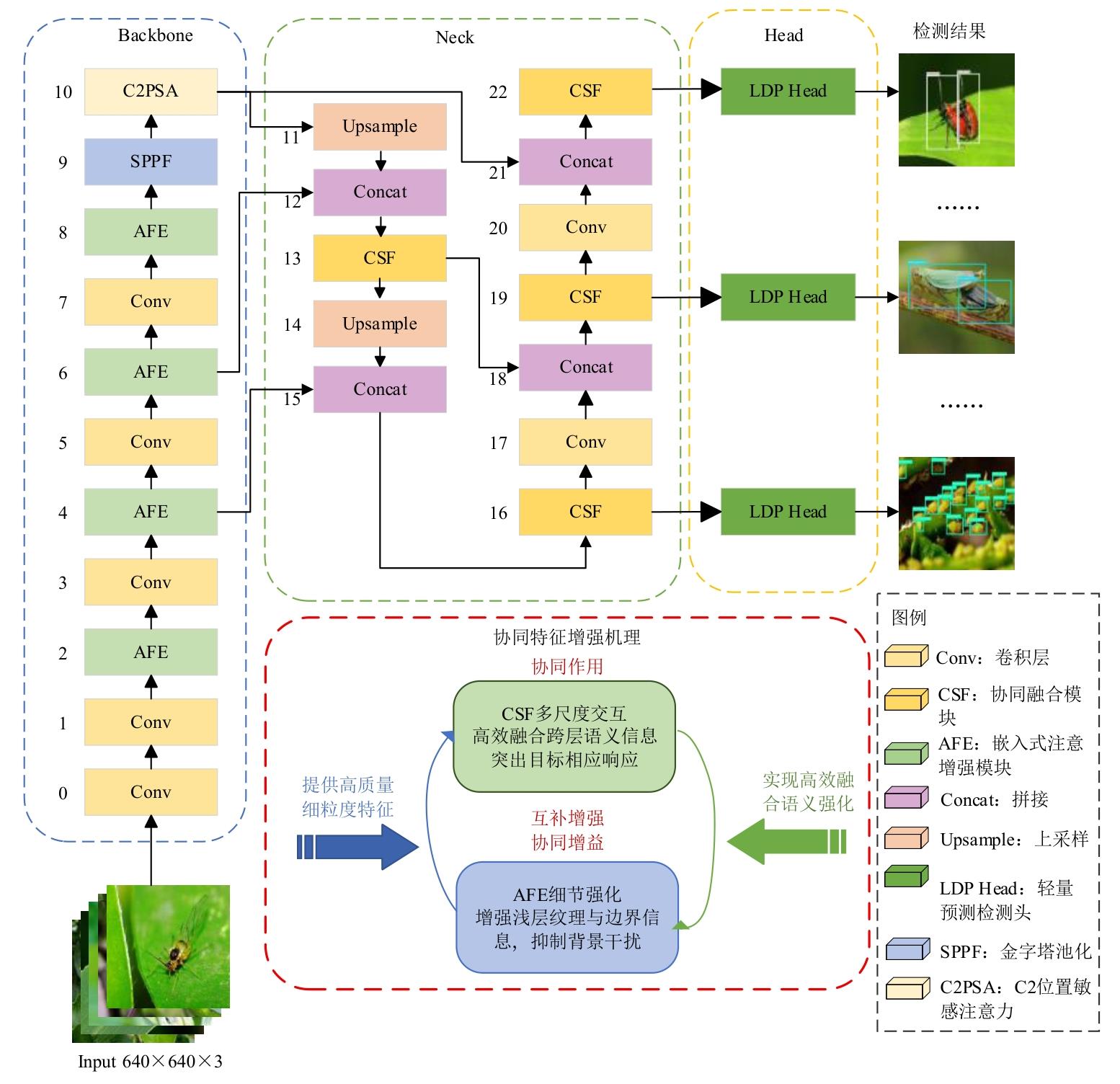
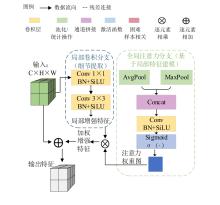
Fig. 4
Attention-embedded feature enhancement module structure
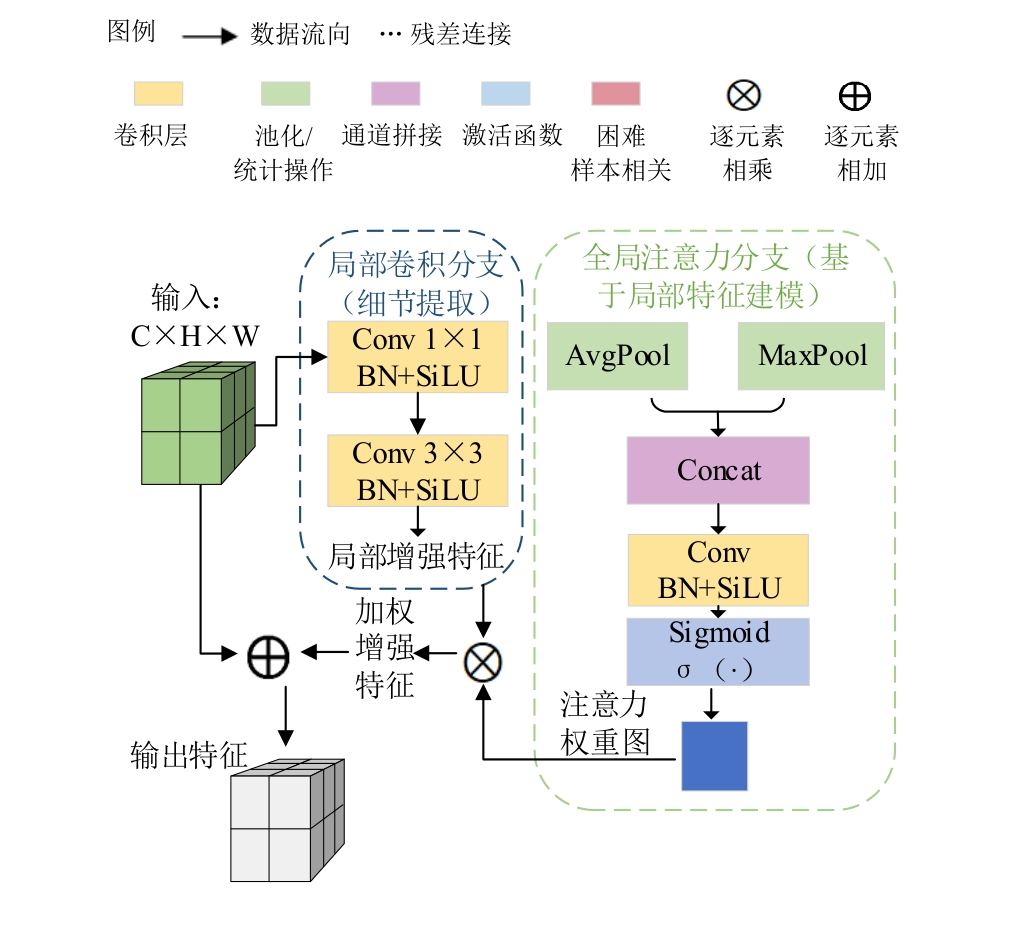
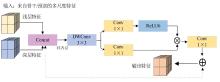
Fig. 5
CSF module structure
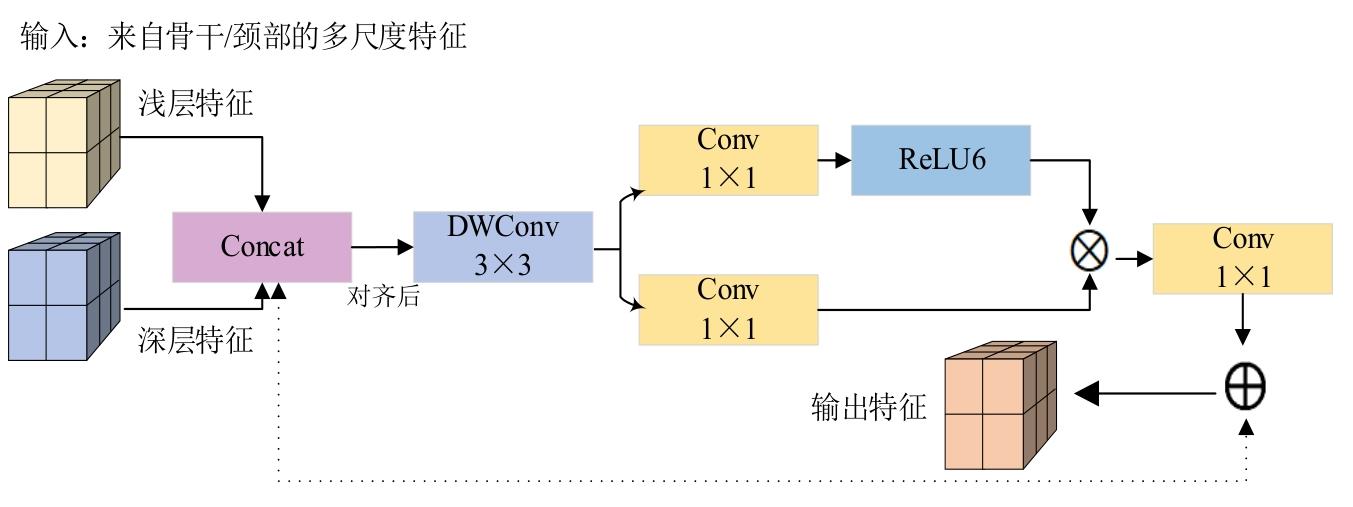
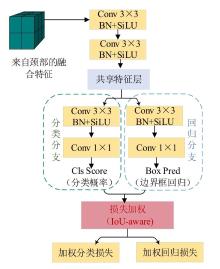
Fig. 6
Lightweight Decoupled Prediction (LDP) Head
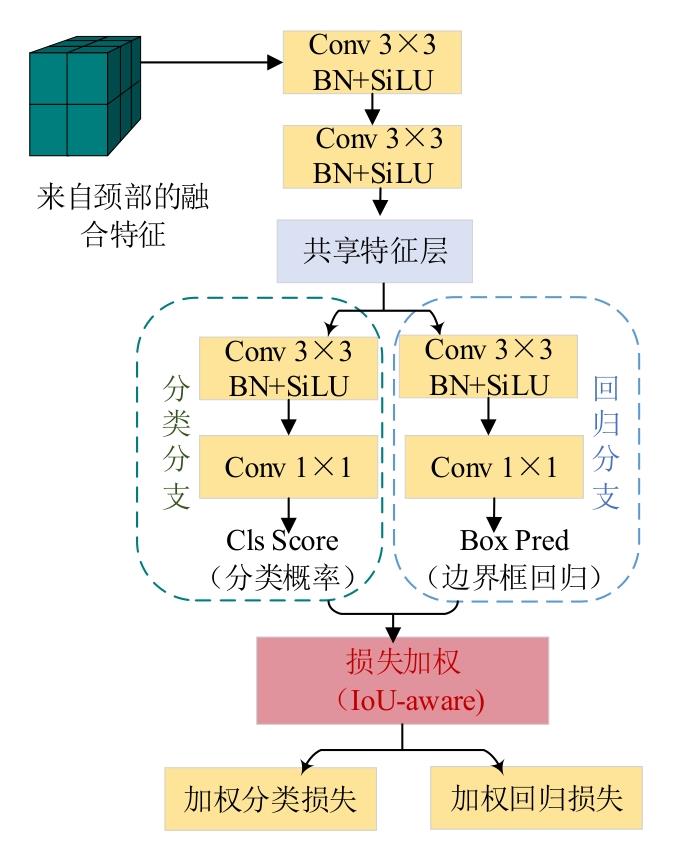
Table 2
Performance comparison of different models for goji berry pest recognition
| 模型 | P/% | R/% | mAP50/% | mAP50∶95/% | 参数量/M | 计算量/GFLOPs | 帧率/(帧/s) |
|---|---|---|---|---|---|---|---|
| RT-DETR-L | 79.471 | 58.753 | 59.461 | 35.843 | 32.84 | 108.1 | 18.1 |
| YOLOv5n | 81.684 | 61.869 | 67.073 | 40.002 | 2.51 | 7.2 | 177.2 |
| YOLOv8n | 82.227 | 66.428 | 70.008 | 43.224 | 3.01 | 8.2 | 188.1 |
| YOLOv10n | 80.784 | 67.055 | 68.399 | 43.511 | 2.71 | 8.4 | 154.7 |
| YOLOv12n | 80.590 | 69.860 | 73.010 | 47.300 | 2.51 | 6.5 | 163.7 |
| YOLOv11 | 83.598 | 65.987 | 70.816 | 45.890 | 2.59 | 6.3 | 147.3 |
| YOLOv11-EMA | 82.125 | 66.714 | 70.395 | 45.769 | 2.69 | 6.4 | 138.5 |
| YOLOv11-CBAM | 81.362 | 65.021 | 69.450 | 45.095 | 2.74 | 6.4 | 130.7 |
| YOLOv11-GhostHGNetV2 | 80.220 | 57.003 | 61.269 | 37.044 | 2.13 | 7.8 | 164.8 |
| YOLOv11-mobilenetV4 | 81.929 | 64.685 | 65.273 | 42.895 | 1.96 | 8.7 | 172.3 |
| CSFE-YOLOv11 | 85.274 | 71.486 | 75.290 | 48.254 | 2.28 | 5.2 | 89.1 |
Table 3
Ablation experiment results of CSFE-YOLOv11
| 模型 | P/% | R/% | mAP50/% | mAP50∶95 /% | 参数量/M | 计算量/GFLOPs | 帧率/(帧/s) |
|---|---|---|---|---|---|---|---|
| 基线模型 | 83.598 | 65.987 | 70.816 | 45.890 | 2.59 | 6.3 | 147.3 |
| +AFE | 87.897 | 67.347 | 72.365 | 46.393 | 2.59 | 6.4 | 87.6 |
| +CSF | 83.264 | 69.543 | 73.158 | 46.027 | 2.54 | 6.4 | 137.4 |
| +LDP Head | 81.406 | 68.343 | 72.913 | 45.500 | 2.32 | 5.1 | 150.9 |
| +AFE+CSF | 88.544 | 69.270 | 73.935 | 47.589 | 2.54 | 6.4 | 83.2 |
| +AFE+LDP Head | 82.874 | 71.550 | 73.085 | 45.799 | 2.32 | 5.2 | 89.4 |
| +CSF+LDP Head | 86.199 | 66.811 | 72.010 | 47.425 | 2.28 | 5.2 | 147.4 |
| CSFE-YOLOv11 | 85.274 | 71.486 | 75.290 | 48.254 | 2.28 | 5.2 | 89.1 |
Table 4
Ablation experiments on module improvements for small, medium, and large object detection based on COCO standards
| 模型 | AP0.5∶0.95 /% | AP0.5/% | AP0.75/% | AP_small/% | AP_medium/% | AP_large/% |
|---|---|---|---|---|---|---|
| 基线模型 | 44.8 | 68.6 | 46.1 | 1.6 | 18.2 | 50.4 |
| +AFE | 44.1 | 69.3 | 46.6 | 1.7 | 27.0 | 51.5 |
| +CSF | 44.3 | 69.5 | 47.8 | 1.7 | 31.6 | 52.3 |
| +LDP Head | 44.2 | 69.6 | 46.7 | 3.4 | 29.2 | 51.7 |
| +AFE+CSF | 45.4 | 70.8 | 48.5 | 2.1 | 32.5 | 51.0 |
| +AFE+LDP Head | 43.7 | 70.5 | 46.8 | 4.2 | 23.9 | 50.4 |
| +CSF+LDP Head | 45.1 | 70.8 | 46.1 | 4.3 | 32.5 | 51.0 |
| CSFE-YOLOv11 | 45.6 | 72.6 | 50.3 | 5.4 | 32.5 | 52.8 |
Fig. 7
Visual detection results of typical goji berry pest samples
| a. Image | b. YOLOv11 | c. +AFE | d. +CSF | e. +LDP-Head | f. +AFE+CSF | g. +AFE+LDP-Head | h. +CSF+LDP-Head | i. CSFE+YOLOv11 |
Fig. 8
Grad-CAM heat maps for each category of goji berry pests
| 原始 图像 | | | | | | | | | | |||||||
| 改进前 | | | | | | | | | | |||||||
| 改进后 | | | | | | | | | | |||||||
| a. 尺蠖 | b. 大青叶蝉 | c. 负泥虫 | d. 黑盲蝽 | e. 黑缘角蝉 | f. 红斑芫菁 | g. 红长蝽 | h. 红缘天牛 | i. 黄斑大蚊 | ||||||||
| 原始 图像 | | | | | | | | | ||||||||
| 改进前 | | | | | | | | | ||||||||
| 改进后 | | | | | | | | | ||||||||
| j. 蓟马 | k. 毛跳甲 | l. 木虱 | m. 实蝇 | n. 小地老虎 | o. 蚜虫 | p. 印度谷螟 | q. 柱果蛾 | |||||||||
Table 5
Performance of generalization experiments on the IP102 dataset for goji berry pest research
| 模型 | P/% | R/% | mAP50/% | mAP50∶95/% | 参数量/M | 计算量/GFLOPs | 帧率/(帧/s) |
|---|---|---|---|---|---|---|---|
| YOLOv11 | 64.58±0.38 | 61.37±0.39 | 61.07±0.68 | 39.54±0.85 | 2.65 | 6.6 | 138.5 |
| +AFE | 62.69±0.40 | 62.27±0.75 | 61.78±0.15 | 39.84±0.15 | 2.65 | 6.7 | 85.9 |
| +AFE+CSF | 60.56±0.61 | 63.64±0.25 | 61.99±0.75 | 39.93±0.12 | 2.60 | 6.7 | 81.1 |
| CSFE-YOLOv11 | 63.82±0.38 | 63.98±0.10 | 63.17±0.29 | 40.77±0.69 | 2.31 | 5.3 | 83.3 |
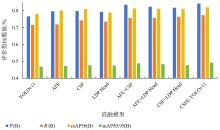
Fig. 9
Comparison of detection accuracy metrics
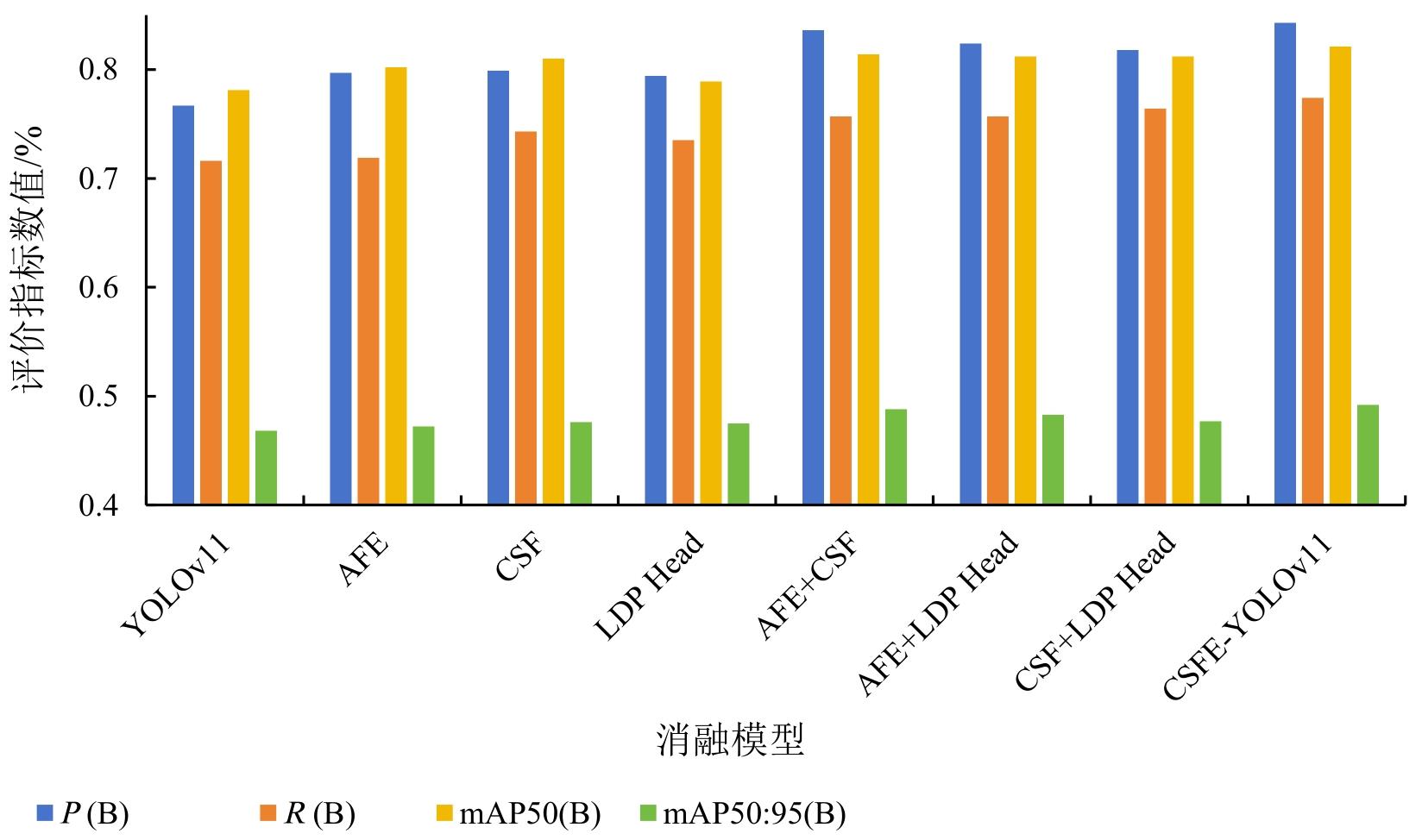
Table 6
Comparison of detection accuracy for each category between the improved model and the original model
| Class | Images | Instances | Box(P) | R | mAP50 | mAP50:95 |
|---|---|---|---|---|---|---|
| all | 210 | 302 | 0.843(0.767) | 0.774(0.716) | 0.821(0.781) | 0.492(0.468) |
| 负泥虫 | 55 | 57 | 0.954(0.955) | 0.947(0.895) | 0.977(0.954) | 0.789(0.739) |
| 红长蝽 | 56 | 98 | 0.814(0.787) | 0.735(0.745) | 0.861(0.852) | 0.436(0.391) |
| 木虱 | 57 | 83 | 0.937(0.914) | 0.790(0.721) | 0.877(0.847) | 0.516(0.496) |
| 蚜虫 | 42 | 64 | 0.668(0.410) | 0.625(0.502) | 0.526(0.471) | 0.225(0.247) |
| [1] |
黄飞逸, 戴前莉, 卢敏, 等. 重庆市叶用枸杞主要虫害发生特征及绿色防控策略[J]. 植物保护学报, 2026, 53(1): 253-262.
|
|
|
|
| [2] |
韩会珍, 刘立波. 基于注意力和视觉语义推理的枸杞虫害检索[J]. 计算机科学, 2022, 49(S2): 419-424.
|
|
|
|
| [3] |
|
| [4] |
庾骏, 李祖贺, 郝林娜, 等. 基于图像和文本哈希特征学习的跨模态枸杞害虫检索[J]. 农业工程学报, 2025, 41(16): 202-210.
|
|
|
|
| [5] |
|
| [6] |
宋文韬, 姜茹月, 舒欣. 基于零样本学习的枸杞虫害识别[J]. 江苏农业学报, 2024, 40(2): 320-330.
|
|
|
|
| [7] |
孙露露, 刘建平, 周国民, 等. 基于空间特征融合ViT的枸杞虫害细粒度分类方法[J]. 农业大数据学报, 2024, 6(4): 522-531.
|
|
|
|
| [8] |
|
| [9] |
张志从, 崔东, 郭金锋, 等. 基于迁移学习ResNet-18的水稻病虫害识别研究[J]. 中国农学通报, 2025, 41(2): 109-116.
|
|
|
|
| [10] |
杜丁健, 高遵海, 陈倬. 基于改进YOLOv5的枸杞虫害检测[J]. 浙江大学学报(工学版), 2024, 58(10): 1992-2000.
|
|
|
|
| [11] |
|
| [12] |
|
| [13] |
|
| [14] |
|
| [15] |
赵峻, 聂志刚, 李广, 等. 基于无人机低空近景图像的玉米螟虫害检测方法[J]. 智慧农业(中英文), 2025, 7(6): 111-123.
|
|
|
|
| [16] |
|
| [17] |
刘慧, 王防修, 王意, 等. 轻量级改进RT-DETR的葡萄叶片病害检测算法[J]. 浙江大学学报(工学版), 2026, 60(3): 604-613.
|
|
|
|
| [18] |
王风云, 王轩宇, 安磊, 等. 基于改进RT-DETR的菌棒栽培香菇检测方法[J]. 智慧农业(中英文), 2025, 7(5): 67-77.
|
|
|
|
| [19] |
陈磊, 刘立波, 王晓丽. 2020年宁夏枸杞虫害图文跨模态检索数据集[J]. 中国科学数据, 2022, 7(3): 149-156.
|
|
|
|
| [20] |
|
| [21] |
|
| [22] |
甘吉元, 甘国珺. 农作物主要病虫害发生危害与综合防治技术[M]. 兰州: 甘肃科学技术出版社, 2021: 118-125.
|
| [23] |
吕佩珂, 高振江, 苏慧兰, 等. 猕猴桃 枸杞 樱桃病虫害诊断与防治原色图鉴[M]. 2版. 北京: 化学工业出版社, 2018: 82-117.
|
| [24] |
刘赛, 徐常青, 陈君. 枸杞病虫害防治技术[M]. 北京: 中国农业科学技术出版社, 2018.
|
| [25] |
|
| [26] |
|
| [27] |
|
| [28] |
|
| [29] |
|
| [1] | ZHANG Kun, ZHANG Chunyu, CHEN Longmei, LIU Qicheng, LI Yongkang, LIU Kai, ZENG Wenhao. Appearance Defect Detection Algorithm of Euryale Ferox Based on Improved YOLOv11n [J]. Smart Agriculture, 2026, 8(5): 194-206. |
| [2] | ZHOU Lin, WANG Yan, LI Haixin, ZHENG Jishu, LI Mai, CAO Zhonghua, WU Zhaojuan. Rapeseed Silique Detection and Counting Based on YOLOv11n-A3 [J]. Smart Agriculture, 2026, 8(5): 182-193. |
| [3] | SONG Xiangshuo, WANG Jun. FLPNet: A Lightweight Real-Time Apple Leaf Disease Detection Model Based on Frequency-Spatial Dual-Domain Decoupling [J]. Smart Agriculture, 2026, 8(5): 219-237. |
| [4] | HE Yating, LUO Youlu, PAN Yonghao, ZHAO Taotao, MOU Guoyu, WU Pengju. RT-DETR-DPF: A Lightweight Kiwifruit Leaf Disease Detection Algorithm [J]. Smart Agriculture, 2026, 8(5): 238-250. |
| [5] | SHEN Xueli, ZHANG Yue, JIN Haibo, ZHANG Xuxu. Multi-Scale Heterogeneous Feature Synergistic Model for Cotton Leaf Disease Detection [J]. Smart Agriculture, 2026, 8(4): 204-216. |
| [6] | SHI Qimeng, WANG Jun, XU Xiaofeng, ZHANG Weiyi. Cotton Maturity Detection Algorithm Based on Improved RT-DETR [J]. Smart Agriculture, 2026, 8(4): 100-113. |
| [7] | LI Chuanmeng, YANG Jie, ZHANG Xiaoyu. Lightweight Detection Method for Grading Fresh Cut Dianthus caryophyllus L. Based on Flor-YOLO [J]. Smart Agriculture, 2026, 8(4): 85-99. |
| [8] | YANG Yu, ZHANG Yibo, MAO Bo, ZHANG Lei. LiteFocus-Net: A Three-Point Lightweight Enhancement Framework for Small-Target Detection of Corn Leaf Diseases and Pests [J]. Smart Agriculture, 2026, 8(4): 217-237. |
| [9] | SU Yujie, LI Yue, WEI Linjing, WU Bing, GUO Linhai, YAN Bin, ZHOU Hui, GAO Yuhong, KANG Lianghe, LIU Huan, SU Shunchang. Lodging Region Detection Method in Flax Based on Lightweight Improved YOLOv11n-seg Model [J]. Smart Agriculture, 2026, 8(2): 35-47. |
| [10] | WU Tingting, GUO Junrui, TAO Qiujie, CHEN Shihua, GUO Shanli. YOLOv8n-SSND: An Improved Lightweight Model for Aerial Chenopodium Chenopodium quinoa Willd. Spike Target [J]. Smart Agriculture, 2026, 8(2): 59-71. |
| [11] | ZHANG Wenbo, JIANG Yijue, SONG Wei, HE Qi, ZHANG Wenbo. CAGE-YOLO: A Dense Small Object Detection Model for Aquaculture Net Cages Based on Remote Sensing Images [J]. Smart Agriculture, 2026, 8(2): 98-117. |
| [12] | LIU Haoran, WANG Yu, ZHAO Xueguan, WU Huarui, FU Hao, PANG Shujie, ZHAI Changyuan. CD-YOLO: A Method for Detecting Carrot Seedlings in Field Based on Improved YOLOv11s [J]. Smart Agriculture, 2026, 8(2): 158-174. |
| [13] | LI Aoqiang, DAI Hangyu, GUO Ya. Underwater Insitu Weight Estimation Method for Chinese Mitten Crab Based on Binocular Vision and Improved YOLOv11-pose [J]. Smart Agriculture, 2026, 8(1): 192-202. |
| [14] | YAO Xiaotong, QU Shaoye. Lightweight Detection Method for Pepper Leaf Diseases and Pests Based on Improved YOLOv12s [J]. Smart Agriculture, 2026, 8(1): 1-14. |
| [15] | XIAO Ruihong, TAN Lixin, WANG Rifeng, SONG Min, HU Chengxi. Multi-Scale Tea Leaf Disease Detection Method Based on Improved YOLOv11n [J]. Smart Agriculture, 2026, 8(1): 62-71. |
| Viewed | ||||||
|
Full text |
|
|||||
|
Abstract |
|
|||||