Smart Agriculture ›› 2026, Vol. 8 ›› Issue (4): 17-34.doi: 10.12133/j.smartag.SA202605012
王海燕1,2, 李泽晨1, 曹钜松1, 黎煊2, 李嘉位1, 李国亮1, 徐学文3( )
)
收稿日期:2026-05-10
出版日期:2026-07-30
基金项目:作者简介:王海燕,博士,副教授,研究方向为动物表型组和智能养殖研究。E-mail:wanghaiyan@mail.hzau.edu.cn
通信作者:
WANG Haiyan1,2, LI Zechen1, CAO Jusong1, LI Xuan2, LI Jiawei1, LI Guoliang1, XU Xuewen3()
Received:2026-05-10
Online:2026-07-30
Foundation items:National Key Research and Development Program of China(2023YFD1300401); Fundamental Research Funds for the Central Universities(2662025XXPY007); Open Project Program of the State Key Laboratory of Multimodal Artificial Intelligence Systems(MAIS2025062)
About author:WANG Haiyan, E-mail: wanghaiyan@mail.hzau.edu.cn
Corresponding author:摘要:
【目的/意义】 家畜体尺参数是评价生长发育、体况评分、生产性能和遗传改良的重要表型指标。传统人工体尺测量方法效率低、劳动强度大且易引起家畜应激。二维图像方法虽可实现非接触测量,但缺少深度信息,难以准确测量胸围、腹围等围度体尺。三维点云能够表征家畜体表空间结构,为体尺表型测定提供新的非接触式技术途径。本文系统梳理基于三维点云的家畜体尺测量研究进展,为家畜三维表型智能测量与智慧养殖应用提供参考。 【进展】 三维点云技术能够在保持非接触测量优势的基础上重建家畜三维体型结构,不仅可用于体长、体宽、体高等线性体尺测量,还可支持胸围、腹围、管围等围度体尺测量,以及臀部形态、后躯丰满度和肢蹄结构等局部形态特征提取。本文以猪、牛、羊为主要研究对象,围绕点云采集、预处理、补全、分割、关键点定位和体尺计算等流程,归纳了家畜点云采集传感器与采集方案,梳理了多视角配准、滤波降噪、姿态归一化和点云补全等预处理方法,总结了直接定位关键点和基于点云分割定位关键点两类体尺测量路线。 【结论/展望】 现有研究表明,基于三维点云的家畜体尺测量在自动化、非接触、高精度体尺表型测定方面具有良好应用前景,但仍面临复杂养殖环境下点云质量不稳定、模型算法适应性与部署能力不足、多物种多姿态数据集匮乏,以及评价标准不统一等问题。未来应重点发展低成本、轻便可靠的点云采集系统,构建并开源多物种、多姿态、多场景家畜点云数据集,发展鲁棒、轻量、可迁移的点云处理与体尺测量方法,并推进其在边缘计算设备和真实养殖场景中的部署应用。同时,应进一步将体尺测量结果与体况评分、局部形态评价、生长发育监测和生产性能分析相结合,推动三维点云体尺测量由几何参数提取向三维表型智能分析拓展,实现精准、实时、高通量的家畜体尺自动测量。
中图分类号:
王海燕, 李泽晨, 曹钜松, 黎煊, 李嘉位, 李国亮, 徐学文. 基于三维点云的家畜体尺表型智能测定技术研究进展[J]. 智慧农业(中英文), 2026, 8(4): 17-34.
WANG Haiyan, LI Zechen, CAO Jusong, LI Xuan, LI Jiawei, LI Guoliang, XU Xuewen. Research Progress on Intelligent Measurement Technologies for Livestock Body-Size Phenotypes Based on 3D Point Clouds[J]. Smart Agriculture, 2026, 8(4): 17-34.
表1
家畜点云数据采集方案
| 数据采集方案 | 代表方案 | 方案特点 | 适用采集场景及对象 | 传感器类型 | 文献 |
|---|---|---|---|---|---|
| 固定式 | 定点通道式 | 采集稳定、姿态较易约束;但通道栏杆易造成遮挡 | 圈舍、通道等稳定测量场景;适用于猪、牛、羊 | 深度相机、双目相机、LiDAR | [ |
| 定点拱门式 | 适合多视角同步采集,采集效率高;但对同步、配准和实时性要求较高 | 高通量、多视角同步采集场景;适用于猪、牛 | 深度相机 | [ | |
| 移动式 | 便携手持式 | 设备灵活、搭建简单;但采集效率较低,点云重建流程较复杂 | 临时性、小规模或试验性采集场景;适用于牛 | RGB相机、深度相机 | [ |
| 设备移动式 | 采集范围大、对养殖环境干扰小;但易受光照、天气和设备移动稳定性影响 | 开放式、放牧式大范围采集场景;适用于牛 | 无人机搭载RGB相机或LiDAR | [ |
图1
家畜点云数据采集场景[2,26,29,32]
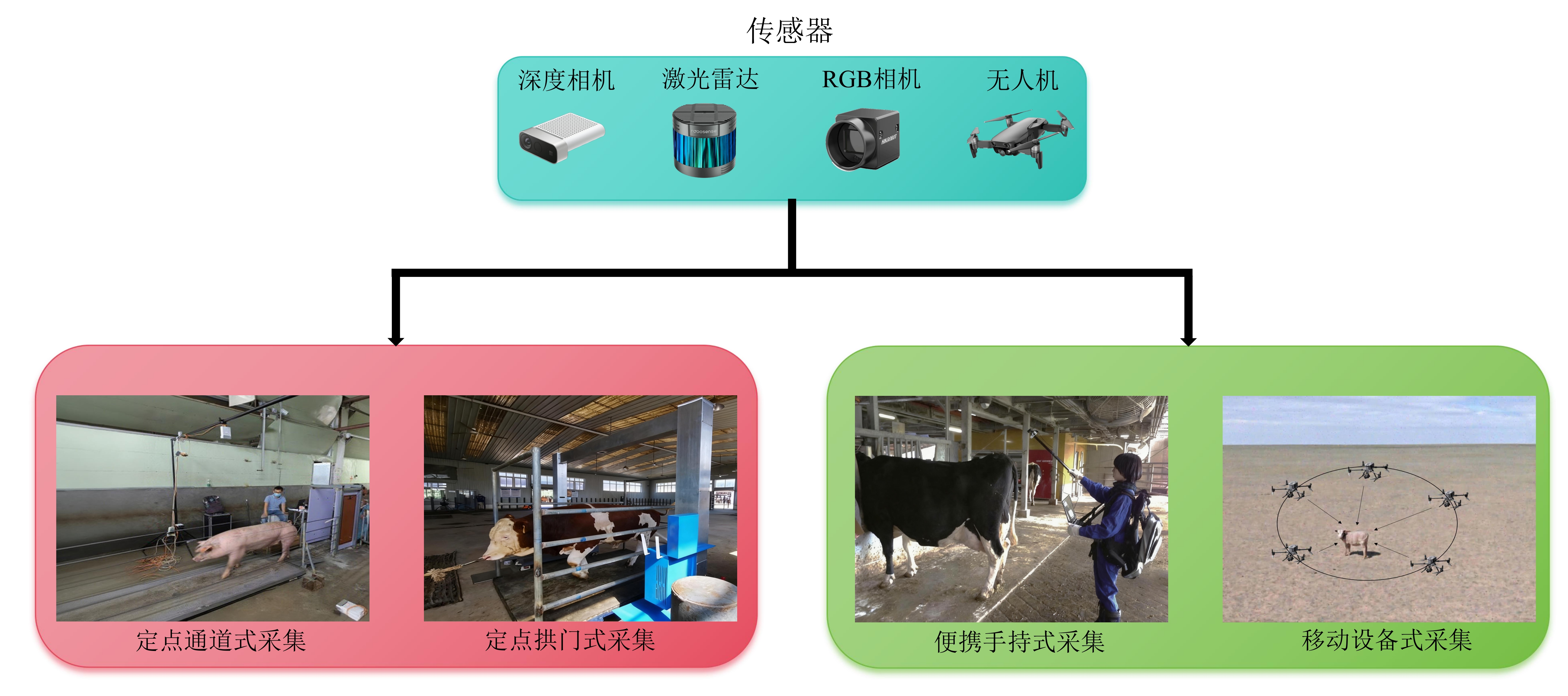
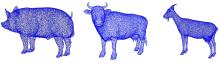
图2
猪、牛、羊三维点云 a.猪三维点云 b.牛三维点云 c.羊三维点云
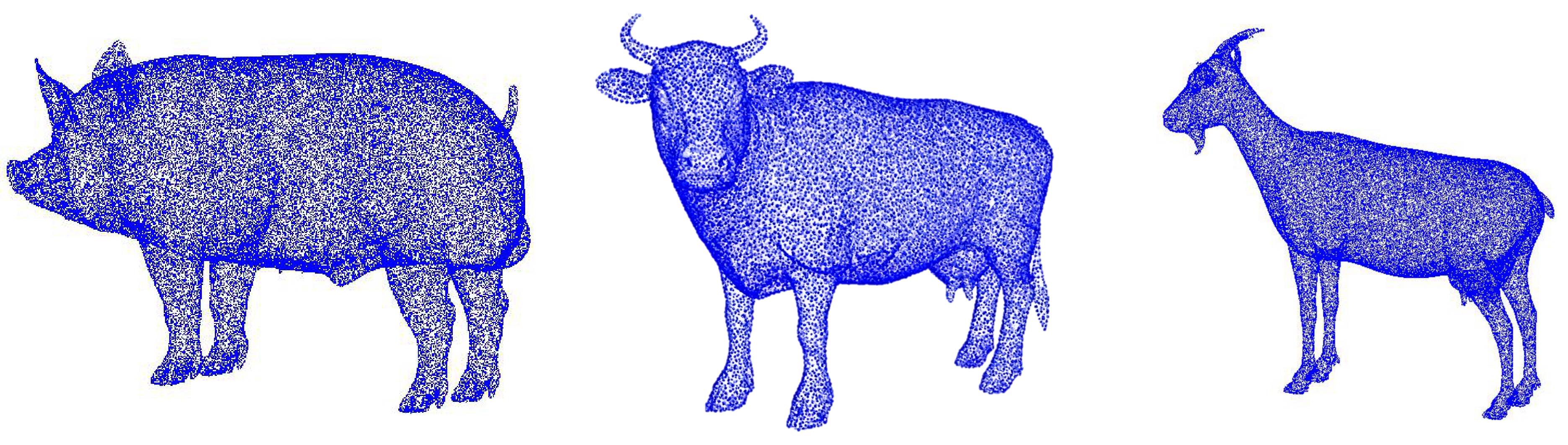
图3
猪点云预处理流程[37]
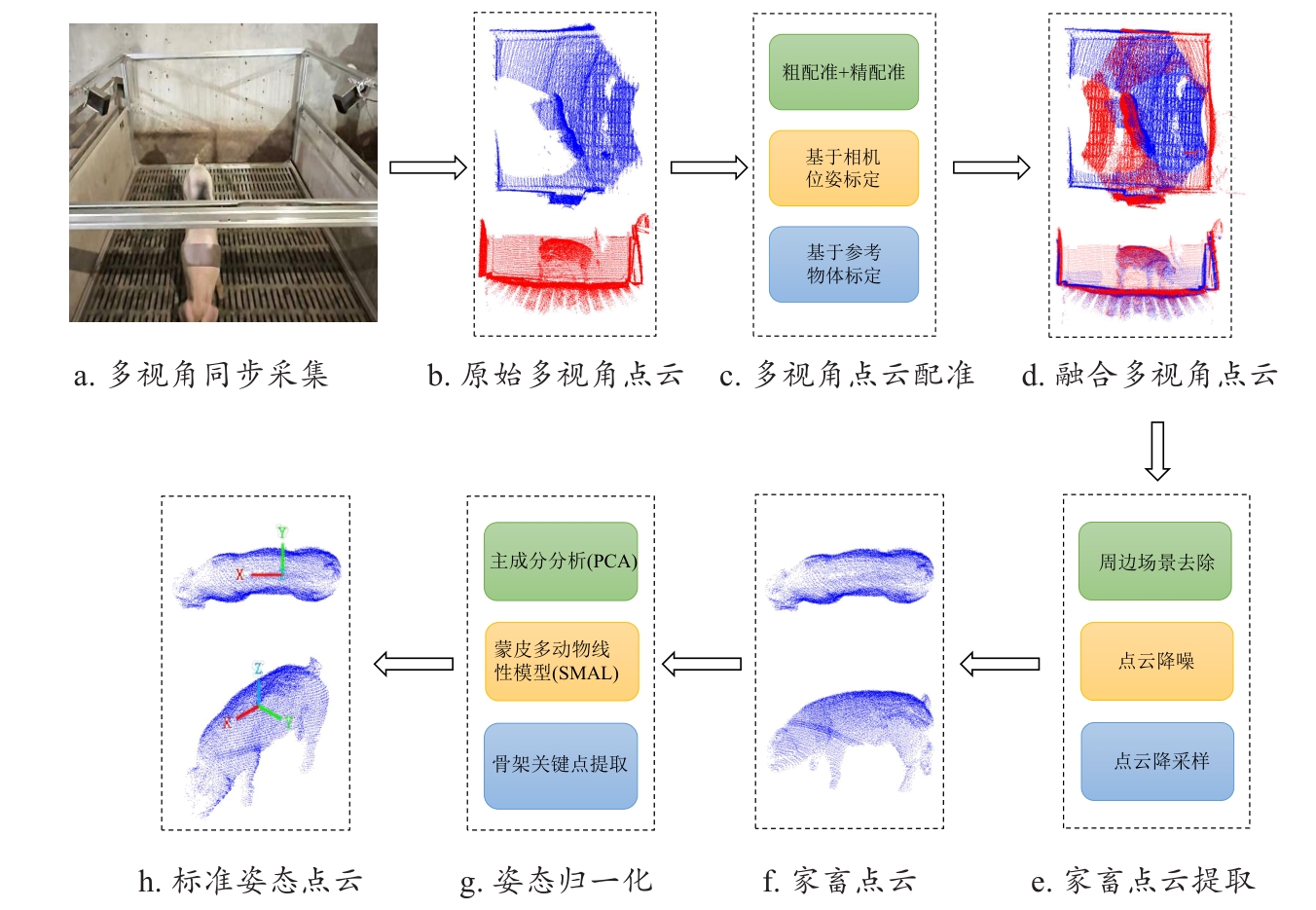
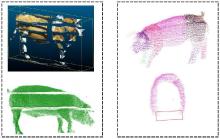
图4
残缺的家畜点云[58,59] a. 因栏杆遮挡导致缺失 b. 因相机位姿限制导致缺失
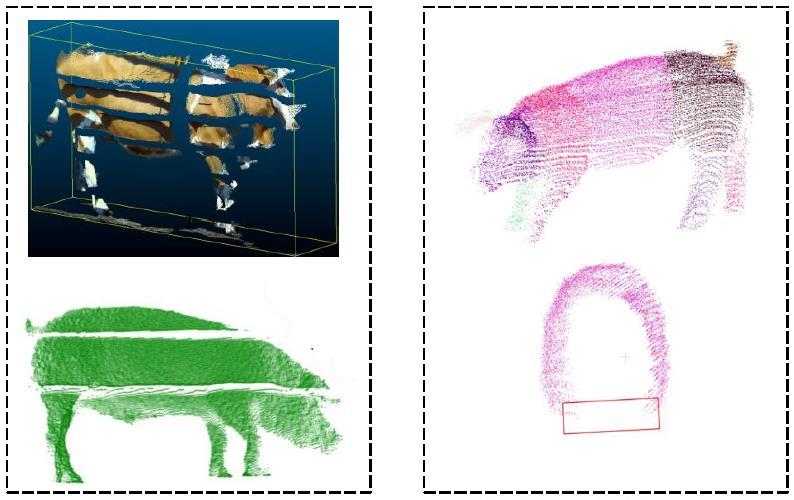
图5
猪、牛、羊点云补全方法[57, 60, 61]
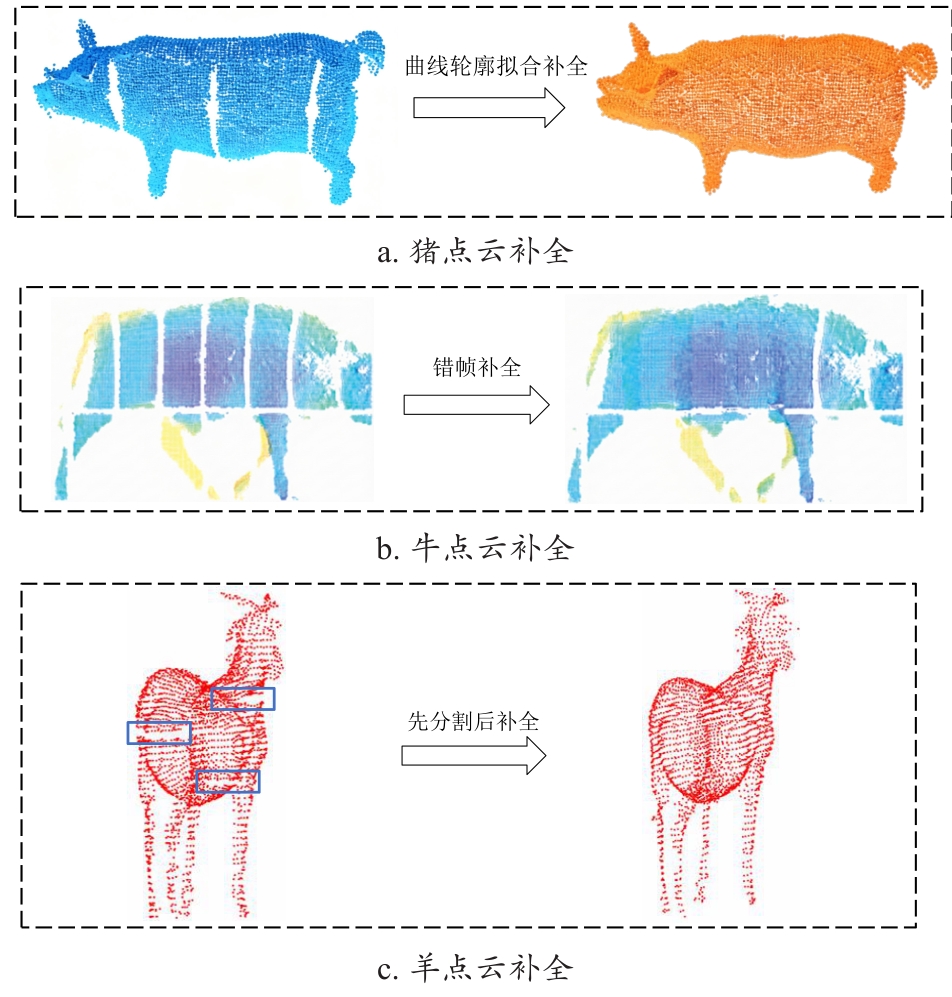
表2
家畜体尺测量标准[13, 74]
| 体尺指标 | 猪 | 牛 | 羊 |
|---|---|---|---|
| 体长 | 耳根中点至尾根点的直线距离 | 肩端至坐骨端的直线距离 | 肩端至坐骨端的直线距离 |
| 体高 | 肩胛骨最高点至地面的垂直距离 | 鬐甲最高点至地面的垂直距离 | 鬐甲最高点至地面的垂直距离 |
| 臀宽 | 髋骨间最大宽度 | 腰角外缘间宽度 | 腰角外缘间宽度 |
| 臀高 | 髋骨最高点至地面的垂直距离 | 两腰角连线中点至地面的垂直距离 | 臀部最高点至地面的垂直距离 |
| 臀围 | 两后膝前缘经臀部的周径 | 两腰角与臀端连线中点的水平周径 | 两后膝前缘经臀部的周径 |
| 胸深 | 背部至胸部下缘的垂直距离 | 鬐甲后缘至胸骨底部的垂直距离 | 肩胛骨背线至胸骨的垂直距离 |
| 胸宽 | 肩胛后缘间的最大宽度 | 肩胛后缘间的最大宽度 | 肩胛后缘间的最大宽度 |
| 胸围 | 肩胛后缘处体躯水平周径 | 肩胛后缘处体躯水平周径 | 肩胛后缘处体躯水平周径 |
| 腹围 | 腹部最大水平周径 | 腹部最大水平周径 | 腹部最大水平周径 |
| 管围 | 前肢管骨最小水平周长 | 前肢管骨最小水平周长 | 前肢管骨最小水平周长 |
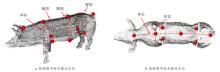
图6
直接定位猪体尺测量关键点[77]
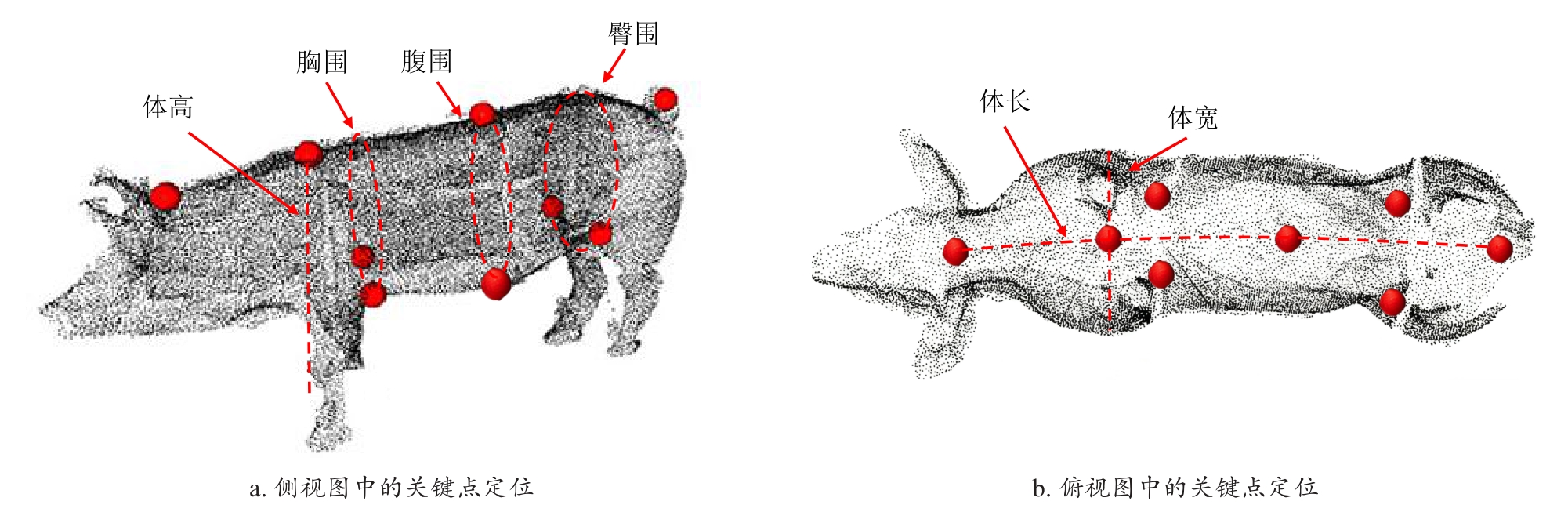
表3
基于直接关键点定位的家畜体尺测量方法
| 采集对象 | 采集方案 | 传感器 | 关键点定位方法 | 体尺计算结果 | 文献 |
|---|---|---|---|---|---|
| 牛 | 便携手持式 | 深度相机 | 基于三维表面轮廓、梯度和曲率特征定位关键点 | 多数体尺偏差低于6% | [ |
| 牛 | 定点拱门式 | 3D扫描仪 | 在三维扫描模型中人工标记关键点 | 6项体尺与人工测量相关系数为0.62~0.89 | [ |
| 牛 | 便携手持式 | RGB相机 | YOLOv5s检测牛体目标,Lite-HRNet定位体尺关键点,并结合Global-Local Path Networks单目深度估计恢复深度信息 | 4项体尺平均相对误差约7.82% | [ |
| 牛 | 定点通道式 | 深度相机 | 通过OpenCV图形界面在深度图像中人工选取测点 | 5项体尺平均绝对百分比误差约11.58% | [ |
| 牛 | 定点通道式 | 深度相机 | 基于点云轮廓曲线、极值点和几何约束定位体尺测量关键点 | 3项体尺平均绝对误差约2.09 cm | [ |
| 牛、羊 | 便携手持式 | 深度相机 | 改进U-Net分割躯干区域,多阶段密集堆叠沙漏网络定位体尺关键点 | 牛4项体尺平均相对误差为1.09%;羊4项体尺平均相对误差为1.37% | [ |
| 牛 | 定点通道式 | 深度相机 | 在RGB图像上进行关键点检测定位并投影至点云 | 牛5项体尺平均绝对百分比误差约4.96% | [ |
| 牛 | 便携手持式 | 深度相机 | 采用改进YOLOv8-Pose模型在RGB图像中定位关键点,并映射至点云坐标系 | 4项体尺平均相对误差约3.80% | [ |
| 猪 | 定点拱门式 | 深度相机 | 提出测地线距离回归关键点检测法并配合改进PointNet++模型定位 | 6项体尺平均绝对百分比误差为3.90% | [ |
| 牛 | 定点通道式 | 深度相机 | 采用轻量化YOLOv8-Pose模型在RGB图像中检测关键点,并映射至由深度图生成的三维坐标系 | 6项体尺平均绝对百分比误差约1.28% | [ |
图7
基于点云分割的猪、牛和羊体尺测量关键点定位示例[37, 88, 89] a. 猪点云中的关键点定位 b. 牛点云中的关键点定位 c. 羊点云中的关键点定位
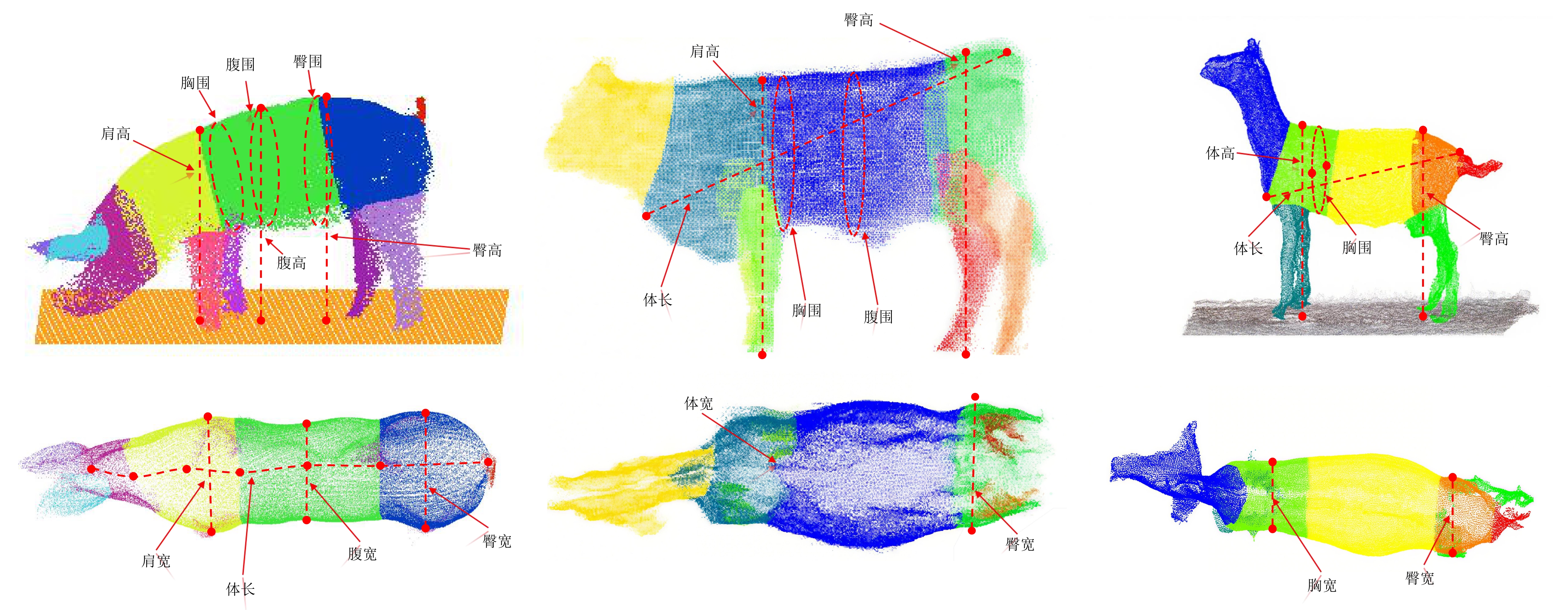
表4
基于点云分割的家畜体尺测量方法
| 采集对象 | 采集方案 | 传感器 | 分割方法 | 体尺计算结果 | 文献 |
|---|---|---|---|---|---|
| 猪 | 定点通道式 | 深度相机 | 采用改进PointNet++分割猪体头部、耳部、躯干、四肢和尾部等区域 | 计算9项体尺平均相对误差为3.39% | [ |
| 猪 | 定点通道式 | LiDAR | 采用PointVector++分割猪体各部位,并提取体尺表型测量区域 | 计算10项体尺平均绝对百分比误差为5.46% | [ |
| 牛 | 定点拱门式 | 深度相机 | 连续水平切片结合五点聚类梯度边界识别算法提取肉牛关键区域 | 计算5项体尺平均相对误差为2.42% | [ |
| 牛 | 定点通道式 | 深度相机 | 采用动态不平衡八叉树分组(Dynamic Unbalanced Octree Grouping,DUOS)改进PointNet++分割牛体和四肢等7个区域 | 计算6项体尺平均相对误差为2.03% | [ |
| 牛 | 定点通道式 | 深度相机 | 采用掩码多层几何点模型(Masked Multilevel Geometric Point,MMLG-Point)进行牛体点云分割 | 计算5项体尺平均绝对百分比误差低于6% | [ |
| 牛 | 定点拱门式 | 深度相机 | 采用FGPointKAN++进行奶牛点云部位分割,并结合自适应关键切片平面识别计算体尺 | 计算4项体尺平均绝对百分比误差为2.32% | [ |
| 牛 | 定点通道式 | 深度相机 | 采用CattlePartNet分割肉牛体尺关键区域,用于体高、体长、胸围、腹围和臀高测量 | 计算5项体尺平均绝对百分比误差为5.53% | [ |
| 羊 | 定点通道式 | 深度相机 | 采用改进PointStack分割山羊头部、前后肢、胸部、腹部、臀部和尾部 | 计算6项体尺平均绝对百分比误差为3.51% | [ |
| 羊 | 定点通道式 | 深度相机 | 提出DyFusion-PCT分割羊体背线、头颈前部、胸廓截面和远端肢体等关键测量区域 | 计算6项体尺平均相对误差为3.20% | [ |
| [1] |
姜冰, 汤文洁, 崔力航, 等. 精准畜牧业研究脉络、主题演进与趋势展望[J]. 畜牧与兽医, 2024, 56(3): 132-143.
|
|
|
|
| [2] |
|
| [3] |
任秋鸿, 彭华, 董晓霞. 基于文献计量学的精准奶业研究现状及其热点分析[J]. 中国畜牧杂志, 2022, 58(9): 325-332.
|
| [4] |
陆明洲, 光二颖, 陈子康, 等. 基于双视角图像的山羊体尺自动测量方法[J]. 农业机械学报, 2023, 54(8): 286-295.
|
|
|
|
| [5] |
赵建敏, 文博, 李琦. 基于Mask R-CNN的牛体尺测量系统[J]. 畜牧与兽医, 2021, 53(5): 42-48.
|
|
|
|
| [6] |
徐金阳, 徐爱俊, 周素茵, 等. 基于Kinect相机的猪弯曲体尺测量算法研究[J]. 东北农业大学学报, 2021, 52(9): 77-85.
|
|
|
|
| [7] |
|
| [8] |
李振波, 孙浩翔, 郭倩男, 等. 机器视觉技术在大体型家畜无接触体尺测量中的研究进展[J]. 农业工程学报, 2025, 41(7): 1-12.
|
|
|
|
| [9] |
|
| [10] |
|
| [11] |
|
| [12] |
|
| [13] |
初梦苑, 司永胜, 李前, 等. 家畜体尺自动测量技术研究进展[J]. 农业工程学报, 2022, 38(13): 228-240.
|
|
|
|
| [14] |
|
| [15] |
|
| [16] |
杨学军, 钟金彪, 林开颜, 等. 双目立体视觉技术及其在智慧农业中的应用研究进展[J]. 农业工程学报, 2025, 41(1): 27-39.
|
|
|
|
| [17] |
赵建敏, 关晓鹏. 基于双目深度估计的牛体尺测量方法设计[J]. 光电子.激光, 2022, 33(4): 429-435.
|
|
|
|
| [18] |
郭浩, 张胜利, 马钦, 等. 基于点云采集设备的奶牛体尺指标测量[J]. 农业工程学报, 2014, 30(5): 116-122.
|
|
|
|
| [19] |
|
| [20] |
NIR O,
|
| [21] |
|
| [22] |
|
| [23] |
井雪瑶. 面向牧场环境的奶牛三维重建与体积测量方法研究[D]. 杨凌: 西北农林科技大学, 2025.
|
|
|
|
| [24] |
|
| [25] |
|
| [26] |
王宇啸, 石源源, 陈招达, 等. 猪三维点云体尺自动计算模型Pig Back Transformer[J]. 智慧农业(中英文), 2024, 6(4): 76-90.
|
|
|
|
| [27] |
|
| [28] |
|
| [29] |
|
| [30] |
|
| [31] |
LOS S,
|
| [32] |
石炜, 陈禹州, 张万锴, 等. 基于无人机平台的牛体点云重构及体尺测量系统研究[J]. 畜牧与饲料科学, 2022, 43(4): 93-103.
|
|
|
|
| [33] |
|
| [34] |
|
| [35] |
|
| [36] |
|
| [37] |
|
| [38] |
|
| [39] |
|
| [40] |
|
| [41] |
李嘉位, 马为红, 李奇峰, 等. 复杂环境下肉牛三维点云重建与目标提取方法[J]. 智慧农业(中英文), 2022, 4(2): 64-76.
|
|
|
|
| [42] |
|
| [43] |
李哲, 林文祉, 翁智, 等. 基于KinectV2的猪体三维点云重构与体尺测量[J]. 软件导刊, 2024, 23(1): 161-166.
|
|
|
|
| [44] |
|
| [45] |
|
| [46] |
范才虎, 程曼, 袁洪波, 等. 基于多角度Kinect v2的羊只三维模型重构方法研究[J]. 中国农机化学报, 2024, 45(3): 189-197.
|
|
|
|
| [47] |
|
| [48] |
|
| [49] |
|
| [50] |
翁智, 范琦, 郑志强. 基于多模态图像信息及改进实例分割网络的肉牛体尺自动测量方法[J]. 智慧农业(中英文), 2024, 6(4): 64-75.
|
|
|
|
| [51] |
|
| [52] |
|
| [53] |
王可, 郭浩, 刘威林, 等. 基于点云旋转归一化的猪体体尺测点提取方法[J]. 农业工程学报, 2017, 33(S1): 253-259.
|
|
|
|
| [54] |
|
| [55] |
|
| [56] |
何东健, 牛金玉, 张子儒, 等. 基于改进三次B样条曲线的奶牛点云缺失区域修复方法[J]. 农业机械学报, 2018, 49(6): 225-231.
|
|
|
|
| [57] |
李孟飞, 康熙, 王彦超, 等. 基于阈值分析的曲线拟合和边缘检测生猪侧视点云补全[J]. 农业机械学报, 2021, 52(S1): 81-88.
|
|
|
|
| [58] |
尹令, 蔡更元, 田绪红, 等. 多视角深度相机的猪体三维点云重构及体尺测量[J]. 农业工程学报, 2019, 35(23): 201-208.
|
|
|
|
| [59] |
|
| [60] |
初梦苑, 刘刚, 司永胜, 等. 基于三维重建的奶牛体重预估方法[J]. 农业机械学报, 2020, 51(S1): 378-384.
|
|
|
|
| [61] |
|
| [62] |
|
| [63] |
|
| [64] |
|
| [65] |
|
| [66] |
|
| [67] |
|
| [68] |
|
| [69] |
|
| [70] |
|
| [71] |
|
| [72] |
|
| [73] |
|
| [74] |
张丽娜, 武佩, 宣传忠, 等. 羊只体尺参数测量及其形态评价研究进展[J]. 农业工程学报, 2016, 32(S1): 190-197.
|
|
|
|
| [75] |
叶文帅, 康熙, 贺志将, 等. 基于深度图像的多姿态肉牛体尺自动测量方法[J]. 智慧农业(中英文), 2022, 4(4): 144-155.
|
|
|
|
| [76] |
|
| [77] |
|
| [78] |
|
| [79] |
|
| [80] |
|
| [81] |
|
| [82] |
|
| [83] |
|
| [84] |
|
| [85] |
|
| [86] |
|
| [87] |
|
| [88] |
|
| [89] |
|
| [90] |
|
| [91] |
|
| [92] |
|
| [93] |
|
| [94] |
|
| [95] |
|
| [96] |
|
| [97] |
|
| [98] |
刘刚, 曾雪婷, 刘晓文, 等. 基于改进YOLOv5-pose的群养生猪体尺自动测量方法[J]. 农业机械学报, 2025, 56(5): 455-465.
|
|
|
|
| [99] |
|
| [100] |
戴维娇, 梁禹东辰, 周勇, 等. 羊只体尺测量的研究进展:从二维视觉到三维重建及2D-3D融合[J]. 智慧农业(中英文), 2026, 8(1): 120-147.
|
|
|
| [1] | 巫晨旭, 左浩龙, 李刚. 面向云遮挡与复杂地块场景下的跨模态注意力多源遥感农作物分类[J]. 智慧农业(中英文), 2026, 8(2): 118-132. |
| [2] | 武张斌, 何宁, 吴延东, 郭新宇, 温维亮. 点云数据驱动的玉米叶片生物量估算方法[J]. 智慧农业(中英文), 2026, 8(1): 156-166. |
| [3] | 赵峻, 聂志刚, 李广, 刘佳宇. 基于无人机低空近景图像的玉米螟虫害检测方法[J]. 智慧农业(中英文), 2025, 7(6): 111-123. |
| [4] | 张运, 张露敏, 许广涛, 郝佳慧. 基于双分支与多尺度注意力机制的稻虾田遥感提取方法[J]. 智慧农业(中英文), 2025, 7(6): 185-195. |
| [5] | 赵莹萍, 梁锦名, 陈贝章, 邓小玲, 张奕, 熊征, 潘明, 孟祥宝. 多智能体大模型在农业中的应用研究与展望[J]. 智慧农业(中英文), 2025, 7(5): 37-51. |
| [6] | 王风云, 王轩宇, 安磊, 封文杰. 基于改进RT-DETR的菌棒栽培香菇检测方法[J]. 智慧农业(中英文), 2025, 7(5): 67-77. |
| [7] | 韩文凯, 李涛, 冯青春, 陈立平. 面向复杂果园环境的改进YOLOv11n苹果轻量化实例分割算法[J]. 智慧农业(中英文), 2025, 7(5): 114-123. |
| [8] | 李汶政, 杨信廷, 孙传恒, 崔腾鹏, 王慧, 李珊珊, 李文勇. 联合空间深度转换卷积与多尺度注意力机制的灯诱稻飞虱害虫检测方法[J]. 智慧农业(中英文), 2025, 7(5): 169-181. |
| [9] | 胡妍, 王玉洁, 张雪晨, 张熠强, 于桦昊, 宋馨蓓, 叶思潭, 周继红, 陈振林, 纵巍伟, 何勇, 李晓丽. 基于高光谱成像技术的茯砖茶发花品质无损检测与智能识别方法[J]. 智慧农业(中英文), 2025, 7(4): 71-83. |
| [10] | 刘龙, 王宁, 王嘉成, 曹宇恒, 张凯, 康峰, 王亚雄. 基于改进U-Net模型的高纺锤形苹果树休眠期修剪点识别与定位方法[J]. 智慧农业(中英文), 2025, 7(3): 120-130. |
| [11] | 韩宇, 齐康康, 郑纪业, 李金瑷, 姜富贵, 张相伦, 游伟, 张霞. 基于改进YOLOv11的轻量化肉牛面部识别方法[J]. 智慧农业(中英文), 2025, 7(3): 173-184. |
| [12] | 李瑞杰, 王爱冬, 吴华星, 李子秋, 冯向前, 洪卫源, 汤学军, 覃金华, 王丹英, 褚光, 张运波, 陈松. 水稻生育期遥感监测的研究进展、瓶颈问题与技术优化路径[J]. 智慧农业(中英文), 2025, 7(3): 89-107. |
| [13] | 马六, 毛克彪, 郭中华. 基于混合注意力生成对抗网络的遥感图像去雾方法[J]. 智慧农业(中英文), 2025, 7(2): 172-182. |
| [14] | 朱顺尧, 瞿宏俊, 夏倩, 郭维, 郭亚. 基于三维点云的小麦叶片曲面参数化重建方法[J]. 智慧农业(中英文), 2025, 7(1): 85-96. |
| [15] | 许世卫, 李乾川, 栾汝朋, 庄家煜, 刘佳佳, 熊露. 农产品市场监测预警深度学习智能预测方法[J]. 智慧农业(中英文), 2025, 7(1): 57-69. |
| 阅读次数 | ||||||
|
全文 |
|
|||||
|
摘要 |
|
|||||