Smart Agriculture ›› 2026, Vol. 8 ›› Issue (2): 118-132.doi: 10.12133/j.smartag.SA202510010
• Topic--Multi-source Remote Sensing Driven Digital Agriculture Innovation and Practice • Previous Articles Next Articles
WU Chenxu, ZUO Haolong, LI Gang( )
)
Received:2025-10-11
Online:2026-03-30
Foundation items:Heilongjiang Province Double First-Class Discipline Coordinated Innovation Achievement Project(LJGXCG 2025-P18)
About author:corresponding author:
CLC Number:
WU Chenxu, ZUO Haolong, LI Gang. Cross-Modal Attention for Multi-Source Remote Sensing Crop Classification under Cloud Occlusion and Complex Field Scenarios[J]. Smart Agriculture, 2026, 8(2): 118-132.
Add to citation manager EndNote|Ris|BibTeX
URL: https://www.smartag.net.cn/EN/10.12133/j.smartag.SA202510010

Fig. 1
Location map of the study area in Yishui county, Shandong province

Table 1
Comparison of band correspondences and resolutions between PASTIS dataset and Sentinel-2
| PASTIS 波段 | Sentinel-2 波段 | 原始分辨率/m | 重采样后分辨率/m |
|---|---|---|---|
| 1—4 | B2—B4, B8 | 10 | 10 |
| 5—7 | B5—B7 | 20 | 10 |
| 8 | B8A | 20 | 10 |
| 9—10 | B11—B12 | 20 | 10 |

Fig. 2
PASTIS dataset

Table 2
Comparison of core parameters between PASTIS and the Yishui county dataset
| 参数 | PASTIS(法国) | 沂水县(中国) | 对迁移的潜在影响 |
|---|---|---|---|
| 云覆盖率/% | 28 | 33 | 沂水县需更强的抗云干扰能力 |
| 时相数量(4—9月) | 32个时相 | 23个时相 | 沂水县时序信息更稀疏,考验时间注意力 |
| 平均地块面积/hm2 | 1.2 | <0.5 | 沂水县需更高的空间细节捕捉能力 |

Fig. 3
The dataset of main crops in Yishui county


Fig. 4
Overall architecture diagram of the attention-3DCNN model


Fig. 5
Multispectral branch model diagram.


Fig. 6
SAR branch model architecture diagram.


Fig. 7
Attention mechanism diagram


Fig. 8
Channel attention mechanism diagram

Table 3
Performance of the Attention-3DCNN and other models on different datasets
| 模型名称 | OA(PASTIS)/% | 宏平均F 1分数(PASTIS) | Kappa(PASTIS) | OA(沂水县)/% | 宏平均F 1分数(沂水县) | Kappa(沂水县) |
|---|---|---|---|---|---|---|
| 标准3D-CNN | 94.2 | 0.932 | 0.915 | 87.2 | 0.845 | 0.822 |
| 光学-SAR简单融合模型 | 95.3 | 0.945 | 0.928 | 89.5 | 0.876 | 0.858 |
| 仅SAR 3D-CNN模型 | 91.6 | 0.902 | 0.889 | 88.3 | 0.861 | 0.842 |
| 注意力双分支融合模型 | 95.1 | 0.938 | 0.935 | 89.9 | 0.882 | 0.870 |
| 通道注意力双分支融合模型 | 96.5 | 0.953 | 0.942 | 90.0 | 0.898 | 0.890 |
| 时间注意力双分支融合模型 | 95.8 | 0.945 | 0.942 | 89.5 | 0.894 | 0.887 |
| 空间注意力双分支融合模型 | 96.9 | 0.959 | 0.956 | 91.0 | 0.906 | 0.900 |
| Attention-3DCNN | 97.5 | 0.970 | 0.965 | 93.0 | 0.920 | 0.910 |

Fig. 9
Results of the Attention-3DCNN and other models in the ablation study on the Yishui county dataset
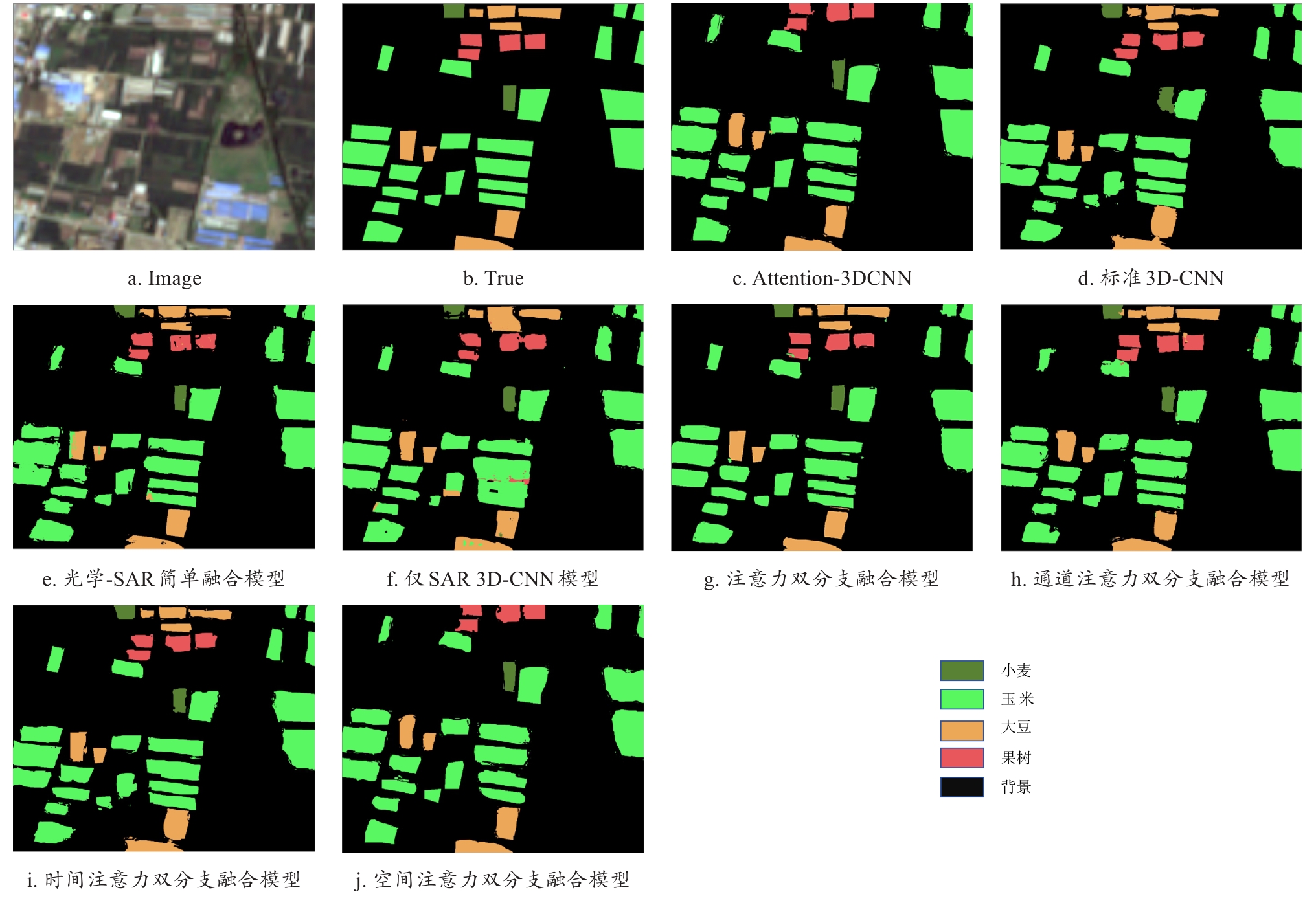

Fig. 10
Results of Attention-3DCNN and other models in the ablation study on the PASTIS dataset

Table 4
Comparison of Attention-3DCNN with other models
| 模型名称 | 核心方法简述 | OA(沂水县)/% | Kappa(沂水县) | 参数量/M | 计算量/GFLOPs | 推理时间/(ms/景) |
|---|---|---|---|---|---|---|
| 3D-ConvSTAR | 3DCNN多源融合(固定权重) | 89.5 | 0.858 | 45.2 | 128.3 | 156 |
| Self-Attention 3D | 自注意力机制+3DCNN | 90.5 | 0.872 | 52.7 | 145.6 | 183 |
| UNet++ | 编码器-解码器结构,多尺度特征融合 | 88.0 | 0.835 | 68.9 | 212.4 | 245 |
| CNN-LSTM-DS | 光学影像时序+纹理特征融合 | 86.5 | 0.815 | 43.0 | 98.7 | 132 |
| TGF-Net | 基于Transformer与卷积(CNN)架构 | 90.5 | 0.900 | 105.3 | 285.1 | 312 |
| Attention-3DCNN | 跨模态三重注意力(通道-时间-空间) | 93.5 | 0.910 | 41.3 | 97.2 | 133 |

Fig. 11
Results of the Attention-3DCNN and other models in the comparative experiments on the Yishui county dataset

Table 5
Comparison of Attention-3DCNN and other models under high cloud coverage conditions on the Yishui county dataset
| 模型名称 | 主要依赖信息 | OA/% | 宏平均F 1 | Kappa |
|---|---|---|---|---|
| 3D-ConvSTAR | 光学时序为主 | 83.6 | 0.802 | 0.775 |
| Self-Attention 3D | 光学 + 时序注意力 | 85.1 | 0.821 | 0.796 |
| UNet++ | 光学空间特征 | 82.4 | 0.789 | 0.761 |
| CNN-LSTM-DS | 光学时序 + 手工特征 | 81.9 | 0.781 | 0.754 |
| TGF-Net | Transformer + CNN融合 | 86.3 | 0.836 | 0.812 |
| Attention-3DCNN | 跨模态三重注意力(S2+S1) | 89.4 | 0.872 | 0.846 |
Table 6
The decline of different models under high cloud cover in multi-source remote sensing crop classification studies
| 模型 | 常规OA/% | 高云量OA/% | 下降幅度/百分点 |
|---|---|---|---|
| 3D-ConvSTAR | 89.5 | 83.6 | 5.9 |
| Self-Attention 3D | 90.5 | 85.1 | 5.4 |
| UNet++ | 88.0 | 82.4 | 5.6 |
| CNN-LSTM-DS | 86.5 | 81.9 | 4.6 |
| TGF-Net | 90.0 | 86.3 | 3.7 |
| Attention-3DCNN | 93.0 | 89.4 | 3.6 |
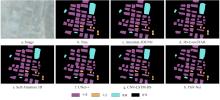
Fig. 12
Results of Attention and other models on the Yishui county dataset under conditions of high cloud coverage

Table 7
Comparison of Attention-3DCNN and other models on the Yishui county dataset under the condition of high degree of land fragmentation
| 模型名称 | 主要结构特点 | OA/% | 宏平均F 1 | Kappa |
|---|---|---|---|---|
| 3D-ConvSTAR | 3D 卷积,局部时空建模 | 84.9 | 0.816 | 0.792 |
| Self-Attention 3D | 3DCNN + 自注意力 | 86.2 | 0.829 | 0.806 |
| UNet++ | 编码器-解码器,多尺度跳连 | 83.5 | 0.801 | 0.776 |
| CNN-LSTM-DS | 空间 CNN+时序LSTM | 82.7 | 0.793 | 0.768 |
| TGF-Net | Transformer + CNN 融合 | 87.1 | 0.842 | 0.818 |
| Attention-3DCNN | 跨模态三重注意力 (含空间注意力) | 90.2 | 0.881 | 0.856 |
Table 8
The performance degradation of different models on the Yishui county dataset under the condition of high degree of land fragmentation
| 模型名称 | 常规测试OA/% | 破碎地块OA/% | 下降幅度/百分点 |
|---|---|---|---|
| 3D-ConvSTAR | 89.5 | 84.9 | 4.6 |
| Self-Attention 3D | 90.5 | 86.2 | 4.3 |
| UNet++ | 88.0 | 83.5 | 4.5 |
| CNN-LSTM-DS | 86.5 | 82.7 | 3.8 |
| TGF-Net | 90.0 | 87.1 | 2.9 |
| Attention-3DCNN | 93.0 | 90.2 | 2.8 |
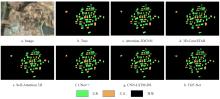
Fig. 13
Results of Attention-3DCNN and other models on the Yishui county dataset under fragmented land conditions

Table 9
Comparison of key characteristics and model attention adjustment in various categories between France PASTIS and Yishui county of China
| 分类类别 | 关键特征 | 法国PASTIS注意力权重(均值) | 沂水县注意力权重(均值) | 调整分析 |
|---|---|---|---|---|
| 小麦 | 抽穗期 | 时间: 0.76; 通道(B5): 0.21 | 时间: 0.79; 通道(B5): 0.23 | 物候提前,时间权重前移;红边波段重要性增强 |
| 大豆 | 开花结荚期 | 通道(VH): 0.35 | 通道(VH): 0.62 | 光学数据受限,SAR通道权重显著提升以补偿 |
| 背景 | 非农用地 | 空间: 0.58 | 空间: 0.71 | 地块破碎,模型更关注局部空间结构 |
Table 10
Comparison of key phenological periods identified by the model with the observation data from the agricultural bureau of Yishui county
| 作物类型 | 模型识别关键物候期(第X—X天) | 对应公历时间 | 沂水县农业农村局观测记录 | 匹配度/% |
|---|---|---|---|---|
| 小麦 | 120—150天 | 4月中下旬—5月上旬 | 4月20日—5月10日抽穗 | 100 |
| 玉米 | 180—210天 | 7月上旬—8月上旬 | 7月5日—8月5日灌浆 | 100 |
| 大豆 | 160—190天 | 6月下旬—7月下旬 | 6月25日—7月25日结荚 | 100 |
| 果树 | 70—90天 | 2月下旬—3月中旬 | 2月28日—3月15日萌芽 | 100 |
| [1] |
刘伊,张彦军. ReluformerN:轻量化高低频增强高光谱农业地物分类方法 [J]. 智慧农业(中英文), 2024, 6 (5): 74-87.
|
|
|
|
| [2] |
|
| [3] |
|
| [4] |
|
| [5] |
|
| [6] |
|
| [7] |
|
| [8] |
郭交, 王鹤颖, 项诗雨, 等. 基于多特征优化的PolSAR数据农作物精细分类方法[J]. 农业机械学报, 2024, 55(9): 275-285.
|
|
|
|
| [9] |
王佳玥, 蔡志文, 王文静, 等. 协同多源国产高分影像和面向对象方法的南方农作物遥感识别[J]. 中国农业科学, 2023, 56(13): 2474-2490.
|
|
|
|
| [10] |
林云浩, 王艳军, 李少春, 等. 一种耦合DeepLab与Transformer的农作物种植类型遥感精细分类方法[J]. 测绘学报, 2024, 53(2): 353-366.
|
|
|
|
| [11] |
张伟雄, 唐娉, 孟瑜, 等. 基于多尺度时空全局注意力的遥感影像时间序列农作物分类[J]. 遥感学报, 2024, 28(11): 2865-2877.
|
|
|
|
| [12] |
|
| [13] |
|
| [14] |
|
| [15] |
|
| [16] |
|
| [17] |
|
| [18] |
|
| [19] |
|
| [20] |
蔡玉林, 王兴路, 高洪振, 等. 融合3DCNN和Vision Transformer的多模态遥感数据树种分类方法[J]. 激光与光电子学进展, 2025, 62(20): 2028001.
|
|
|
|
| [21] |
李泽慧, 张琳, 山显英. 三维卷积神经网络方法改进及其应用综述[J]. 计算机工程与应用, 2025, 61(3): 48-61.
|
|
|
|
| [22] |
杨朋辉, 杨长青, 刘静, 等. 基于2D-3D卷积神经网络的情绪识别模型[J]. 燕山大学学报, 2025, 49(1): 66-73.
|
|
|
|
| [23] |
|
| [24] |
|
| [25] |
|
| [26] |
|
| [27] |
|
| [28] |
|
| [29] |
|
| [30] |
|
| [31] |
|
| [32] |
史洁宁, 吴田军, 黄启厅, 等. 耦合NDVI与纹理时序特征的地块作物遥感分类[J]. 南方农业学报, 2025, 56(1): 29-40.
|
|
|
|
| [33] |
|
| [34] |
|
| [1] | SU Yujie, LI Yue, WEI Linjing, WU Bing, GUO Linhai, YAN Bin, ZHOU Hui, GAO Yuhong, KANG Lianghe, LIU Huan, SU Shunchang. Lodging Region Detection Method in Flax Based on Lightweight Improved YOLOv11n-seg Model [J]. Smart Agriculture, 2026, 8(2): 35-47. |
| [2] | ZHAO Licheng, LU Xinyu, WU Qian, REN Ni, ZHOU Lingli, CHENG Yawen, HU Anqi, QI Chao. An Improved YOLOv10-Based Tomato Ripeness Detection Algorithm with LAMP Channel Pruning [J]. Smart Agriculture, 2026, 8(2): 133-146. |
| [3] | LIAN Zhenxiang, FEI Xufeng, REN Zhouqiao. Optimal Sampling Strategy for Soil Organic Matter Based on Hippopotamus Optimization Algorithm and Machine Learning [J]. Smart Agriculture, 2026, 8(2): 48-58. |
| [4] | XU Xiaobin, ZHU Hongchun, LI Feng, HE Wei, YANG Jiaming, LI Zhenhai. High Spatiotemporal Resolution Remote Sensing for Precision Agricultural Disaster Early Warning: Progress, Bottlenecks, and Integrative Pathways [J]. Smart Agriculture, 2026, 8(2): 18-34. |
| [5] | CAI Yuqin, LIU Daming, XU Qin, LI Boyang, LIU Bojie. Greenhouse Temperature and Humidity Prediction Method Based on Adaptive Kalman Filter and GWO-LSTM-Attention [J]. Smart Agriculture, 2026, 8(1): 148-155. |
| [6] | HU Yumeng, GUAN Feifan, XIE Dongchen, MA Ping, YU Youben, ZHOU Jie, NIE Yanming, HUANG Lüwen. Tea Leaf Disease Diagnosis Based on Improved Lightweight U-Net3+ [J]. Smart Agriculture, 2026, 8(1): 15-27. |
| [7] | HUANG Xianguo, ZHU Qibing, HUANG Min. Online Detection System for Freshness of Fruits and Vegetables Based on Temporal Multi-source Information Fusion [J]. Smart Agriculture, 2026, 8(1): 203-212. |
| [8] | WU Zhangbin, HE Ning, WU Yandong, GUO Xinyu, WEN Weiliang. Point Cloud Data-driven Methods for Estimating Maize Leaf Biomass [J]. Smart Agriculture, 2026, 8(1): 156-166. |
| [9] | YAO Xiaotong, QU Shaoye. Lightweight Detection Method for Pepper Leaf Diseases and Pests Based on Improved YOLOv12s [J]. Smart Agriculture, 2026, 8(1): 1-14. |
| [10] | XIE Wenhao, ZHANG Xin, DONG Wen, ZHENG Yizhen, CHENG Bo, TU Wenli, SUN Fengqing. Parcel-Scale Crop Distribution Mapping Based on Stacking Ensemble Learning [J]. Smart Agriculture, 2025, 7(6): 196-209. |
| [11] | LU Yihang, DONG Wen, ZHANG Xin, YAN Ruoyi, ZHANG Yujia, TANG Tao. Physics-Constrained PROSAIL-cGAN Approach for Spectral Sample Augmentation and LAI Inversion of Winter Wheat [J]. Smart Agriculture, 2025, 7(6): 149-160. |
| [12] | WANG Yinhui, ZHAO Anzhou, LI Dan, ZHU Xiufang, ZHAO Jun, WANG Ziqing. Construction and Evaluation of Lightweight and Interpretable Soybean Remote Sensing Identification Model [J]. Smart Agriculture, 2025, 7(6): 136-148. |
| [13] | LONG Yuqiao, SUN Jing, WEN Yanru, WANG Chuya, DONG Xiuchun, HUANG Ping, WU Wenbin, CHEN Jin, DING Mingzhong. Remote Sensing Approaches for Cropland Abandonment Perception in Southern Hilly and Mountainous Areas of China: A Review [J]. Smart Agriculture, 2025, 7(6): 58-74. |
| [14] | ZHAO Jun, NIE Zhigang, LI Guang, LIU Jiayu. Corn Borer Pests Infestations Detection Method Using Low-Altitude Close-Range UAV Imagery [J]. Smart Agriculture, 2025, 7(6): 111-123. |
| [15] | ZHANG Yun, ZHANG Lumin, XU Guangtao, HAO Jiahui. Remote Sensing Extraction Method of Rice-Crayfish Fields Based on Dual-Branch and Multi-Scale Attention [J]. Smart Agriculture, 2025, 7(6): 185-195. |
| Viewed | ||||||
|
Full text |
|
|||||
|
Abstract |
|
|||||